
Open Gate Video in 2026: Do You Actually Need It for Vertical and Horizontal Content?
Clients increasingly want one shoot to supply a widescreen campaign film, vertical social edits and sometimes a square cut too. That demand has made open gate video one of the most discussed camera features of 2026, but it has also created a very tidy marketing promise: shoot once, crop later, deliver everything.
The reality is more useful and more complicated.
Open gate can give an editor substantially more room to create both 16:9 and 9:16 versions from the same take. It cannot make one composition perfect for every shape, recover a subject that was framed in the wrong place or remove the need to plan the set for multiple crops.
Recent discussions among working videographers show the split clearly. Some use open gate whenever a client requests portrait deliverables. Others prefer a dedicated vertical camera, a second take or a wider 16:9 frame. The right answer depends on the job.
What is open gate video?
Most cameras recording standard 16:9 video use a wide strip of the imaging sensor. Open gate recording uses the full sensor area, or close to it, producing a taller frame: commonly 3:2 on a full-frame camera or 4:3 on a Micro Four Thirds camera.
That extra picture above and below the widescreen crop is the main advantage. It gives the editor more room to reposition a subject, protect a vertical crop or create several aspect ratios from one source.
Panasonic gives a useful real-world example. A 6K open gate LUMIX recording at 5952 × 3968 pixels can produce a centred 9:16 crop of 2232 × 3968. By comparison, a centred 9:16 crop from standard 3840 × 2160 UHD is only 1215 × 2160. Both may be delivered at 1080 × 1920, but the taller source gives the editor much more captured detail and room to work.
Open gate is also moving beyond the cameras most associated with it. Sony announced the FX5 on 22 July 2026 with 3:2 open gate recording, the first such mode in its Cinema Line FX series. Adobe then added support in Premiere 26.5 for Sony’s XAVC and X-OCN media with 32-bit float Hi-Res audio. That does not make open gate essential, but it does show that multi-format acquisition is becoming a mainstream production concern.
Why creators are debating it now
The recurring question is not simply, “Is open gate better?” It is, “Can I stop shooting everything twice?”
In September discussions on r/videography, creators described three common approaches:
- shoot open gate and use frame guides to protect both 16:9 and 9:16;
- shoot a wider 16:9 image and crop a vertical version in post; or
- record a separate vertical angle or take so the portrait composition can be designed properly.
Each can work. The choice changes with subject movement, delivery resolution, production time and how important the vertical edit is to the campaign.
The disagreement is healthy because open gate solves a capture problem, not a storytelling problem. A taller sensor readout provides options. It does not decide where the eyeline belongs, whether two people can fit into a narrow crop or whether a product label remains readable on a phone.
When open gate video is genuinely useful
Interviews and talking-head content
A controlled interview is one of the strongest uses. A single speaker can often be composed within simultaneous 16:9 and 9:16 frame guides, while the extra height preserves headroom and gives the editor space for subtle reframing.
Keep the speaker near the shared safe area and place key background elements where they survive both crops. If the wide frame uses strong negative space for graphics, plan how those graphics will relocate in portrait rather than assuming the crop will solve it.
Product demonstrations and presenter-led content
Open gate works well when the important action happens around the centre of frame: a presenter handling a product, a tabletop demonstration or a simple piece-to-camera. A controlled set makes it easier to keep stands, flags and unfinished scenery outside every intended crop.
For small products, check that the vertical crop still shows hands, work surface and product detail together. A technically valid crop can still be a poor demonstration.
Performances with repeatable blocking
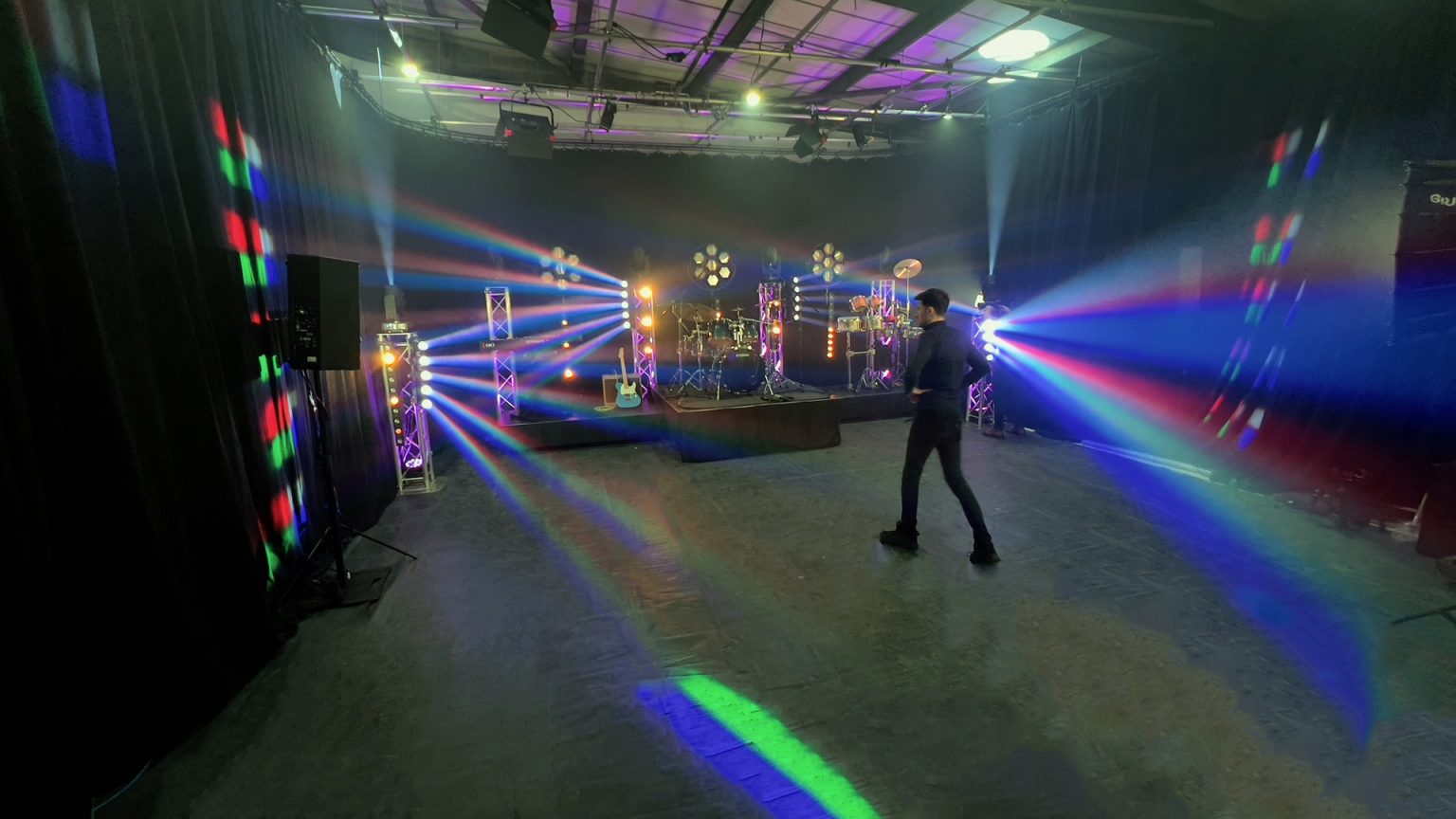
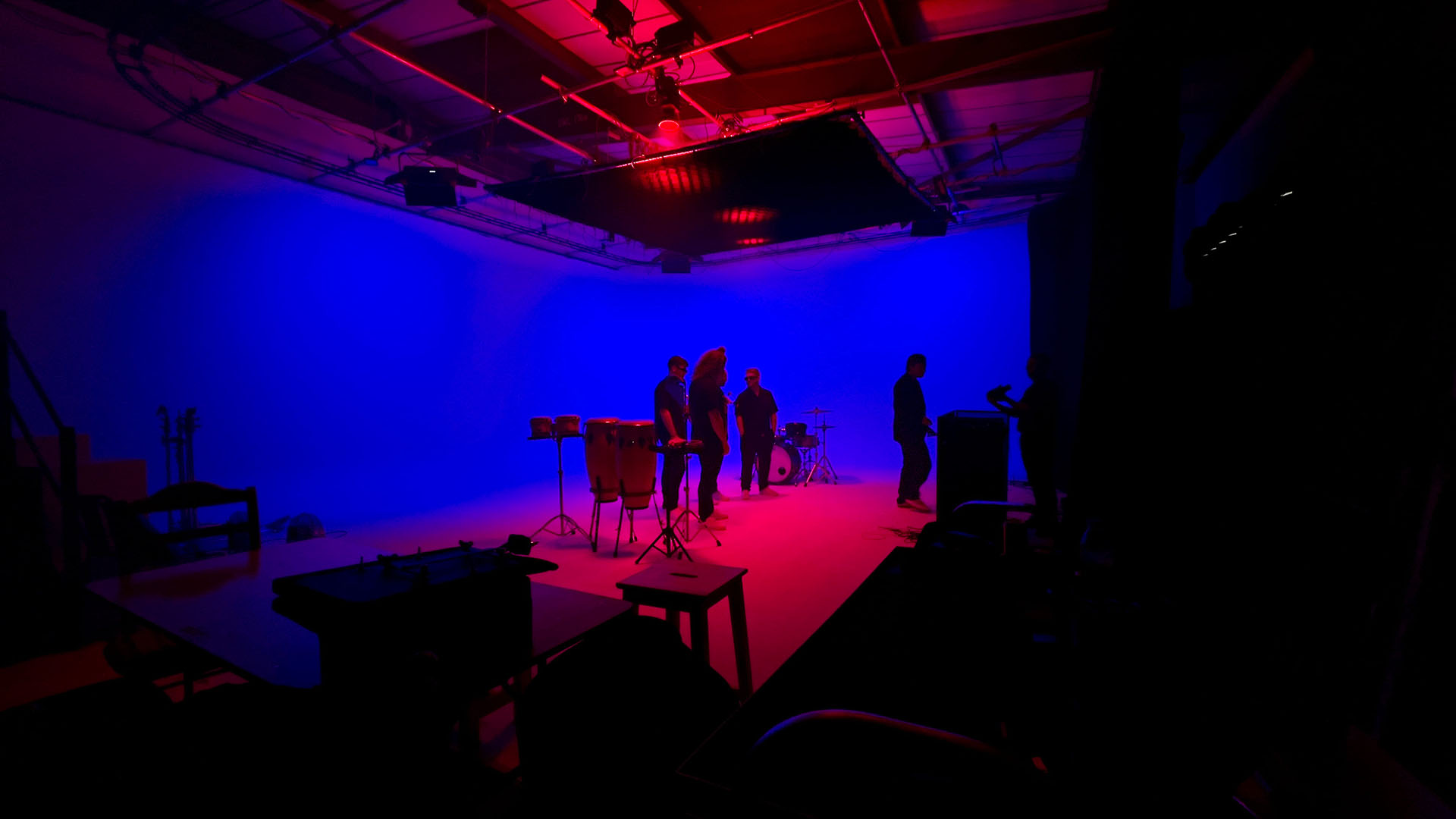
Music sessions, dance fragments and performance content can benefit when movement is rehearsed inside a protected central zone. The extra sensor height is especially useful when hands, instruments or full-body movement would be clipped by a conventional widescreen capture.
Fast or unpredictable movement is harder. If talent travels across the width of a stage, a narrow 9:16 extraction may require keyframed reframing or an automated tracking tool. Both add edit time and can make the portrait version feel like a follower rather than an intentional composition.
One-off moments
When a take cannot be repeated, optionality matters. An open gate master can protect several delivery shapes without adding another camera close to the action. It can be valuable for live performance, documentary moments and practical effects, provided the camera’s open gate mode also meets the required frame rate and recording quality.
When open gate is not the best answer
The horizontal and vertical stories need different compositions
A two-person interview may look balanced in 16:9 but cramped in 9:16. A landscape product shot may rely on lateral movement that has nowhere to go in portrait. In these cases, a dedicated vertical take or camera is not duplication; it is proper art direction.
You need high frame rates or a particular codec
Open gate modes often have different limits from standard 4K modes. Depending on the camera, you may give up a desired frame rate, crop, stabilisation behaviour, codec or recording duration. Check the current manual for the exact body and firmware rather than assuming every advertised feature works in combination.
Storage and post-production are already tight
Higher-resolution files require more media, backup capacity and editing bandwidth. Proxy workflows can help, but they do not remove ingest and storage time. For a quick 1080p social job, a carefully framed 4K source may be entirely sufficient.
The vertical version is the hero deliverable
If most of the audience will watch in portrait, turn a camera or shoot a dedicated portrait take. Open gate is most persuasive when widescreen and portrait matter together. It is a weaker argument for treating the main format as an afterthought.
A practical dual-format framing workflow
1. Agree the deliverables before the shoot
List every required aspect ratio, resolution, platform, duration and safe area. Ask which version is primary. A 9:16 paid advert with captions and a call-to-action has different framing needs from an organic social cutdown.
2. Build the frame guides in camera
Display 16:9 and 9:16 guides over the open gate image if the camera supports them. If it does not, use a monitor with custom guides. Do not rely on imagining the crop during a busy take.
3. Design a shared action zone
Mark the floor and rehearse movement inside the area that works for both frames. For an interview, check eyes, hands and chair position. For a product shot, check the product, hand movements, props and branding. For a performance, check the widest gesture, not just the starting pose.
4. Protect the edges of every intended crop
Scan for lamps, stands, microphones, floor marks, cove edges and crew reflections. Open gate sees more of the set, and a later reframe may reveal something that looked safely out of shot on the widescreen monitor.
5. Record a real test and make both crops
Before the main setup, shoot a short performance and export rough 16:9 and 9:16 versions. View the portrait cut on a phone. This reveals problems that guide overlays miss: unreadable products, awkward eye-lines, captions covering hands or a background that loses its logic when narrowed.
6. Decide where a second take earns its time
Even on an open gate shoot, reserve time for dedicated portrait versions of priority shots. Hero product frames, group shots, wide movement and complex blocking are the usual candidates. The most efficient workflow is often hybrid: shared acquisition where it works, purpose-built compositions where it matters.
Does open gate replace a vertical camera?
Not automatically.
A second camera mounted vertically provides a composition you can judge directly and may capture a different focal length or angle. It also increases kit, monitoring, data and continuity demands. If both cameras cannot occupy a good position, the extra angle may be worse than a carefully planned extraction from one high-resolution source.
For a solo operator, open gate plus accurate guides can be the cleaner setup. For a campaign in which portrait and landscape outputs are equally important, a dedicated vertical camera or separate takes give the director more control.
The decision is creative before it is technical.
Testing an open gate workflow at Cineview Studios
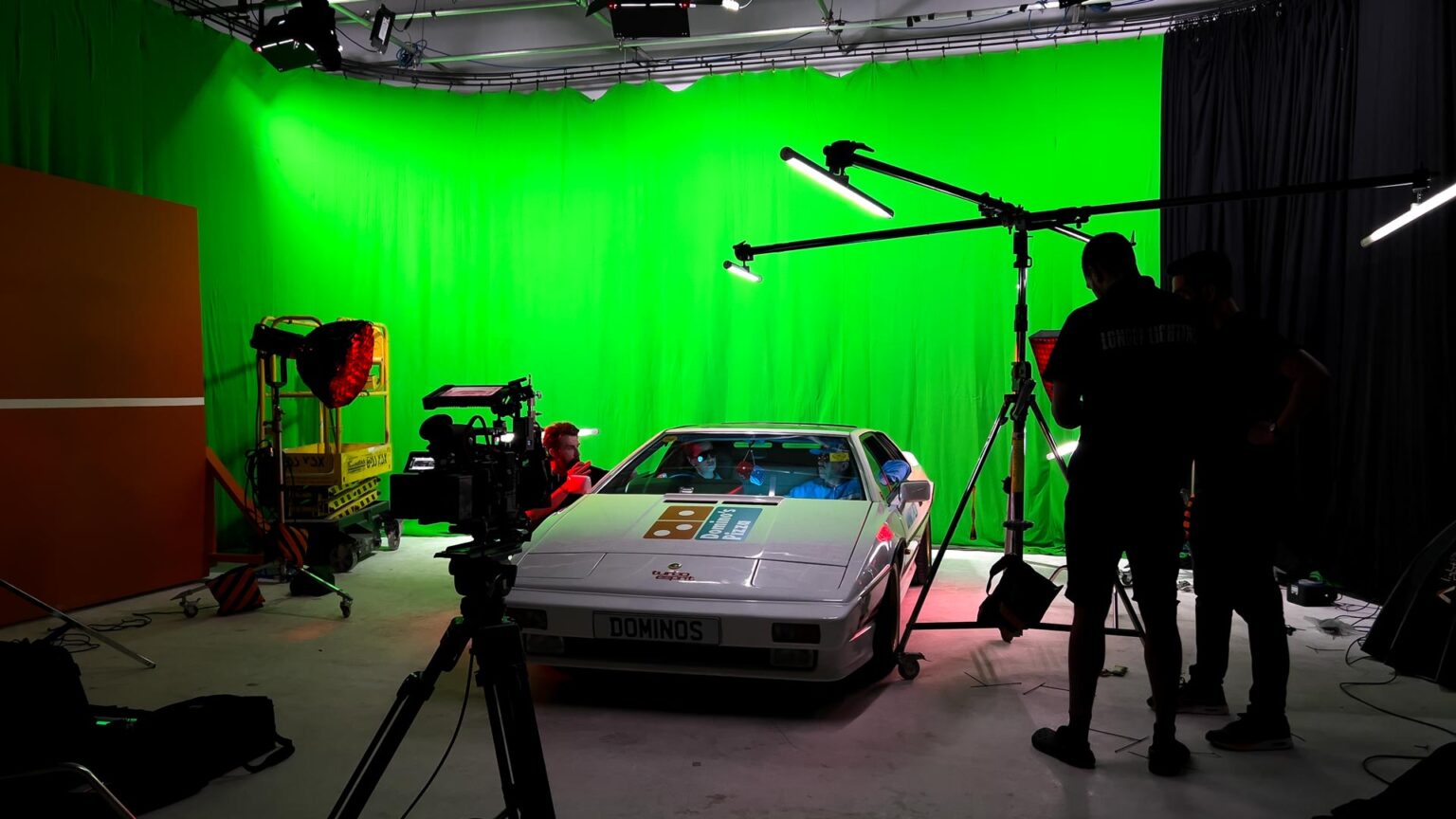
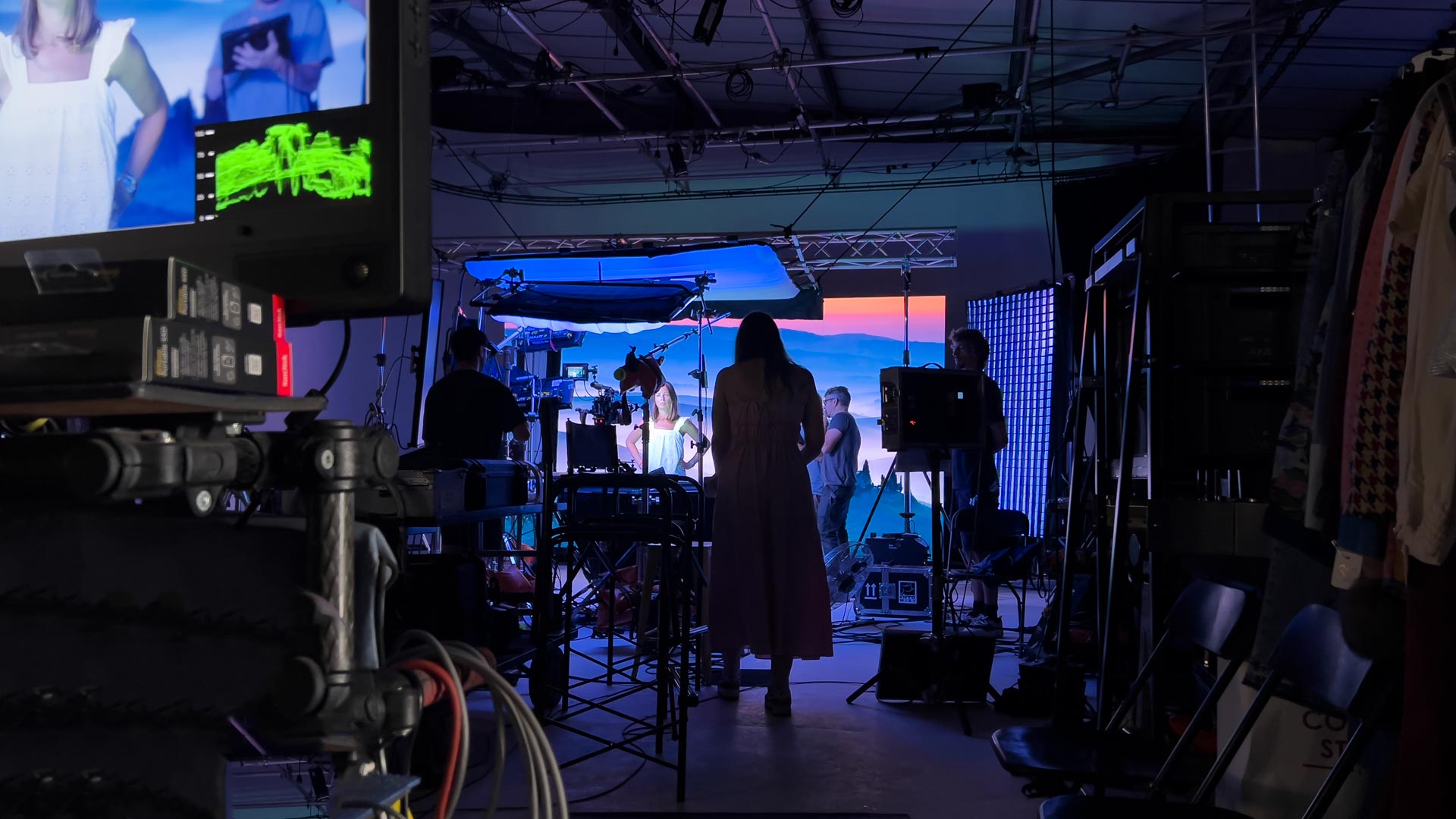
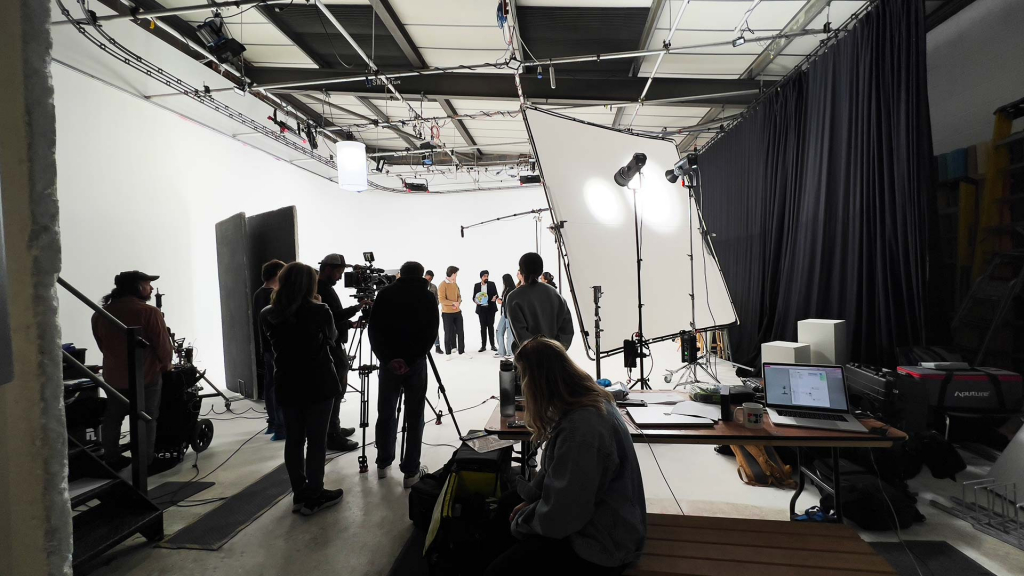
A studio is a practical place to settle this question before a client campaign depends on it. Controlled lighting, repeatable talent marks and enough room to move the camera make side-by-side tests meaningful.
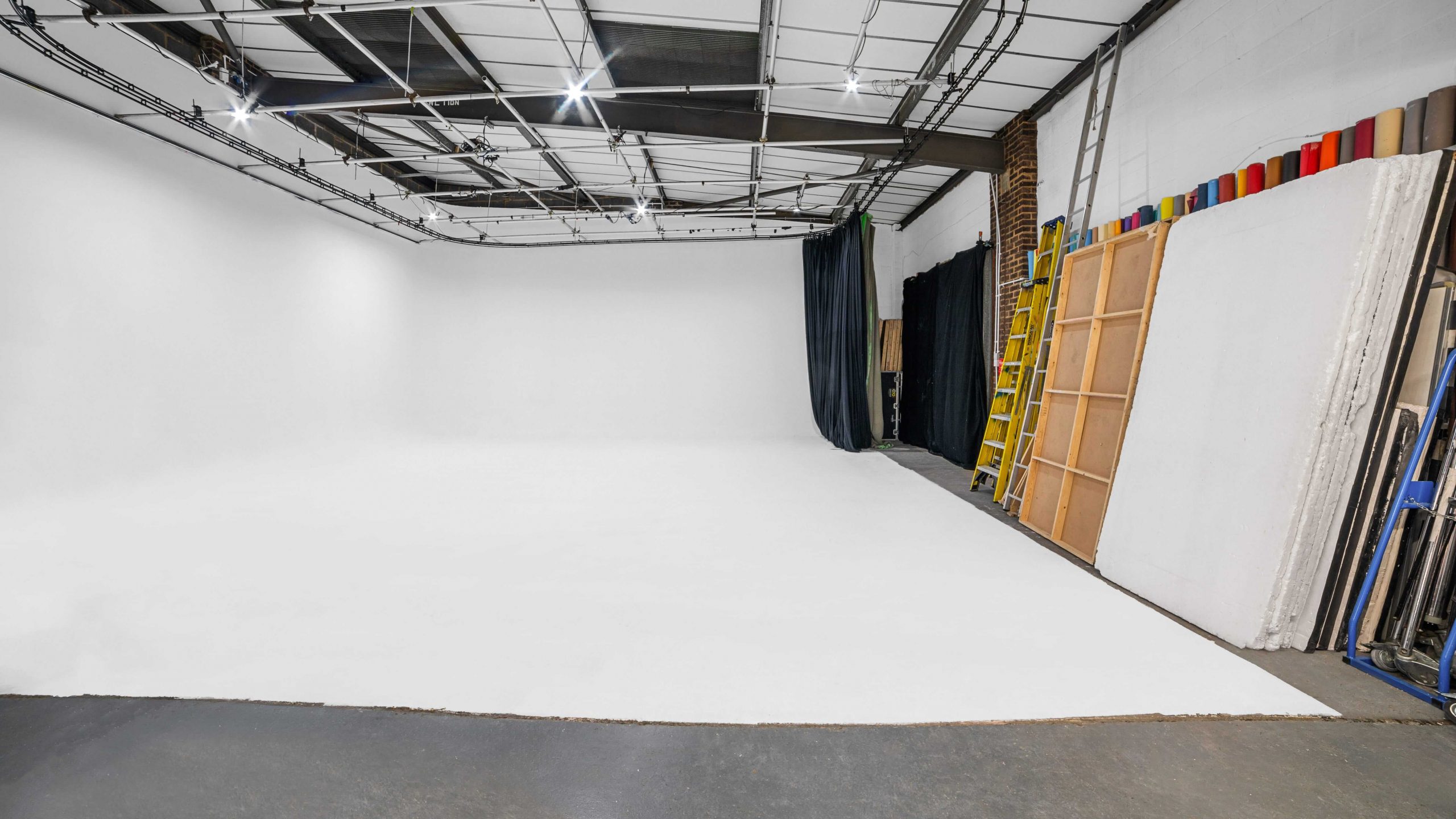
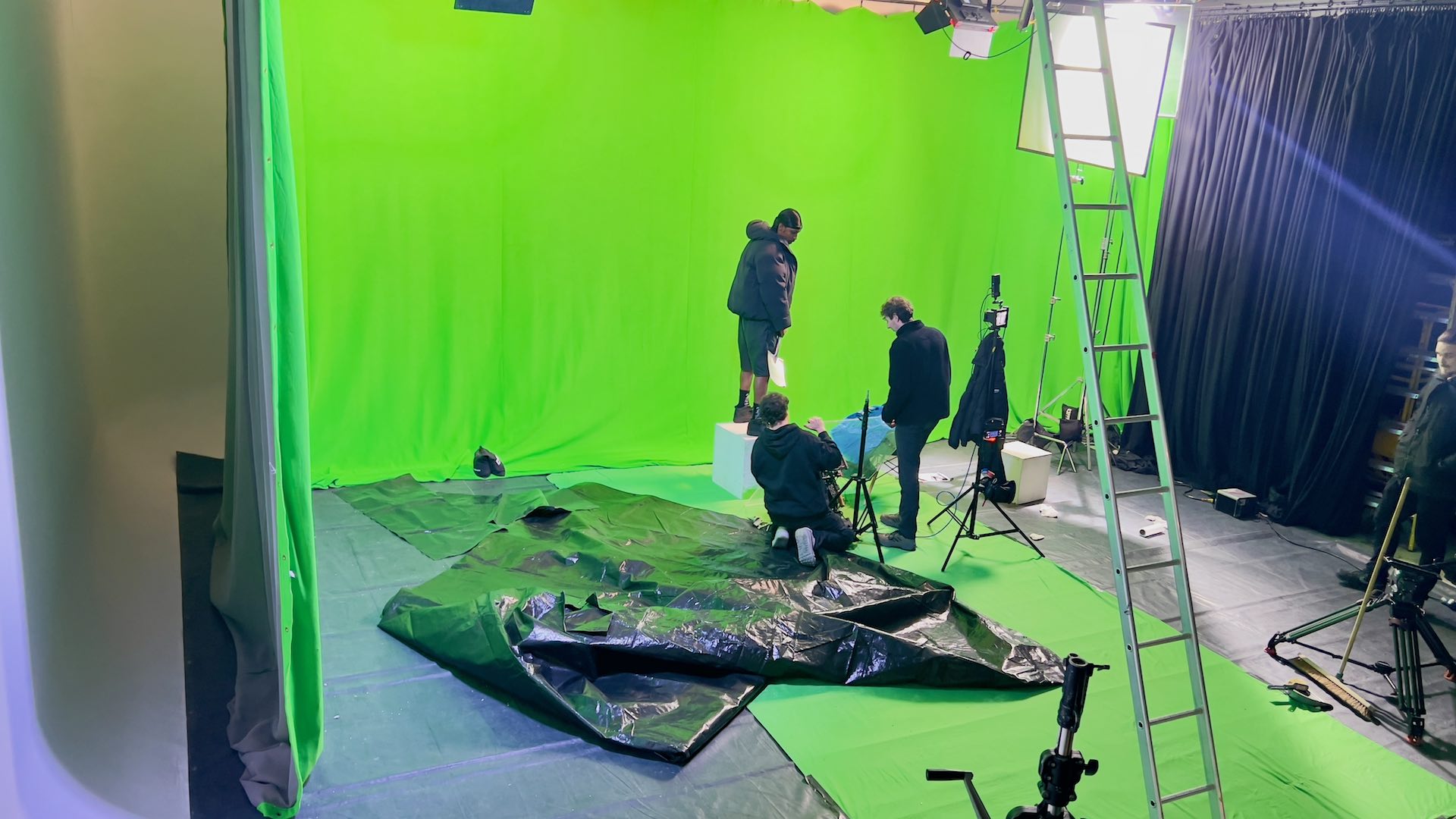
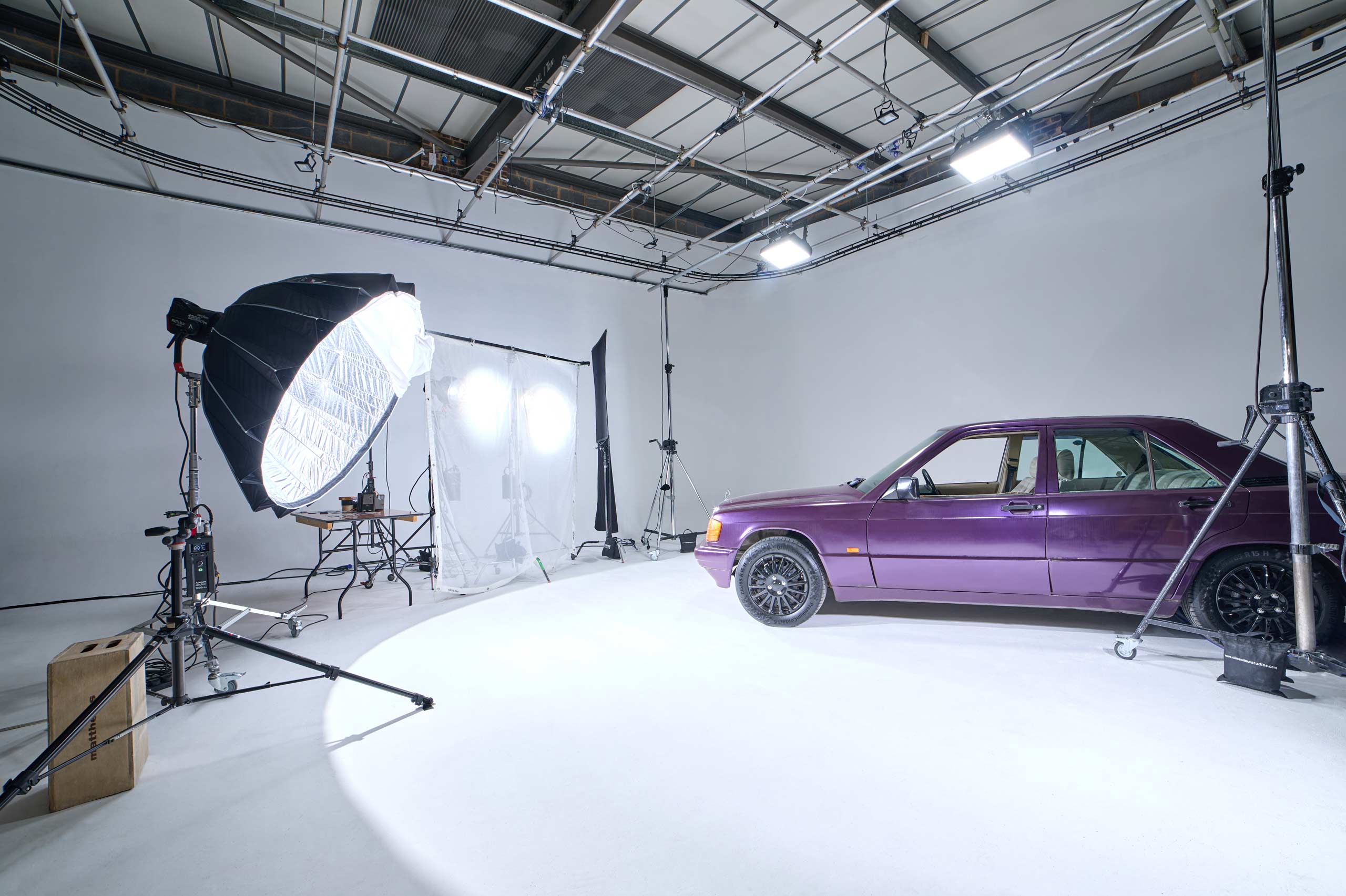
At Cineview Studios in Greenwich, productions can test an open gate master against dedicated landscape and portrait setups on the infinity cove, in blackout or on the pre-lit green screen. The 5.8m ceiling, lighting grid and in-house lighting and grip equipment help keep the set consistent while framing changes.
For a useful test, bring the camera and lenses intended for the job, record the same short scene three ways, then compare the crops at final delivery resolution. Check composition, detail, autofocus, rolling shutter, heat, file size and edit time. A half-hour camera test can prevent an expensive assumption on shoot day.
Get a quote for a studio test or production, or review what is available at a film studio before planning the setup.
The verdict
Open gate video is not a gimmick, and it is not a universal answer. It is a flexible acquisition format that earns its place when one take must support several aspect ratios, especially for interviews, demonstrations and controlled performance.
Use it when the extra sensor area solves a real delivery problem. Test the camera’s limitations, compose with both frames visible and budget for the larger files. When portrait needs its own visual language, give it a dedicated take.
That is the mature version of “shoot once, deliver everywhere”: not one frame forced into every platform, but a planned workflow that knows where flexibility ends.
Frequently asked questions
Is open gate better than 4K?
They describe different things. Open gate refers to how much of the sensor is recorded; 4K refers broadly to output resolution. Many open gate modes record at 5K, 6K or higher, which provides more room for cropping. A well-shot 4K 16:9 image can still be the better choice when you need higher frame rates, smaller files or only a widescreen delivery.
Can I crop 4K horizontal video to vertical?
Yes. A centred 9:16 crop from UHD 4K measures about 1215 × 2160 pixels, which is enough to deliver 1080 × 1920 after scaling. The challenge is usually composition, not merely pixel count. The narrow crop discards much of the horizontal frame.
Does open gate give me true 4K vertical video?
It depends on the recorded resolution and sensor shape. Some 6K open gate modes provide more than 2160 pixels of width in a 9:16 extraction, while others do not. Check the exact recorded pixel dimensions and allow room for stabilisation or reframing.
Should I film interviews in open gate?
It is a strong option when both landscape and portrait edits are required. Use simultaneous frame guides, keep the eyeline and hands inside both compositions, and test the background in each crop. For two or more speakers, dedicated versions may be more effective.
Is open gate the same as shooting RAW?
No. Open gate describes the recorded sensor area and aspect ratio. RAW describes how image data is encoded. A camera may offer open gate in a compressed codec, RAW, or both, with different limitations.