
Can Cars Enter Photo Studios? Access Explained
A car on set changes the brief immediately. The question is not simply, “can cars enter photo studios?” It is whether the route from the street to the shooting area is wide, high, safe and workable enough for the exact vehicle, crew and lighting plan you have in mind.
For a commercial, music video, dealer campaign or branded content shoot, vehicle access can save hours of rigging around an exterior location. But a studio that looks large in photographs is not automatically drive-in capable. A proper vehicle studio booking starts with measurements, loading arrangements and a clear plan for how the car will be positioned, lit and removed.
Can cars enter photo studios safely?
Some can, and some cannot. The deciding factor is the entire access route, not the floor area alone. A studio may have enough space to photograph a car once it is inside, but still be unsuitable if there is a narrow gate, low roller shutter, tight internal turn, steep ramp or restrictive loading bay between the road and the set.
Ask the studio for the clear width and height of every opening the vehicle must pass through. “Clear” matters because the usable measurement can be reduced by door tracks, handles, safety barriers or a partially open shutter. Compare those figures with the vehicle’s width including mirrors, height including roof rails or aerials, and length. Do not assume a standard saloon, SUV, van and low sports car will follow the same route successfully.
Turning space is equally important. A vehicle may fit through a doorway but require several manoeuvres to line up with it. That affects call times, crew safety and whether the driver can enter without blocking neighbouring units or the public highway. For hero vehicles, classics and prototypes, a simple, low-risk route is worth far more than a few extra square metres of studio floor.
What makes a studio suitable for a car shoot?
A drive-in studio needs more than a large door. The practical details determine whether the job runs efficiently or turns into a costly workaround.
Door clearance and route planning
Start at the street and work inward. Confirm the height of the entrance, width of gates, kerb access, ramp gradient and internal corners. If a lorry is delivering the car rather than it being driven to site, establish where it can unload and whether a transporter can safely stop without creating a traffic issue.
London access needs particular attention. Restricted roads, timed loading bays, controlled parking zones and busy neighbouring premises can all affect when a vehicle can arrive. A studio with organised loading and nearby parking gives the production team more control over crew arrivals, kit deliveries and vehicle moves.
Floor loading and surface protection
Cars are heavy, but their weight is concentrated through four tyres. A studio should confirm that its floor can accept the vehicle’s gross weight and point loads, particularly where raised platforms, service covers, older floors or temporary set builds are involved.
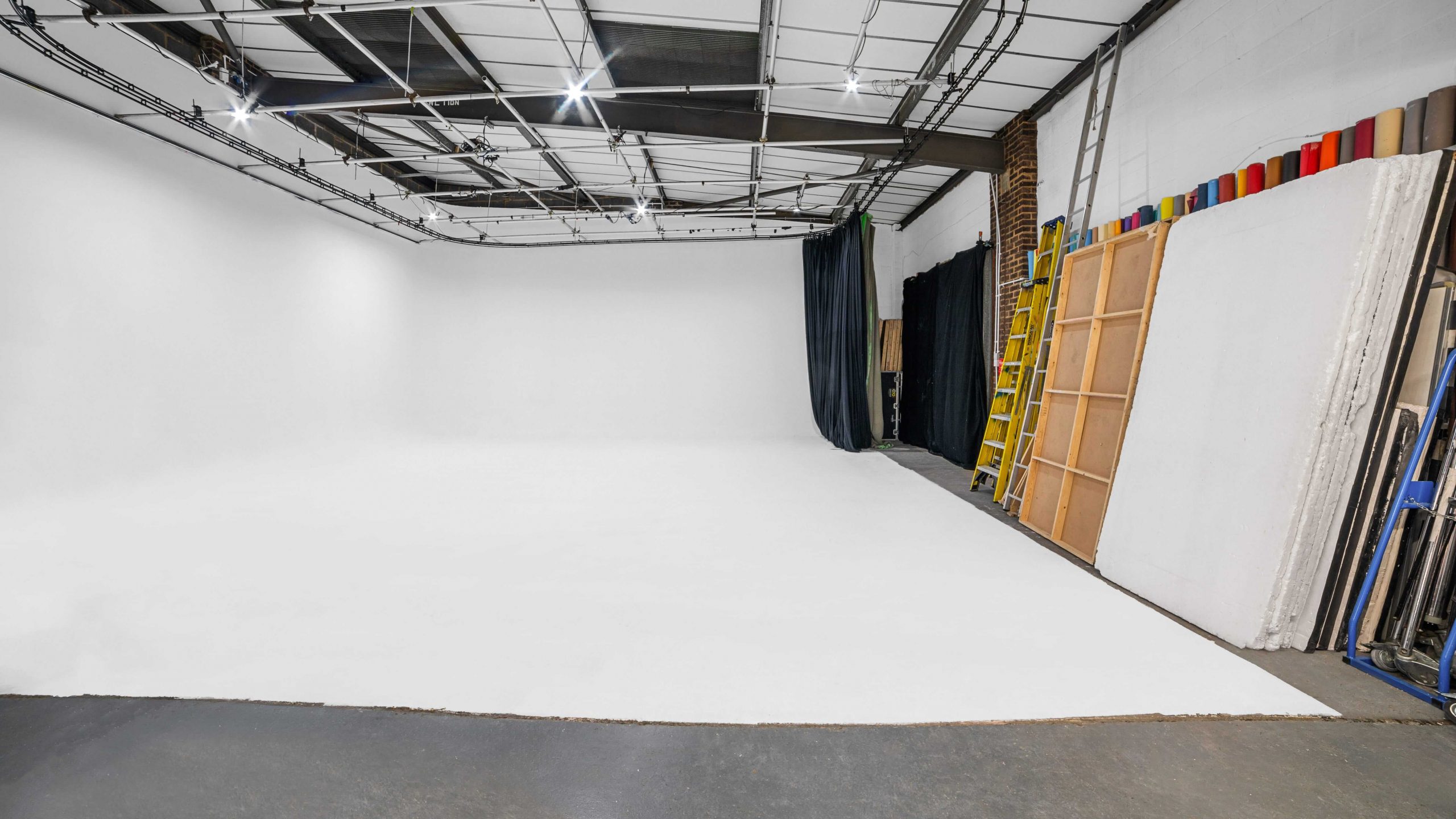
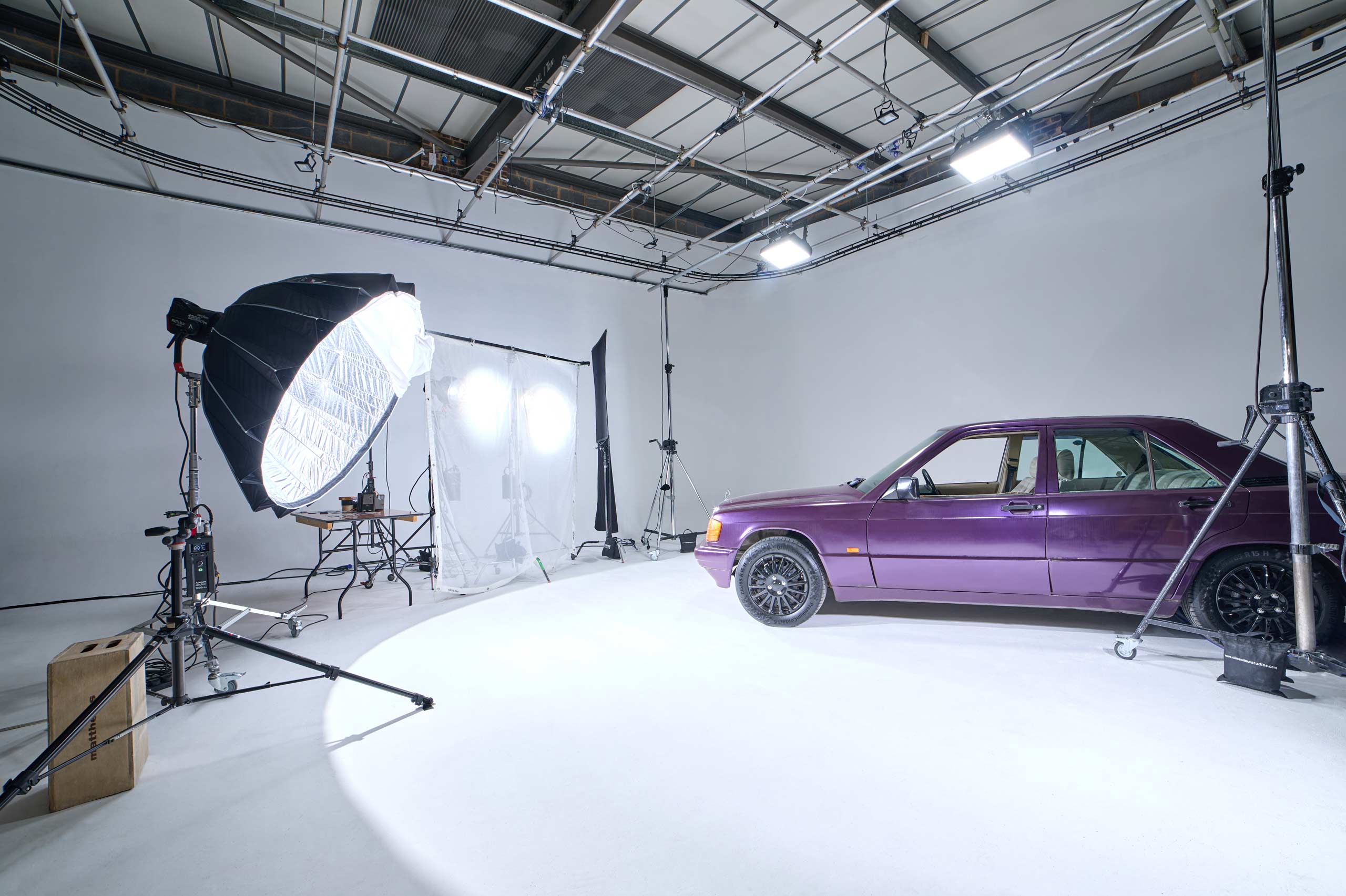
The surface also has to suit the shot. A polished concrete floor may photograph beautifully but needs protection from tyre marks, moisture and accidental scratches. A white cyclorama requires even more care: tyres can mark paint quickly, and one poorly managed move can create an avoidable repair charge and delay the next set-up. Discuss mats, protective sheeting, wheel cleaning and final positioning before the car crosses the threshold.
Ceiling height, rigging and camera angles
Once the vehicle is inside, the real production question becomes how much control you have around it. Low ceilings limit the height and angle of large soft sources. They also make it harder to create clean reflections across a bonnet, roofline or windscreen without seeing unwanted fixtures in the paintwork.
A studio with useful ceiling height, a lighting grid and enough room around the vehicle gives the gaffer and photographer more options. You can place overhead diffusion, build negative fill, push lights further back for a cleaner reflection, and still leave clear routes for camera movement. This is often the difference between a quick record shot and premium automotive imagery.
Ventilation, fuel and site rules
Vehicle shoots need a written conversation about operating rules. Many studios will require engines to be off indoors and may have restrictions on fuel level, electric vehicle charging, battery isolation or the use of smoke effects around a vehicle. These are sensible controls, not production obstacles.
If the car needs to be moved during the day, nominate a qualified driver and agree the route. Keep the set clear, use a banksman where visibility is limited, and avoid idling in enclosed spaces. For a shot that suggests motion, plan alternatives such as controlled wheel movement, lighting effects, rear projection or post-production rather than relying on an engine running inside the studio.
Why vehicle access improves the production day
Bringing the car into the studio gives the production team control that a roadside location rarely offers. You can protect the schedule from rain, traffic, changing daylight and curious passers-by. It also allows the agency, client and crew to work in a more focused, client-ready environment.
For e-commerce and dealership content, that control means consistent background, repeatable lighting and faster turnaround across multiple vehicles. For a music video or campaign film, it means the art department can build a set around the car rather than trying to force a location to behave like one. Reflections, glass and paint are demanding surfaces, so controlling every source of light becomes a commercial advantage.
There is a cost trade-off. A drive-in space may command a higher hire fee than a small portrait studio, and vehicle moves can require extra crew, floor protection and additional cleaning. Yet the total production cost can be lower when it removes location permits, weather cover, security requirements and lost hours caused by an awkward load-in.
Questions to ask before booking a vehicle studio
Send the studio manager the make, model and dimensions of the car before confirming the hire. Include whether it will arrive under its own power or on a transporter, whether it has low ground clearance, and whether it needs to be moved during the shoot.
You should also confirm the route dimensions, floor loading approval, access hours, vehicle insurance requirements, parking for crew and client cars, and any cleaning or reinstatement expectations. If you are shooting on a cyc, ask specifically how tyre marks and floor protection are handled. If you are building scenery around the vehicle, share the set plan early so the studio can assess fire exits, rigging positions and safe working space.
For commercials and larger film crews, a short technical recce is usually the most efficient next step. Bring the producer, director of photography, gaffer and art department lead where possible. They can assess lensing, camera track, lighting positions, reflections and where the client village will sit before the schedule is locked.
Plan the car’s position before it arrives
The fastest vehicle shoots are not the ones with the biggest studio. They are the ones where the car enters once, stops in the correct position and stays there while the crew works through the shot list.
Mark the intended wheel position, camera axis and lighting zones in advance. Decide which side of the vehicle needs the cleanest background, where doors may need to open, and whether the bonnet or boot must be accessible. A three-quarter front image, interior shot and profile can each demand different space around the car, so plan for the most restrictive frame rather than the easiest one.
At Cineview Studios, the right conversation starts before the booking is signed off: share the vehicle details, access needs and creative treatment early. A studio that can confirm the practicalities upfront lets your team spend the shoot day on lighting, performance and finish, not on trying to make an unsuitable entrance work.
A car in a studio is a powerful production asset when access is treated as part of the set design. Confirm the route, protect the floor, allow room for the lighting plan, and the vehicle can become the centrepiece of a controlled, high-value shoot.