
Best E-commerce Shoot Studio Setup Guide
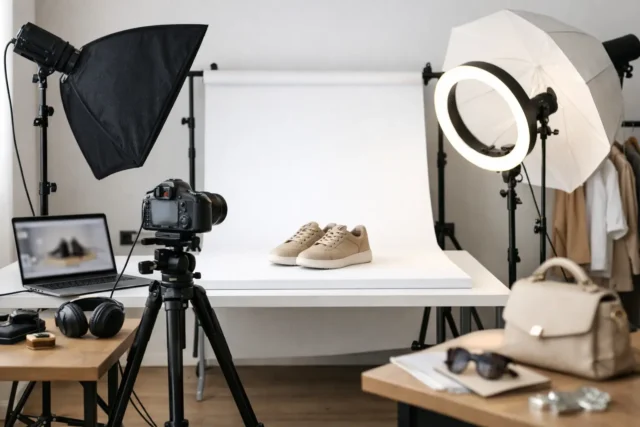
If your product shoot starts with moving boxes through a narrow corridor, balancing lights around low ceilings and taping paper rolls to a wall that is already marked, the problem is not your team. It is the space. The best e-commerce shoot studio setup is not simply a camera, a couple of lights and a white background. It is a production environment built to keep output consistent, turnaround fast and avoidable delays off the call sheet.
E-commerce photography is often treated as straightforward because the subject is small, the framing is controlled and the creative brief can look repetitive. In practice, it is one of the most unforgiving types of commercial shooting. You need accuracy in colour, repeatability across SKUs, clean cutout-friendly files and enough flexibility to handle everything from cosmetics and jewellery to fashion on model, flat lays and packshots. A weak setup slows every stage of that process.
What the best e-commerce shoot studio setup actually needs
The right setup starts with the room, not the kit list. That is where many brands and smaller production teams go wrong. They spend heavily on camera bodies and modifiers, then try to run a commercial workflow from a space that was never designed for production.
For e-commerce, the studio needs to do three things well. It needs to support consistent lighting, efficient movement and quick resets. If one of those breaks down, the shoot becomes more expensive than it needs to be.
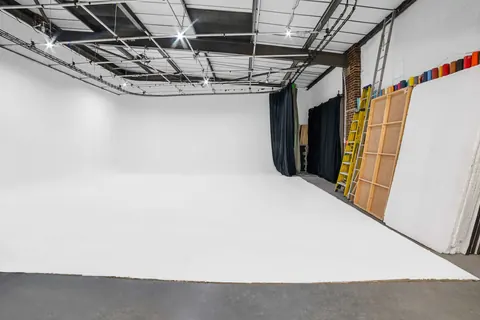
A proper studio footprint matters because product work expands quickly. A simple tabletop set can become a multi-SKU styling station, a tethering desk, a prep area, a holding zone for stock and packaging, and a review position for clients. Add talent, rails, steamers or video deliverables and the room tightens fast. That is why ceiling height, clear floor space and sensible access are not luxury features. They are workflow features.
Space affects consistency more than most teams expect
Low ceilings limit how precisely you can place overhead lighting. Small rooms force lights too close to reflective surfaces. Tight access slows unloading and increases the chance of damage before the first frame is captured. If you are photographing glass, beauty products, metallic packaging or anything with a glossy finish, these limitations show up immediately in reflections and uneven spill.
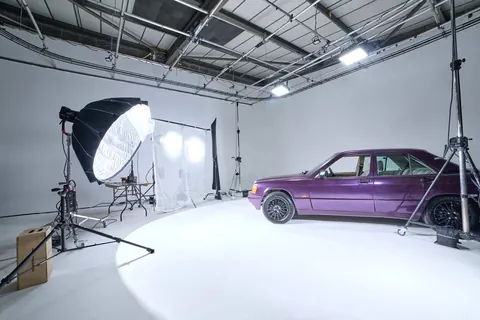
That is also why infinity coves and blackout capability matter, even for e-commerce. A cove gives you a clean, scalable background for larger products, model shoots and campaign-style extensions. Blackout control is useful when you need to remove daylight fluctuations and maintain one lighting recipe across a full-day or multi-day production.
Lighting for an e-commerce studio setup
Lighting is where consistency is won or lost. The best e-commerce shoot studio setup usually favours controlled, repeatable lighting over improvisation. That does not mean every shoot needs the same arrangement. It means the studio should make repeatability easy.
For standard packshots, large soft sources are often the safest choice because they produce even illumination and predictable fall-off. For glossy products, harder accent lights may be needed to define shape while larger diffusion controls reflections. Fashion e-commerce often needs a different balance again, with enough punch to retain texture in fabric and enough fill to keep skin tones clean.
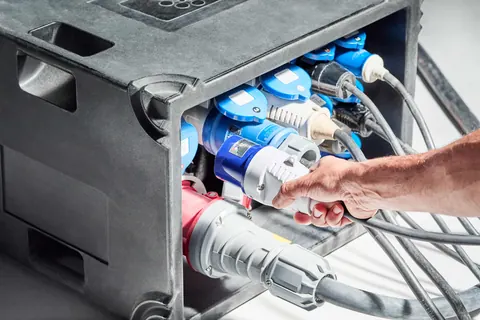
The trade-off is simple. The more varied the product range, the more flexibility you need from the studio grid, power distribution and floor space. If the lights cannot be rigged efficiently, every product category becomes a fresh setup problem. A proper lighting grid changes that. It gets units off the floor, reduces stand clutter and gives the crew more room to work safely and quickly.
Why overhead rigging and pre-lighting save money
Pre-lighting sounds like a convenience until you price the extra crew hours caused by building every setup from scratch on the day. For catalogue days with high SKU counts, pre-rigging can make the difference between finishing on schedule and carrying product into overtime.
Overhead rigging is equally practical. It keeps shooting lanes clear, makes top-lighting easier for flat lays and tabletop work, and allows more exact repetition when a brand needs the same look across multiple sessions. That is especially useful for growing e-commerce teams that shoot new lines in batches rather than all at once.
Backgrounds, surfaces and set flexibility
A white seamless is still a staple for e-commerce, but it is not the whole story. Many brands now need mixed outputs from the same production day: pure white packshots for marketplaces, tonal lifestyle imagery for web banners, social-first cutdowns and short-form product video. The best setup can move between those requirements without a complete studio reset.
That is where a larger production space earns its keep. You can run a hero set on one side, a clean packshot station on another and a styling or prep area nearby. The gain is not just speed. It is continuity. Products are handled less, the team stays in rhythm and clients can approve assets in real time without standing in the middle of the shooting area.
Surface choice matters too. Small products often need interchangeable tops, risers and diffusion materials close at hand. If the studio has room for proper set build or modular styling zones, the crew can respond faster to brief changes without derailing the schedule.
Access, loading and on-set practicality
This is the part people overlook until shoot day. You can have a strong creative setup and still lose time because the practical side was poorly planned.
Ground-floor access makes a major difference for e-commerce productions, particularly when you are bringing in props, rails, product stock, display plinths or larger set elements. Shutter access is even better because it shortens load-in time and reduces manual handling. If the team is spending the first hour navigating lifts and narrow doorways, that cost sits somewhere, whether you see it in overtime, fatigue or reduced output.
Parking matters for the same reason. In London, reliable free parking near the studio removes one more variable from the budget and one more stress point from call time. The same goes for 24/7 access. E-commerce teams often need early starts, late wraps or quiet turnaround time for prep and sorting. A rigid hire window is not always compatible with commercial production.
The best e-commerce shoot studio setup for product scale
Not every product needs the same studio. Jewellery, cosmetics and tabletop electronics can work well in a tightly controlled tabletop bay. Furniture, mannequins, fashion and campaign crossover content need more scale. The best e-commerce shoot studio setup is the one that matches the product range and the output plan.
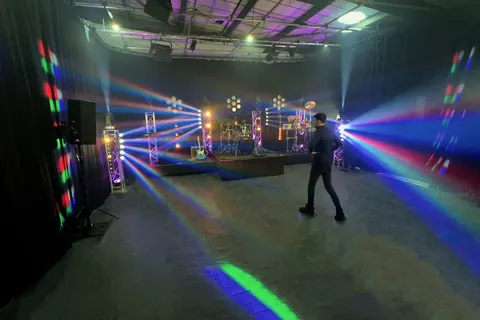
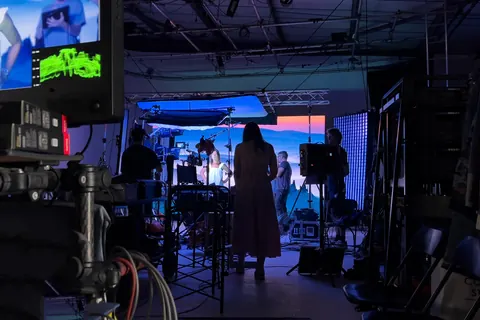
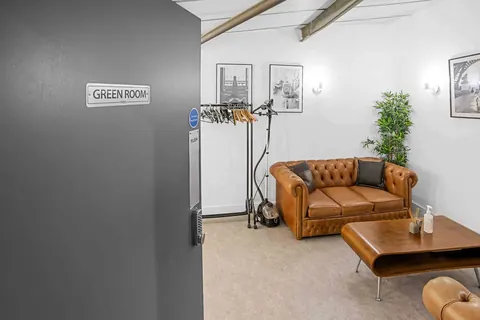
If you are shooting small reflective items, your priority is control – stable lighting, precise styling space and minimal ambient contamination. If you are shooting apparel on model, you need more height, changing space, room for rails and a clean route between prep and set. If you are mixing stills and motion, sound control and blackout options become more useful.
The mistake is choosing a studio solely on day rate without costing the workflow around it. A cheaper room that lacks grid access, equipment, parking or proper loading can become the more expensive option very quickly. That is especially true when clients are present and waiting for changes.
What to check before booking a studio
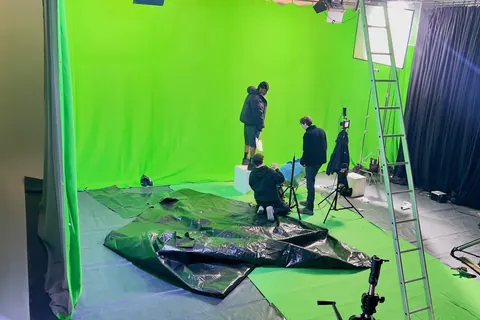
A good e-commerce studio should answer practical questions clearly. Can the space handle both packshots and larger branded setups? Is there enough in-house lighting and grip to avoid unnecessary third-party hires? Are ceilings high enough for overhead shaping? Can the crew pre-rig? Is access simple for product stock and set pieces? Can the space support blackout, green screen studio or video if the brief expands?
Those questions matter because e-commerce rarely stays in one lane. A straightforward product day can turn into a content day very quickly once a brand asks for social assets, motion loops or additional campaign frames. A studio with proper production infrastructure gives you room to say yes without rebuilding the whole plan.
For teams hiring in London, this is where operationally focused spaces stand apart from smaller, more compromised rooms. A studio such as Cineview Studios makes sense because the production benefits are practical rather than decorative – high ceilings, lighting grid, drive-in friendly access, in-house kit, pre-rig support, parking and enough scale to handle both clean product work and larger set-based content without the usual London inefficiencies.
The smartest setup is the one that removes friction before the first shot. When the space supports the brief properly, your crew works faster, your imagery stays consistent and your budget goes where it should – into the work on set, not into solving problems the studio created.