
Best Studio Features for Commercials That Matter
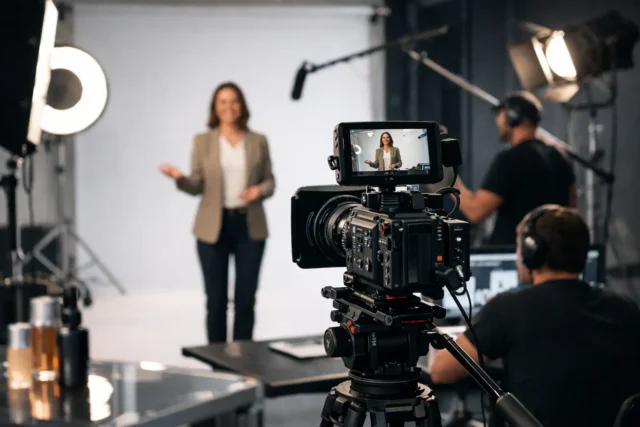
A commercial shoot can lose an hour before the first frame is captured. A delivery van cannot get close enough to unload, the ceiling is too low for the intended lighting, or the client wants a clean white set when the studio’s cove is already marked and unavailable. The best studio features for commercials are not decorative extras. They are the practical details that protect the schedule, give the crew more creative control and stop production value being lost to avoidable compromises.
For agencies, brands and production companies, studio choice should begin with the treatment, shot list and load-in plan, not just a gallery of attractive images. A space may look impressive online yet be difficult to rig, too restrictive for camera movement or unable to support a proper set build. The right facility makes ambitious work easier to deliver.
The best studio features for commercials start with usable scale
Square footage alone is a poor measure of commercial capability. What matters is usable floor space, ceiling height, clear shooting distance and the ability to place crew, clients, monitors and equipment without pushing the set into a corner.
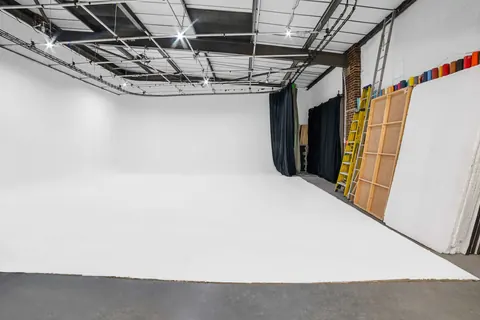
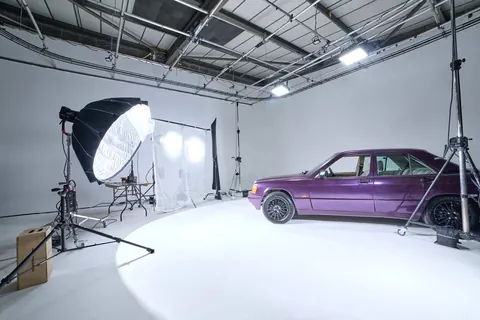
A high ceiling is one of the most valuable features in a commercial studio. It gives the lighting team room to create shape and separation, keep fixtures out of frame and soften light without sacrificing control. This matters for automotive-style beauty lighting, fashion, food, furniture and any campaign where polished highlights are part of the brief. Low ceilings force compromises quickly, particularly when a large soft source or overhead rig is needed.
Depth matters just as much. A product film may only need a modest set footprint, but the camera, dolly track, lighting, video village and crew all need space behind it. For wider lenses, vehicle work, group casts or motion-heavy scenes, a studio needs sufficient throw to avoid distorted framing and unwanted compromises in lens choice.
A large space is not automatically the best choice for every job. A simple packshot day can be more efficient in a tighter, controlled room. But if the production may grow from tabletop work into a full campaign setup, booking a studio with headroom is usually cheaper than moving locations or rebuilding the plan mid-shoot.
A lighting grid saves time where it counts
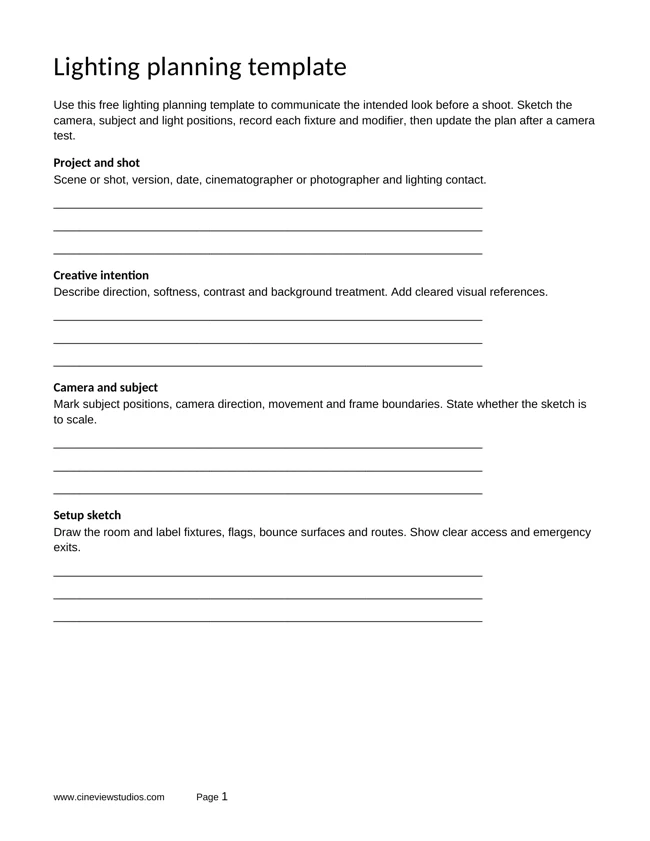
Commercial schedules are often tight because every department is working against the same clock. A permanent lighting grid allows fixtures, flags and diffusion to be flown safely and positioned accurately, freeing up floor space for camera and art direction. It also reduces the constant need to move stands around a working set.
For cinematographers and photographers, the advantage is control. Overhead rigging makes it easier to create broad, clean top light; practical pools of light; controlled reflections; or a natural-looking daylight effect. For agencies and clients, it means a less cluttered set and a more professional viewing environment.
Ask how the grid is accessed, what can be rigged from it and whether pre-rigging is available before the shoot day. A grid is only genuinely useful if the studio team can support a safe, organised setup. Pre-lighting the night before can be the difference between spending a morning building the look and arriving ready to shoot.
Access and parking are production features, not admin details
Poor access is one of London production’s most expensive frustrations. If equipment has to travel through narrow corridors, up stairs or across a busy pavement, every case takes longer to move and every department starts under pressure. That is before considering heavier props, scenery, large-format backgrounds or a vehicle.
Ground-floor shutter access changes the rhythm of a shoot. It enables direct load-in for lighting, grip, product stock and set materials, while drive-in capability opens up options for cars, motorcycles and oversized builds. For a commercial featuring a vehicle, this is not a nice-to-have. It is the difference between creating the shot in studio and accepting a far more complicated location plan.
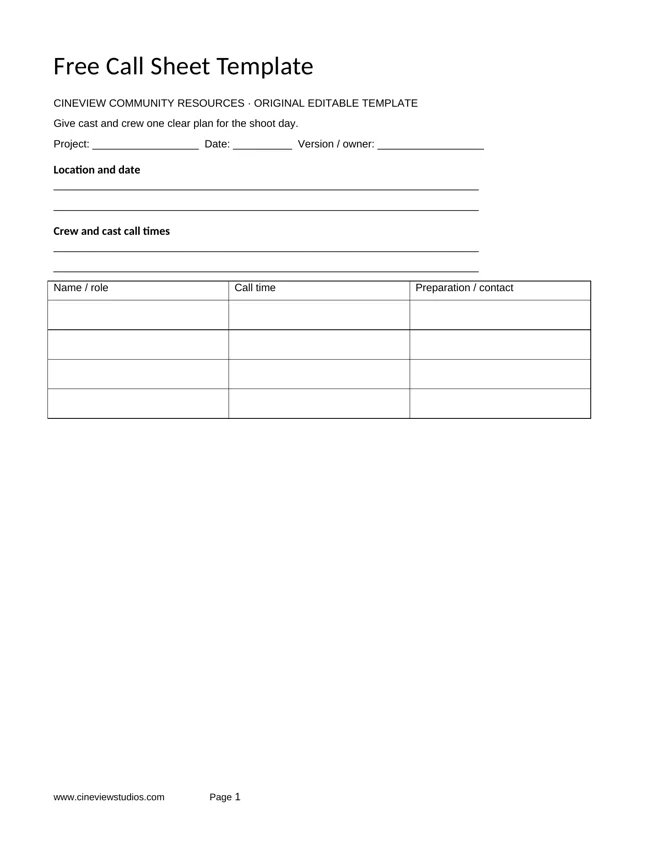
Free on-site parking has a similar operational value. Crews can unload efficiently, producers can manage arrivals and suppliers are not burning budget on repeated parking charges or long carries from off-site bays. Check vehicle dimensions, access hours and whether there is enough room for multiple department deliveries. The answer affects the call sheet as much as the studio itself.
Blackout, infinity coves and green screen serve different jobs
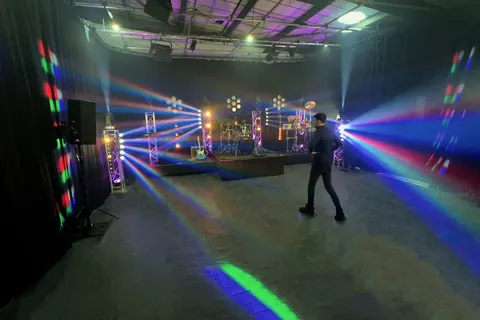
The strongest commercial studios offer controlled environments rather than one fixed look. A blackout-capable room lets the crew take command of every source of light, whether the brief calls for glossy product cinematography, a dramatic portrait, an LED-lit performance or a day-to-night setup. Daylight can be useful, but uncontrolled daylight is a risk when continuity matters.
An infinity cove remains a highly efficient tool for clean campaign work. It gives products, talent and fashion a polished horizon-free background, with enough room for light fall-off and camera movement. Before booking, confirm the dimensions, condition and colour of the cove. A cove that is too small or heavily marked may require additional preparation, repainting or a revised shot plan.
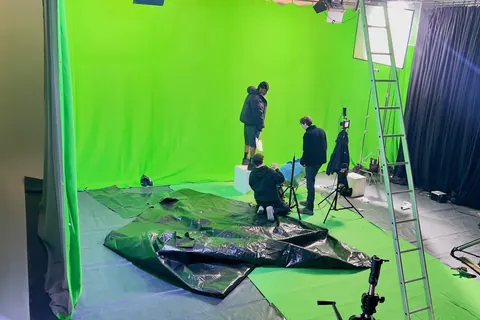
Green screen is valuable when the creative requires composite work, virtual environments or flexible post-production options. The quality of the final key depends on more than green paint. You need enough distance between subject and background to limit spill, sufficient height for the frame, and space for controlled, even lighting. A cramped green-screen room can cost more in post than a better-equipped studio costs to hire.
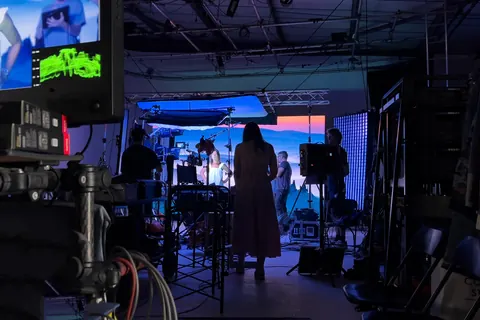
Virtual production is another consideration for campaigns involving changing environments, real-time backgrounds or interactive lighting. It is not necessary for every commercial, and it should not be chosen simply because it is fashionable. For the right brief, however, it can reduce travel, improve client visibility and give performers a more convincing environment than a blank screen.
Set-build suitability protects creative ambition
Many commercial concepts begin with a deceptively simple line in a treatment: a kitchen, a bedroom, a retail display, a stylised living room. Turning that line into a convincing set requires space, access, power, a workable build period and somewhere for scenic teams to operate.
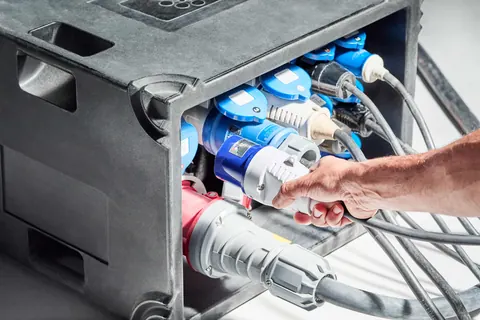
A studio suitable for set builds should have a durable floor, straightforward delivery access and enough height to accommodate walls, ceilings, practical lighting and the camera positions needed to sell the illusion. It should also allow the production to work sensibly around the build. If every scenic flat blocks the only route to the set, efficiency disappears.
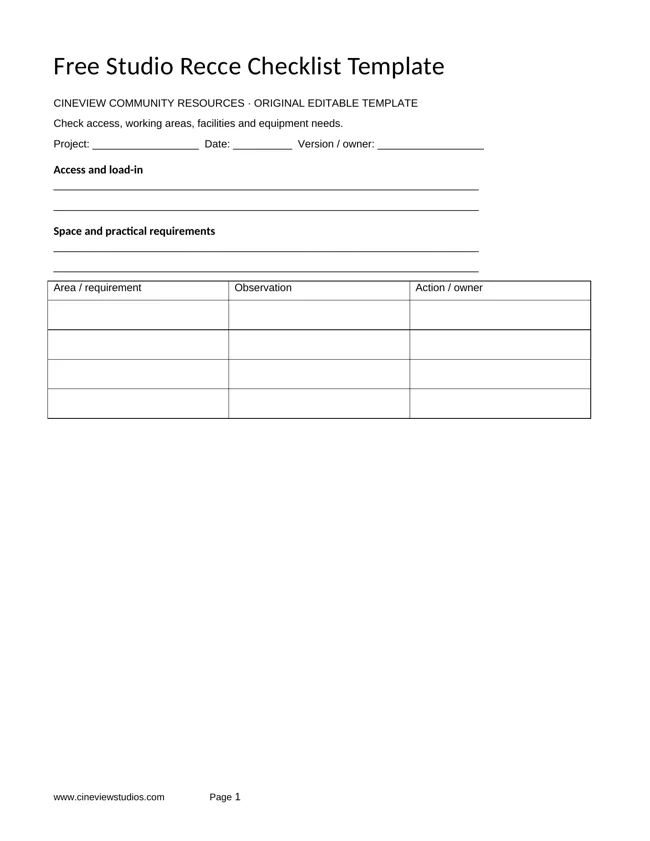
Discuss the build and strike schedule early. Some productions need a full prep day, while others require overnight construction and a rapid handover to the lighting department. Confirm what can be fixed, painted or suspended, how waste is handled and whether the studio can accommodate a return visit for a recce. The more complex the art direction, the less suitable a generic daylight studio becomes.
Equipment and support should reduce hire complexity
A studio with a meaningful in-house lighting and grip inventory can reduce transport costs, booking admin and the risk of missing essential kit. The point is not to hire equipment for the sake of it. It is to have the basics available when the lighting plan changes, a stand is needed unexpectedly or the production needs another flag, polyboard or C-stand.
For smaller teams, accessible equipment and knowledgeable on-site support can make professional results far more achievable. For established crews, it provides useful contingency without replacing their preferred kit package. Ask for the actual inventory, condition of equipment and any hire charges. Vague claims of being fully equipped are less useful than a clear list and a team that understands how crews work.
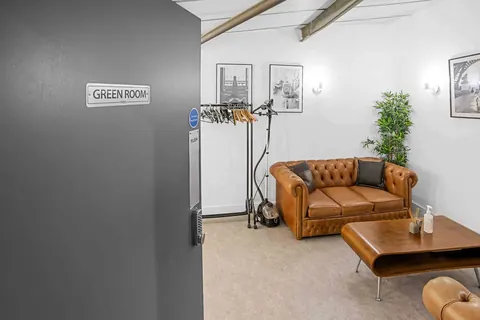
Client-ready facilities matter too. Reliable Wi-Fi, clean holding areas, production office space, changing facilities and a comfortable viewing area help keep approvals moving. A commercial set is a working environment, but it is also where brand teams make decisions. If clients are uncomfortable or unable to review takes properly, feedback becomes slower and less precise.
Availability and cost control shape the final result
Affordable studio hire is not simply about the day rate. The real figure includes overtime exposure, parking, equipment, access restrictions, cleaning, repainting, security and the time lost to an inefficient setup. A cheaper studio that causes a half-day delay is rarely cheap in practice.
Flexible access is particularly useful for commercial work. Twenty-four-hour opening can support overnight builds, early pre-lights, late pack-downs and schedules designed around talent availability. It is not always needed, but when a campaign has a demanding call sheet, flexibility prevents the studio’s operating hours from becoming the production’s limiting factor.
Cineview Studios is designed around these working realities: a large-scale, ground-floor production space with high ceilings, lighting-grid capability, blackout control, cove, green screen, drive-in access and practical support for builds and pre-rigs. The value is not in ticking feature boxes. It is in giving a crew the room and operational freedom to execute the brief properly.
Before confirming any studio, walk through the day as the crew will experience it. Where does the lorry unload? Where does the set go? Can the key light be rigged at the required height? Where will the client review footage? If the answers are clear before the booking is made, the shoot has a far better chance of feeling controlled when it matters most.