Virtual Production Studio London: What Matters
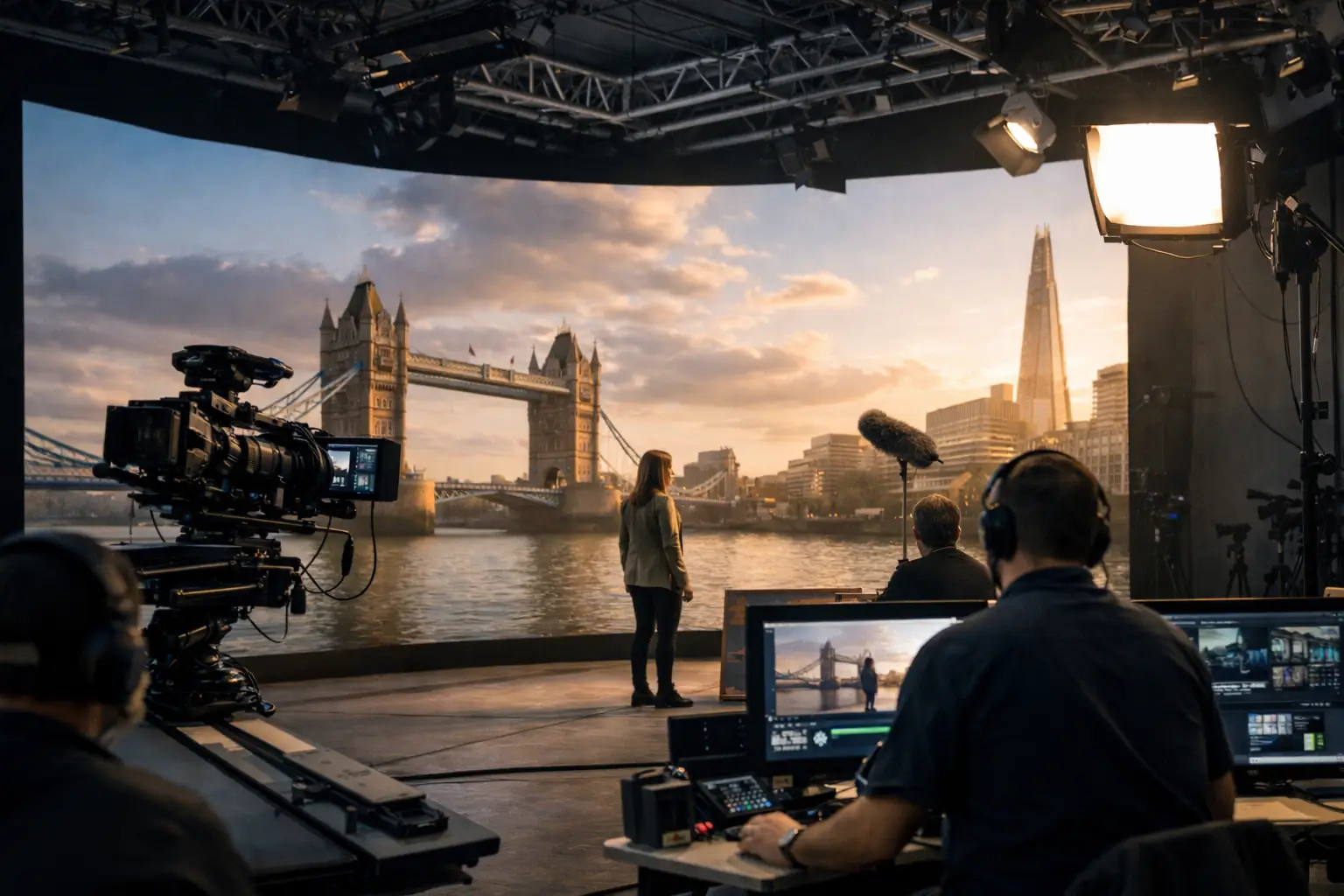
If you are booking a virtual production studio London production teams will actually enjoy using, the headline spec is never the whole story. LED volume capability matters, of course, but so do load-in, ceiling height, lighting control, power, prep space, rigging options and whether the studio can support a real shoot day without friction. That is where many London spaces fall short. They promise technical possibility, then force crews to work around poor access, limited kit and layouts that slow everything down.
Virtual production has moved beyond novelty. Agencies want faster turnaround on branded content. Filmmakers need controlled environments without the cost and uncertainty of constant location moves. Brand teams want better production value while keeping spend under control. The reason more shoots are considering virtual production is simple: when the space is designed properly, it gives you more control over time, lighting, backgrounds and continuity.
Why a virtual production studio in London is a practical production choice
For many shoots, virtual production is not about replacing every physical set or location. It is about reducing waste in the schedule. If you can create multiple environments in one controlled space, your crew spends less time moving kit across London, waiting for daylight, battling traffic noise or losing half the day to access restrictions.
That matters even more on commercial jobs where agency, client and crew are all on the clock. A well-equipped studio lets teams move from one setup to the next with less compromise. You can maintain consistent light, protect the schedule from weather and build a more predictable day for everyone on set.
There is also a quality argument. When virtual production is supported by proper studio infrastructure, the result feels more polished because every part of the workflow is considered together. It is not just about the screen or background. It is about camera movement, lighting integration, sound conditions, staging area, equipment support and how quickly the team can adapt when the brief changes.
What separates a good virtual production studio London crews trust
The first thing to look at is not the marketing language. It is the practicality of the room. A virtual production setup needs enough physical space around it to work properly. Crews need room for camera positions, lighting adjustments, monitors, direction, styling, make-up, client attendance and safe movement. If the studio is too tight, every change becomes slower and more expensive.
Ceiling height is one of the biggest factors. Lower ceilings limit rigging, restrict lighting angles and make it harder to shape the image cleanly. A proper grid changes the pace of the day because pre-rigging becomes possible and your team is not constantly rebuilding the setup from scratch.
Access is just as important. If the studio makes load-in difficult, virtual production quickly stops feeling efficient. Ground-floor access, shutter entry and the ability to bring in larger set pieces or equipment without a long internal carry make a genuine difference. The same goes for drive-in capability on productions that need vehicles, oversized props or heavy technical packages.
Then there is blackout control. Virtual production relies on consistency. Any uncontrolled spill or ambient light problem can undermine the result and create more work in post. A studio needs proper blackout conditions, not a partial fix.
In-house kit also affects value. Some spaces look affordable until you add the cost of hiring basic lighting and grip elsewhere. A studio that already has serious production equipment on site can save both money and time, particularly for smaller teams trying to keep the day lean without compromising output.
The trade-off between specialist tech and overall workflow
Some studios focus heavily on the virtual production headline and underdeliver on everything around it. That can work for a very narrow use case, but most productions need more than one technical feature. They need a room that can handle prep, set build, lighting changes, stills capture, motion work and client oversight in the same booking.
This is where the best studio decisions are usually made. Not by asking, “Does this space offer virtual production?” but by asking, “Can this space support the whole production efficiently?”
For example, if you are shooting branded content with both video and stills deliverables, flexibility matters more than a single talking point. If you are producing a music video, you may need a hybrid approach with virtual elements, blackout control and practical set dressing. If you are shooting e-commerce or campaign assets, the ability to shift quickly between clean studio setups and more complex production environments can save a full extra day.
A strong London studio should support that range without forcing you into multiple venues or awkward compromises.
Who benefits most from a virtual production studio in London
Commercial production teams are obvious users, but they are not the only ones. Agencies benefit because client-facing shoots become easier to control. Timings are more reliable, setups look more polished and fewer variables threaten approval rounds. Brand teams benefit because the spend is easier to justify when one studio day can replace several location moves.
Independent filmmakers and smaller production companies also gain a lot when the space is priced sensibly. Virtual production only makes commercial sense if the studio itself does not absorb the budget. That is why affordability matters, but not in the cheap-and-cheerful sense. It matters because a production-friendly space should help you spend money where it shows on screen, not on avoidable inefficiencies.
Photographers and hybrid content teams can also benefit, especially where campaign production includes motion and stills in the same schedule. A studio with an infinity cove, blackout options, green screen capability and virtual production potential gives creatives more ways to build a full asset package from one base.
The hidden costs of choosing the wrong studio
On paper, two studios can look similar. In practice, one might cost far more by the end of the day.
Poor access adds overtime and crew fatigue. Limited parking complicates logistics and slows arrivals. Weak in-house support means more third-party hire, more coordination and more failure points. Restricted hours can turn a straightforward pre-light into a scheduling headache. Cramped layouts reduce the number of people who can work comfortably, which affects both pace and morale.
These details are not secondary. They are often the difference between a studio that helps the production and one that simply houses it.
This is why experienced crews usually assess a space in terms of workflow first. Is there room to build? Can the team prep properly? Is the environment client-ready? Can departments work without constantly blocking each other? Is the technical setup backed by the practical basics that keep a day moving?
If the answer is no, the cheapest day rate rarely stays cheap.
What to ask before you book a virtual production studio London space
The right questions are usually operational. Ask how the studio handles pre-rigging and pre-lighting. Ask what equipment is available in-house and what is charged separately. Ask about parking, load-in, power, crew holding areas and whether the space is suitable for set builds or larger production layouts.
You should also ask how adaptable the studio is. Some jobs need a fully controlled technical environment. Others need a broader production base where virtual production sits alongside green screen, blackout filming, product work or constructed sets. The more varied your deliverables, the more valuable that flexibility becomes.
If you are balancing quality with budget, ask where the studio actually saves you money. A serious facility should be able to answer clearly. Savings might come through included equipment, reduced transport needs, fewer external hire costs, faster setup times or avoiding the stop-start inefficiencies that plague many London shoots.
For teams looking at a smarter production base rather than a one-feature space, Cineview Studios is part of that conversation because it combines virtual production capability with the practical advantages crews rely on – high ceilings, lighting grid, ground-floor access, free parking, 24/7 opening and space that works for both straightforward shoots and more complex builds.
Choosing the studio that fits the job
There is no single perfect setup for every production. A dialogue-heavy commercial, a fashion campaign, a product shoot and a music video all place different demands on the room. What matters is whether the studio gives you enough control, enough support and enough flexibility to execute the brief without fighting the space.
That is the real benchmark for a virtual production studio in London. Not whether it sounds advanced, but whether it performs under production pressure.
When a studio is designed around how crews actually work, virtual production stops being a novelty line in the spec sheet. It becomes a practical advantage – one that protects the schedule, supports the image and gives your team more room to deliver the job properly.