Studio Hire With Free Parking in London
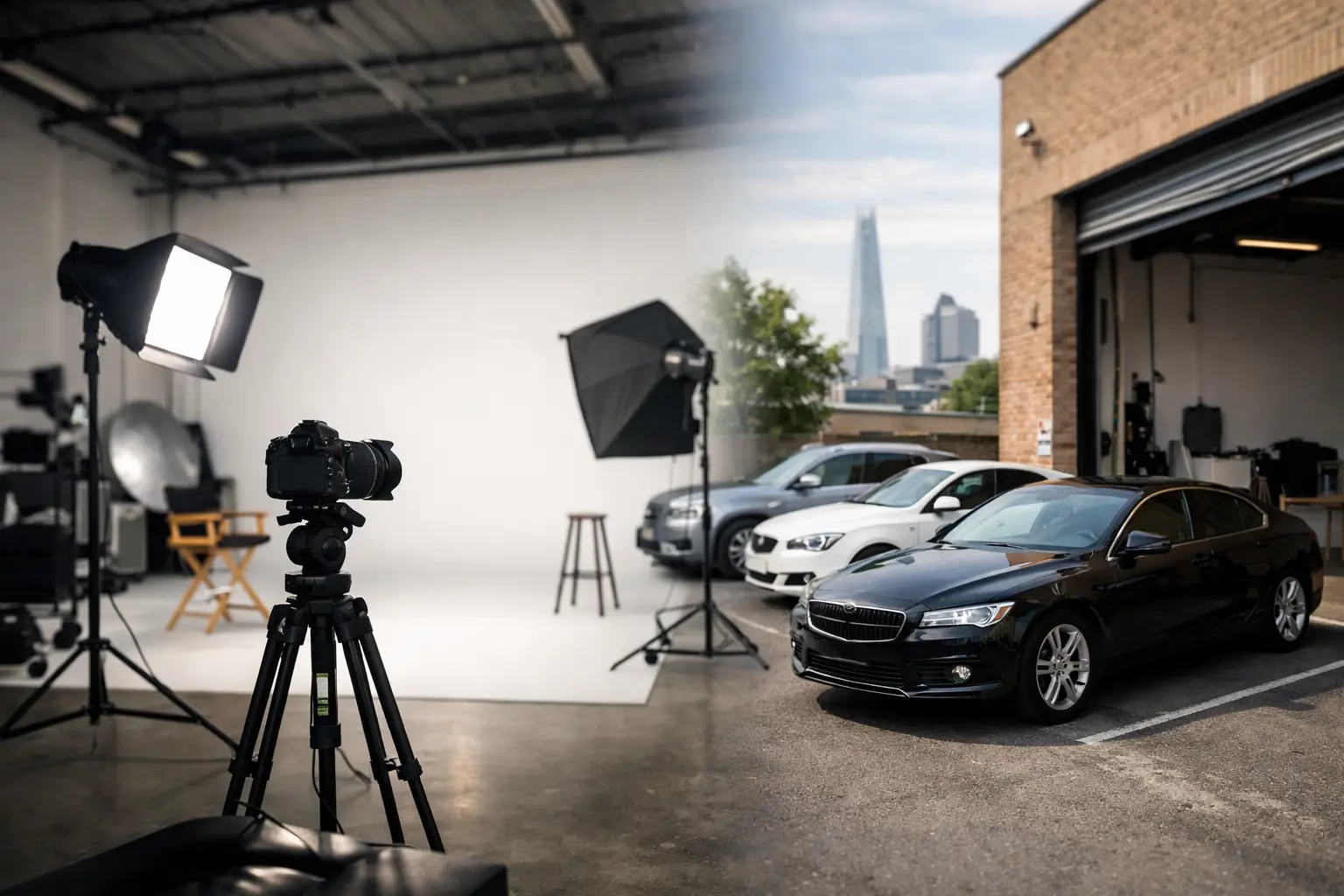
If you have ever watched a crew burn the first hour of a shoot hunting for spaces, unloading in shifts, or feeding a meter while talent waits inside, you already know why studio hire with free parking matters. In London, parking is not a minor extra. It affects call times, access, budget control and how calmly the day runs from the first van arrival to the final pack-down.
For photographers, filmmakers, agencies and brand teams, this is one of those details that looks small on a rate card and feels massive on set. A studio can have a good-looking website and still create avoidable friction if access is poor, loading is awkward or crew vehicles are left scattered across nearby roads. Free parking changes that equation immediately. It removes one of the most common hidden costs in production and gives your team a cleaner, faster way to work.
Why studio hire with free parking matters on shoot day
The obvious benefit is money. Paid parking in and around London can quietly become a serious line item, especially on longer bookings or multi-vehicle shoots. Add camera vans, crew cars, client arrivals and delivery vehicles, and the cost rises fast. When parking is included, your budget stays clearer and easier to manage.
The less obvious benefit is time. Free on-site parking usually goes hand in hand with better practical access. That means fewer delays at load-in, less carrying equipment across streets, and less risk of kit being left exposed while someone moves a vehicle. If your production involves lighting packages, set materials, wardrobe rails, props or product stock, easy parking is not a luxury. It is part of the workflow.
There is also the issue of concentration. Shoots are full of moving parts already – timings, talent, approvals, lighting changes, file handling, catering, transport. Nobody needs another layer of admin because a parking session is expiring or a courier cannot get close enough to the door. A production-friendly studio removes those distractions.
What free parking says about the studio itself
A studio offering free parking often signals something broader. It suggests the space has been set up with real production use in mind rather than squeezed into a building that was never designed for commercial shoots. That distinction matters.
Studios built around practical access tend to understand the basics properly. Ground-floor entry, shutter access, drive-in capability, enough room for equipment cases, sensible circulation space, and the ability to move quickly between load-in and first setup all point to an operator who knows how shoots work in practice.
That does not mean every production needs a large technical facility. Some jobs are simple – product photography, talking-head interviews, e-commerce content, editorial portraits. But even smaller shoots benefit from a studio that treats logistics seriously. The fewer obstacles between vehicle and set, the more time you keep for the work that actually earns its place on the call sheet.
Studio hire with free parking is about more than convenience
Convenience is part of it, but for most professional teams this is really about efficiency and control. A studio can save you on headline hire and still cost you more if access is poor. The opposite is also true. A space with straightforward parking, proper loading access and in-house equipment can reduce labour time, simplify transport planning and help crews stay productive.
Think about the cumulative effect. Your gaffer arrives without circling for twenty minutes. The client can come and go without stress. Product stock can be brought in cleanly. Set pieces are not dragged through public areas. Talent does not arrive flustered after an expensive parking search. Those gains are real, even if they do not always show up as a separate invoice.
This becomes even more valuable on shoots with tighter turnarounds. Branded content, social campaigns and e-commerce production often operate on compressed schedules. There is less tolerance for wasted motion. If the space supports fast setup, quick resets and easy vehicle access, your team can spend more of the day shooting rather than solving problems.
What to check before you book
Not all parking offers are equal, and this is where a lot of teams get caught out. “Parking available” can mean one space, restricted hours or a nearby arrangement that is less useful than it sounds. If studio hire with free parking is a priority for your production, ask direct questions before you confirm the booking.
First, find out how many vehicles can be accommodated and where they will be positioned. One free space may be enough for a solo photographer, but it will not cover a commercial crew with a van, client cars and deliveries. Second, ask whether the parking is genuinely on site or simply nearby. On-site access is far more efficient when you are moving kit repeatedly.
Then look at how the parking connects to the stage. A free space loses value quickly if the route into the studio involves stairs, narrow corridors or long internal distances. The strongest setup is simple: ground-floor access, wide entry points and minimal handling between vehicle and shooting area.
Finally, check whether the studio’s other practical features support the same standard. Parking works best when it is part of a broader production setup – lighting grid, good ceiling height, blackout capability, grip and lighting inventory, pre-rig support, clean client areas and a team that understands scheduling pressure.
Why London productions feel the difference faster
In London, inefficiency gets expensive quickly. Roads are busy, access is limited, and many spaces charge premium rates without offering the infrastructure to justify them. You can end up paying central-London prices for a studio that looks polished online but feels compromised the moment the first cases come off the van.
That is why comparison matters. The right studio is not simply the cheapest or the trendiest. It is the one that gives your production enough room, enough support and enough practical functionality to keep the day moving. Free parking is part of that value equation because it reduces friction where London often creates it.
For crews travelling in from outside the city, it matters even more. If your team is coming from across Greater London or further into the GB market, clear vehicle access can be the difference between a realistic call time and a difficult start. The same applies to brands and agencies bringing clients to set. Straightforward arrival matters when you are trying to keep a production looking controlled and professional.
The best-fit studio depends on the kind of shoot
A talking-head interview has different needs from a car commercial, and a product campaign has different demands again. Free parking helps across the board, but the surrounding facilities should match the job.
For stills and e-commerce work, parking supports efficient stock handling, sample movement and quick crew turnover. For film and video shoots, it is often tied to heavier kit, power distribution, art department materials and more frequent deliveries. For larger builds or technical productions, parking only really pays off if the studio also offers the scale and access to use that advantage properly.
This is where a purpose-built space stands apart from a converted room with a backdrop stand. If you need an infinity cove, blackout control, green screen capability, drive-in access or room to pre-light and pre-rig, parking is only one part of the decision. But it is still a useful indicator that the operator understands what a serious production day requires.
Studios such as Cineview Studios appeal for exactly this reason. The practical offer is not built around surface-level style. It is built around workflow: proper access, functional space, technical readiness and the kind of details that save time rather than stealing it.
A better question than “Is parking included?”
The better question is this: will this studio help the day run properly?
If the answer is yes, free parking becomes part of a wider operational advantage. It supports easier load-ins, cleaner scheduling and fewer hidden costs. It reduces pressure on crew and gives clients a better arrival experience. Most importantly, it helps protect your shooting time, which is usually the most valuable part of the budget.
When you are comparing options, look beyond the headline day rate and assess the full working reality of the space. A studio that costs slightly more but includes proper access, free parking and production-ready infrastructure can be the cheaper choice once the day begins.
That is the standard worth aiming for in London – not just a room to shoot in, but a studio that makes the entire production easier from the moment the first vehicle arrives.
6 thoughts on “Studio Hire With Free Parking in London”