Ground Floor Studio Hire That Saves Shoot Time
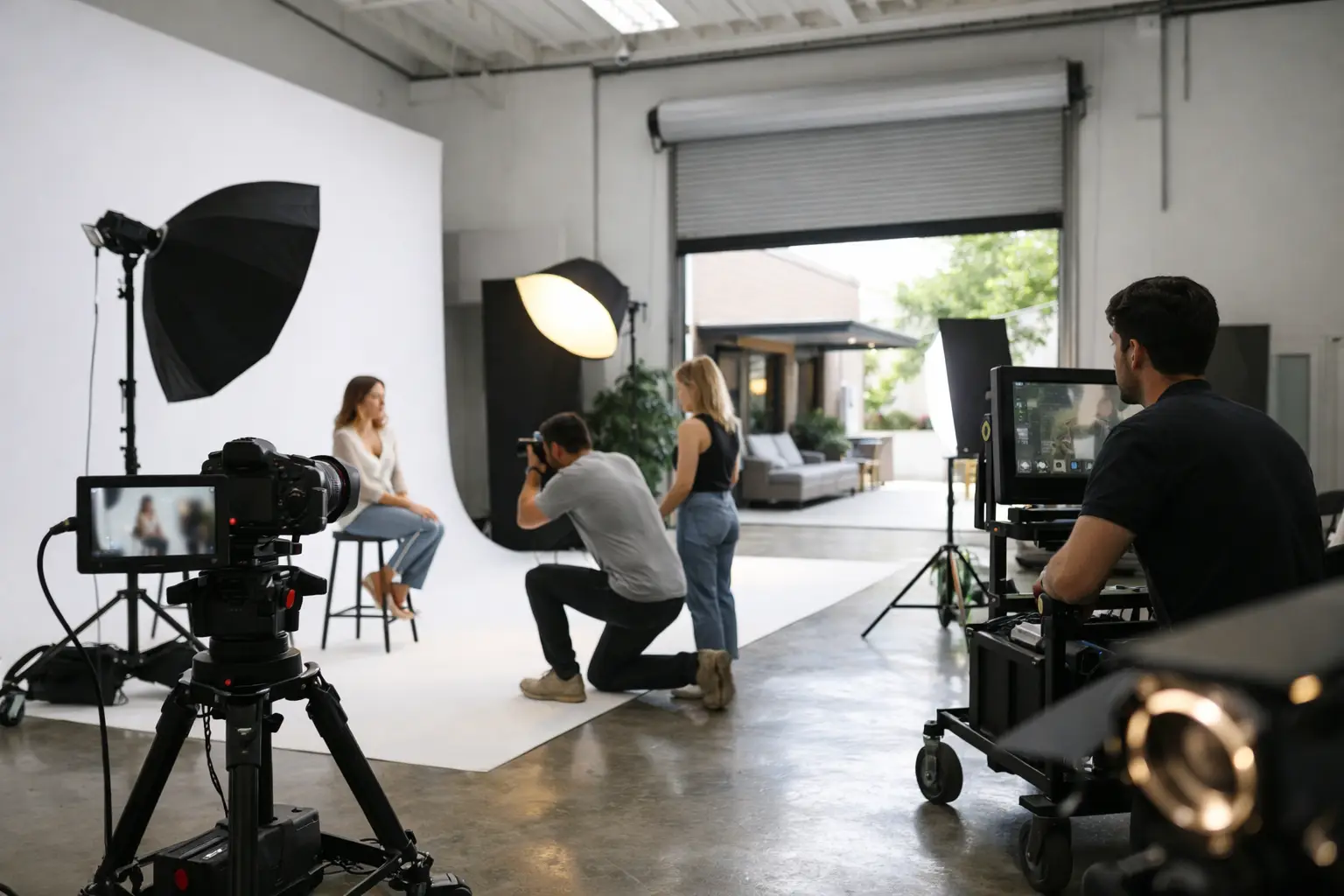
If you have ever lost an hour of call time wrestling flight cases through a narrow entrance, waiting on a goods lift or carrying set pieces up stairs, you already know why ground floor studio hire matters. It is not a convenience feature dressed up as a selling point. On a working shoot, it affects timing, labour, crew energy and what you can realistically produce in a day.
In London, plenty of studios look good in photos and become far less appealing the moment a van arrives. Access is often the hidden cost. A space might appear affordable on paper, but if loading in is slow, parking is awkward and the route from vehicle to set is tight, your schedule starts slipping before the first light is up. For photographers, filmmakers and agencies working to fixed budgets, that is not a minor irritation. It is a production problem.
Why ground floor studio hire changes the day
The best argument for a ground floor studio is simple – it removes friction. Crews can move lighting, grip, props, rails, product stock and set materials directly into the space without wasting time on awkward logistics. That has an immediate effect on setup speed, but the bigger benefit is consistency. A smoother load-in usually leads to a smoother shoot.
This matters even more when the production is not small. Commercial jobs often involve multiple departments arriving at different times, from camera and lighting to styling, art direction and client teams. If access is poor, every arrival becomes another interruption. If access is straightforward, the day starts in a more controlled way and people can focus on making the work rather than solving preventable problems.
There is also a creative upside. Better access broadens what you can bring into the studio. Larger props, rolling set flats, furniture, plinths, product pallets and specialist equipment become practical rather than risky. That opens up more ambitious set builds and more efficient e-commerce, editorial and branded content shoots.
What to look for in ground floor studio hire
Not every ground floor studio offers the same production value. Being at street level is useful, but it is only part of the picture. The real question is how the entire space supports the workflow.
Access that works under pressure
The strongest setups have direct loading access, ideally through a shutter rather than a standard pedestrian door. That distinction matters. A shutter makes a meaningful difference when you are moving larger equipment, wheeled stands or scenic elements. If a studio also has drive-in access or enough clearance for easy unloading, even better.
Check how close vehicles can get to the entrance and whether parking is included. In London, free on-site parking is not a throwaway extra. It can remove a regular source of stress, especially on early starts, long days or shoots involving repeated load-ins and load-outs.
Space that matches the brief
A ground floor location is only genuinely useful if the actual studio space is large enough to work in once the kit is inside. Some studios solve the access issue but still leave you cramped on set. You need enough floor area for camera movement, lighting positions, talent holding, client oversight and safe circulation.
Ceiling height matters just as much. If the studio has a proper lighting grid and generous height, crews can rig more effectively and avoid cluttering the floor with stands. That creates a cleaner working environment and gives photographers and DOPs more flexibility with angles, modifiers and overhead setups.
Equipment and technical readiness
Studios that include lighting, grip and support kit in-house usually offer better value than spaces that leave you hiring everything separately. This is not only about cost control. It is also about reducing the number of moving parts on the day. Fewer outside suppliers, fewer delivery windows and fewer last-minute fixes.
If your brief involves specialist production needs, check whether the studio can support them properly. Infinity coves, blackout capability, green screen setups, pre-rigging support and set-build suitability are all features that can materially improve the day if they are well executed. If they are not, they become another compromise.
Ground floor studio hire for different types of production
One reason this format works so well is that the benefit is not limited to one type of client. The gains show up differently depending on the brief.
For e-commerce and product photography, easy access helps with stock movement, prop handling and fast turnarounds. Teams shooting high volumes need a studio that keeps the workflow moving rather than slowing every changeover.
For branded content and commercial film work, ground floor access helps with larger crews, more lighting package, art department requirements and a greater client presence on set. The practical side of production becomes easier to manage, which protects the creative side.
For music videos, fashion shoots and editorials, the advantage is often freedom. When access is simple and the space can handle larger kit and bolder builds, ideas that might be dismissed in smaller or more awkward studios stay viable.
For agency and brand teams, there is also a client-facing benefit. A studio that is easy to enter, easy to navigate and professionally set up creates a stronger impression than a space that feels compromised from the moment people arrive.
The London problem with many studio spaces
London studio hire often comes with a familiar trade-off. You either pay a premium for a space that is actually production-ready, or you book something cheaper and spend the day working around its limitations. Poor access is one of the most common limitations because it is often treated as secondary in listings.
That is why comparison matters. A studio should not just be judged on square footage or headline day rate. You need to assess the full operational picture. Can a crew load in quickly? Can vehicles park without a separate logistical exercise? Is there enough room for a proper set-up? Is the equipment provision strong enough to reduce external hires? Can the space support both simple shoots and more complex productions without friction?
When the answer is yes across those points, the day tends to run better and the budget goes further. When the answer is mixed, the hidden costs show up quickly in overtime, stress and reduced output.
Ground floor studio hire and real cost control
Affordable studio hire is not just about booking a lower rate. It is about reducing wasted time and avoiding extra costs that accumulate around a poor space. Labour overrun, delayed setup, inefficient load-out, transport complications and additional equipment hire can easily outweigh a small saving on the booking fee.
A more functional studio often delivers better commercial value, even if the rate is not the very cheapest on the market. That is particularly true for full-day productions, shoots with larger crews and jobs with any degree of build or technical complexity.
This is where facilities make a measurable difference. A ground floor studio with shutter access, high ceilings, a lighting grid, in-house kit, free parking and 24/7 availability is not simply more convenient. It supports tighter scheduling and better use of paid crew time. That is real cost control.
For teams looking at London options, Cineview Studios is built around that logic. The value is not just in having a good-looking space. It is in offering a studio that performs well under actual production conditions.
Questions worth asking before you book
Before committing to any ground floor studio hire, ask practical questions rather than relying on broad claims. How wide is the access point? Can you load directly into the studio? Is there on-site parking and how many vehicles does it cover? What equipment is included? Can the space be pre-lit or pre-rigged? Is it suitable for set building? How does it handle blackout or green screen work if that is relevant to the brief?
You should also think about the scale of your production. A ground floor studio is a clear advantage for larger and kit-heavy jobs, but even leaner shoots benefit from the time saved. The only real variable is how much you need beyond access itself. Some productions need a blank, flexible shell. Others need a more technically developed environment with stronger in-house support. It depends on the brief, the crew size and how much complexity you want the studio to absorb.
A good studio does not force you to build a workaround for the building before you can build the set. That is the real standard. If access is easy, the space is properly equipped and the environment is built for production rather than just hire, you give your team a better chance of delivering strong work without burning time and budget on basics.
When you are comparing options, think less about the brochure language and more about what the day will actually feel like from the first van arrival to final pack-down. That is usually where the right decision becomes obvious.
5 thoughts on “Ground Floor Studio Hire That Saves Shoot Time”