Infinity Cove Studio Hire in London
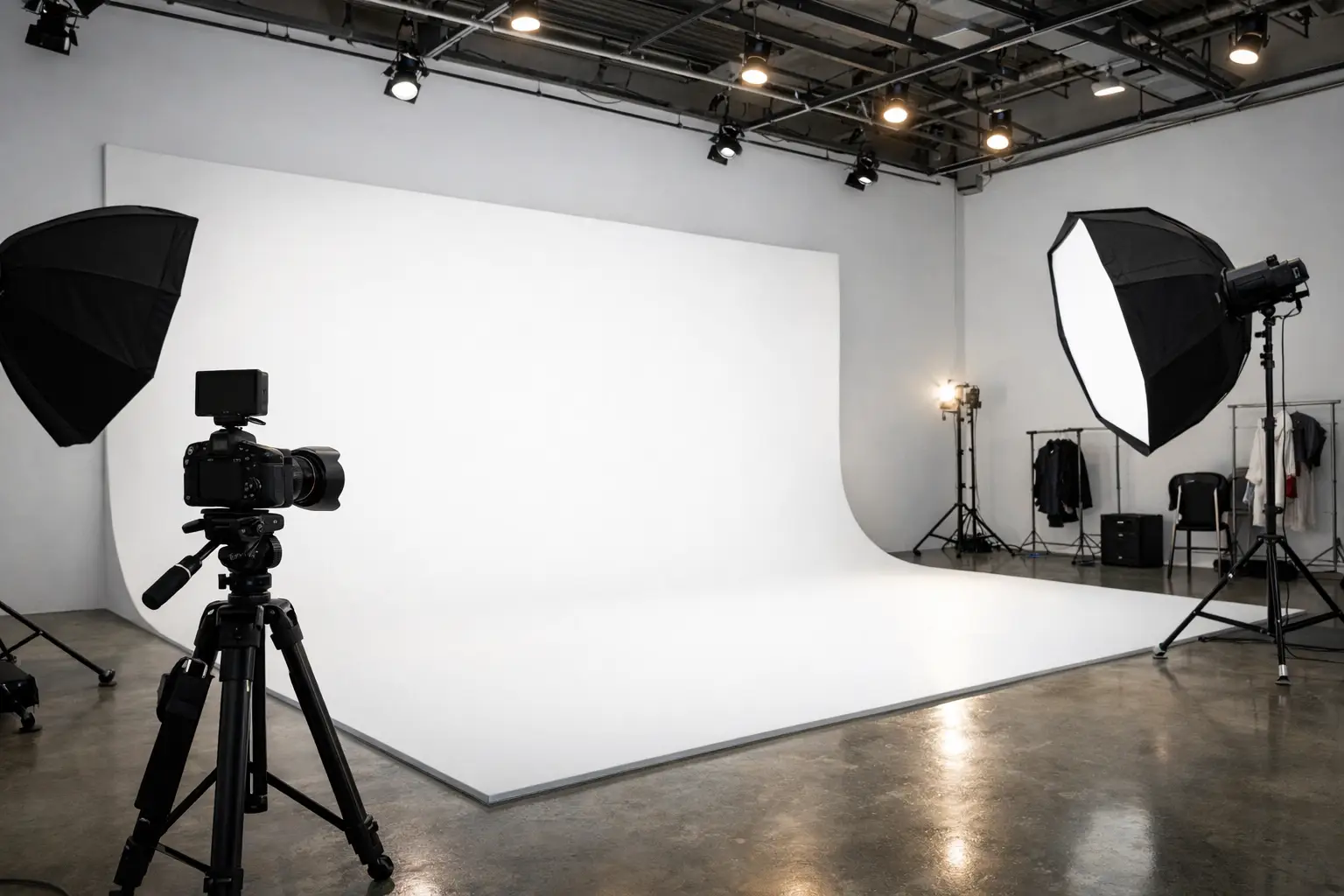
A white cove looks simple until you try to shoot in the wrong one. Suddenly the curve is too tight, the ceiling is too low, the access is awkward, and half the day disappears into workarounds. That is why infinity cove studio hire is not just about finding a clean white background. It is about choosing a studio that actually supports the production you are trying to deliver.
For photographers, filmmakers, agencies and brand teams, the cove is often the visual foundation of the shoot. It gives you a controlled, distraction-free environment that can flex from e-commerce and editorial to commercials, product films and music content. But not every cove is built for the same job, and in London especially, the gap between what is promised online and what works on set can be significant.
What makes infinity cove studio hire worth it?
The main value of an infinity cove is control. You get a continuous background with no visible corners, which means cleaner frames, easier lighting and fewer compromises in post. That matters whether you are shooting fashion lookbooks, product campaigns, social content, interviews or vehicle work.
A proper cove also speeds up decision-making on set. Clients can review images against a neutral background without visual clutter. Directors and DOPs can shape light precisely. Photographers can move quickly between angles without rebuilding the set. If the production is high volume, that efficiency matters as much as the look.
There is also a commercial benefit. A flexible cove can handle multiple deliverables in one booking – stills, video, cutdowns, packshots, behind-the-scenes content. When studio space is priced sensibly and equipped properly, that can reduce the need for separate locations and duplicate crew time.
Infinity cove studio hire: what to check before you book
The cove itself is only one part of the decision. If you are hiring for a professional shoot, the practical details around it will affect the day far more than a polished gallery of reference images.
Cove size and shooting distance
This is the first thing to assess. A small cove may be fine for single-person portraits or tabletop work, but once you need full-length fashion, wider camera moves, multi-subject setups or larger products, space becomes critical. You need enough distance to light the subject separately from the background and enough room for camera, crew and client positioning.
If you are planning motion work, think beyond the frame line. Tracks, gimbals, monitors, playback and sound all need space. A cove that looks workable for stills can become restrictive very quickly for video.
Ceiling height and lighting grid
Low ceilings create avoidable problems. They limit top light options, reduce rigging flexibility and make it harder to control spill. For fashion, automotive details, reflective products or any setup requiring shaped light, height is not a luxury. It is a working requirement.
A studio with a proper lighting grid gives the crew more options and saves setup time. Instead of building everything from floor stands and working around them all day, you can rig cleanly, keep the floor clearer and move faster between setups.
Access and load-in
This is where many London studio hires fall short. Narrow doors, stairs, awkward corridors and restricted loading quickly become expensive. If your production includes flats, props, plinths, larger kit packages or anything on wheels, poor access creates delays before the first frame is even shot.
Ground-floor access and shutter loading make a meaningful difference. The same goes for drive-in capability if the production involves vehicles, heavier set elements or rapid equipment turnaround.
In-house kit and technical support
Infinity cove studio hire becomes far better value when the space comes with useful equipment and people who understand production. Lighting, grip, stands, modifiers and power provision should not feel like an afterthought.
There is a big difference between a studio that rents out four walls and one that is set up to help crews work properly. Pre-lighting support, pre-rigging options and a team that can answer practical questions before the day can save hours and reduce unnecessary hire elsewhere.
Why London crews need to be selective
London has no shortage of studio listings, but availability is not the same as suitability. Many spaces are either priced like premium facilities without the infrastructure to justify it, or they are physically constrained in ways that only become obvious on the day.
The common issues are predictable: limited ceiling height, poor parking, no proper loading access, small holding areas, restricted hours and extra charges for basics. None of that helps when you are running a commercial schedule, coordinating talent, or trying to keep agency and client teams comfortable on site.
That is why the right studio is usually the one that removes friction. If your crew can get in easily, rig properly, park without hassle, and keep moving through the day without battling the space, the production has a better chance of landing on time and on budget.
The productions that benefit most from an infinity cove
Cove work is often associated with clean stills photography, but its value is much broader than that. Fashion campaigns benefit from the controlled, premium look and the ability to light consistently across multiple outfits and angles. Product brands use it for both hero imagery and short-form motion where a simple environment keeps attention on the item.
For branded content and commercials, a cove can give you a highly polished finish without the complexity of a full scenic build. It is also useful for interviews, presenter-led content and social-first assets where flexibility matters more than elaborate set dressing.
It depends, of course, on the creative. If the project needs a heavily textured environment or a location-specific feel, a cove may not be the right base. But for productions where control, speed and versatility matter, it is often the most efficient option available.
What separates a production-ready studio from a basic hire
A production-ready studio is not just a room with a white curve. It is a space designed around workflow. That means enough room to stage kit, sensible power, proper amenities, crew comfort, and support for the way shoots actually run.
Free parking is a good example. It sounds secondary until you are managing vans, crew call times and client arrivals. The same applies to 24/7 opening. For some shoots, standard business hours are fine. For others, especially when there is pre-rigging, overnight builds or early talent call times, flexibility is essential.
Studios that understand commercial production also know the value of a professional environment. Clients need to feel that the space reflects the quality of the work being commissioned. Crew need enough functionality to do the job efficiently. Those two things should sit together.
For teams looking at infinity cove studio hire in London, that combination is often what justifies the booking. A well-equipped, accessible studio with strong technical features can outperform a more expensive central location that looks good on paper but slows the job down in practice.
Making the booking decision properly
If you are comparing studio options, do not focus only on day rate. Look at the total production cost around the booking. If a cheaper space requires more external kit, more crew time, more transport hassle or more post-production correction, it may not be cheaper at all.
Ask practical questions early. Can the cove handle your shot size? Is there enough height for your lighting plan? How straightforward is the load-in? What equipment is available on site? Is there support for pre-rigging? Can the studio accommodate both stills and motion if the brief expands?
The strongest hire decisions are usually the simplest. Choose the studio that gives you more usable time, fewer compromises and better technical control. That is what protects the work.
For productions that need space, access and functionality without inflated London pricing, a facility such as Cineview Studios makes that calculation easier. The point is not just to hire a cove. It is to hire a studio that helps the entire shoot run properly from call time to wrap.
A good infinity cove should make the production feel simpler, faster and more polished – and if it does not, it is the wrong studio.
2 thoughts on “Infinity Cove Studio Hire in London”