Drive In Studio Hire That Saves Shoot Time
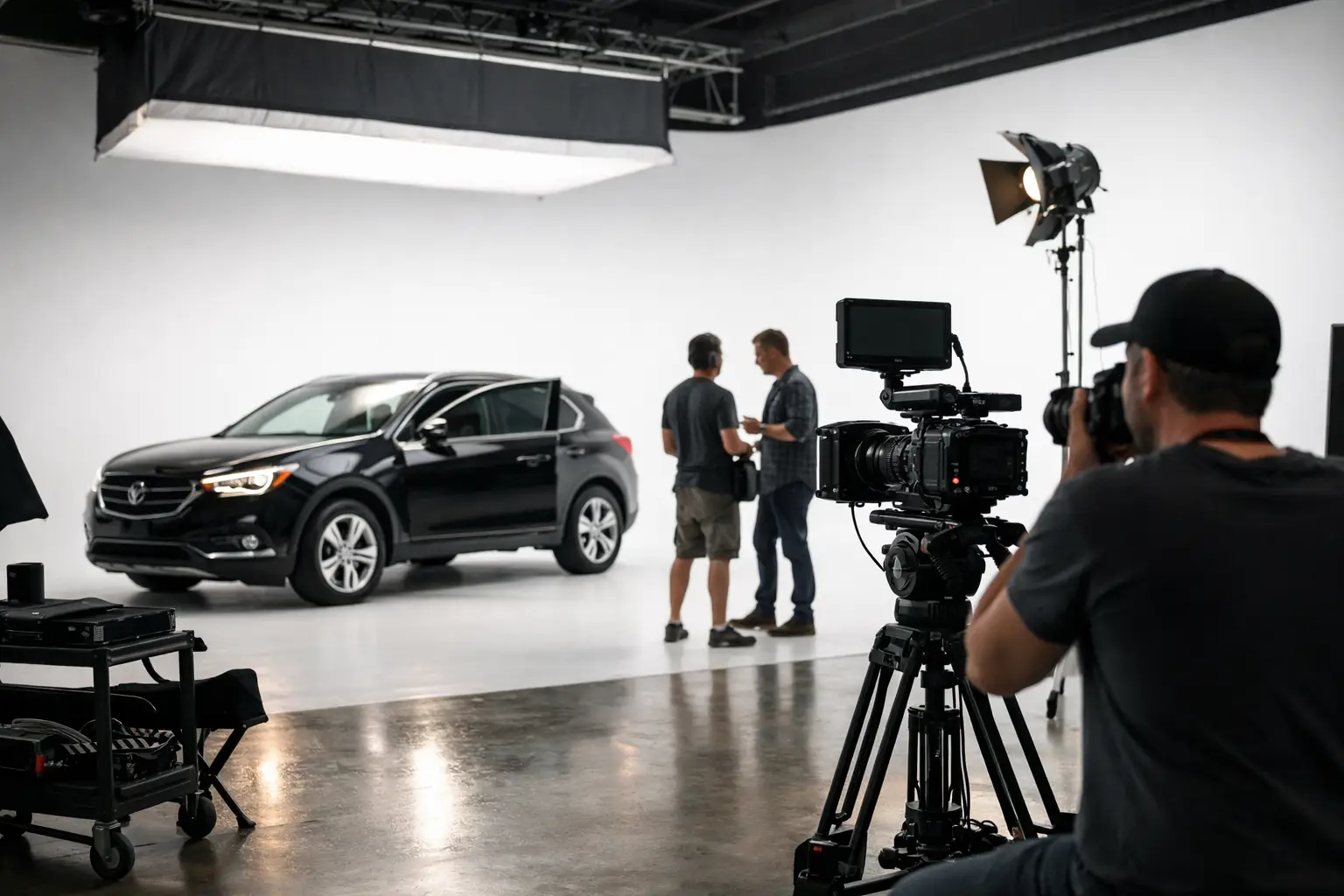
If your shoot involves a vehicle, oversized prop, heavy set piece or pallet of kit, ordinary studio access stops being a minor detail and starts becoming the problem. That is where drive in studio hire earns its value. You are not just hiring square footage. You are buying back time, reducing handling risk and giving your crew a setup that works like a production space rather than a compromise.
A lot of London studios are still built around the assumption that everything can be carried through a standard door, moved into a lift and assembled in a tight footprint. That might be manageable for a small editorial session or a basic talking-head setup. It becomes expensive very quickly when your production includes a hero car, a full scenery build, rolling cases, larger lighting packages or back-to-back crew movement.
Drive in studio hire solves a practical problem that affects the entire shoot day. Better access changes load-in, set build, turnaround times and how confidently a team can plan a more ambitious setup. For agencies, photographers, filmmakers and brand teams, that has a direct commercial impact.
What drive in studio hire actually changes
The obvious benefit is vehicle access, but the real advantage is workflow. When you can bring a vehicle or equipment directly into the studio through ground-floor shutter access, every stage becomes easier to control. You spend less time transferring kit from van to trolley to lift to floor. You reduce the amount of manual handling. You cut the risk of damage to props, products and equipment before cameras are even rolling.
That matters on shoots where timing is tight and budgets are under scrutiny. A delayed load-in can push lighting setup back, shorten shooting time and create pressure that affects creative decisions later in the day. What looks like a simple access issue can end up costing more in crew overtime, talent holding fees and rushed production than the studio day rate itself.
For vehicle shoots, drive-in capability is even more significant. If the concept requires a car, motorbike or branded vehicle in frame, the studio has to be built for that use from the start. Ceiling height, turning space, floor loading, ventilation planning and lighting access all matter. Without that, the space may technically allow a vehicle but still be awkward to use in practice.
Why standard studio spaces often slow productions down
The gap between a studio that looks good online and one that performs well on the day is usually access. A polished gallery says very little about how the space handles a real crew, real equipment and real production pressure.
Many central London spaces trade on location and aesthetics, but they are physically restrictive. Narrow corridors, low ceilings, awkward stairs, limited parking and shared-building rules create friction from the moment the first van arrives. If you are shooting product on tabletops, that may be fine. If you are building scenery, filming automotive content or moving larger pieces of grip and lighting gear, it is not.
This is why experienced production teams ask more detailed questions before booking. Can a vehicle enter the studio directly? Is the access ground floor? Is there room to pre-rig? Can art department materials come in without disrupting the whole schedule? Can crew park on site? Is the studio available around call times that reflect how productions actually run?
These are not extras. They shape whether the shoot feels efficient or needlessly difficult.
Drive in studio hire for commercial shoots
Commercial production benefits most from studio spaces that remove obstacles. Brand campaigns, e-commerce work, product launches, music videos and branded content often involve more moving parts than a standard photo session. You may be managing agency stakeholders, client approvals, multiple lighting changes, set dressing, styling, catering and talent logistics in the same day.
A drive-in studio helps because it gives departments room to work without constantly collapsing into each other. Props can come in quickly. Vehicles can be positioned with less disruption. Larger items can be loaded without dismantling them just to fit through the entrance. If you are working to a shot list with several looks, those saved minutes add up.
It also opens up more ambitious creative options. A campaign involving a car reveal, a built environment, large-format product display or mixed photo and video capture becomes far more achievable when access is not restricting the concept from the outset. Instead of scaling the idea down to fit the studio, you can choose a studio that supports the production properly.
The features that matter most in a drive in studio hire
Vehicle access on its own is not enough. The best spaces combine drive-in practicality with the technical features needed to make that access useful.
High ceilings are one of the biggest differentiators. They give lighting teams proper working room, allow better rigging options and help separate background from subject. That becomes especially important for automotive shoots, large set builds and productions that need clean light control.
A lighting grid is another serious advantage. It speeds up rigging, improves safety and gives crews more flexibility when shaping light across a larger set or vehicle surface. If the studio also offers blackout capability, you gain tighter control over reflections, mood and consistency across a long shooting day.
An infinity cove expands the range of commercial outputs you can create in one space. It works for clean advertising visuals, product content, vehicle shoots and motion work where you want scale without visible edges. Green screen capability is equally useful if the production needs compositing, virtual environments or flexible post workflows.
Then there is the practical side that too many studios underplay – free parking, 24/7 opening, in-house lighting and grip, and pre-lighting or pre-rigging support. Those features reduce supplier coordination, simplify call times and cut the hidden costs that often sit around a studio booking.
Who should be booking drive in studio hire
This kind of space is not just for major automotive campaigns. It suits any production where access, speed and scale affect the result.
Photographers shooting larger commercial sets benefit from easier load-in and more flexible lighting layouts. Filmmakers and videographers gain a controlled environment that supports technical setups without the location issues that often slow motion work down. Agencies and production companies get a space that presents well for clients while still being operationally strong behind the scenes.
It also makes sense for smaller brands and independent creators when the production requirements are growing. If you are moving from simple packshots to full brand imagery, campaign video or lifestyle scenes with substantial props, choosing a better-equipped studio can be more cost-effective than trying to make a cheaper but limited space work.
That is the key trade-off. A lower day rate is not automatically better value if the space creates delays, restricts setup options or forces you to hire in more external support.
Choosing the right drive in studio hire in London
Not every production needs the same thing, so the right choice depends on what you are shooting. If the brief centres on a vehicle, ask about shutter dimensions, turning access and whether the studio team regularly handles automotive shoots. If the job involves set build, ask about floor space, load-in routes and whether pre-rig days are possible. If you need both stills and motion, check blackout control, sound considerations and available power.
It is also worth looking beyond the brochure. Ask what is included on site, how the space is supported and whether the studio is designed for production or simply adapted for hire. There is a difference. A purpose-built environment tends to solve issues before they reach the floor.
For many crews, that is where a facility such as Cineview Studios stands apart. The value is not only in having drive-in access, but in combining that with high ceilings, ground-floor shutter entry, strong in-house equipment provision, client-friendly presentation and the kind of flexibility that real productions require.
Why this matters for budget as much as convenience
The strongest case for drive in studio hire is not convenience. It is efficiency. Productions run on time, labour and decision-making. When access is poor, all three suffer. Crew waste time moving gear. Producers absorb avoidable costs. Creative teams compromise shots because setup windows are shrinking.
By contrast, a studio built for direct access gives you a cleaner start and a more controlled day. Departments can work faster. Vehicles and larger assets can be handled more safely. Clients see a smoother production. The work usually looks better because the team has more time to focus on image-making rather than logistics.
That is the difference between hiring space and hiring a studio that actively supports production. If your next shoot includes anything larger than a few cases and a backdrop stand, it is worth being stricter about what access really means. The right studio should make the job easier before the first frame is captured.
3 thoughts on “Drive In Studio Hire That Saves Shoot Time”