Music Video Studio Hire That Works Harder
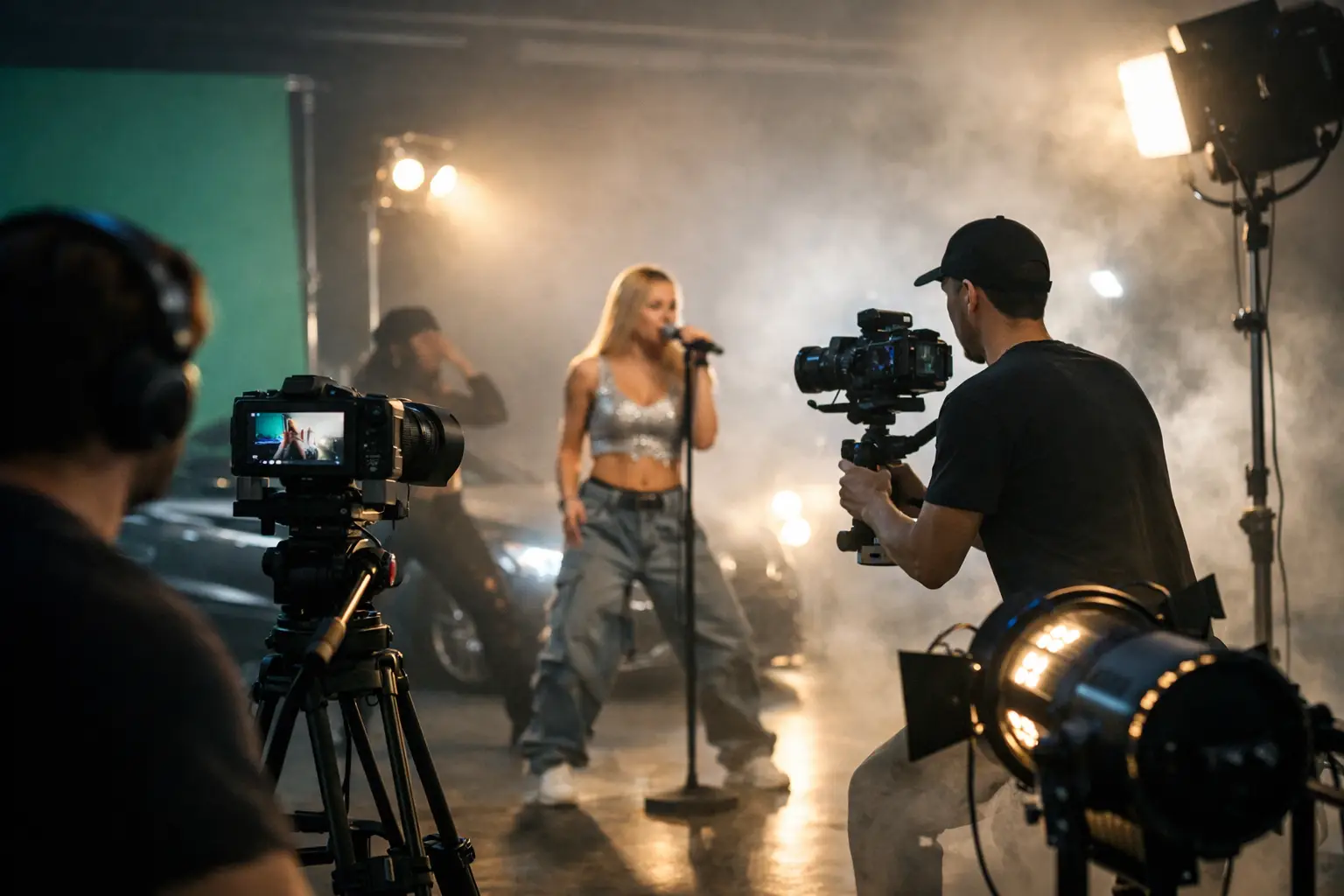
A music video can fall apart long before the camera rolls. The usual problems are not creative – they are practical. Tight load-in windows, low ceilings, poor power access, nowhere to park, not enough rigging options, or a space that looks affordable until you start adding essential kit. That is why music video studio hire needs to be judged on production value, not just day rate.
For directors, producers and artists working in London, the right studio does more than provide four walls. It shapes how ambitious the concept can be, how efficiently the crew can move, and how much of the budget survives to make it onto the screen. If the space fights the production, every setup takes longer and every compromise shows up in the final cut.
What good music video studio hire actually gives you
A proper music video studio should make creative execution easier. That starts with scale. High ceilings change what is possible with lighting, camera movement and set design. A usable lighting grid saves time and keeps the floor clear. Drive-in or ground-floor access matters when you are bringing in props, staging, playback, wardrobe rails and grip kit under pressure.
Then there is control. Blackout capability gives you consistency across the day and more authority over mood, contrast and colour. An infinity cove opens up clean performance setups, product-led visuals and stylised art direction without spending half the day hiding room edges. Green screen and virtual production options add another layer if the concept needs background replacement, compositing or a more ambitious visual treatment.
Good hire also reduces hidden costs. In-house lighting and grip can make a serious difference to budget, especially on fast-turnaround shoots where hiring from multiple suppliers adds transport, coordination and overtime risk. If the studio team understands pre-lighting and pre-rigging, that support can save hours rather than minutes.
Why cheap studio space often costs more
Studios are often marketed on headline price, but music video production rarely runs on headline price alone. A cheaper room with poor access can add labour. Limited rigging points can force a different lighting plan. Tight dimensions can mean changing lenses, reducing camera movement or cutting part of the set. A lack of parking or awkward loading can quickly turn a straightforward call time into a late start.
This is where many London spaces disappoint. They are either too small for serious production, too compromised in layout, or too expensive once you factor in what is missing. Crews end up paying premium rates for spaces that were not designed around working production needs.
A better approach is to look at the whole shoot day. If the space allows faster setup, easier client management, smoother load-in and fewer external hires, the real cost can be lower even if the initial hire fee is not the cheapest on paper.
Music video studio hire in London: what matters most
Not every music video needs the same studio, but most production teams care about the same pressure points. Access is near the top of the list. If your art department cannot get flats, props or a vehicle in without a struggle, time disappears. Ground-floor shutter access is not a luxury on music video shoots. It is a working advantage.
Height is the next one. Lower ceilings limit lighting positions and make it harder to create depth in frame. If you want strong toplight, large modifiers, overhead rigging or a bigger set footprint, ceiling height becomes critical very quickly. This is especially true for performance videos, choreographed setups and any concept with moving lights or scenic build.
The third factor is flexibility. Many shoots need to move between looks in one day. A space that can support blackout work, clean cove shooting, set-build activity and heavier equipment use gives the production far more options. If the studio also runs 24/7, that can be the difference between finishing on schedule and paying for extra time elsewhere.
Parking should not be treated as an afterthought either. Free on-site parking reduces stress for crew, clients and suppliers. In London, that matters. It can also cut courier costs and simplify call sheets when multiple departments are arriving at staggered times.
Matching the studio to the treatment
A performance-led video has different demands from a narrative piece or a product-heavy promo. Performance shoots usually need room for lighting shape, playback, camera movement and repeated takes without constant resets. An infinity cove or blackout stage often works well here because it gives you control and speed.
Narrative videos may need more from the studio as a build space. If the concept involves constructed sets, practical props, vehicles or textured art direction, the studio needs to cope with that physically. High ceilings, wide access and a layout that allows departments to work without standing on top of each other are what keep the day moving.
For effects-led work, green screen or virtual production capability may make sense, but only if the team knows how to use it properly. Not every music video needs those tools, and forcing them into a treatment can increase complexity without improving the result. Sometimes a large blackout stage with the right lighting package is the smarter choice.
The equipment question
One of the fastest ways to lose control of a music video budget is to underestimate equipment. Even a relatively stripped-back shoot can require more grip, rigging and lighting than expected once the treatment is broken down properly. When the studio already has a strong in-house package, that changes the equation.
It is not just about saving money. It is about reducing moving parts. Fewer external deliveries mean fewer delays. Easier access to stands, modifiers, power distribution and rigging support means the crew can adapt quickly if the plan changes, which it often does.
Studios that support pre-rigging are especially useful for agency work and more complex artist shoots. If you can get key elements in place before call time, your first setup lands sooner and the day starts with momentum instead of problem-solving.
Client-ready matters, even on fast shoots
Music videos are not always loose, improvised sets. Many involve label teams, brand partners, management, stylists and commissioners. The studio needs to function for them as well as for the crew. That does not mean dressing up an average space with nice language. It means having a facility that feels organised, workable and professional from the start.
When clients can review playback comfortably, when crew can move efficiently, and when departments have enough room to do their jobs properly, confidence stays high. That affects decision-making on set. People approve faster when the production environment feels under control.
For that reason, the best studios are not just technically capable. They are operationally calm. Cineview Studios is built around that logic – a serious production space with the access, scale and equipment support to help crews work quickly without paying inflated London rates for less practical rooms.
How to judge a studio before booking
Ask direct questions. Can a vehicle get in? What is the ceiling height to the grid? What power is available? Is there blackout? What is included in the hire, and what becomes an extra? Can the team support pre-light or pre-rig? Is parking on site? Is the space genuinely suitable for set-build and heavier production use?
Also ask for recent examples of the kinds of shoots the studio handles. A studio may say it works for film and photography, but music videos can be tougher on space and logistics than either. You want evidence that the room can cope with dynamic lighting setups, larger crews, playback-driven workflow and fast visual changes.
The right answers usually point to the same conclusion. Good music video studio hire is not about finding the lowest price or the trendiest location. It is about choosing a space that helps the production move efficiently, protects the budget, and gives the treatment the room it needs to land properly.
If you are planning a music video, think less about the brochure version of the studio and more about what the shoot day will actually ask of it. The best space is the one that makes ambitious work feel straightforward.