Choosing a Commercial Photography Studio in London
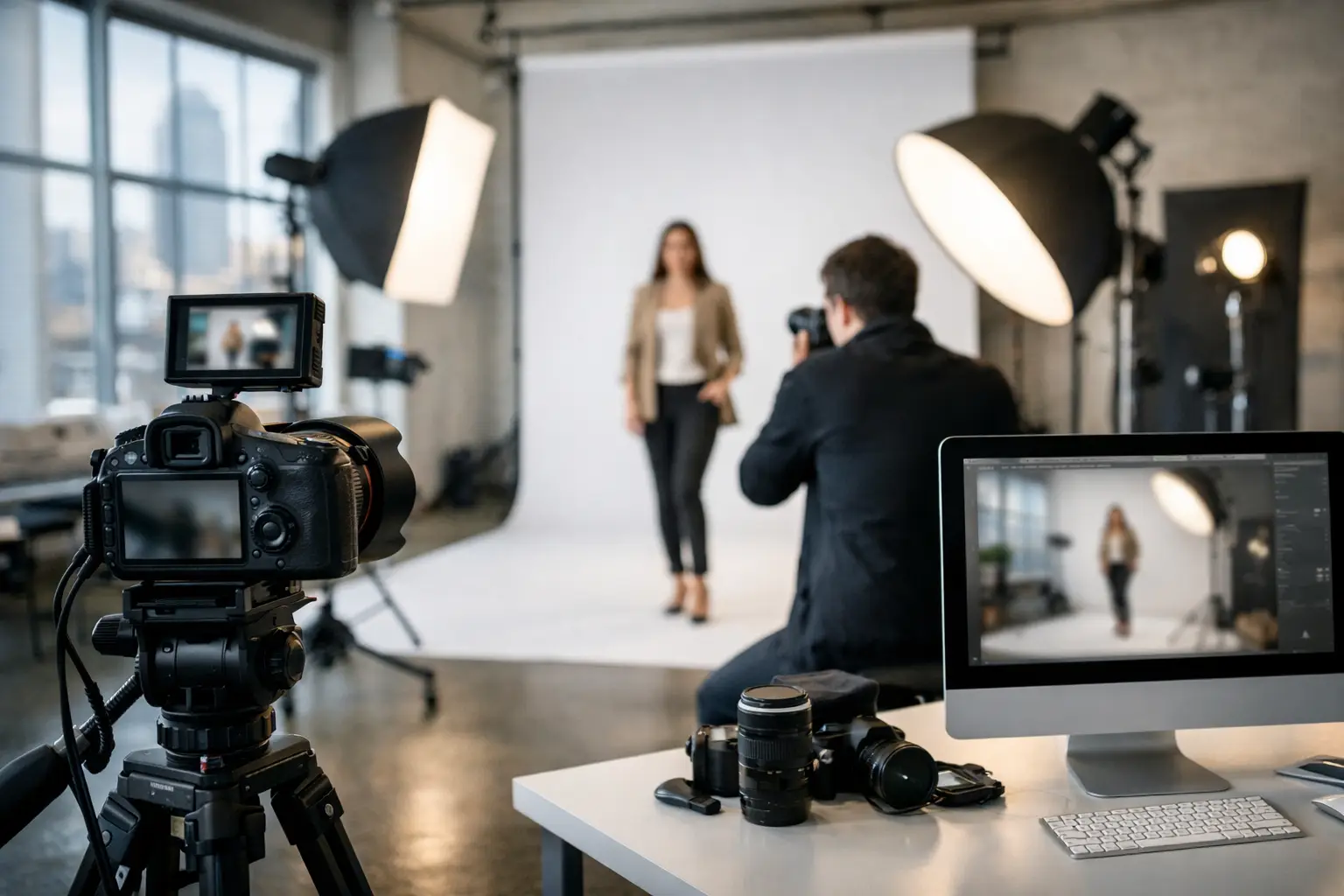
Table of Contents
ToggleA commercial photography studio in London should do more than look good in a location scout. It needs to keep a crew moving when the call sheet is tight, the client arrives at 10am, the art department needs to build, and the final product still has to be packed down before wrap. Space, access and technical readiness are not background details. They directly affect the time, cost and quality of a commercial shoot.
For brands, agencies, photographers and production teams, the right studio is one that removes avoidable friction. That means enough room to light properly, practical load-in, dependable blackout, equipment that is ready when needed and a team that understands the difference between a simple product shoot and a full-scale campaign production.
What a commercial photography studio in London needs to deliver
London has no shortage of studios, but many were not designed around modern production workflows. A visually interesting space can quickly become expensive if ceilings are low, access is restricted, parking is charged separately or every additional stand, flag and light has to be hired in from another supplier.
A commercially capable studio starts with usable volume. High ceilings give photographers and lighting crews the clearance to shape light rather than compromise it. A proper lighting grid keeps stands off the floor, opens up the set and makes overhead rigs safer and faster to manage. This matters on fashion, automotive, food, furniture and campaign work, where controlled light and clean sightlines are central to the final image.
The shooting area also needs flexibility. An infinity cove is valuable for clean catalogue imagery, e-commerce, portraits, packshots and editorial work, but it should not be the only option. Productions often need a blackout environment for full lighting control, a green screen for compositing, or enough clear floor space to construct a bespoke set. The best facilities allow the shoot to dictate the space, not the other way round.
Access is part of the studio specification
Access is often where a seemingly affordable London hire becomes a costly day. If cases, flats, props, product stock and equipment must be carried through narrow corridors or up stairs, the crew pays for it in labour and lost shooting time. That is especially true when a production includes heavy grip, large set pieces, motorcycles, vehicles or high volumes of retail product.
Ground-floor shutter access changes the workflow. A van or lorry can unload directly into the working area, reducing handling and protecting the schedule. Drive-in access goes further, allowing vehicles to become part of the set or enabling large-scale deliveries without complex manoeuvres.
Free on-site parking is equally practical. It gives crew members somewhere to put their vehicles, keeps production transport close by and removes the uncertainty of public parking restrictions. For a full-day commercial job, these details can be more useful than an impressive postcode.
Match the studio to the production, not the mood board
A studio should be selected against the demands of the shoot, not just the first frame on a Pinterest board. Start by considering what needs to happen before the camera rolls. Will the team build a set? Is the stylist bringing rails, furniture or large props? Does the photographer need long lens distance? Will video and stills be captured on the same day? Do client, agency and production staff need space to review work without standing inside the set?
For straightforward product photography, a clean cove, reliable power and a well-equipped lighting package may be enough. For a larger advertising campaign, the requirements change. You may need multiple shooting zones, a dedicated client area, make-up positions, a production office, kitchen facilities and room for pre-lighting the night before.
There is a trade-off here. A compact studio can be efficient for a small crew shooting jewellery, cosmetics or social content. Hiring more space than necessary can add cost. But saving on square footage is false economy if the crew cannot move around the set, equipment is stacked in corridors or the client has nowhere workable to sit. The right choice depends on the crew size, the shot list and the amount of changeover built into the day.
Build time and pre-lighting protect the shoot day
Commercial productions rarely fail because the camera was not switched on. They lose time because a set is unfinished, a lighting plan cannot be rigged in advance or a delivery arrives after the crew has already started charging for the day.
Look for a studio that can support pre-rigging and pre-lighting. Being able to install key fixtures, test the lighting setup and complete the technical build before the main crew arrives protects the shoot day for what it is meant to be: shooting. It also gives the director, photographer and creative team more room to make considered decisions rather than rushing through alternatives.
Twenty-four-hour access can be a major advantage when schedules are compressed. A crew may need to load in late, build overnight, shoot early or work around talent availability. It is not necessary for every job, but when it is, it can prevent an extra hire day or an awkward compromise in the schedule.
Equipment should reduce supplier calls, not create them
In-house lighting and grip equipment can make a meaningful difference to the budget and the pace of a production. The benefit is not simply convenience. It is the ability to respond quickly when the lighting plan changes, a modifier is needed for a second set-up or the director wants to test a new treatment.
A properly specified studio should have practical tools available for professional crews: lighting heads, stands, modifiers, flags, frames, C-stands, polyboards, sandbags and grip hardware. The exact package matters less than its condition, availability and relevance to the type of work being made. Ask what is included in the hire, what is charged separately and whether the studio team can help prepare equipment before arrival.
For video and hybrid productions, power, blackout and sound considerations deserve equal attention. A studio built for stills may look suitable but struggle when a video crew needs silence, controlled daylight and space for camera movement. Virtual production capability may also be relevant where a campaign needs adaptable backgrounds, immersive scenes or efficient content variations without multiple location moves.
Cineview Studios is designed around these practical demands, combining a large-scale production floor with an infinity cove, blackout capability, green screen options, high ceilings, a lighting grid and ground-floor access. The point is not to add features for the sake of a spec sheet. It is to give productions more control over how they build, light and deliver the work.
Budget for the whole workflow
The headline day rate is only one line in the studio budget. A lower hire fee can be offset by equipment rentals, parking charges, overtime, extra loaders, off-site storage or time lost during difficult access. Equally, a larger facility may cost more upfront but reduce the number of hire days required by allowing set-build, pre-light and shooting to happen in one place.
When comparing studios, assess the complete operating cost. Include the likely equipment package, the crew’s transport and parking, load-in time, build time, cleaning requirements, overtime policy and whether the space can accommodate all departments at once. This is where production-friendly studios distinguish themselves from spaces that are simply available to rent.
It is also worth asking how the studio handles the realities of a live shoot. Can the team assist with access arrangements? Is there a clear process for cove repainting? Can you hold a recce? Are there practical rules around rigging, smoke, vehicles, green screen or set construction? Direct answers before booking are a good sign that the facility understands commercial work.
Choose a studio that gives the work room to improve
A commercial studio hire should create options, not constraints. When access is simple, equipment is close at hand and the studio has the height and floor space to support the lighting plan, the crew can focus on the image rather than the workaround. That is where better production value comes from.
Before confirming your next studio, walk through the shoot from the first delivery to final pack-down. If the space makes each stage easier, it is likely to make the work stronger too.