


Is Studio Hire Worth It for Your Next Shoot?

A location that looks cheap on the call sheet can become the most expensive part of a shoot by lunchtime. If the crew cannot get kit through the door, the ceiling is too low for the lighting plan, there is nowhere to park or the space cannot be properly blacked out, time starts disappearing fast. So, is studio hire worth it? For productions where quality, control and a reliable schedule matter, the answer is usually yes – provided you hire a space built for the work rather than a room that merely photographs well.
The hire fee is only one line in a production budget. The more useful question is whether the studio reduces the costs, compromises and risk around it. A well-specified studio gives your team a controlled environment, practical access and the freedom to make creative decisions without fighting the building.
Is studio hire worth it when budgets are tight?
It depends on the brief. A simple daylight portrait session with a small kit may work perfectly in a compact location or office. But once a shoot involves a client team, multiple looks, talent, sizeable lighting, motion work, a constructed set or a fixed delivery deadline, the limitations of an unsuitable space become expensive.
Consider the true cost of making a poor location work. You may need to hire lighting separately, bring in blackout material, pay for off-site parking, book an additional prep day, restrict the shot list or schedule extra time for a complicated load-in. If the space is cramped, the crew may be unable to work simultaneously. Styling, camera, sound and lighting all end up waiting for one another.
A professional studio consolidates those moving parts. That does not mean every production needs the largest stage available. It means the space should match the production, with enough room to shoot, stage equipment, accommodate clients and keep the workflow moving.
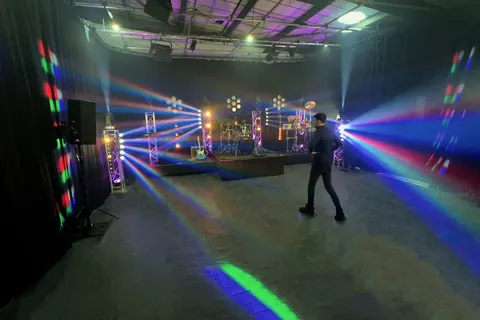
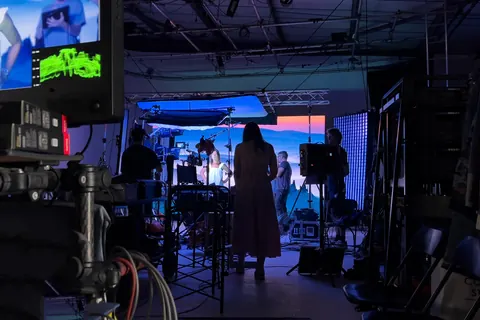
For an e-commerce team, that might mean a clean, repeatable setup with power, backgrounds and room for products to be prepared off camera. For an agency commercial, it could mean enough ceiling height to light a wide frame properly while the art department builds the next scene. For a music video, it may be blackout control, a green screen or space to move a vehicle onto set.
The difference between a room and a production facility
London has no shortage of spaces described as studios. The difference is whether the building supports production from arrival to wrap.
Start with access. Ground-floor shutter access changes the pace of a shoot. Cases, stands, flats, props and larger equipment can come in directly rather than being carried through narrow corridors or passenger lifts. Drive-in access is more valuable still for vehicle shoots, oversized props and set construction. It also makes the day less punishing for the crew responsible for the load-in.
Then look up. Ceiling height and a proper lighting grid are not cosmetic features. They affect what can be achieved in frame. A low ceiling forces lamps close to talent and background, makes it harder to control spill and can limit the size of a soft source. A generous height lets the lighting department create more natural shaping, light wider sets and keep equipment out of shot.
Blackout capability deserves the same scrutiny. If you are shooting video, mixed daylight can make exposure and colour consistency difficult across a long day. Reliable blackout gives the team control over the image, whether the brief calls for a clean product film, a moody interview or a high-impact performance setup. It also allows the schedule to be driven by the production, not the weather outside.
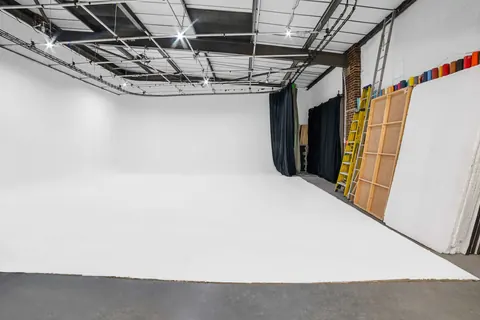
An infinity cove can offer a similarly practical advantage. It provides a continuous, shadow-free background for product work, fashion, beauty, automotive details and advertising imagery, while reducing the time spent building and retouching a temporary backdrop. The important question is not simply whether a cove exists, but whether it is large enough and accessible enough for your intended framing, crew and lighting plan.
Where the return on studio hire comes from
The strongest case for studio hire is operational. It gives a production more control over the variables that usually cause delays.
First, there is setup efficiency. In-house lighting and grip equipment can remove a supplier collection, reduce transport requirements and give the crew familiar options on hand. A studio that allows pre-lighting and pre-rigging can be especially valuable for packed schedules. Rather than using the first hours of the shoot day to build the look, the team can arrive ready to refine and shoot.
Second, there is creative flexibility. A sizeable studio can support multiple shooting zones, allowing one setup to be filmed while another is prepared. This is useful for campaigns with several deliverables, product ranges or social-first variations. It gives the director, photographer and creative team space to solve problems without dismantling the entire set between every shot.
Third, there is cost control. Predictable facilities are easier to budget than constant workarounds. Free parking, for example, can be a meaningful saving once you account for several crew vehicles, vans and equipment deliveries in London. Twenty-four-hour access can also prevent an unnecessary second hire day when a set needs to be built late, a production runs over or a crew needs an early call.
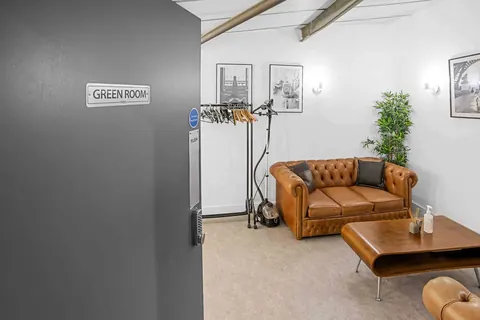
Finally, there is client confidence. Clients do not need a lavish environment for its own sake, but they do need to see that the production is organised. A clean, capable studio with room for viewing, collaboration and basic comfort creates a better working atmosphere. That matters when decisions need to be made quickly and several stakeholders are attending the shoot.
When hiring a studio may not be the right choice
Studio hire is not automatically the best answer. If the story depends on an authentic location, a house, street, restaurant or workplace may bring a texture that would be costly to recreate. A very small content shoot with available daylight and minimal kit may also be better served by a compact space.
There are also productions that need both. A location shoot may capture the narrative scenes, while a studio day handles controlled product shots, packshots, green-screen elements, stills, interviews or contingency coverage. Splitting the work can protect the schedule and give the edit more usable material.
The key is to avoid judging studios by hourly price alone. A lower-priced room with poor access, limited power, no blackout and no equipment can be a false economy. Equally, paying for a huge stage is unnecessary if the shoot only needs a small tabletop setup. Buy the capability the job requires, not the most impressive-looking listing.
What to check before you confirm a studio
Before booking, run the production plan against the building. Ask how the equipment will arrive, where vehicles can park and whether there are any access restrictions. Confirm the usable shooting dimensions, ceiling height, cove size and whether you can fully black out the space. If you are shooting sound, establish what ambient noise is likely at the required times.
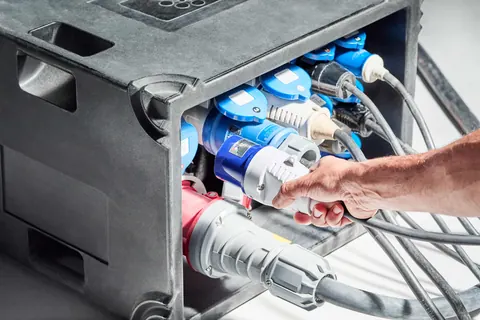
Check the power provision and the lighting and grip inventory in detail. “Equipment included” can mean anything from a few basic stands to a serious production package. Your gaffer or photographer should know exactly what is available, what is charged separately and what needs to be brought in.
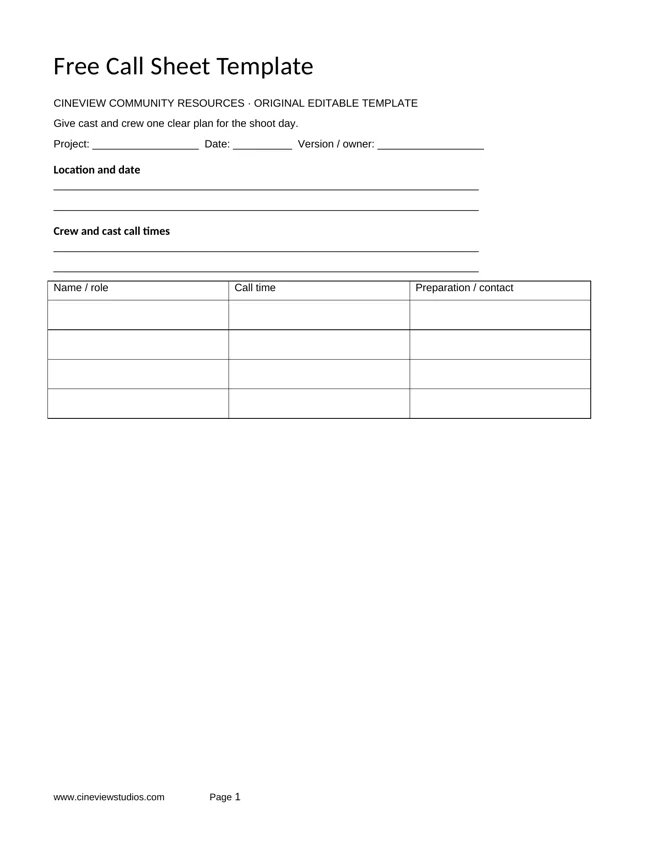
For complex work, discuss the schedule rather than booking a generic block of time. Can the art department build beforehand? Can lighting be rigged in advance? Is there space for props, wardrobe, catering and a client area without interfering with the set? These questions are often more valuable than saving a small amount on the headline rate.
At Cineview Studios, the combination of a large ground-floor space, shutter and drive-in access, high ceilings, lighting grid, blackout control, in-house kit and free parking is designed around these practical decisions. It is the difference between arriving at a blank room and arriving at a facility ready to support a working crew.
Make the hire earn its place on the budget
A studio should not be treated as a passive backdrop. Use it to compress the schedule, increase the shot count and improve consistency across every deliverable. Build enough time into the booking for a proper technical recce, prep and reset. Bring a clear floor plan, a lighting reference and a realistic list of equipment and crew positions.
When the right studio removes friction, the team spends less of the day solving access, space and control problems. That leaves more time for the work clients are actually paying to see: sharper images, stronger films and a production that finishes with the job properly done.
One thought on “Is Studio Hire Worth It for Your Next Shoot?”