
Best Photo Shoot Space Features for Smooth Shoots
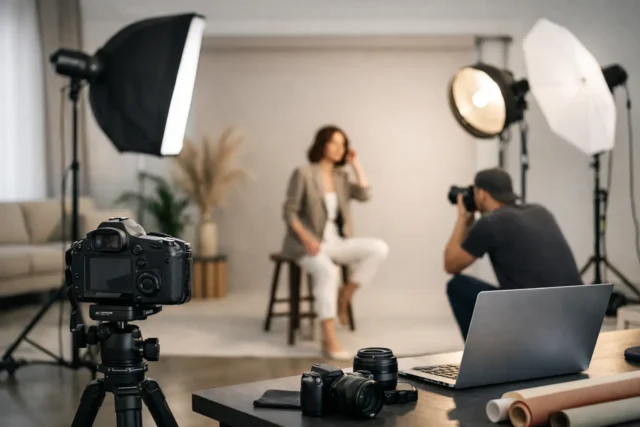
A studio can look impressive in photographs and still cost a production hours on the day. The best photo shoot space features are not decorative extras. They are the practical details that determine whether your crew can light properly, move kit safely, turn products around quickly and keep clients confident in the process.
For a simple portrait session, a compact daylight room may be enough. For an e-commerce campaign, vehicle shoot, fashion editorial or commercial production, space has to work much harder. The right facility removes avoidable compromises before the call sheet is even issued.
Best photo shoot space features start with usable scale
Square footage matters, but it is only useful when you understand how much of it is genuinely shootable. A room can be large on paper yet lose valuable working area to low ceilings, awkward pillars, fixed furniture or a narrow entrance. Ask for the clear floor area, not just the headline size, and consider where camera, lighting, styling, client seating and kit cases will actually sit.
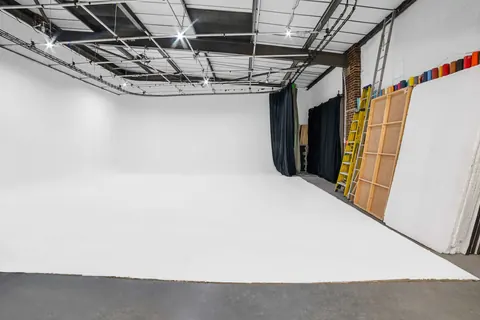
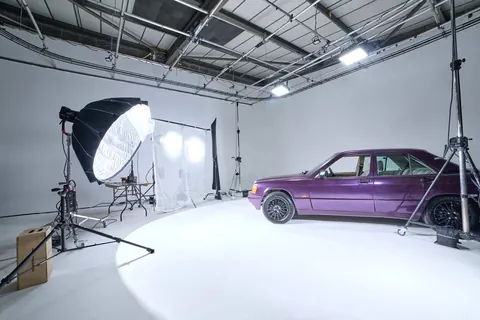
Ceiling height is one of the biggest differentiators. High ceilings give photographers and DOPs room to position large modifiers, flags, overhead frames and boom arms without pushing everything too close to the subject. They also make full-length fashion, group work and wide-angle sets far easier to light cleanly. A proper lighting grid adds another level of control, allowing crews to rig sources above the floor and keep walkways clear.
This is particularly valuable when the brief changes. A team shooting product packshots in the morning may need to move into a standing talent setup, a tabletop food scene or a larger art-directed set in the afternoon. A scalable studio lets the production adapt without having to reduce the visual ambition of the work.
A cove should support the job, not restrict it
An infinity cove is useful because it provides a clean, continuous background without a visible horizon line. It is a strong choice for fashion, beauty, advertising, product photography and social assets where a polished finish is required straight out of camera.
However, size and condition matter. A shallow cove can restrict lens choice and limit the distance between subject and background. A cove that is too narrow may work for a single person but become impractical for groups, furniture, wide compositions or motion. Check its dimensions, whether it can be repainted, and whether the studio has enough space around it for lighting and crew movement.
Lighting control is where production value is won or lost
Natural daylight can be attractive, but it is not always an advantage. London weather changes quickly, and daylight studios can become difficult to manage when consistency matters across a full shoot day. If you are creating a campaign with multiple products, talent changes or matching angles, reliable blackout capability gives you control over exposure, colour temperature and reflections.
A blackout studio is not only for film work. Photographers benefit from it whenever they need to shape light precisely, shoot reflective products, use projected visuals or maintain a repeatable setup. It also makes longer days more predictable, particularly in summer when daylight can run well beyond normal working hours.
The strongest spaces offer both options: the ability to use available light when it suits the brief and the ability to remove it completely when the creative demands control. That flexibility prevents the studio itself from dictating the look of the job.
In-house lighting and grip reduce unnecessary friction
A technically capable room is only half the equation. Crews also need practical equipment close at hand. Stands, C-stands, polyboards, flags, clamps, sandbags, extension leads and modifiers are the items that keep a set moving, yet they can become an expensive and time-consuming separate hire.
An in-house lighting and grip inventory helps smaller teams work professionally without over-ordering equipment. For larger productions, it reduces the amount that must arrive by lorry and gives the crew useful back-up if a plan changes. The key question is not simply whether equipment is available, but whether it is suitable for commercial use, maintained properly and supported by staff who understand how it fits into a working set.
Access, loading and parking protect the schedule
Poor access is one of the most expensive hidden costs of a London shoot. Carrying lighting, cases, props, flats and product stock up stairs or through narrow corridors eats into booked time before the first frame is taken. It also creates unnecessary risk for crew and equipment.
Ground-floor access with a wide shutter door changes the workflow immediately. It allows kit, set materials and large props to move directly into the studio. For vehicle content, drive-in access can make the difference between a viable production and an impossible one. Even if no car is being photographed, a loading route built for serious production means faster turnarounds and less congestion at the beginning and end of the day.
Free on-site parking is equally practical. It keeps crew travel simpler, makes equipment transport more manageable and prevents a producer from spending the morning coordinating unloading restrictions. In a city where parking and access often become separate logistical projects, these details are commercial advantages, not conveniences.
Look for a space that can handle builds and changing briefs
Many shoots need more than a blank background. Branded campaigns may require flats, kitchen sets, office scenes, coloured walls, practical lighting or layered foreground elements. A studio suitable for set builds gives art departments enough room to construct, dress and shoot without constantly working around the limitations of the room.
There is a trade-off here. A smaller studio can feel cost-effective for a straightforward product shoot, but it may become false economy when the team needs to build even a modest set, create depth in the frame or keep multiple looks live. Additional studio time, external storage and awkward reset periods soon erode the saving.
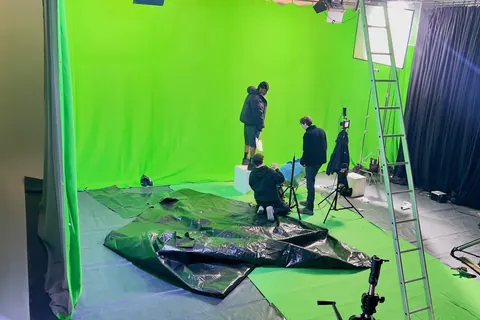
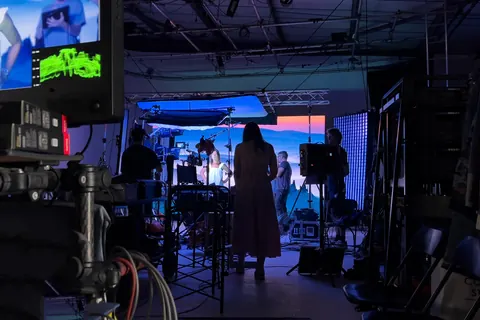
For more technical work, green screen and virtual production capability are worth considering. Green screen requires even lighting, adequate separation between talent and background, and enough depth to reduce spill. Virtual production has its own requirements around power, lighting, camera tracking and controlled environments. Not every job needs these facilities, but hiring a space with the capability gives agencies and production companies more options when a brief develops.
Crew comfort and client readiness are production features too
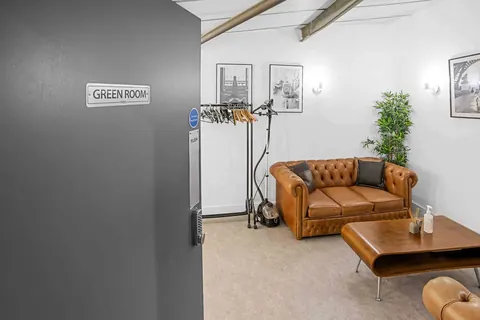
A shoot can be technically perfect and still run poorly if the space does not support the people working in it. A separate area for hair, make-up, wardrobe, catering and client review keeps the shooting floor focused. Reliable Wi-Fi, clean facilities, seating, heating and a place to take calls may sound basic, but they affect how calmly the day runs.
Client-facing work benefits from a studio that feels organised rather than improvised. Brand teams want room to review takes, protect product samples and collaborate without standing in a corner beside cases. That does not mean choosing style over function. It means choosing a professional environment where the operational basics have been considered.
Twenty-four-hour access can also be valuable when production schedules are tight. Pre-lighting the night before, building ahead of a morning call, or wrapping after a full commercial day can save substantial pressure. The availability is only useful if it comes with clear arrangements for access, security and support, so confirm how the facility handles out-of-hours production.
Ask about support before booking
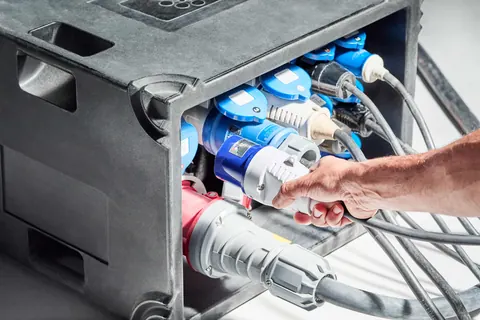
The best studio operators do more than hand over a key. They understand that a producer may need to confirm power, access timings, cove dimensions, rigging options or the best loading plan before a crew arrives. Fast, informed answers at the enquiry stage are a useful sign of how the day itself will be managed.
Pre-lighting and pre-rigging support are particularly valuable on complex shoots. Having lights or overhead equipment prepared before the main crew call can protect shooting time and allow the creative team to begin with a tested setup. It is not necessary for every production, but it is a serious advantage for campaigns with multiple deliverables, talent bookings or demanding client schedules.
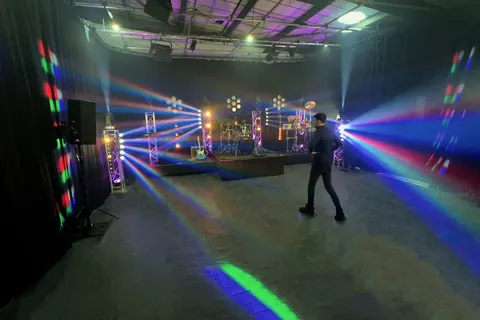
At Cineview Studios, the combination of high ceilings, a lighting grid, ground-floor shutter access, parking and specialist shooting environments is designed around this reality: a studio should help the production move faster, not ask the production to work around it.
Before you book, walk through the shoot from arrival to wrap. Picture the vehicle unloading, the first lighting setup, the client review, the prop change and the final load-out. The space that handles each stage without compromise is the one that will give your creative team the most room to do its best work.