

Blackout Studio for Filming: What Matters
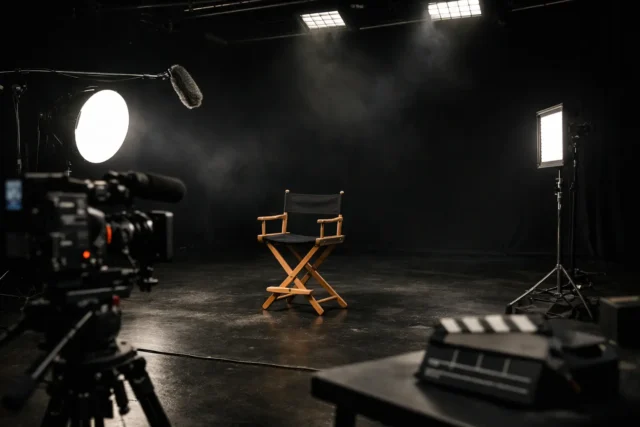
The difference between a smooth shoot and an expensive one often comes down to the room. If you are booking a blackout studio for filming, you are not just paying for darkness. You are paying for control – over light, reflections, continuity, crew movement, rigging options and the pace of the day.
That matters more than many teams expect. A space can look fine on a website, but if light leaks around a shutter, the ceiling is too low for your overheads, or access turns load-in into a two-hour problem, your schedule starts slipping before camera rolls. For commercials, branded content, music videos, interviews and product work, a proper blackout environment is not a nice extra. It is part of the production workflow.
Why a blackout studio for filming changes the shoot
A true blackout space gives you consistency. That sounds simple, but it affects almost every department. Lighting becomes repeatable, exposure stays stable across takes, and you are not fighting daylight shifts halfway through a setup. If you are building mood, working with projection, shaping contrast or matching plates, that control is the difference between getting the look in camera and trying to rescue it in post.
It also gives you flexibility. In a daylight-led studio, the room dictates more than it should. In a blackout studio, the production leads. You can create a hard commercial edge in the morning, switch to soft beauty lighting after lunch, then move into a dramatic low-key setup in the evening without the sun dictating the terms.
For smaller crews, that control is often a budget issue as much as a creative one. Time lost managing daylight, improvising flags or constantly adjusting exposure adds up quickly. A cheaper space that creates technical problems is rarely cheaper by wrap.
What to look for in a blackout studio for filming
Not every dark room is a proper filming space. The useful question is not whether a studio can be blacked out. It is whether it stays production-ready once it is.
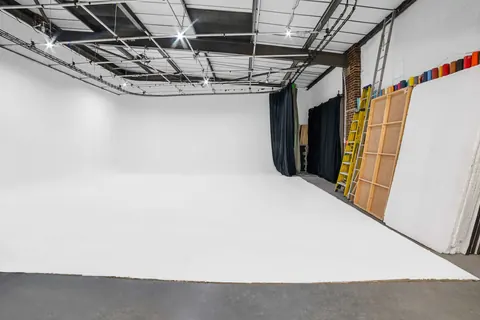
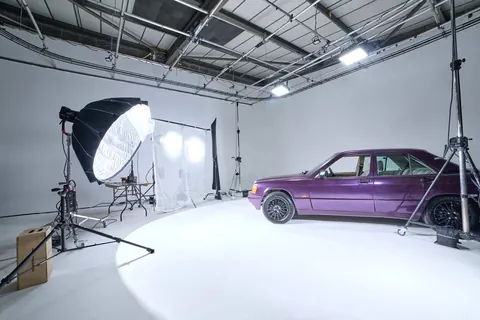
Ceiling height is one of the first things to check. If you are shooting people, products, set builds or any setup that relies on overhead shaping, low ceilings become restrictive fast. You lose options with larger modifiers, booms and top light positions. High ceilings with a proper lighting grid give your gaffer and camera team room to work, which means faster setups and cleaner frames.
Access matters just as much. A blackout studio might have the right look, but if every case, prop and stand has to be carried through narrow corridors or up stairs, crew energy goes into logistics instead of the shoot. Ground-floor access, shutter entry and drive-in capability are practical advantages that directly affect schedule, especially on larger commercial jobs or productions with scenic elements.
Then there is power and rigging. Productions often underestimate how quickly technical demand builds. Once you are running multiple fixtures, monitors, playback, charging stations, haze, practicals and client village requirements, a basic room starts to show its limits. A filming studio should support that load without awkward workarounds.
Acoustics are another trade-off to weigh properly. Blackout is about light control, but many filming jobs also need clean audio. A space can be visually perfect and still be compromised by road noise, echo, roller shutters or neighbouring units. If you are recording sync sound, ask direct questions. A studio built for image capture is not always ideal for dialogue-heavy work.
The hidden costs of the wrong space
Studios are often compared on day rate alone. That is understandable, but it is rarely how production teams actually feel the cost.
A lower hire fee loses its appeal when the crew needs extra blackout material, more labour for load-in, additional grip to work around the room, or more time to pre-light because the rigging is limited. Add parking charges, equipment transport delays and overtime, and the cheaper booking starts looking expensive.
This is where functional details matter. Free parking, in-house lighting and grip, pre-rig support and 24/7 access do not just sound useful on a spec sheet. They reduce friction. They make call times easier to manage, simplify technical planning and cut the number of moving parts you need to source elsewhere.
For agencies and brands, there is another cost that matters: client confidence. If the set feels cramped, chaotic or difficult to work in, it changes the energy of the day. A professional studio should not only work for the crew. It should support approvals, viewing, collaboration and pace without making the production feel improvised.
When blackout is the right choice – and when it depends
Blackout is the obvious choice for a lot of filming work, but not every shoot needs full isolation from daylight. If you are capturing natural-looking lifestyle imagery or a simple daylight interview, a daylight studio can sometimes be the right fit. It may even speed things up if the creative is built around available light.
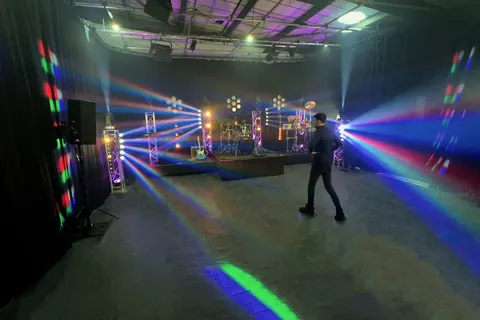
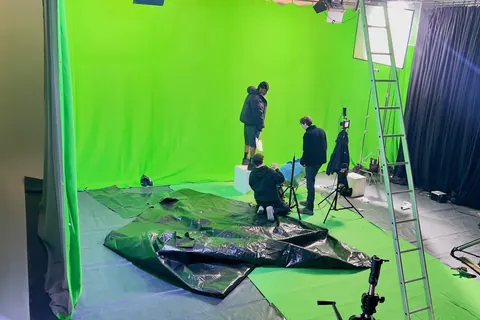
But once consistency, stylised lighting or technical precision matter, blackout tends to win. That includes beauty campaigns, tabletop product films, fashion editorials with controlled lighting ratios, automotive content, performance setups, green screen work and anything involving projection or VFX elements. It is also useful when the schedule stretches across long hours and you cannot afford changes in ambient light between setups.
The right answer depends on the brief, but serious filming jobs usually benefit from keeping variables down. A blackout space does exactly that.
Blackout, green screen and set build flexibility
One of the biggest advantages of a well-equipped filming studio is not just the blackout itself. It is what the blackout allows you to combine with other production requirements.
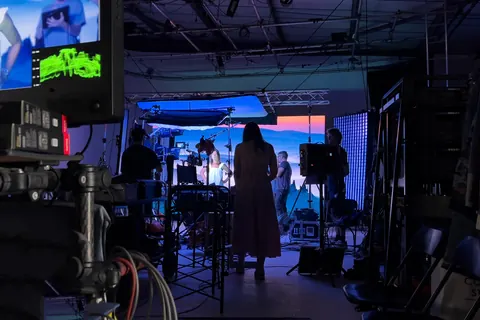
If your project moves between controlled cinematic lighting and green screen capture, the studio needs enough scale and separation to support both properly. If you are bringing in scenic flats, props or larger fabrication, the room needs to be set-build friendly rather than merely empty. If you are working with virtual production elements or specialist playback setups, blackout becomes part of a wider technical environment rather than a standalone feature.
That is where many smaller London spaces fall short. They can handle a straightforward content day, but once the shoot becomes more ambitious, the limitations show up quickly in height, access, rigging, storage and working room around the set. Productions do not just need a dark room. They need a room that still performs once a proper crew, lighting package and client team are inside it.
Why London productions need to be more selective
Studio hire in London has a habit of charging premium rates for compromised spaces. Tight access, awkward loading, limited kit, restricted hours and underwhelming support are often presented as normal. They should not be.
A blackout studio for filming should make production easier, not force more problem-solving onto the crew. The best spaces are built around workflow: enough room to rig properly, enough access to load efficiently, enough equipment on site to avoid unnecessary sub-hires and enough operational support to keep the day moving.
That is why practical comparison matters more than polished marketing. Ask what the studio actually helps you do. Can you pre-light the night before? Can you get vehicles or large set pieces in without drama? Is there a proper grid? Is there enough ceiling height for the look you want? Are you bringing in everything yourself, or is there meaningful in-house support?
These are not small details. They determine whether the studio works as a production base or just a room hire.
For teams weighing options in London, that is often the real dividing line. A facility such as Cineview Studios is designed around those production realities, which is why the conversation shifts from square footage alone to how efficiently the space works on the day.
Choose the room that protects the schedule
When you book a blackout studio, you are really buying certainty. Certainty that the light will stay where you put it, that the crew can move properly, that the gear can get in without delay and that the studio will support the brief rather than complicate it.
That does not mean every production needs the biggest space available. It means the room needs to match the technical and logistical demands of the shoot. If it gives you control, access, rigging strength and enough operational support to keep momentum on set, it is doing its job.
The best studio choice is usually the one that removes problems before they arrive. On a filming day, that is worth far more than a lower headline rate.
One thought on “Blackout Studio for Filming: What Matters”