Choosing a Studio for Set Build Projects
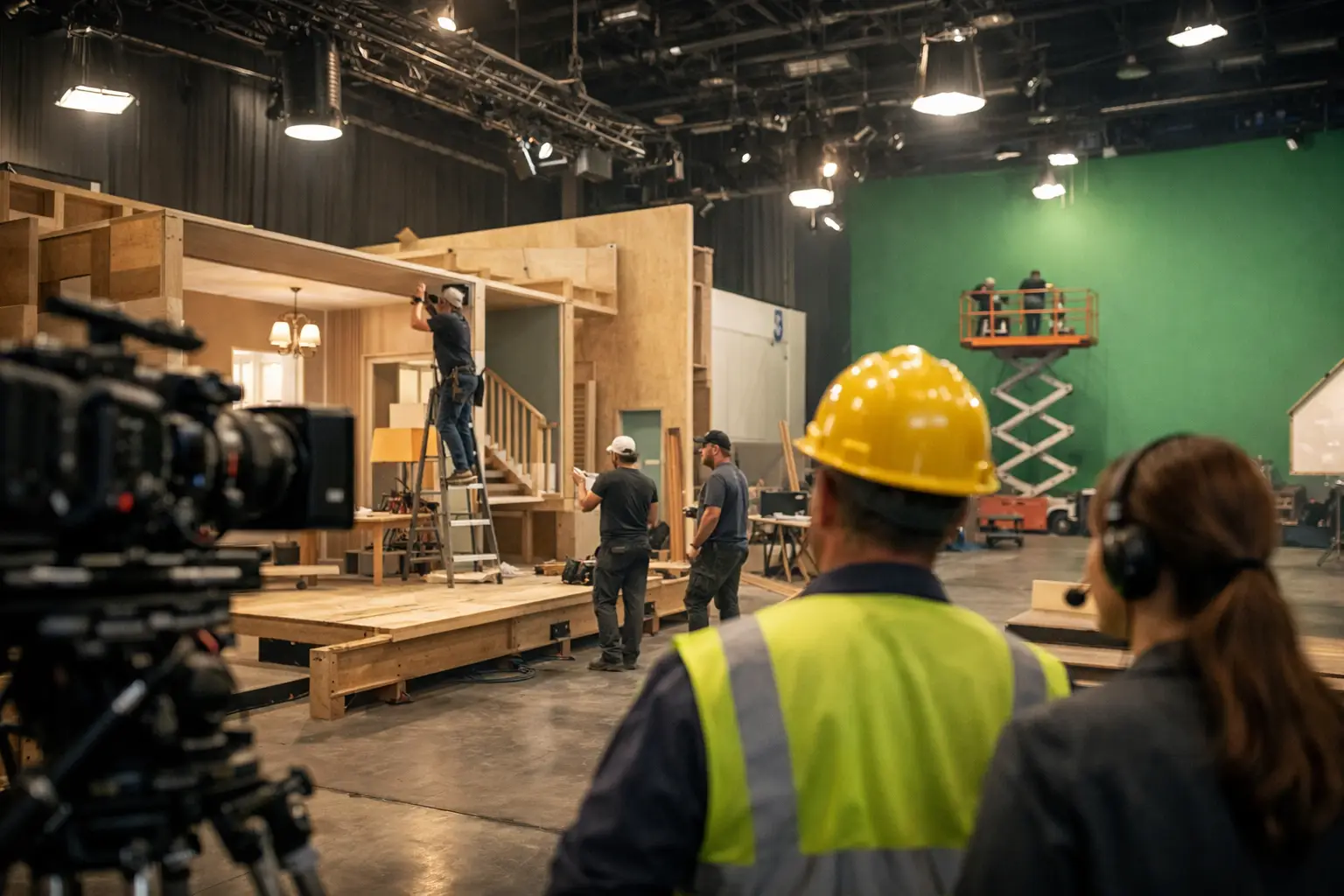
A set build can look straightforward on a floor plan and become expensive the moment the first wall goes up. Suddenly, access is too tight, ceiling height starts limiting lighting positions, the build team is waiting on load-in, and production is losing hours to a space that was never designed for proper construction. If you are booking a studio for set build projects, the room itself is only part of the decision. What matters is whether the whole facility supports the way a real production works.
That distinction is where many London studio hires fall short. Plenty of spaces photograph well in a recce, but become difficult once scenic arrives, vehicles need unloading, clients turn up, and the lighting plan has to adapt around the build. A studio that genuinely suits set construction needs to perform before the camera rolls, not just during the shoot.
What makes a studio for set build projects actually usable
The first issue is access. If loading materials, flats, props and kit into the studio requires awkward lifts, narrow corridors or multiple handlers, build time expands quickly. Ground-floor access changes the pace of a project. So does shutter access that allows crews to move larger items in without dismantling them first.
The second issue is volume. A build may fit within the footprint of a room and still be wrong for the space. Ceiling height affects more than comfort. It affects whether you can rig overhead lighting cleanly, whether scenery feels boxed in, and whether camera positions remain flexible once the set is dressed. A studio with proper height gives production more options when the brief changes, which it often does.
Then there is the working environment around the set. You need space for art department activity, storage, client holding, styling, make-up, kit staging and crew movement. If every square metre is consumed by the build itself, the shoot becomes cramped before it begins. That usually leads to slower resets, more compromised angles and avoidable friction between departments.
Why access matters more than most teams expect
When producers compare studios, they often focus on rate, dimensions and visuals first. Those matter, but access tends to have the biggest impact on schedule. If scenic contractors, prop teams and production runners cannot get in and out efficiently, the studio day starts burning budget long before talent arrives.
A practical studio for set build projects should make load-in simple. Drive-in or near-direct access is a major advantage, especially for larger scenic pieces, furniture, product rigs or vehicle-based work. Free parking also matters more than it sounds on paper. In London, parking restrictions and off-site unloading can create unnecessary delays that ripple through the whole call sheet.
Twenty-four hour access is equally valuable when builds need to happen outside shooting hours. Many productions prefer to pre-rig the lighting, complete scenic work late, and arrive to a shoot-ready floor the next morning. That only works if the studio is genuinely set up to support round-the-clock workflow rather than treating it as an exception.
The right studio setup saves money, even if the day rate is higher
A cheap studio that slows down a build is rarely cheap in the final budget. If crews spend extra hours manoeuvring materials, waiting for access, rethinking the lighting plan or shifting kit to make space, those costs overtake any saving on hire. The more moving parts a production has, the more costly those inefficiencies become.
This is why experienced teams look beyond headline pricing. They assess whether the studio reduces labour, overtime and compromise. A well-equipped space with rigging support, in-house lighting and grip, sensible access and a build-friendly layout can be the more economical option because it removes separate hires and cuts wasted time.
For agency shoots, branded content and commercial stills, that difference is especially noticeable. Clients expect efficiency. They want a polished environment, a production that feels under control, and a space that can support both creativity and pace. If the studio looks affordable but creates pressure all day, it is the wrong room.
Studio features that matter for set build projects
Ceiling height and a proper lighting grid
High ceilings are not a luxury on a build stage. They give your gaffer and DoP room to shape light without backing fixtures into scenery or contaminating the frame. A lighting grid adds another layer of control because it keeps the floor clearer and allows more precise overhead rigging.
That becomes even more useful when the set itself is doing heavy visual work. If you are building interior environments, room sets, branded installations or e-commerce backgrounds, clean rigging options help maintain believable light while protecting usable floor space.
Blackout capability and controlled conditions
Natural light can be useful, but most set builds benefit from full control. A blackout studio gives production consistency across long days, especially when shooting motion content, product work or campaigns that need matched scenes across multiple setups.
Controlled conditions also help when the creative brief changes mid-shoot. If the team wants to push the mood, shift colour temperature or extend the day without chasing daylight, the studio should make that easy rather than forcing technical workarounds.
In-house equipment and pre-rig support
Set builds already create enough logistical demands. Bringing every stand, modifier, rigging component and grip item in from elsewhere adds cost and complexity. A studio with substantial in-house equipment simplifies planning and gives crews options if something changes on the day.
Pre-lighting and pre-rigging support are just as important. They reduce pressure on shoot mornings and help departments work in sequence rather than on top of each other. That is particularly useful when scenic, lighting and camera all need time in the space before call time.
When a studio is too small, the whole production feels it
A cramped stage does not just limit the set. It limits ambition. Camera moves get cut down, lensing becomes more restricted, client viewing areas become an afterthought, and departments start competing for space. On straightforward shoots that can be manageable. On set build projects, it usually becomes a problem.
This is one reason larger-format production spaces continue to outperform smaller central London studios for commercial work. You gain room to build properly, room to light properly and room to work without every decision becoming a compromise. That has a direct effect on production value.
At Cineview Studios, that practical advantage is central to the offer. The value is not simply square footage. It is having a production-ready environment with the height, access, blackout control, equipment and flexibility needed to support builds without the inflated pricing and constraints that often come with London studio hire.
How to assess a studio for set build projects before you book
Start with the build itself. How tall is it, how wide is it, and how much working space will be needed around it? Then assess the load-in route from vehicle to floor. If anything about that route feels awkward in a recce, it will feel worse on the day.
Ask how the studio supports pre-rigging, overnight setups and access outside standard hours. Confirm what power, rigging and in-house kit are available. Check whether the space is suitable for scenic construction, not just for shooting against a finished set. There is a difference.
It is also worth asking practical questions that get missed. Where do clients sit? Where does styling go? Can art department hold spare materials nearby? Is there room for a sensible monitor setup without obstructing the floor? Productions run better when these basics are solved in advance.
The best studio is the one that protects workflow
A studio for set build projects should do more than contain the build. It should help every department work faster and with fewer compromises. Good access speeds the load-in. Height improves lighting. Proper rigging keeps the floor workable. Parking, support and equipment reduce hidden costs. A client-ready environment keeps commercial shoots running smoothly.
That is the real benchmark. Not whether a studio looks impressive online, but whether it holds up once scenic, production, camera and client all arrive with different needs and the clock is already running. Choose the space that protects workflow, and the creative usually follows.
One thought on “Choosing a Studio for Set Build Projects”