Set Build Studio London: What Actually Matters
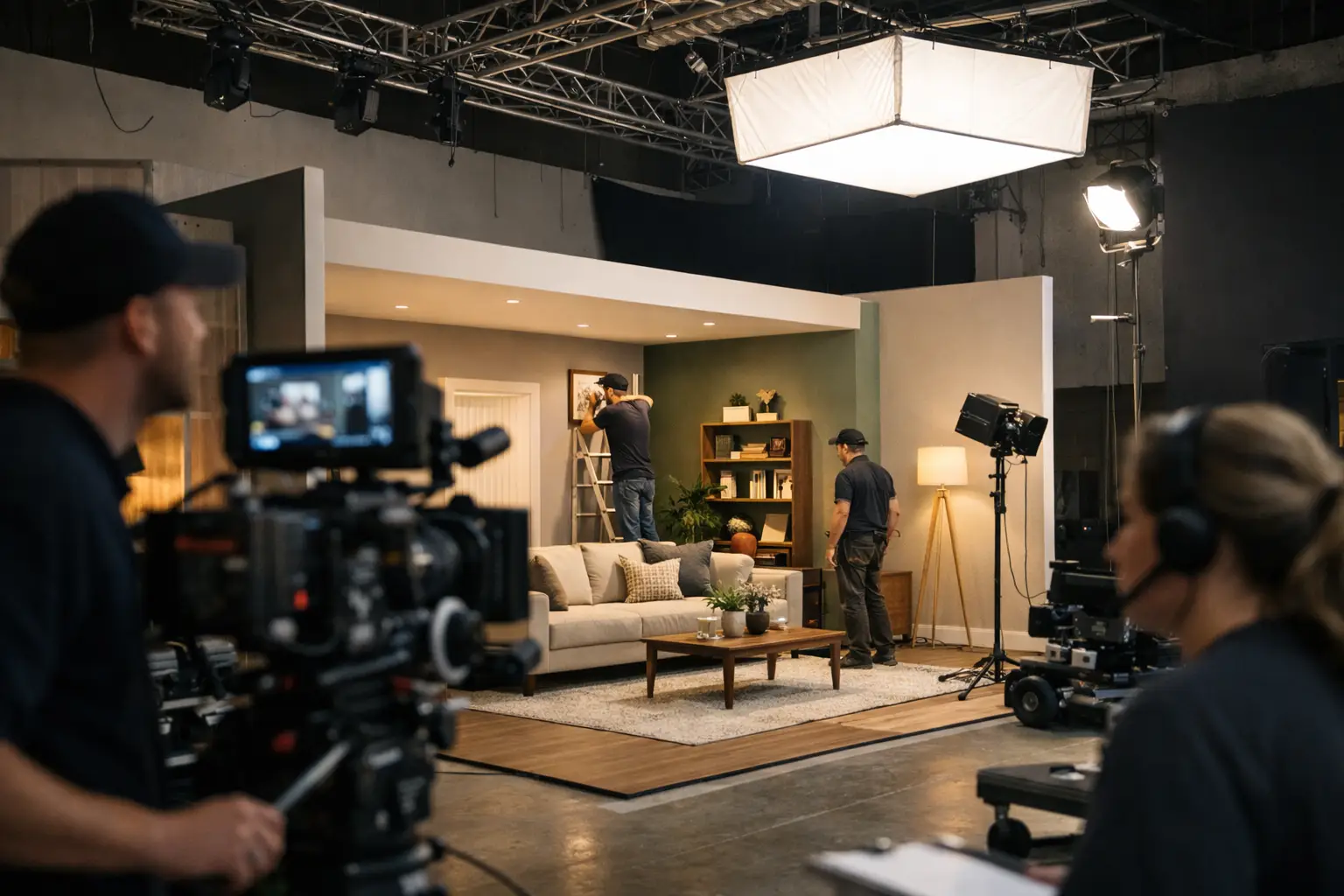
If you are booking a set build studio London productions can use properly, the wrong choice shows up fast. Not in the brochure, but on the day – when art department is waiting at shutter doors that are too small, lighting plans change because the ceiling is too low, or the build works on paper but not once the crew, kit and clients are all in the room.
A set-build shoot is never just about square footage. It is about whether the space behaves like a working production environment. For agencies, production teams, photographers and filmmakers, that usually means balancing three pressures at once: creative ambition, schedule and cost. If the studio cannot support all three, the day gets expensive quickly.
What a set build studio in London needs to do
A proper set build studio in London has to solve practical problems before they become creative compromises. Floor area matters, but access, power, rigging options and working height often matter more. A studio can look large in photos and still be restrictive once flats, props, camera kit, crew movement and client holding are factored in.
High ceilings are one of the first things experienced teams check. They give lighting designers and DoPs room to shape the scene without fighting the set. They also help with larger scenic builds, suspended elements and cleaner camera angles. In a lower space, every decision becomes a workaround. Lights creep into frame, top shots become awkward and the set starts dictating the shot rather than the other way round.
Access is just as critical. Ground-floor loading and drive-in capability save time at every stage, from unloading scenic materials to bringing in larger props or vehicles. If your build involves repeated deliveries, fabrication elements or heavy kit, poor access can strip hours out of the schedule. In London, where crew time is expensive and call sheets are tight, that is not a small issue.
Why many London studios fall short for set builds
There is no shortage of studio hire in the capital. The problem is that many spaces are designed for simple shoots, not build-led productions. They can be perfectly fine for packshots, portraits or small content days, but once scenery, styling departments and larger lighting packages enter the mix, limitations appear.
The most common issue is physical constraint. Studios in converted buildings often have awkward columns, limited loading, upper-floor access or ceiling heights that look workable until the rig goes up. Another issue is fragmented workflow. If your production has to hire one place for the studio, another supplier for essential grip, and then solve access and parking separately, costs start stacking up in places that never appeared in the first estimate.
That is why price alone is a poor way to compare a studio. A lower day rate can still produce a more expensive shoot if it causes overtime, additional transport, crew inefficiency or compromises in the build. For most commercial teams, the better question is simple: does this space reduce friction or create it?
Choosing a set build studio London crews can work in efficiently
The right studio should make the production day simpler, not just possible. That starts with space that is genuinely build-friendly. A clear floorplate, enough height, usable rigging points and a lighting grid all make a major difference once the scenic team is active and the camera department starts shaping shots.
In-house equipment also matters more than many first-time bookers expect. If lighting, grip and support kit are already on site, crews can move faster and adapt without waiting on additional deliveries. That flexibility is especially useful on commercial shoots where the brief shifts, shot lists expand or clients want alternative looks once they are on set.
Pre-lighting and pre-rigging support are often overlooked at booking stage, but they can change the whole rhythm of a production. If the team can get into the space early, rig safely and have the set camera-ready before the main call time, the shoot day itself becomes far more controlled. That is better for the budget, and usually better for the work.
Parking is another detail that sounds minor until it is not. In London, free on-site parking removes a recurring source of stress for crew, suppliers and clients. The same applies to 24/7 access. Some productions need a late strike, an overnight build or an early start to stay on schedule. A studio that can accommodate that gives producers more room to solve problems without inflating costs elsewhere.
The trade-off between central location and usable production space
A lot of teams start their search by aiming for the most central postcode they can afford. That makes sense if client travel is the only priority, but for set builds it is rarely the full picture. More central spaces often come with compromises – tighter access, less parking, stricter hours and smaller footprints at higher rates.
For production-led hires, a slightly less constrained location can be a smarter commercial decision if it gives you proper loading, larger usable space and better technical support. Clients care about convenience, but they also care about a shoot that runs on time and looks expensive on screen. A studio that allows the work to happen efficiently usually delivers a better overall experience than a prestige address with operational headaches.
This is where production teams have to be honest about the job. If the brief is a lightweight social shoot with a modest set, one type of studio may be enough. If you are building scenery, running multiple departments and managing agency stakeholders, you need a facility that behaves like one.
Build-friendly features that genuinely affect the day
Not every feature deserves equal weight. Some are nice to have. Others directly affect cost, safety and output. A blackout-capable space gives control over lighting conditions, which matters for both stills and motion. An infinity cove broadens creative options when the brief needs clean, adaptable backgrounds alongside built scenic work. Green screen and virtual production capability can also be relevant, depending on whether the project combines practical set elements with digital environments.
The key is flexibility. Productions rarely stay fixed from prep to wrap. The strongest studio spaces are the ones that can support a straightforward e-commerce build one week and a more ambitious branded content set the next, without feeling overcomplicated or under-equipped for either.
Client-ready amenities matter too, though they should support the shoot rather than distract from it. Comfortable working areas, clean facilities and enough room for agency, brand and production stakeholders all help the day run smoothly. But they only become meaningful once the fundamentals are handled: access, height, rigging, power, equipment and room to work.
Who benefits most from a set-build capable studio
Large commercial productions are the obvious fit, but they are not the only ones. Brand teams producing campaign assets often need a controlled environment where they can shoot multiple looks in one day. E-commerce operators benefit from being able to scale from simple product setups to more styled environments without moving to a different facility. Music videos, editorial shoots, fashion campaigns and broadcast content all gain from a space that can take scenic work seriously.
Independent creators and smaller businesses benefit too, especially when budgets are tight. A well-equipped studio with practical support can reduce the need to source everything separately. That lowers complexity as much as cost. For smaller teams, that can be the difference between pulling off a polished shoot and spending the day firefighting.
For London productions that need room, access and proper technical readiness, a facility such as Cineview Studios makes sense because it is built around the way crews actually work rather than the way studio listings like to present themselves.
Ask better questions before you book
Before confirming any set build studio London option, ask how the set gets in, how the lighting gets up and how the day expands if the brief changes. Ask about ceiling height, shutter access, parking, pre-rigging, in-house kit and whether the quoted rate reflects a real working setup or just an empty room. Those answers tell you more than styled photos ever will.
The best studio choice is usually not the one that sounds impressive in a pitch. It is the one that protects your schedule, gives your crew room to work and keeps creative decisions in the hands of the production rather than the limitations of the building.
If the space is doing its job properly, nobody spends the day talking about the studio. They get on with making the work better.
One thought on “Set Build Studio London: What Actually Matters”