
What Is a Virtual Production Studio?
A client wants a car shot at golden hour, a city skyline at night and a mountain road before lunch. Ten years ago, that meant location moves, weather risk, permits, overtime and a budget that could spiral fast. Now, in the right space, much of that can happen in one controlled environment.
So, what is a virtual production studio? At its core, it is a studio that combines physical set space with real-time digital environments, allowing filmmakers, brands and content teams to capture shots that look like multiple locations without leaving the building. Instead of relying entirely on green screen and adding everything later in post, virtual production brings much of that world into the shoot itself.
What is a virtual production studio and how does it work?
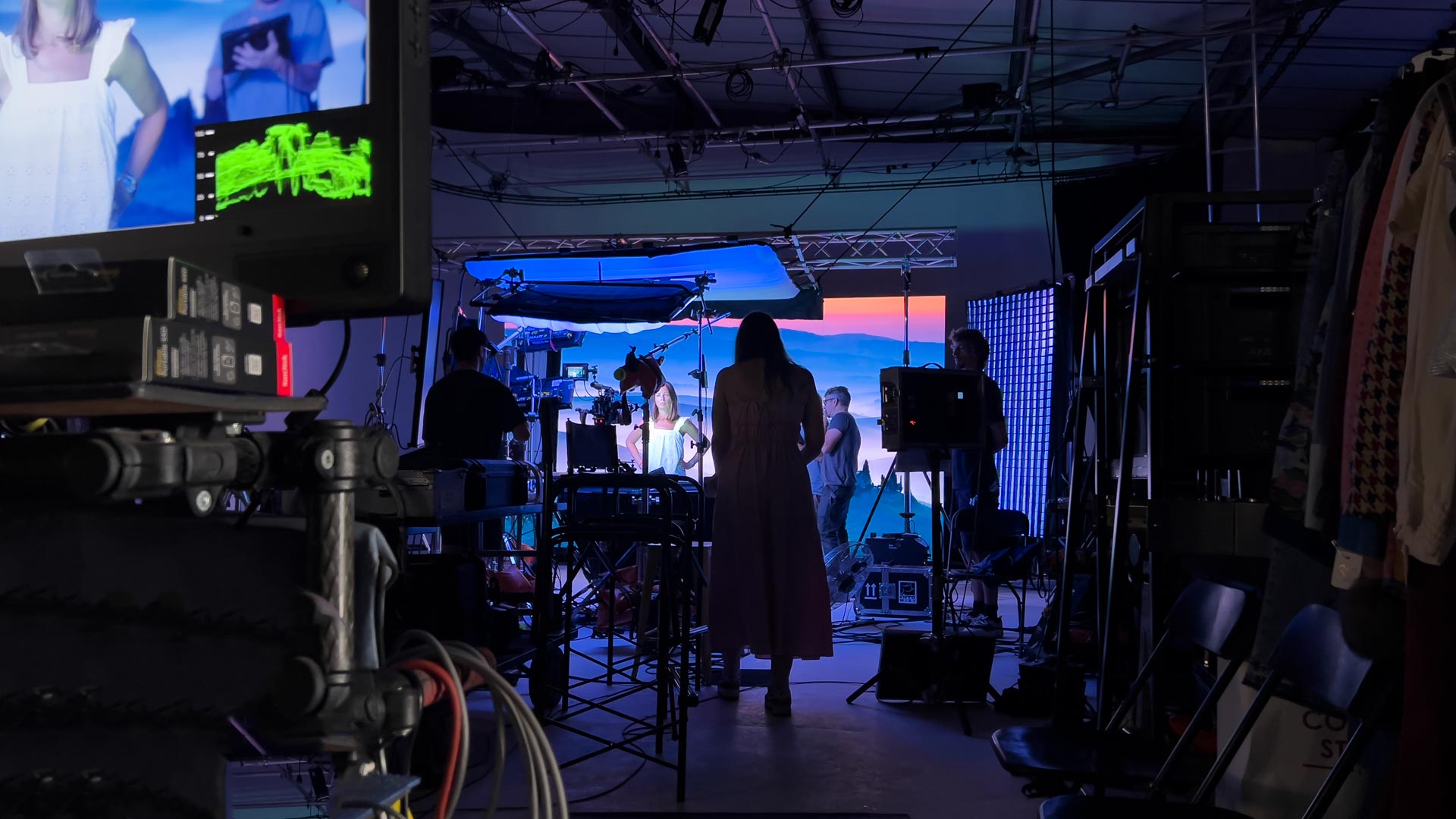
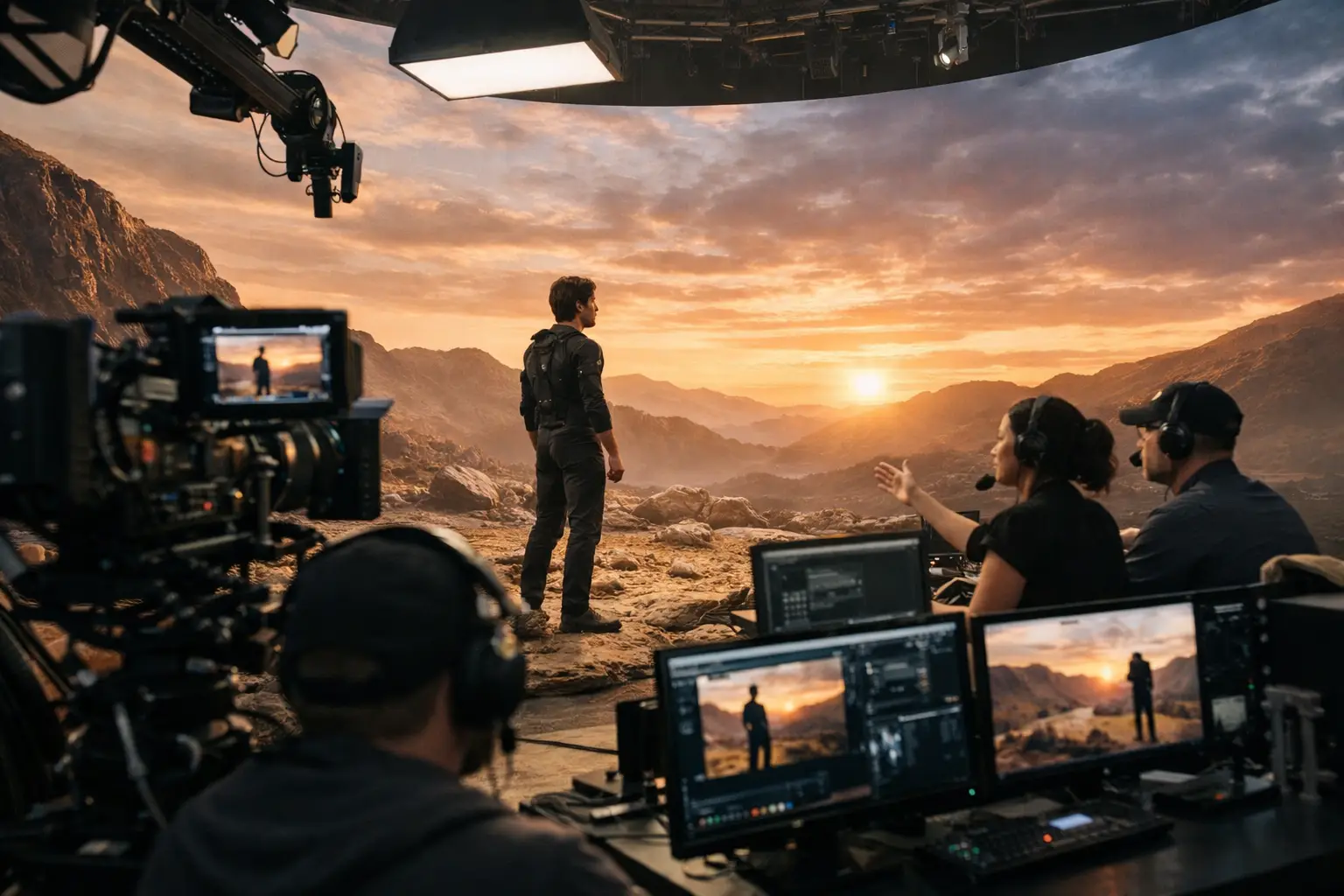
A virtual production studio typically uses large LED screens or projection systems to display digital backgrounds in real time. Those backgrounds are often built in game-engine software and can respond to camera movement, which helps create realistic depth, perspective and interactive light on the subject.
That last point matters more than the jargon suggests. If you are shooting a person inside a car, for example, the background can shift naturally as the camera moves. The light from the digital sunset can also play across the dashboard, glass and skin in a way that feels far more convincing than a flat green backdrop.
In practical terms, virtual production sits somewhere between a traditional studio shoot and a location shoot. You still need a proper production space, lighting control, rigging options, access for crew and kit, and enough room to build out your scene. The difference is that the environment beyond the talent, product or vehicle can be generated and controlled on set.
For agencies and production teams, that means fewer compromises between creative ambition and production reality. You can test looks earlier, make decisions with clients watching the monitor and avoid some of the guesswork that comes with heavy post-production compositing.
The key parts of a virtual production setup
The phrase can sound more futuristic than it really is. A virtual production studio is not one magic screen. It is a combination of systems working together in a studio that can support them properly.
The display element is the part most people notice first. That may be an LED wall, curved volume or other digital display surface used as the background or environment. The quality of that display affects brightness, colour accuracy, moiré risk and how believable the final image feels in camera.
Then there is the content itself. The digital environment needs to be designed, loaded and adjusted for the scene. Sometimes that is a simple backdrop. Sometimes it is a fully responsive 3D world with animated skies, moving reflections or changing time of day.
Camera tracking is another important piece. This allows the background to shift correctly as the camera moves, helping preserve perspective. Without that, the image can feel flat or artificial, especially on moving shots.
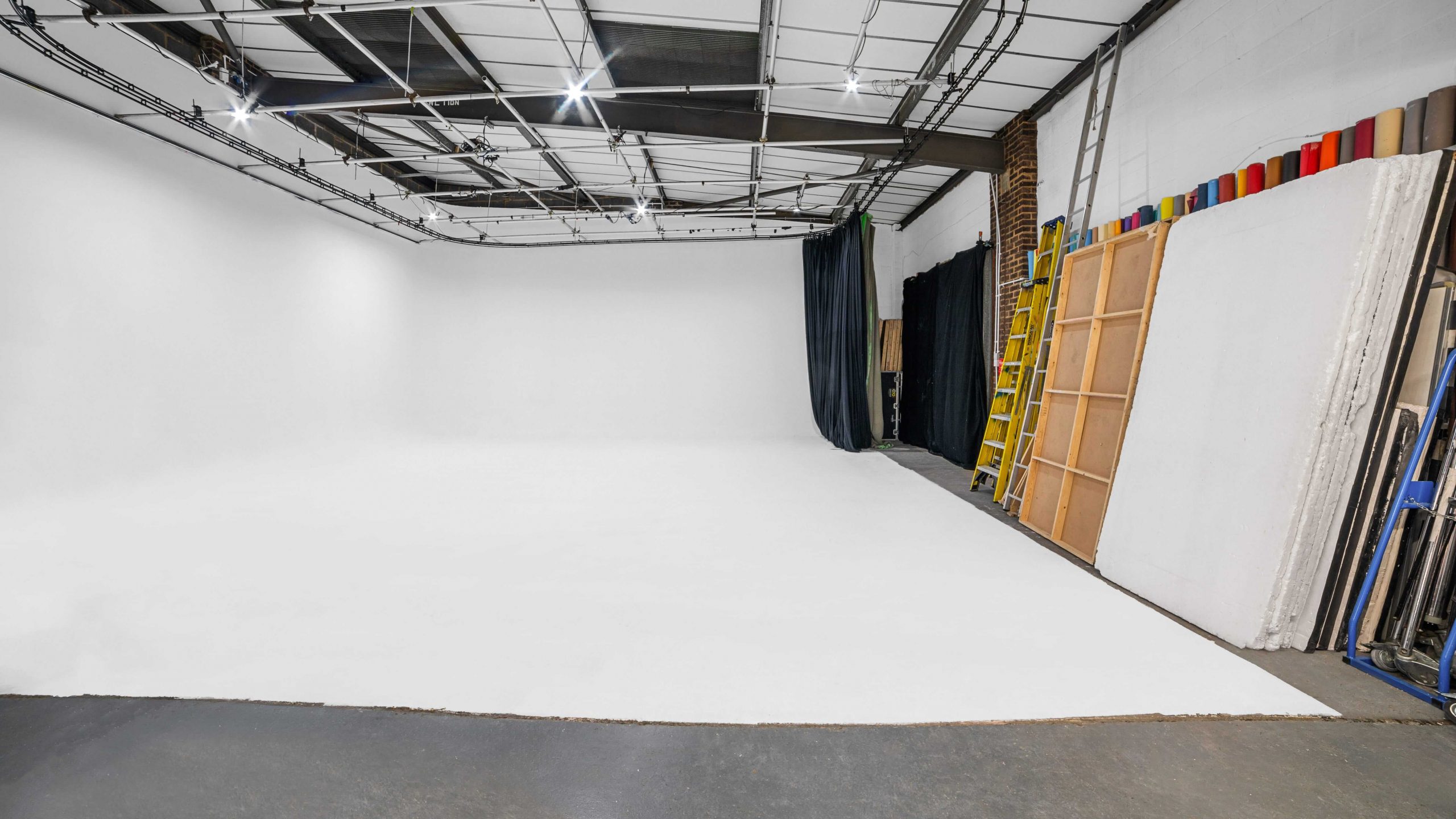
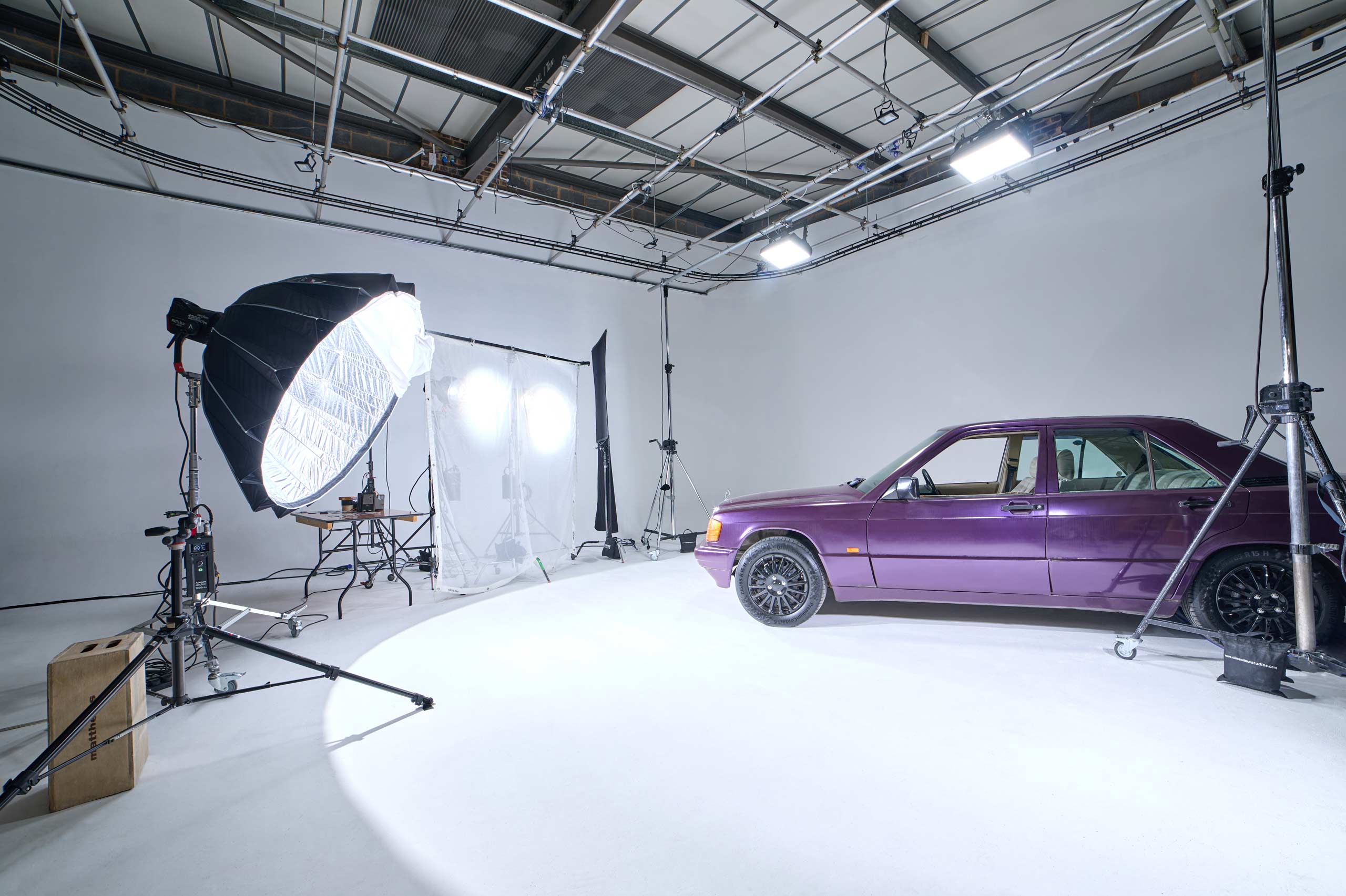
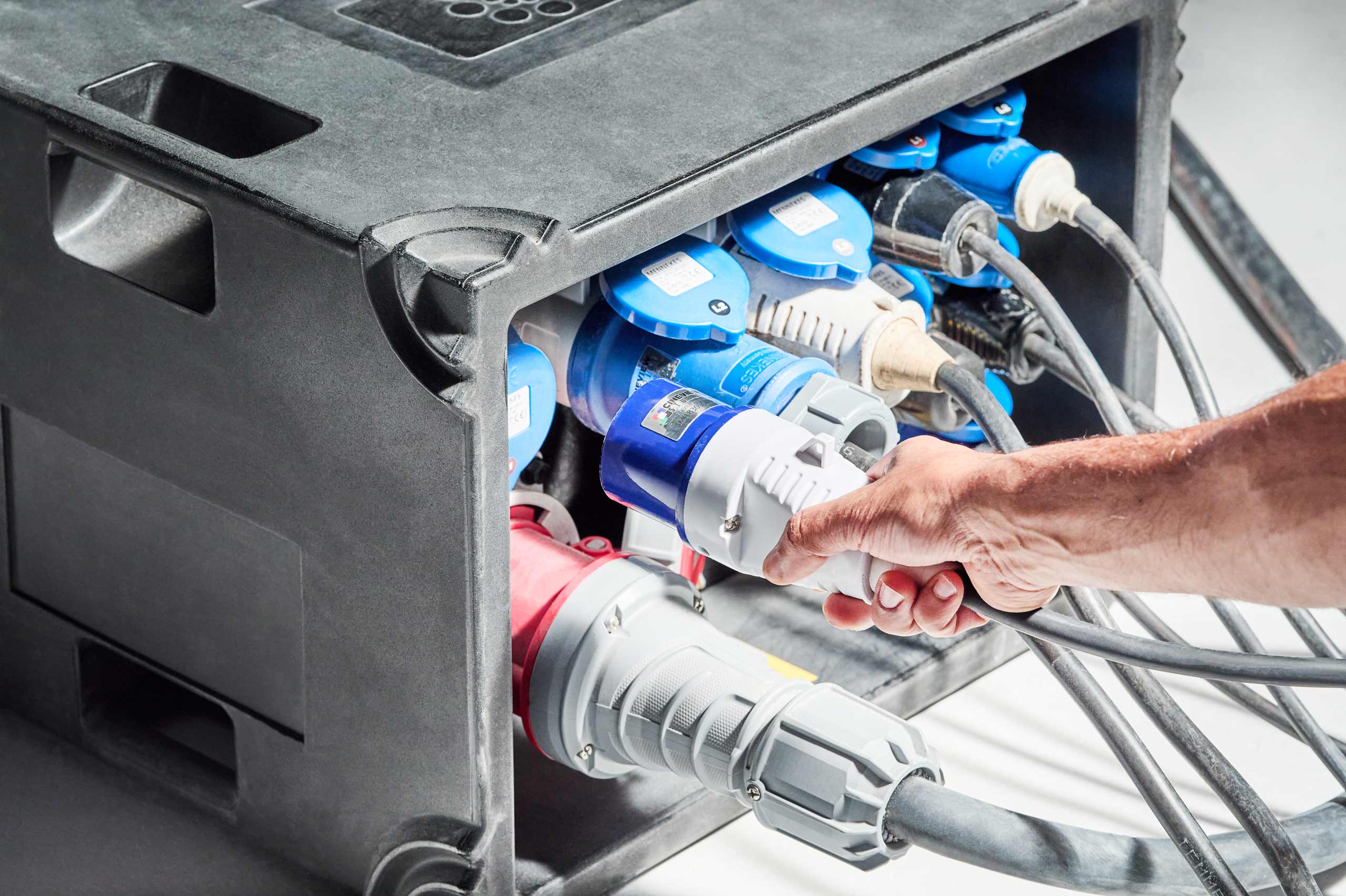
The final piece is the studio infrastructure around it. This is where many people underestimate the real requirement. Virtual production still depends on ceiling height, blackout control, power, access, rigging, floor space and a crew-friendly layout. If the room is too tight, poorly equipped or awkward to load into, the technology will not save the day.
Why productions are using it more often
The obvious benefit is efficiency. If you can shoot multiple looks in a single day without company moves, you save time and reduce logistics. That has a direct budget impact, particularly in London where travel, parking, crew hours and access restrictions add up quickly.
There is also a creative advantage. Directors, DPs, agencies and clients can see far more of the final image while shooting. That changes the conversation on set. Instead of saying, “Trust us, the skyline will be added later,” you can frame the shot and review something much closer to the finished result.
For branded content and commercial work, that can be a major win. Marketing teams often need approval confidence, fast turnaround and strong visual control. Virtual production helps with all three, especially when timelines are tight and there is limited appetite for extensive reshoots.
It also makes some shoots more practical from a risk perspective. Weather does not derail the day in the same way. Golden hour can last longer than fifteen minutes. A night-driving scene does not require road closures. That does not mean every production should switch, but it does explain why more teams are considering it.
Virtual production versus green screen
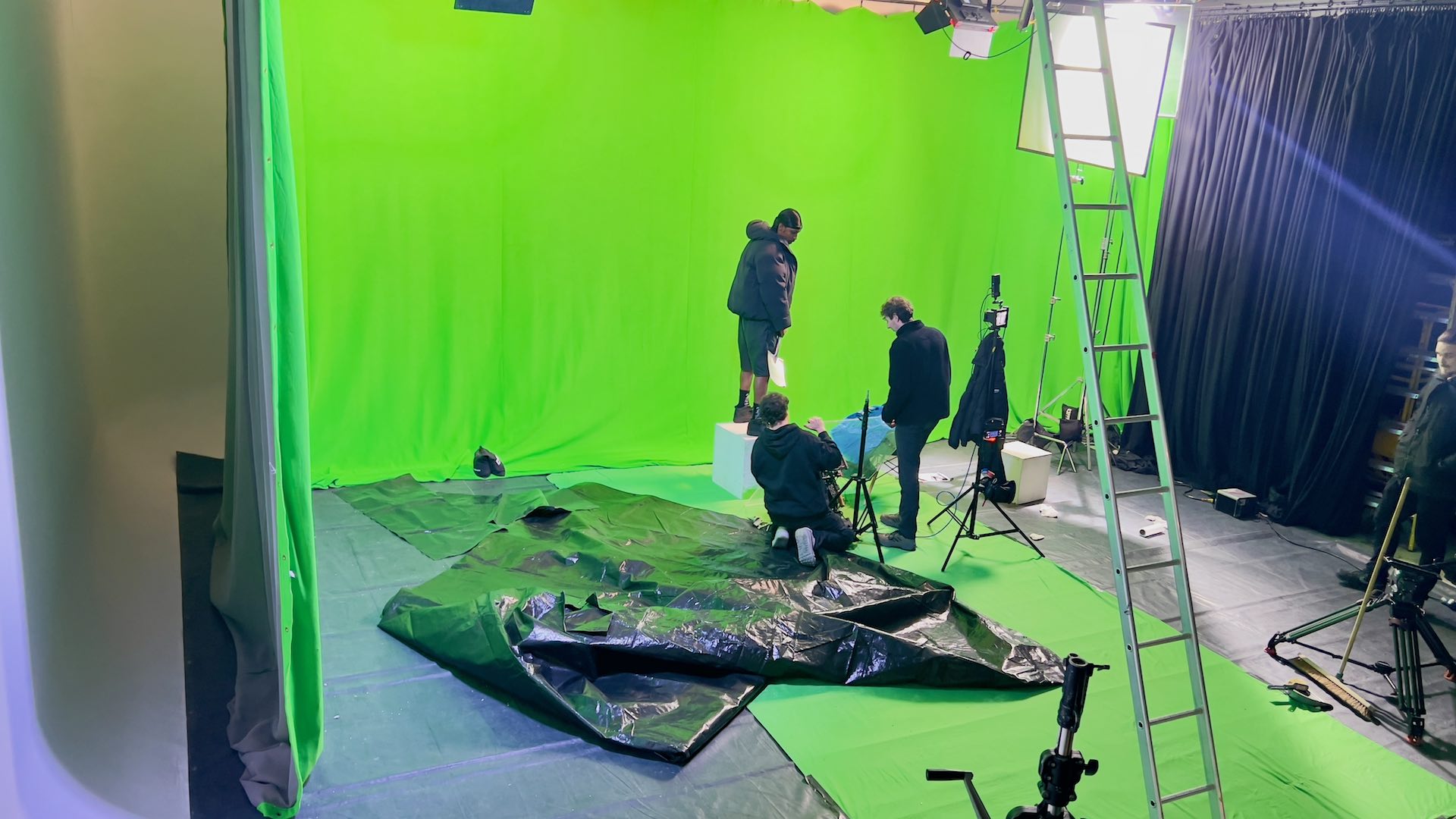
This is where the distinction matters. Green screen is still useful, and in some cases it remains the better option. If you need a relatively simple background replacement, heavy stylisation or maximum flexibility in post, green screen can be cost-effective and efficient.
Virtual production changes the workflow by moving more decision-making into the shoot day. You are seeing the environment in camera, often with real reflections and interactive light. That can reduce post work and improve realism, but it also means you need more planning up front.
The trade-off is straightforward. Green screen can be cheaper to stage initially, but it often pushes complexity into post. Virtual production can increase pre-production and on-set technical requirements, but may save time later and produce a more believable image in the right scenario.
If you are shooting shiny products, vehicles, fashion, interviews with a premium backdrop or scenes where lighting interaction matters, virtual production can be especially effective. If the scene is simple and the budget is tight, green screen may still be the smarter call.
When a virtual production studio makes sense
Not every brief needs it. The best use cases tend to be the ones where location realism matters, but location logistics are expensive, restrictive or unpredictable.
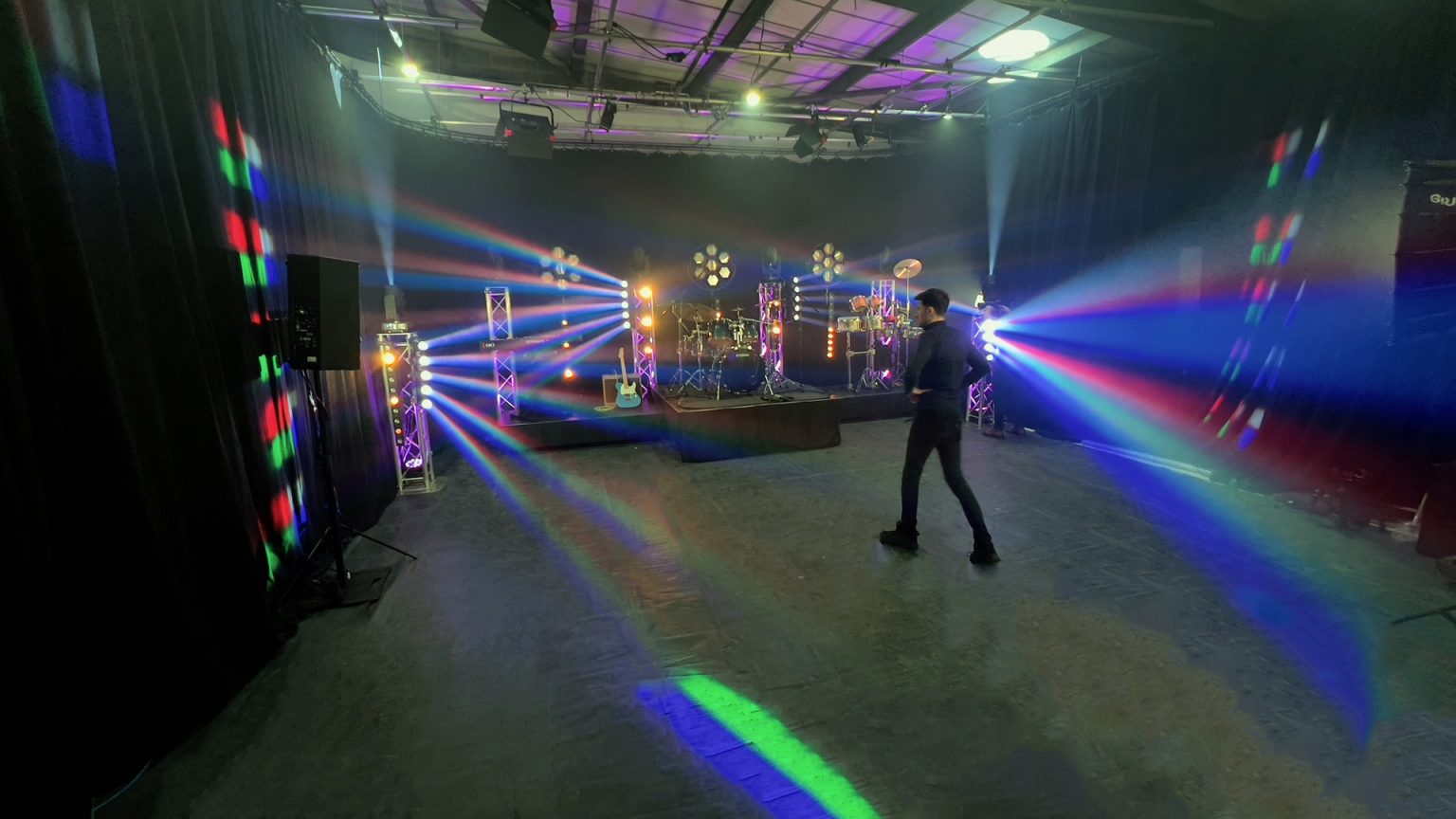
Commercials are a strong fit, particularly automotive, technology, fashion and branded storytelling. Product films can benefit too, especially when reflections, environment control and consistency are important. Music videos often suit the format because they need visual impact without the cost of multiple real-world locations.
For agency work, it can be a way to stretch a concept further without stretching the schedule. For smaller brands, it can provide a more polished result than a basic studio backdrop, without the cost and uncertainty of a full location-based production.
It also suits shoots that need fast approvals. When agency teams and clients can see a near-final look on set, decisions happen faster and with fewer surprises later.
What to look for in the studio itself
If you are hiring a space for virtual production, the studio matters just as much as the screen. A technically capable setup in a cramped or impractical room will create bottlenecks straight away.
Start with access. Can you get set pieces, vehicles or large kit into the space without wasting half the call time? Ground-floor loading, shutter access and drive-in capability are not nice extras on more ambitious shoots. They directly affect setup speed and labour costs.
Then look at the scale of the room. You need enough depth to separate subject, camera and background properly, enough height for lighting positions and enough width for crew to work without standing on top of one another. A proper lighting grid helps too, particularly when you are combining physical lighting with digital environments.
Blackout control is another non-negotiable. Ambient light contamination can affect both the screen image and your exposure control. Add in parking, in-house grip and lighting, pre-rig support and 24/7 availability, and the production day gets much easier to manage.
That is why the best virtual production spaces are not just about the tech demo. They are built around workflow. Cineview Studios approaches it from that practical angle, with the kind of access, height and production-ready infrastructure crews actually need on shoot day.
The limits to be aware of
Virtual production is not a shortcut for weak planning. It can solve real production problems, but it introduces its own requirements. Content needs to be prepared. Camera, lighting and screen settings need to be aligned. The creative team needs to know what is being built and why.
There are also aesthetic limits. Some environments work brilliantly on an LED wall. Others can still look better as a practical set extension or a traditional VFX composite. Wide shots, extreme reflections and certain kinds of fast movement may need careful testing.
Budget is another “it depends” factor. Virtual production can save money compared with complex location schedules, but it is not automatically the cheapest option for every brief. The value comes when the setup matches the job.
That is the real answer for most production teams asking whether to use it. Do not treat virtual production as a trend to chase. Treat it as a tool. If your brief needs controlled environments, efficient shoot days, fewer location variables and stronger in-camera results, it is worth serious consideration. And if your studio choice supports the logistics as well as the visuals, the whole production runs better from the first load-in to final shot.
The smartest productions are rarely the ones spending the most. They are the ones choosing a setup that gives the crew room to work, the client confidence at the monitor and the image the control it needs.