Film Studio Hire for Music Video Shoots
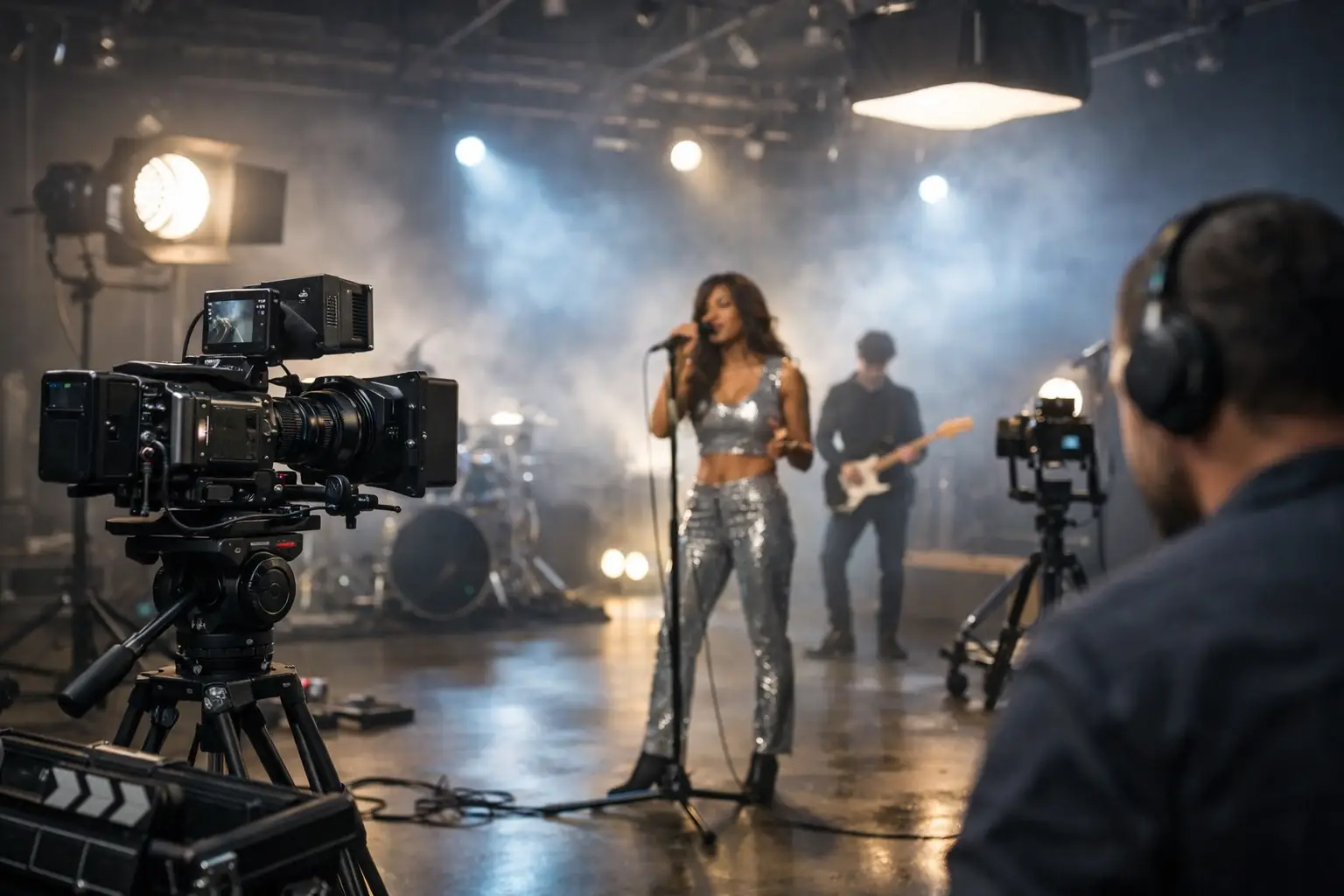
A music video shoot can fall apart long before the camera rolls. The usual problems are not creative – they are practical. Poor access for kit vans, low ceilings that kill lighting options, no room for art department builds, limited power, awkward loading, and hire rates that make every extra hour feel expensive. That is why film studio hire for music video production is often the smarter route when the brief needs control, speed and a polished result.
Music videos move fast. Even when the concept looks stripped back on screen, the production often is not. You may need performance set-ups, playback, haze, moving lights, blackout conditions, costume changes, multiple looks in one day, or enough depth to shoot on long lenses without compromising framing. In those cases, the studio you choose affects far more than convenience. It affects what you can actually achieve on schedule and on budget.
Why film studio hire for music video work makes sense
Location shoots can be brilliant when the setting does heavy creative lifting. They can also burn time. Permits, noise restrictions, weather, public interruption, limited power and tight call windows all chip away at the day. If the creative relies on lighting precision, repeatable takes or rapid scene changes, those variables become expensive very quickly.
A studio gives you control. That sounds obvious, but for music video production it has real commercial value. You can black out the space fully, rig overhead lighting properly, keep the set secure between takes, manage playback without fighting the environment, and work around the artist rather than around the location.
That does not mean every concept needs a studio. If the brief is documentary-led or built around a live location atmosphere, going out on the road may still be right. But when the treatment calls for stylised visuals, set design, VFX elements, performance lighting or a tight shooting ratio, studio hire usually gives better production efficiency.
What to look for in a film studio for music video shoots
The first thing to assess is usable space, not just square footage on paper. A room can sound large and still feel restrictive once you bring in camera, lighting, playback, talent, styling, agency clients and a working crew. Ceiling height matters as much as floor area because it determines how flexibly you can light performance and how easily you can keep stands, rigging and modifiers out of shot.
A proper lighting grid changes the day. Instead of cluttering the floor with stands, you can rig overhead, keep the set cleaner and move faster between looks. For music videos, where lighting often shapes the whole visual identity, that is a major advantage.
Access is another make-or-break issue. If loading in means carrying kit up stairs, through narrow corridors or across shared spaces, you lose time before the first set-up. Ground-floor access, shutter entry and drive-in capability matter more than many first-time hirers expect. The same goes for free parking. In London, parking costs and vehicle logistics can quietly inflate a budget.
Then there is the studio environment itself. If you need a clean infinity cove for performance work, product-led inserts or stylised choreography, the cove needs to be properly maintained and sized for motion, not just stills. If the project calls for green screen, the space has to support even lighting and practical separation between subject and background. If the concept involves custom set builds, the studio needs the scale, access and tolerance for construction work.
The real budget question is not the day rate
Many teams compare studios on headline cost alone. That is understandable, but it is rarely the best way to judge value. A cheaper room with poor access, no in-house kit and limited rigging can end up costing more once you factor in extra crew time, external equipment hire, slower turnarounds and compromised shot choices.
Good film studio hire for music video work should reduce friction across the whole production. If key lighting and grip equipment are available in-house, you cut delivery costs and simplify prep. If the studio allows pre-lighting or pre-rigging, your shooting day becomes more efficient. If you can work 24/7, overnight shoots and artist availability become easier to manage.
This is where production teams often see the difference between a basic space and a functional one. You are not just hiring walls. You are buying time, flexibility and fewer technical excuses.
Matching the studio to the treatment
Not every music video needs the same environment. A moody performance piece with haze and hard lighting has different demands from a choreography-led pop video or a concept built around virtual environments.
For performance-heavy work, blackout capability is essential. You need to control every source, shape contrast properly and repeat lighting cues across takes. For movement and dance, clear floor space and depth become critical. If the artist is working with props, build elements or a hero vehicle, drive-in access and generous dimensions stop the production from becoming a compromise exercise.
For VFX-led concepts, green screen or virtual production capability can make sense, but only if the crew can support it properly. Those tools are useful when the creative and technical planning are aligned. They are less useful when chosen as a shortcut without enough prep. In practice, the best studio is the one that fits the actual treatment rather than the one with the longest features list.
Film studio hire for music video productions in London
London gives you plenty of studio options, but the market is uneven. Some spaces are priced like premium facilities while offering very little beyond four walls and a white cyc. Others are technically decent but awkward to access, restrictive on hours or too small for a serious crew once the day gets moving.
For production companies, agencies and independent directors, the better question is simple: does the studio make the shoot easier or harder? If it has high ceilings, practical loading access, flexible hours, reliable equipment, crew-friendly working conditions and room for multiple departments to operate properly, it is doing its job. If the team is constantly adapting around the limitations of the space, it is not.
That is why many productions now favour facilities built around workflow rather than appearance. A smart studio should support efficient load-in, clean rigging, straightforward client management and enough technical infrastructure to handle both simple and ambitious briefs. Cineview Studios sits in that category – a production-minded London space designed to solve the practical issues that commonly slow music video shoots down.
Questions to ask before you book
Before confirming a studio, ask how the day will actually run in that space. Can you pre-rig the night before? Is there enough power for your lighting package? How long does load-in take from vehicle to floor? Are there restrictions on haze, sound levels or late finishes? Is the included equipment genuinely useful, or will you still need to source most of your package elsewhere?
Also think about client and artist experience. Music video shoots can involve label teams, management, stylists and collaborators coming in and out all day. A professional environment helps keep the set calm and organised. That is not about luxury for its own sake. It is about maintaining momentum when multiple stakeholders are involved.
Finally, be honest about scale. A cramped studio can work for a single-camera performance set-up, but once you add art direction, playback, gimbal work, motion control or multiple lighting zones, limitations show up quickly. It is usually better to book slightly more space than to spend the day trying to cheat around not having enough.
The strongest music videos tend to feel intentional. That comes from creative direction, but it also comes from having the right working environment behind the scenes. If the concept needs control, flexibility and room to execute properly, choosing the right studio is not an admin task. It is part of the production strategy.
One thought on “Film Studio Hire for Music Video Shoots”