Vehicle Filming Studio Guide for London Shoots
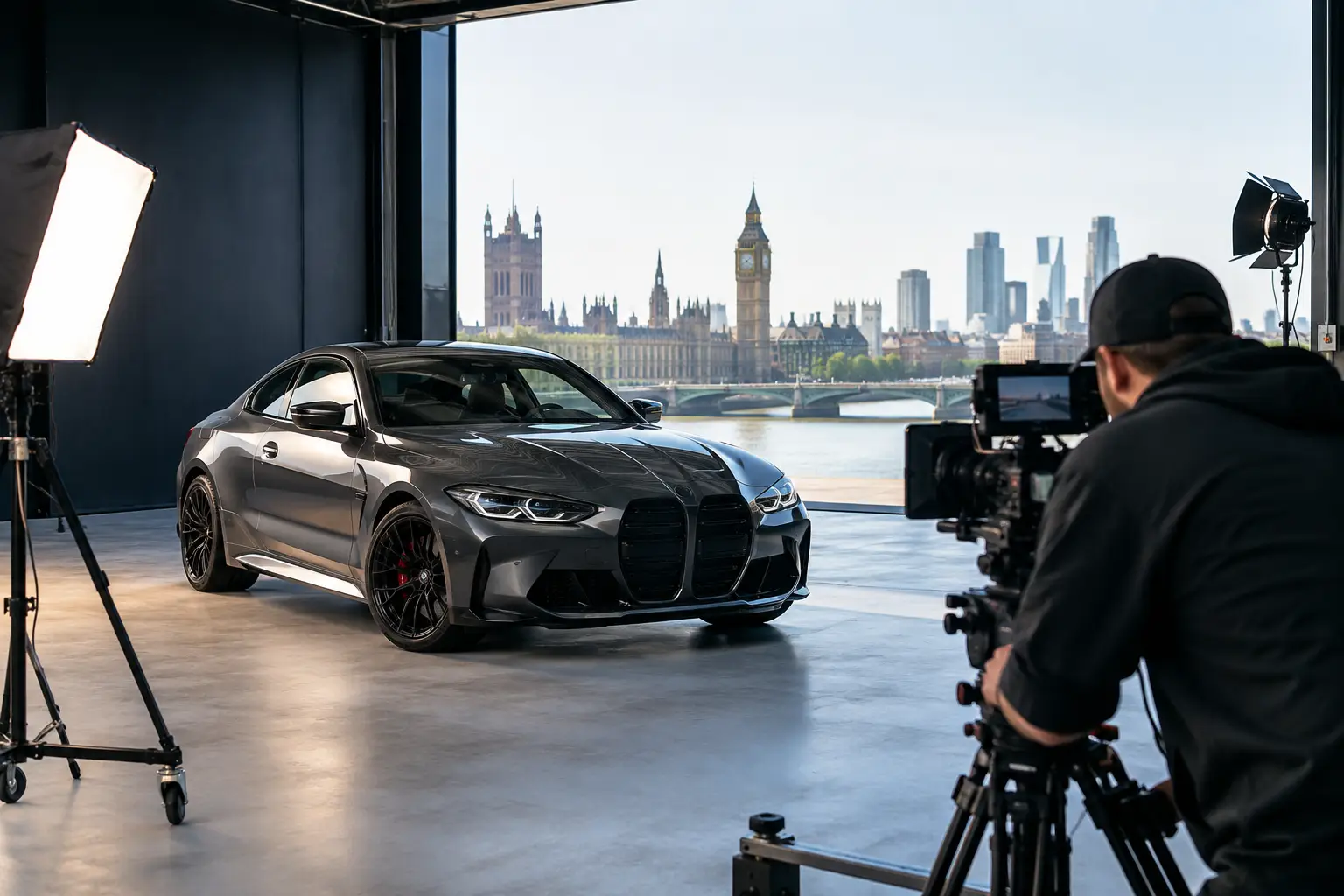
A car shoot can lose half a day before the first frame is captured. A tight loading route, low shutter, restricted rigging or nowhere for the client to stand will quickly turn a straightforward brief into an expensive compromise. This vehicle filming studio guide sets out what production teams should check before booking a London space for automotive content.
Whether you are filming a launch commercial, dealer campaign, music video, social assets or editorial stills, the vehicle is not simply another prop. It dictates access, floor loading, camera positions, lighting height, safety planning and the amount of usable set around it. The right studio gives the crew control. The wrong one leaves them working around the building.
Start with vehicle access, not the mood board
A studio may look suitable online, yet be impossible to use once a vehicle arrives. Confirm that the vehicle can drive directly into the shooting area through a ground-floor shutter or appropriately sized entrance. Do not assume that “vehicle access” means a car can be unloaded nearby and pushed inside.
Ask for the clear width and height of the entrance, the route from the road to the stage, turning space and any ramps, thresholds or tight corners. This matters even more for long-wheelbase vehicles, vans, classic cars with limited manoeuvrability, or vehicles arriving on transporters. If the brief includes more than one car, establish where waiting vehicles, support vehicles and a recovery lorry can be placed without blocking the crew.
Ground-floor access also changes the working day. It reduces handling time, avoids unnecessary risk and gives art, camera and lighting departments more freedom to bring in heavy kit, flats and set pieces. Free on-site parking is not a minor extra on this type of production. It is a practical safeguard against wasted time and difficult load-outs.
Choose a vehicle filming studio with real shooting volume
Floor area matters, but volume matters more. A vehicle occupies a large physical footprint and needs space around it for lighting, tracking shots, reflections, crew movement and safety clearance. A studio can feel generous when empty, then become cramped once the car, camera trolley, flags, stands and agency team are inside.
High ceilings are particularly valuable. They allow lamps to be placed above the vehicle rather than forced into low, visible positions at the edge of frame. With a proper overhead lighting grid, crews can rig large soft sources, top light, black solids and diffusion precisely where the shot needs them. That leaves more floor space open and produces cleaner reflections across paintwork, glass and chrome.
For static packshots, a smaller footprint may be enough. For a driving plate, a dialogue scene inside the vehicle, a 360-degree camera move or a set build around the car, book more space than the vehicle alone appears to require. The cost of a larger, functional stage is often lower than the cost of rebuilding a shot plan around physical restrictions.
Plan for camera and lighting positions
Automotive work is a controlled-reflection exercise. Every source, flag, crew member and open doorway has the potential to appear in the bodywork. The studio needs enough depth to position negative fill and lighting outside the intended camera angle, rather than squeezing everything into the same narrow strip of floor.
Consider the shots before selecting the studio. A low front-three-quarter hero shot needs room for camera, lens changes and carefully placed reflections. Side profile imagery needs long, clean runs beside the vehicle. Interior filming often requires doors fully open, removable seats or a camera build that extends beyond the cabin. Each setup benefits from clearance that cannot be improvised once the car is parked.
Control daylight, sound and the background
Blackout capability is essential when the lighting direction, exposure and reflections need to remain consistent through a full shooting day. Uncontrolled daylight can shift between takes, introduce colour contamination and reveal exterior detail in polished surfaces. It also limits your ability to create a night look, a dramatic silhouette or a precisely lit premium finish.
A blackout studio gives the lighting team a reliable starting point. It does not mean every automotive brief should be shot in darkness. It means daylight becomes a creative choice rather than a problem imposed by the building.
Background options should match the visual treatment. An infinity cove suits clean campaign stills, motion content and product-led compositions where the vehicle must feel isolated and considered. A green screen is useful for plate work, virtual environments and VFX-heavy campaigns, but it requires disciplined lighting and enough separation between the vehicle and backing to control spill. For practical worlds, confirm the studio can accommodate set walls, flooring, scenic elements and the working routes needed to build them.
Sound is a separate consideration. If dialogue, sync sound or vehicle effects are part of the schedule, ask about surrounding activity, external traffic and the ability to close shutters during takes. A studio designed primarily for photography may still be workable for film, but only if the production understands the sound limitations in advance.
Check the infrastructure before you book crew
Vehicle shoots become inefficient when essential production requirements are treated as add-ons. Establish the available power, rigging points, lighting grid specifications, floor condition, ceiling height and equipment inventory during pre-production. It is far better to identify a limitation before the lighting list is finalised than when the gaffer is already on site.
In-house lighting and grip can make a significant difference to the budget and call sheet. A studio with suitable stands, flags, frames, overhead rigging options and common lighting equipment reduces transport, collection time and external hire charges. It also gives the crew a practical fallback if a planned item fails or the creative evolves on set.
Pre-lighting and pre-rigging support are equally valuable for complex work. If the vehicle arrives at a fixed time, the team should not still be building the lighting foundation. Pre-rigging can have the grid, large sources and essential control in place before the main unit call, leaving the shoot day for refinement rather than basic installation.
At Cineview Studios, the combination of drive-in access, high ceilings, blackout control, an infinity cove and a production-ready lighting grid is designed to remove precisely these common restrictions from London vehicle shoots.
Build safety into the schedule
A moving vehicle in a studio needs clear controls, even where the movement is limited to driving on, parking and driving off. Agree the route, banksman responsibilities, engine policy, ventilation needs and keys procedure before arrival. Keep non-essential people clear during vehicle movements and protect vulnerable surfaces, coves and set elements with the right floor covering or track protection.
Fuel, batteries and emissions should be considered early. A petrol or diesel engine may need only brief operation indoors, but the decision depends on ventilation, the movement required and the studio’s policies. Electric vehicles remove tailpipe emissions but introduce different considerations, including charging arrangements, vehicle weight and the need to preserve battery range for repeated takes.
If the car is being filmed with wheels turning, mounted on dolly boards or used with process-style lighting, bring the relevant specialists into the conversation. A convincing result is rarely achieved by asking a standard studio booking to behave like a controlled vehicle stage without additional planning.
Make the space work for the whole production
The vehicle may be the hero, but a commercial set also needs places for styling, wardrobe, hair and make-up, data handling, client review, catering and crew breaks. When these functions spill onto the shooting floor, the stage becomes cluttered and concentration drops.
Look for a studio that supports the full production rather than only the frame. Dedicated client and crew areas, reliable facilities, practical loading and 24/7 availability can protect a demanding schedule, especially when access, pre-light and shoot timings need to run outside a standard working day.
There is a trade-off here. A bare warehouse may offer character and low headline hire costs, but it can require substantial spend on blackout, power distribution, heating, access solutions and hired equipment. A purpose-built studio may appear more expensive at first glance, yet be less costly once the full production requirement is considered. Compare the operational total, not just the day rate.
Questions worth asking on a recce
Before you commit, walk the route from the street to the stage and look at it from the perspective of every department. Can the exact vehicle enter safely? Can the lighting plan be rigged overhead? Is there enough room to shoot both sides without turning the car repeatedly? Can the set be blacked out? Where will cases, crew, clients and support vehicles go?
Also confirm what is included, what must be booked separately and who is available if the schedule changes. The strongest studio partners are not those that merely hand over a key. They understand that vehicle work changes quickly, and that practical support protects the creative outcome.
A good vehicle shoot feels controlled because the production has room to make decisions. Choose a studio that gives the car, the crew and the idea enough space to perform properly.