High Ceiling Photo Studios in London That Work
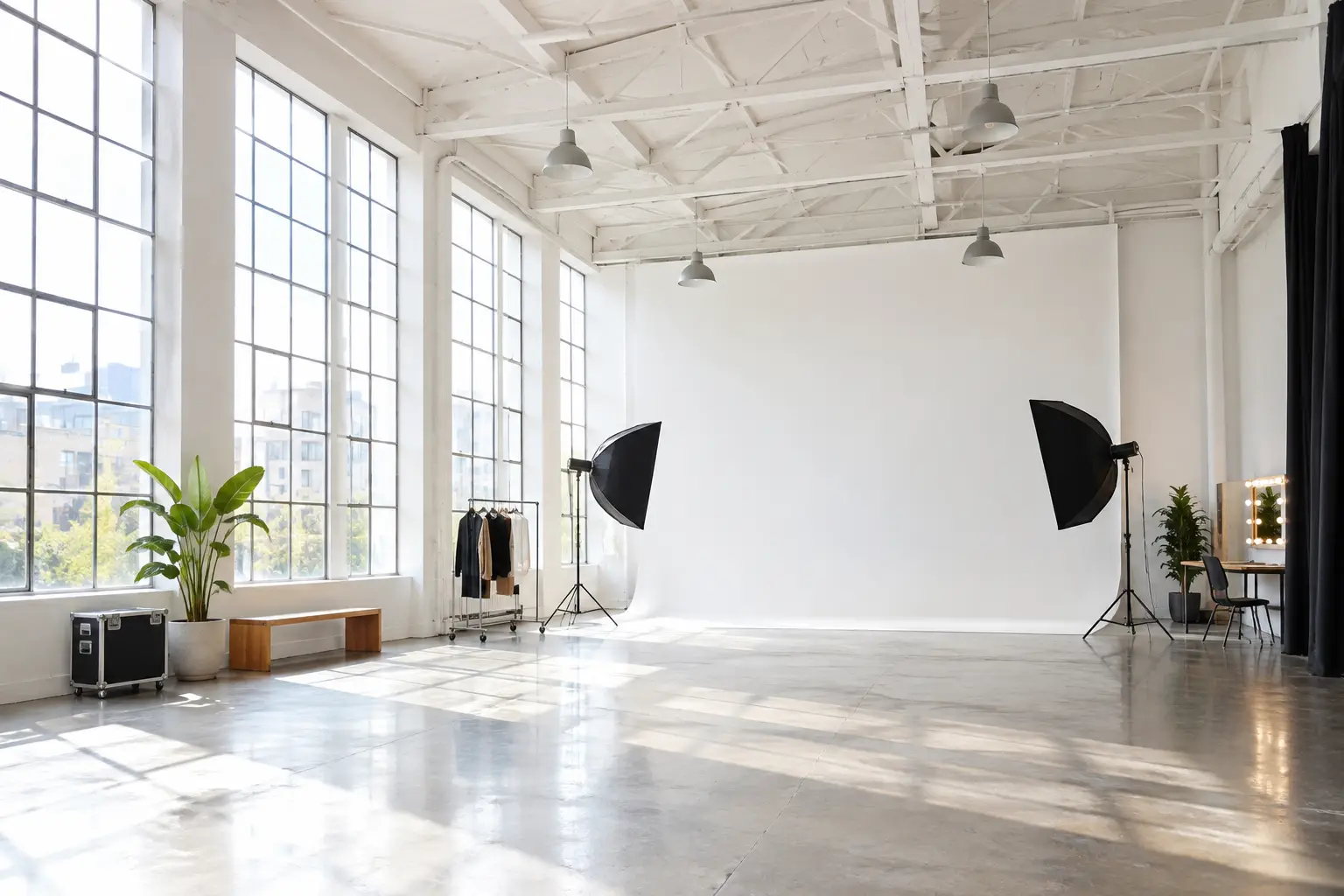
A high ceiling photo studio London teams can genuinely rely on is not simply a room that looks impressive in a location photograph. It is a working production environment: somewhere lights can be rigged at the right height, large modifiers can sit out of frame, set pieces can be brought in without dismantling them at the door, and clients can stand behind the monitor without stopping the crew from doing their job.
That difference becomes obvious as soon as a shoot grows beyond a simple portrait setup. For commercial campaigns, fashion editorials, product films, music videos and e-commerce content, ceiling height affects creative options, crew movement, lighting quality and the amount of time lost to compromises. A lower-cost studio is only good value if it helps the day run properly.
Why ceiling height changes the shoot
A higher ceiling gives the lighting department room to work with intention rather than necessity. It allows fixtures to be raised, softened, flagged and positioned further from the subject. That matters when you need a broad, natural-looking source, clean fall-off on a large set, or enough distance to keep hard lighting out of shot.
In a cramped room, the same kit can produce a very different result. Lights sit too close to talent, shadows become harder to control and stands start competing with camera positions. You may still get the shot, but more time goes into working around the space. On a paid production day, that is rarely an efficient trade-off.
Ceiling height also creates visual separation. When the frame needs to feel premium, spacious or cinematic, being able to light from above and maintain distance between subject, background and fixture makes a material difference. It is particularly useful for full-length fashion, automotive content, practical builds, group scenes and any brief involving movement.
A lighting grid is more useful than empty height
Height alone is not the whole specification. A studio with a proper lighting grid gives crews safer, cleaner options for overhead fixtures and modifiers. Instead of filling the floor with stands and sandbags, a gaffer can pre-rig the lighting plan, protect clear walkways and keep the set camera-ready.
This has a direct effect on pace. On a stills shoot, it means easier adjustments between looks without rebuilding the room. On a film set, it can help maintain continuity and reduce the disruption of moving large fixtures during a take. For agencies and clients, fewer stands around the set also makes the working environment feel more organised and presentable.
The exact requirement depends on the brief. A tabletop product shoot may not need substantial height, while a car shoot, large-packshot day or motion project with multiple lighting zones almost certainly benefits from it. The point is to hire space that supports the scale of production you are planning, not just the square footage listed on a studio page.
Choosing a high ceiling photo studio in London
London studio hire often comes with familiar compromises: limited loading access, no parking, equipment hired in from elsewhere, tight turnaround windows or spaces that look larger online than they feel with a full crew inside. Before booking, assess the studio as a production facility rather than a blank canvas.
Start with the type of work you are making. If you need clean, repeatable backgrounds, an infinity cove can save considerable time in post-production and on set. If the brief demands full darkness, projection, controlled reflections or day-for-night work, proper blackout capability is more valuable than attractive natural light. For compositing and virtual environments, a green screen or virtual production-ready setup may be the deciding factor.
Then consider what has to enter the building. Large props, scenery, product stock and vehicles change the access conversation immediately. Ground-floor shutter access and drive-in capability remove a common source of delays, particularly when a shoot includes a set build, a large product installation or a vehicle. Carrying equipment through narrow corridors and passenger lifts is not a creative challenge – it is an avoidable production cost.
Access and parking protect the schedule
A studio can have the right ceiling height and still create a difficult day if loading is restricted. Early call times, van arrivals, courier drops and collection schedules need practical access. Free parking is not a minor perk when several crew vehicles, equipment cases and client arrivals are involved. It gives the production team more control over the day and less exposure to central London loading pressures.
Flexible opening hours matter for the same reason. A 24/7 facility can support an early pre-light, an overnight build or a late wrap without forcing every task into the booked shooting window. This is especially useful for projects with ambitious shot lists, complex art direction or limited talent availability.
A production-friendly studio should also allow pre-rigging and pre-lighting where the schedule calls for it. Walking into a prepared set on shoot morning is a very different proposition from asking a full crew to unload, build, light and begin shooting from scratch. The saving is not only time. It protects the creative energy of the team for the work that appears on camera.
Space should improve creative control
High ceilings give a production more than technical clearance. They make it easier to create separate zones: a live set, a client viewing area, a styling station, equipment holding and a break-out space can coexist without everyone working on top of one another. That is valuable on brand campaigns where sign-off is happening in real time and where the studio needs to look as professional as the output.
For photographers, more room around the subject means greater choice in lensing and perspective. You can step back for a longer lens, bring in a larger modifier or create depth between foreground and background. For filmmakers, it supports camera movement, boom placement and lighting control across a wider frame.
There are limits, of course. More space is not automatically better if the production is very small and the cost of heating, dressing or filling the room outweighs the brief. A compact beauty shoot may be better served by a smaller studio with excellent daylight and a simple equipment package. But once a brief involves large-scale lighting, multiple departments, set construction or motion, undersizing the space tends to become more expensive than booking the right studio at the outset.
Check what is included before comparing rates
The headline hire rate is only one part of the budget. A studio that appears cheaper can become costly once you add lighting, grip, parking, overtime, access support and external equipment delivery. Ask for clarity on what is available in-house and what can be prepped before your crew arrives.
For a high-ceiling setup, useful inventory commonly includes fixtures, stands, C-stands, flags, diffusion, boom arms and grip suitable for shaping a large source. The ideal package depends on your gaffer and treatment, but an extensive in-house selection reduces delivery charges and gives the crew options when the plan changes. It also helps smaller teams access professional tools without building a separate rental order.
At Cineview Studios, the combination of high ceilings, a lighting grid, ground-floor shutter access, free parking and in-house lighting and grip is designed around that working reality. It gives productions a scalable base for straightforward stills days as well as more demanding film, build and vehicle shoots.
Plan the studio around the shot list
The most effective booking process starts with the frame, not the room. Consider the widest shot, the tallest object, the largest modifier and the biggest item that must be loaded in. Factor in where camera, sound, styling, clients and cases need to sit. If you are shooting video, account for sound control, blackout and the time required to reset between scenes.
Share that information with the studio team before the hire date. A good operator can flag access issues, suggest the best area for the set and advise whether pre-lighting, pre-rigging or a site visit would make the day more efficient. This is not unnecessary admin. It is how you prevent a workable concept becoming a compromised shoot once the crew is on the clock.
The right studio should give your crew room to make stronger decisions, not force them into smaller ones. Book the height, access and technical support your production actually needs, then let the team spend the day improving the image rather than negotiating with the building.