Choosing a Photography Studio for Clothing Brand
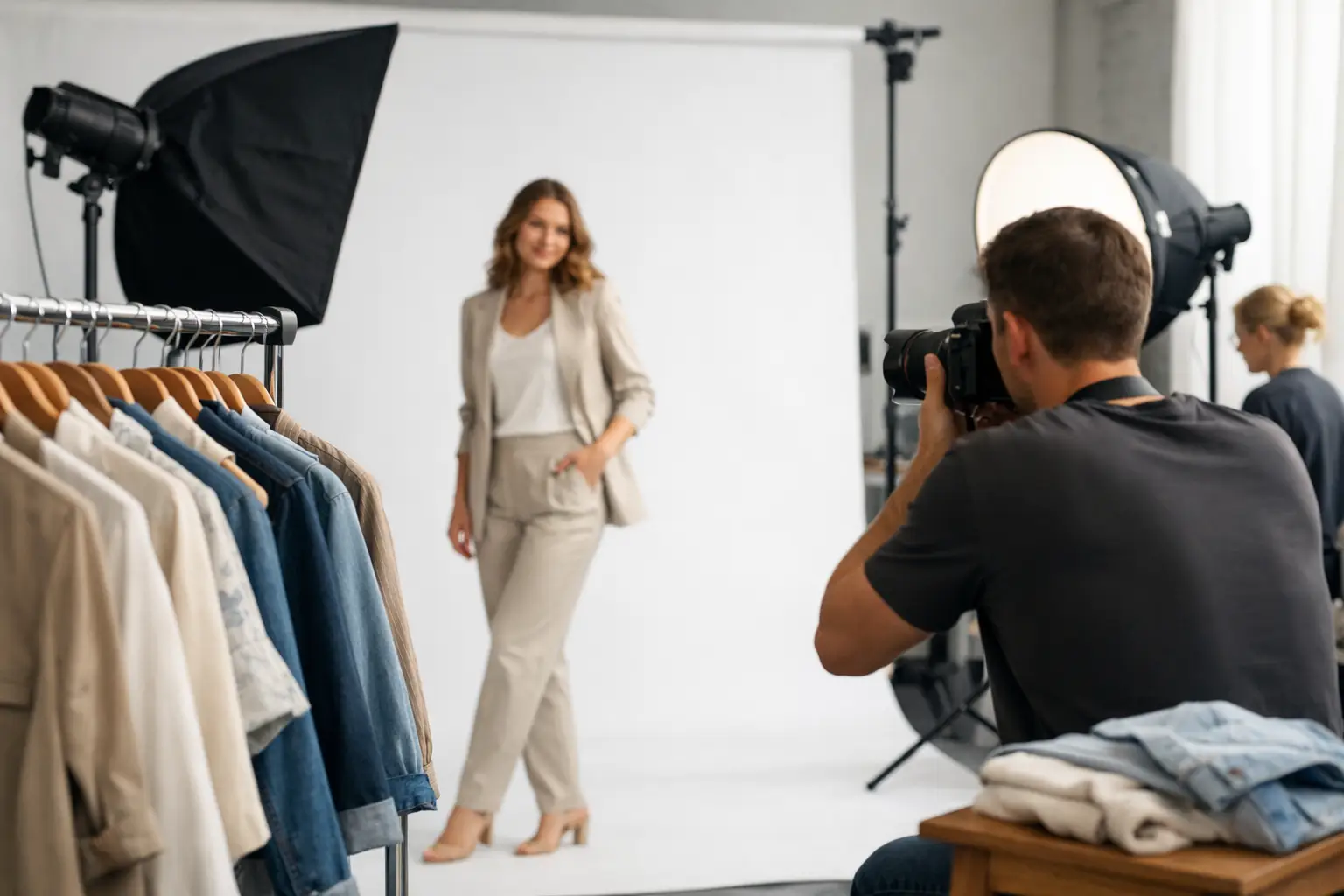
A clothing shoot can fall apart long before the camera is rolling. The usual problems are rarely creative. They are practical: rails with nowhere to go, steaming in a corridor, poor access for kit, low ceilings that limit lighting, and a studio that looked affordable until every add-on appeared on the call sheet. If you are choosing a photography studio for clothing brand work, the space itself has a direct effect on pace, image quality and production cost.
Fashion and apparel shoots put different pressure on a studio than a simple product session. You are not just photographing garments. You are managing changing looks, samples, stylists, talent, hair and make-up, client review, and often a mix of stills and motion in the same booking. That means the right studio is not simply a white room with a backdrop. It needs to function like a production space.
What a photography studio for clothing brand shoots needs to handle
Clothing brands work across very different formats. One day it is clean e-commerce on ghost mannequin or model. The next, it is campaign content with set build, video capture and social cutdowns. A studio that suits one approach may actively slow down the other.
For e-commerce, consistency matters most. You need enough space to maintain repeatable lighting, organise garments by look and move through outfit changes without creating bottlenecks. For campaign work, flexibility becomes more important. You may need blackout conditions, a larger lighting set-up, room for art direction and enough clearance to shoot full length without compromise.
This is why ceiling height, floor space and access matter more than many teams expect. A cramped room can still produce decent images, but it tends to cost you in time. More resets, more compromises on lens choice, and more friction between departments. That is manageable on a two-look test shoot. It becomes expensive on a full collection day.
Space changes the quality of a clothing shoot
The first question is not whether the studio looks good online. It is whether the space supports the shot list. Full-length fashion photography needs working distance. If the camera is pushed too close because the room is short, proportions suffer and styling choices become harder to read. That matters whether you are shooting tailored pieces, oversized silhouettes or layered looks.
High ceilings matter for the same reason. They allow cleaner top light, better control over flags and modifiers, and more options when the creative shifts mid-shoot. A proper lighting grid also makes a difference. It speeds up rigging, keeps the floor clearer and gives the crew more control without turning every lighting change into a disruption.
For clothing brands, room around the set is not a luxury. It is operational space. Stylists need rails and prep areas. Hair and make-up need a workable station. Clients need somewhere to review selects without standing in the photographer’s line. If the studio cannot absorb those basics comfortably, the day becomes tighter than the budget ever intended.
Access is not a side issue
Many London studios look workable until load-in starts. Stairs, narrow doors and awkward unloading points add avoidable pressure to the call time. Clothing shoots often involve more kit and more wardrobe than expected, especially when a single booking covers stills, motion and social assets.
Ground-floor access and a shutter entrance save time immediately. They also reduce the wear on crew and lower the risk of damaging samples, set pieces or hired kit on the way in. Free parking matters too. In central locations, transport costs and parking stress can quietly become a line item that chips away at the value of the booking.
If your team is carrying garment rails, steamers, props, cases, lighting and monitors, easy access is not an extra. It is part of an efficient production workflow.
Lighting and control in a photography studio for clothing brand content
Clothing needs accurate, flattering light, but the right set-up depends on what the brand is selling. Crisp packshots for a marketplace require consistency and colour accuracy. Editorial fashion often wants shape, contrast and mood. Activewear may need motion-friendly lighting and enough space to shoot action cleanly. Luxury garments often demand careful handling of texture, sheen and drape.
That range is why in-house lighting and grip matter. A studio that is already equipped reduces external hire and makes it easier to adapt on the day. It also protects the schedule. When the client decides to capture motion alongside stills, or when the weather changes and daylight becomes unreliable, a properly equipped studio gives the crew options instead of excuses.
Blackout capability is particularly useful for fashion and apparel work. It gives you consistent control across long shoot days and prevents shifting ambient light from affecting colour or exposure. If you are capturing a full range across multiple SKUs, that consistency helps post-production move faster and keeps the final set looking unified.
Green screen and virtual production are more specialised, but for certain clothing brands they can be commercially smart. If a team wants multiple background treatments, moving environments or fast-turn campaign assets without repeated location costs, those facilities can expand what is achievable in a single studio booking.
The hidden cost of a cheap studio
Low hire rates can look attractive, especially for emerging brands or lean agency budgets. But the day rate is only part of the cost. If a cheaper studio lacks enough space, proper facilities or usable equipment, the savings disappear into overtime, add-on hires and lost output.
A common example is trying to force both e-commerce and campaign content into a basic room. The team spends half the day rebuilding, moving furniture, managing cable clutter and working around access limitations. The booking may have been cheaper on paper, but the production value and efficiency suffer.
By contrast, a better-configured studio often saves money by removing friction. Faster load-in, pre-rig support, accessible power, enough room for parallel prep and a strong in-house equipment inventory all reduce wasted hours. For brands producing seasonal drops or repeat content days, those gains add up quickly.
How to assess the studio before you book
A good recce should answer practical questions, not just aesthetic ones. Start with the shot list and ask whether the studio supports it without compromise. Can you shoot full-length looks comfortably? Is there enough room for wardrobe, client seating and a digital station? Can the team move around the set without stepping on each other?
Then look at the workflow. How easy is load-in? Is there parking? Are there clear prep areas? What equipment is already on site, and what still needs to be brought in? If you are planning an early start, a late finish or a split stills-motion schedule, flexible opening hours matter more than a glossy website.
Support also counts. Experienced studio teams can solve problems before they become delays. Pre-lighting and pre-rigging support are especially useful when the brief is ambitious but the shooting window is tight. That sort of practical help is often more valuable than decorative extras.
When one studio needs to cover stills and motion
More clothing brands now expect a single production day to deliver website imagery, paid social, short-form video and behind-the-scenes content. That only works if the studio can support hybrid production.
You need enough room to operate separate zones or switch formats efficiently. Clean power, rigging options, acoustic control where possible, and sensible crew flow all help. If the studio was designed around production rather than casual hire, the difference is obvious. The team spends more time shooting and less time negotiating the space.
For that reason, facilities such as infinity coves, blackout options, generous ceiling height and drive-in access are not niche features. They make a studio more adaptable when the brief grows beyond a basic fashion set-up. For brands and agencies trying to extract more value from each shoot day, that flexibility is commercially useful.
A studio such as Cineview Studios is built around that practical reality: enough scale for ambitious set-ups, enough functionality for efficient turnaround, and enough in-house support to keep productions moving.
The right studio should make the day easier
A strong photography studio for clothing brand campaigns does more than provide four walls and a backdrop. It should make styling easier, lighting cleaner, crew movement simpler and schedule management more realistic. That is what allows photographers, producers and brand teams to focus on the work rather than the workarounds.
When you are comparing options, look past the headline rate and ask a better question: will this space help us get through the day properly? If the answer is yes, the studio is not just a venue. It is part of the production.