
Studio Space for Hire That Works Harder
A studio can look good in photos and still slow your shoot down by midday. That usually shows up in the same places – awkward load-in, low ceilings, patchy blackout, limited power, nowhere for clients to sit, and extra charges for basic kit that should have been ready from call time.
If you are looking for studio space for hire, the real question is not whether the room looks impressive online. It is whether the space supports the way productions actually run. For photographers, filmmakers, agencies and brand teams, that difference affects schedule, spend and the standard of the final output.
What good studio space for hire should actually deliver
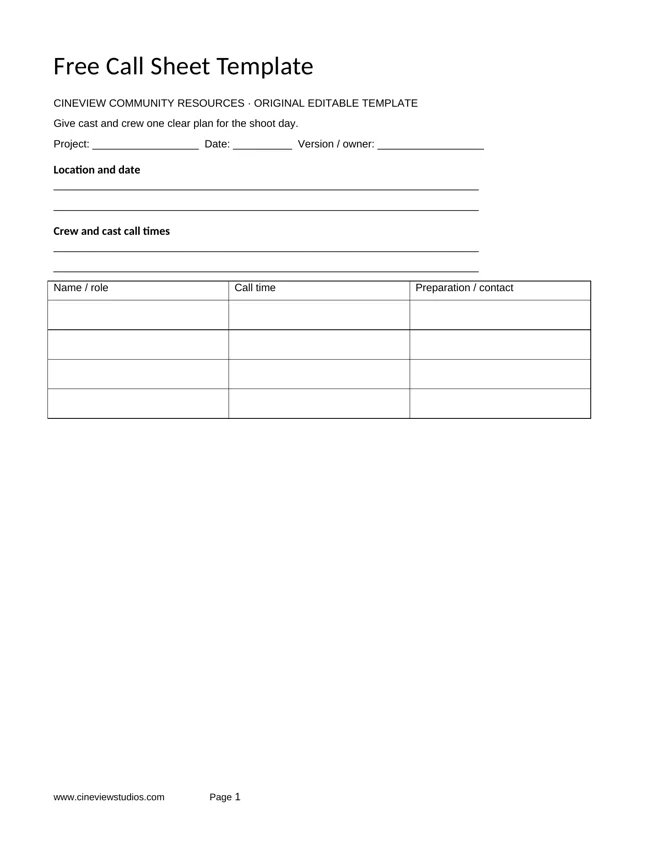
A production-ready studio does more than give you four walls and a white backdrop. It should reduce friction from the moment the crew arrives. Access matters first. If unloading takes longer than setting up first light, the day has already started badly. Ground-floor access, wide shutter entry and practical parking are not minor conveniences. In London, they can be the difference between a clean load-in and a delayed call sheet.
Ceiling height matters just as much. A studio with proper vertical space gives your gaffer and DoP room to work, especially when larger modifiers, rigged lighting or set elements are involved. Add a lighting grid and the space becomes far more usable for commercial stills, branded content, interviews, music videos and product campaigns. You spend less time solving avoidable problems and more time shaping the image.
Then there is the question of flexibility. Many hires are sold as multi-purpose spaces, but in practice they suit only one type of shoot. A stronger option is a studio that can handle a clean photography set-up one day, a blackout video production the next, then a green screen studio or set build without compromise. That versatility matters when productions evolve quickly or clients expand the brief halfway through pre-production.
Why many London studio hires fall short
The issue with a lot of London studio stock is not just price. It is value. Plenty of spaces charge premium rates while offering compromised facilities – difficult access, limited rigging, restrictive hours, no parking and a thin equipment list dressed up as a full provision.
That creates hidden costs. A lower headline rate can still become an expensive day if you need to hire in additional grip, pay for extra crew time during load-in, or work around a space that was never designed for serious production. Equally, a high-end studio is not always the right fit if the pricing has more to do with postcode than practical advantage.
For production teams working to deadlines and budgets, the strongest choice is usually the one that balances capability with efficiency. You want a space that looks professional to clients, performs properly for crew and does not force compromises once the shoot begins.
The features that save time on set
Production value is not just about the finished image. It is also about how smoothly the day runs. A well-equipped studio should remove common delays before they happen.
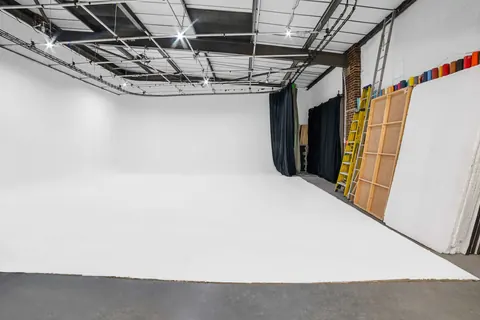
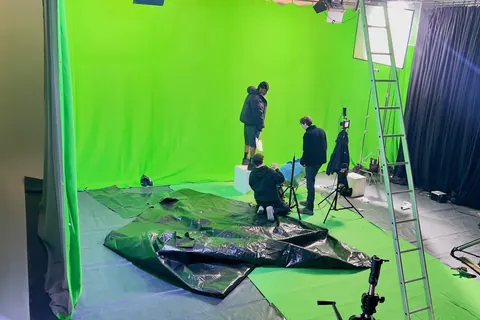
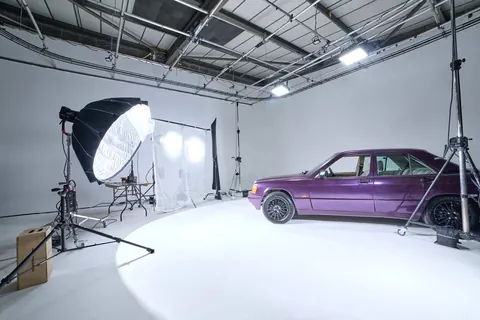
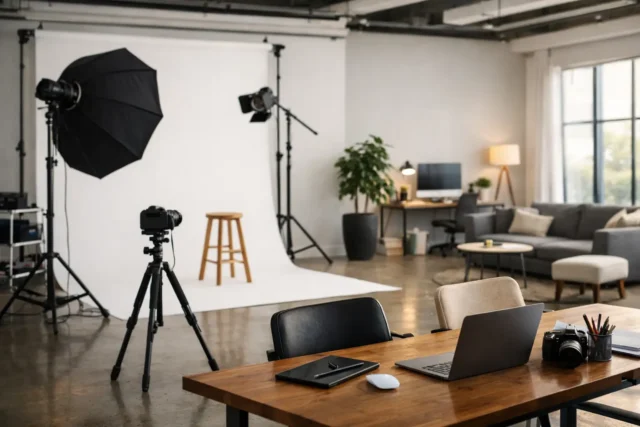
An infinity cove studio gives you immediate flexibility for fashion, product, automotive details, e-commerce and branded content. A true blackout studio allows full control over light, which is critical for film work, interviews and stylised set-ups. Green screen studio capability opens the door to VFX-heavy work, presenter-led shoots and virtual environments. If the studio is suitable for set building, you gain far more creative control than you ever will in a smaller, improvised space.
In-house lighting and grip equipment also make a genuine commercial difference. Crews do not need to over-order from a third-party supplier just to cover basic needs, and smaller productions can achieve a more polished result without stretching the budget. Pre-lighting and pre-rigging support are equally valuable. When a studio team understands production, they can help get the space ready before the clock starts working against you.
That is where experienced operators stand apart from landlords renting out a room. One is there to support the shoot. The other is simply letting you in.
How to assess a studio before you book
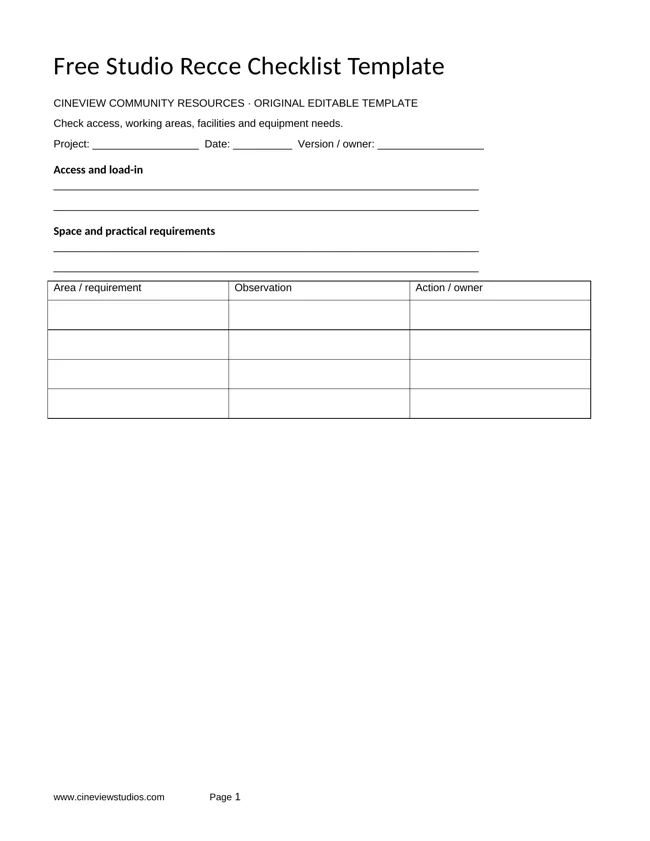
The quickest way to assess any studio space for hire is to think like a producer, not a browser. Start with workflow. How does kit get in? Where do vehicles stop? Can the crew move quickly from load-in to set-up? If access is vague in the listing, expect issues on the day.
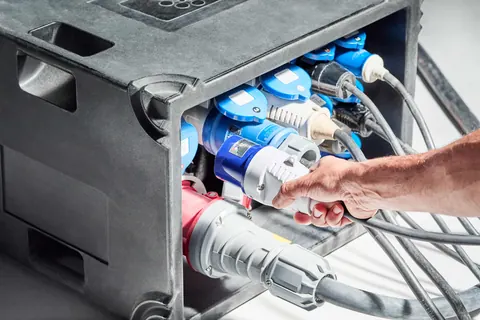
Next, test the technical claims. Ask about ceiling height, power, blackout quality, grid capacity and in-house kit. If you are shooting motion, ask how sound-friendly the space is and whether there are likely interruptions. If you are planning set construction, check whether the studio is genuinely suited to builds or simply willing to allow them.
Then look at operating hours. A 24/7 studio gives far more control than a space tied to standard business times. Early starts, night shoots and pre-rig days are common for commercial productions. If the venue cannot flex around that, your schedule has to.
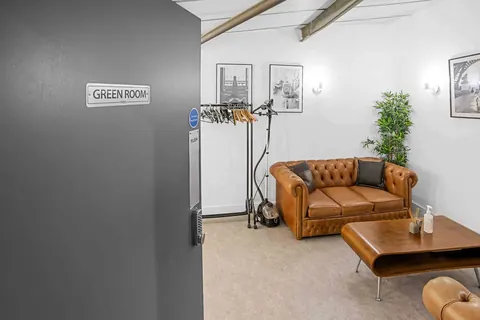
Finally, consider the client experience. Productions do not happen in a vacuum. Agencies, brand teams and stakeholders often attend the shoot, and the environment needs to support that. A studio should feel professional, organised and comfortable enough for decision-makers to work on site without getting in the crew’s way.
Different shoots need different strengths
Not every production needs the same kind of studio, and that is where a lot of bookings go wrong. Product photography and e-commerce shoots usually need consistency, fast resets and efficient lighting options. A large but poorly organised space can be less useful than a well-planned one.
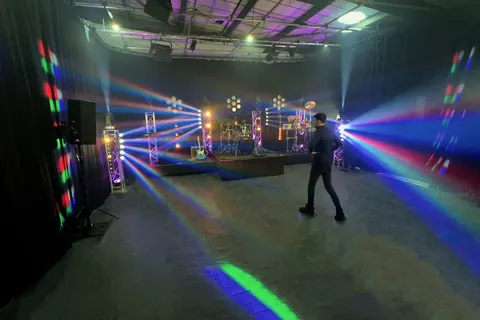
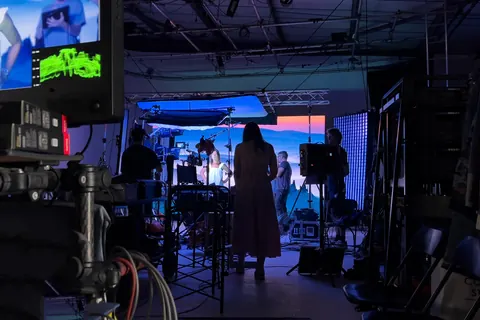
Commercial video and branded campaigns tend to need more infrastructure – blackout control, rigging options, room for art direction, agency attendance and often enough footprint for multiple zones. Music videos and narrative shoots benefit from scale, height and the ability to shape the environment properly. Green screen studio work depends on even lighting, clean separation and enough room to avoid fighting the space.
For automotive or large prop work, drive-in access becomes a serious asset rather than a nice extra. The same goes for set builds and larger production design jobs, where access, height and floor area all matter at once. Trying to force these requirements into a small or awkward studio often ends up costing more than booking the right space from the outset.
Affordability matters, but so does what is included
There is a difference between an affordable studio and a cheap one. Cheap usually means you pay later – in add-ons, delays or avoidable compromises. Affordable means the hire rate reflects what the space actually delivers, with practical features that reduce your wider production costs.
That might be free parking instead of a courier chain from a distant loading bay. It might be a proper lighting grid that avoids extra rigging time. It might be included equipment that saves a separate rental order. It might simply be a larger, more adaptable space that allows one studio booking to cover multiple set-ups in a single day.
For London productions, that value equation matters. Rates across the city can be inflated by location alone, even when the studio itself is physically limited. Teams that book well tend to look beyond postcode and ask a simpler question – will this space make the shoot easier, faster and better?
Choosing a space that grows with the brief
The strongest studio hire is the one that still works when the brief changes. That happens constantly. A stills shoot picks up motion deliverables. A simple interview becomes a multi-camera set-up. A product campaign suddenly needs room for talent, styling and social cutdowns in the same booking.
A scalable studio gives you options without forcing a last-minute rethink. High ceilings, flexible floor space, specialist shooting areas and proper production support all make that possible. This is exactly why many crews now favour facilities designed around real workflows rather than aesthetically pleasing but operationally limited spaces. For teams booking with Cineview Studios, that practical advantage is often the deciding factor.
When you are comparing options, do not just ask whether the studio can host your shoot. Ask whether it can improve it. The right space will not only accommodate the brief – it will give your crew more control, protect your schedule and help the final work look as strong as it should.