

Virtual Production Studio Review for London Shoots
A virtual production studio review should not start with the LED wall. It should start with the shoot day. If a studio looks impressive in a sales deck but slows your crew down on access, power, rigging, parking or turnaround time, the technology quickly stops feeling advanced and starts feeling expensive.
That is the reality for production teams hiring in London. Virtual production studio can solve genuine creative and logistical problems, but only when the studio behind it is built to support the full job. The review process needs to be practical. Can the space handle a commercial crew? Is there enough height for proper lighting control? Can art department, camera, lighting and clients all work without tripping over each other? Those questions matter just as much as pixel pitch and screen size.
What a virtual production studio review should actually cover
Most reviews focus too narrowly on the headline feature. That is understandable because virtual production studio is often sold on spectacle. Large screens, real-time environments and in-camera effects make strong first impressions. But professional crews know that a studio lives or dies on workflow.
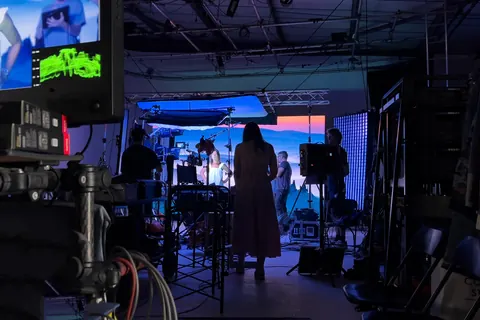
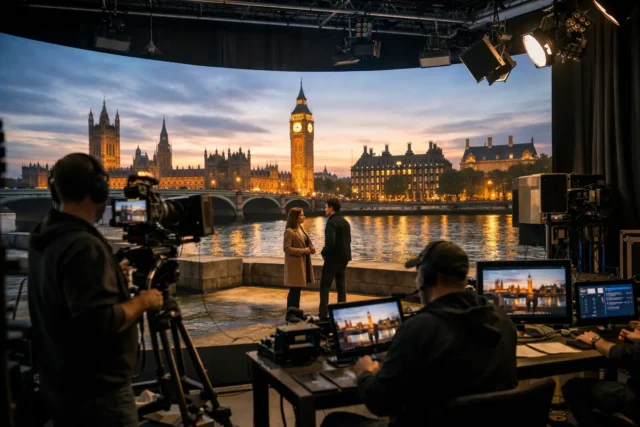
A useful review looks at the whole operating environment. Start with the physical footprint. A virtual production studio setup needs room not only for the stage, but for camera movement, lighting positions, client monitoring, DIT, playback, kit staging and safe crew circulation. If the room feels tight on a recce, it will feel smaller once the job is live.
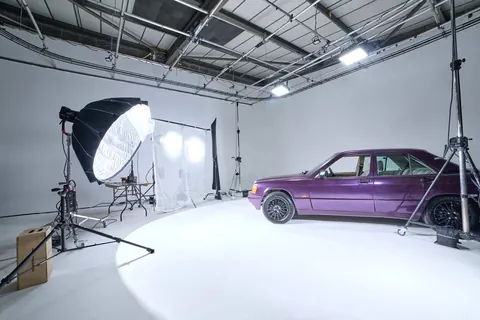
Ceiling height is another non-negotiable. Lower ceilings restrict lighting angles, reduce rigging flexibility and make it harder to separate the stage from the rest of the production space. For car shoots, larger set builds or any brief that needs scale, height becomes even more valuable.
Then there is access. Ground-floor loading, shutter entry and drive-in capability are not glamorous talking points, but they have a direct impact on budget and timing. Every awkward load-in adds labour, delays and unnecessary friction. London crews already lose enough time in traffic. The studio should not create more problems once you arrive.
The difference between technical capability and shoot readiness
This is where many studios get judged too generously. A venue can claim virtual production studio capability and still be a poor choice for an efficient production.
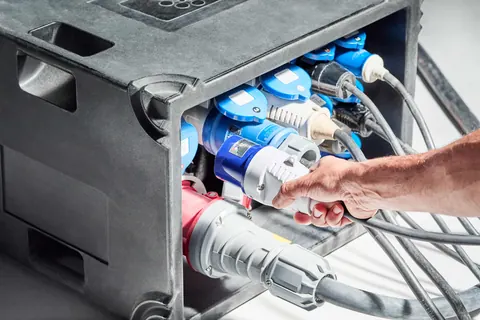
True shoot readiness means the surrounding infrastructure is in place. Power distribution must be fit for purpose. The lighting grid needs to support fast changes. Blackout control should be reliable. The studio should offer enough in-house lighting and grip to reduce transport costs and simplify prep. If basic production support is missing, crews end up solving avoidable problems on the clock.
The same applies to pre-lighting and pre-rigging. On paper, virtual production studio can speed up location changes and reduce company moves. In practice, those savings disappear if your team cannot get in early to build, test and refine the setup. A studio that understands production will make preparation easier, not treat it as an add-on inconvenience.
That is often the dividing line between a hire space and a production facility. The first rents you a room. The second helps the job run properly.
Virtual production studio review: questions worth asking
A serious virtual production studio review should pressure-test the space before you commit. Ask how the studio handles mixed-use shoots that combine virtual production studio with green screen studio, stills, blackout work or physical set elements. Many campaigns now need all of that in a single booking window.
You should also ask about support for different production scales. A small branded content shoot has different priorities from a music video, a table-top product campaign or a broadcast setup. The best studios are flexible enough to support both without making smaller teams pay for unnecessary complexity.
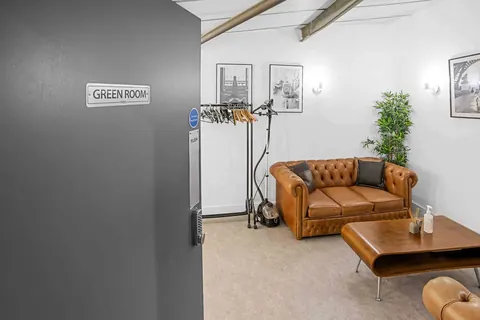
Crew comfort matters too. This is not a soft extra. If there is no sensible space for clients, talent holding, production desks or catering flow, the day becomes harder to manage. Commercial shoots need a studio that works for decision-makers as well as operators.
Parking is another good test because it tells you whether a studio understands how productions really move. Free on-site parking can save surprising amounts once vans, crew cars and supplier arrivals are factored in. In London, that operational convenience is not minor. It changes call times, reduces stress and helps keep the schedule intact.
How to assess value without chasing the cheapest rate
Virtual production studio pricing can be misleading. A lower day rate does not always mean lower cost. If the studio has limited kit, poor access, no rigging support and restrictive hours, your production makes up the difference elsewhere.
That is why value should be measured across the full shoot equation. Look at how much equipment is already in-house. Consider whether the studio is available 24/7 or whether overtime will push costs up. Factor in whether the layout reduces setup time and whether the crew can work efficiently once on site.
A more functional studio often creates savings that do not show on the initial quote. Faster load-ins, fewer external hires, easier pre-rig, smoother client management and better lighting options all have a budget effect. They also improve the quality of the final output, which is usually the bigger commercial concern.
For agencies and brand teams, this matters because delays are expensive and visible. For independent creators, it matters because every wasted hour comes straight out of margin. Good value is not about paying less for less. It is about paying sensibly for a space that keeps the production moving.
Why London productions need a more critical review standard
London has no shortage of studio options, but there is a big difference between availability and suitability. Plenty of spaces are marketed well and photographed even better. Fewer are genuinely designed around professional production needs.
That gap becomes more obvious with virtual production studio because the margin for compromise is smaller. Once you add specialist screens, camera tracking, lighting control and real-time workflows, the rest of the studio has to keep up. If the supporting environment is weak, the stage becomes a bottleneck rather than an advantage.
This is especially true for crews trying to consolidate multiple setups into one day. A studio that can support stills, motion, set builds and virtual production studio in the same facility gives production teams more flexibility and more control. That matters when schedules are tight and creative expectations are high.
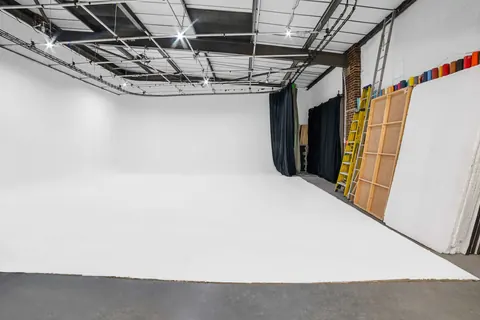
Studios such as Cineview Studios stand out when they approach virtual production studio as part of a broader production ecosystem rather than a standalone feature. For working crews, that is a more credible proposition. The screen matters, but so do the infinity cove studio, blackout capability, high ceilings, loading access, parking and in-house equipment. Those are the elements that turn an interesting space into a commercially useful one.
The best review outcome is clarity, not hype
A studio does not need to be right for every production to be a strong option. It needs to be honest about what it supports best. Some jobs need a compact technical setup for controlled content capture. Others need a larger, more adaptable environment for ambitious builds, moving vehicles or multiple deliverables across stills and film.
A good review should help you make that distinction quickly. It should tell you whether the studio is production-friendly, whether the hire rate reflects real functionality and whether the team behind the space understands what commercial crews actually need.
That is the standard worth applying to any virtual production studio booking. Not whether the facility sounds impressive, but whether it gives your crew the space, access and support to do the work properly. When you review a studio through that lens, the right choice usually becomes obvious.
The smartest studio hire is rarely the one with the loudest pitch. It is the one that saves time at 7am, holds up under pressure at midday and still gives you options when the brief changes after lunch.