What Is a Cyc Wall Used For on Set?
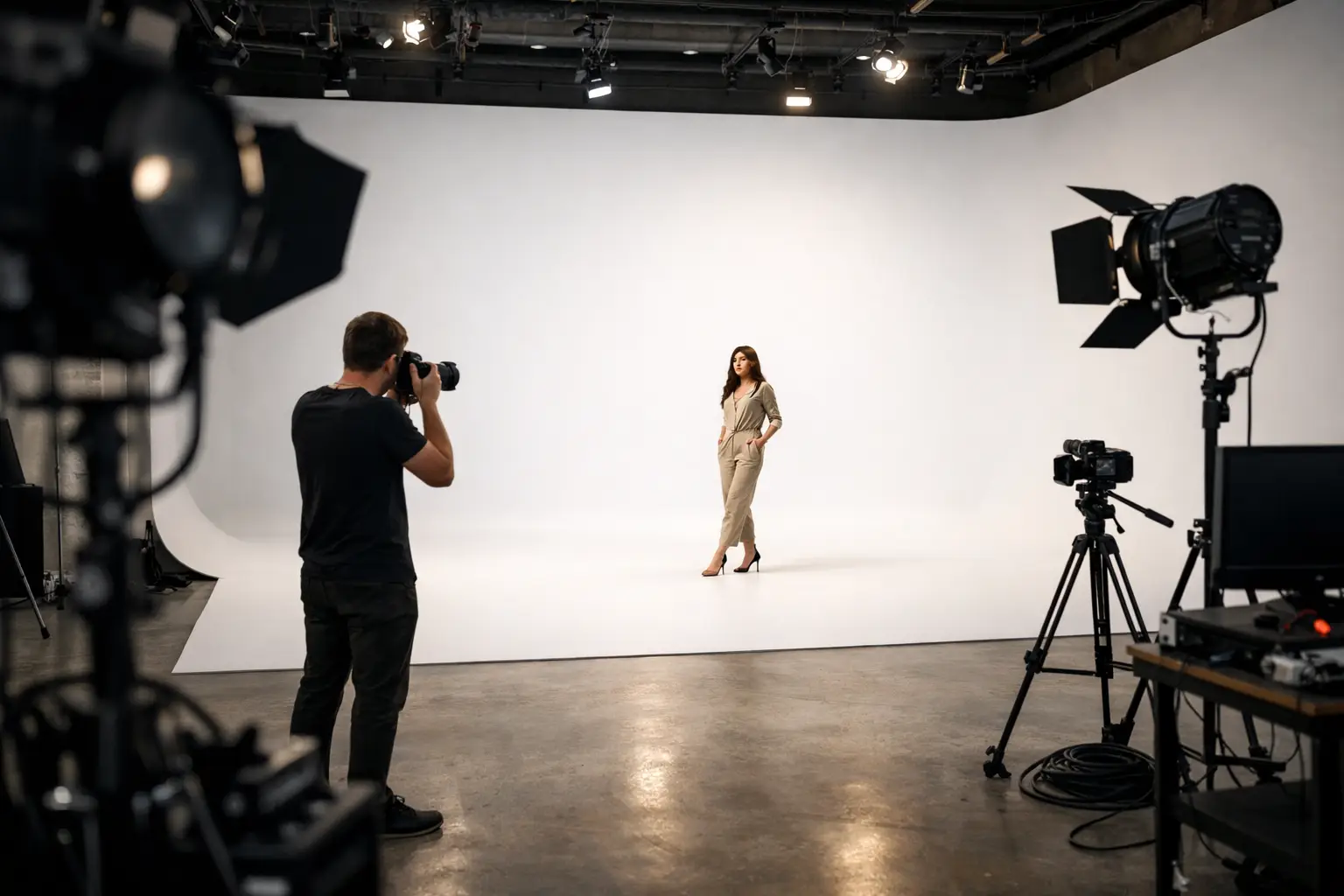
A cramped studio shows up on camera fast. You see hard corners, awkward shadows and background joins that make even a well-lit shoot feel cheap. That is exactly why clients ask, what is cyc wall used for? In practical terms, a cyc wall gives you a clean, continuous background that removes visual distractions and gives crews far more control over lighting, framing and post-production.
A cyc wall, short for cyclorama wall, is usually a curved corner studio backdrop designed to create the illusion of endless space. Instead of a hard 90-degree join where the wall meets the floor, the curve allows the background to fall away smoothly on camera. That matters whether you are shooting a fashion editorial, a car commercial, e-commerce stills or a talking-head brand film.
What is a cyc wall used for in production?
The simplest answer is this: it is used to create a seamless background. But in real production terms, that opens up a lot more possibilities.
For photographers, a cyc wall is ideal when the subject needs to stand out without any environmental clutter. Product photography, portraiture, fashion lookbooks and campaign work all benefit from a background that feels polished and controlled. You are not fighting room edges, skirting boards or paper roll creases. You are working with a surface built for clean commercial results.
For filmmakers and videographers, the cyc wall is just as useful. It creates a neutral environment for branded content, interviews, music videos, motion work and ad campaigns. Because the background is continuous, it is easier to light evenly and easier to shape for different moods. Bright white, soft shadow, colour wash, silhouette and high-contrast setups all become more achievable when the space is designed properly.
Why crews choose a cyc wall over paper backdrops
Paper rolls still have their place, especially for smaller shoots, but they come with limits. They mark easily, the width is fixed, and once you are dealing with movement, groups or larger products, they become restrictive.
A cyc wall gives you scale. It lets talent move naturally, allows wider framing and handles bigger set-ups without exposing the edge of the background. It is also more durable for commercial use, particularly when multiple scenes are being shot across a long day. If you are producing content at volume, that reliability matters.
There is also a quality difference. A properly finished infinity cove looks more premium on camera than a temporary backdrop solution. That is one reason agencies and brand teams often prefer it for campaign work. It reduces the amount of fixing needed later and gives the final image a cleaner, more expensive feel.
Common cyc wall use cases
One of the main strengths of a cyc wall is flexibility. It suits a wide range of production types without needing a full scenic build.
In stills, it is commonly used for fashion editorials, model tests, beauty campaigns, packshots, furniture photography and catalogue work. In motion, it is often used for product demos, social content, interviews, promos, performance shoots and commercials. It also works well when the brief calls for minimalism. If the focus is the talent, the garment or the product, the background should not compete.
For larger productions, a cyc wall also gives set designers and DOPs a useful blank canvas. You can keep it stark and clean, flood it with colour, add practical props or build into the space. That flexibility is why it remains a core feature in serious studio environments.
A cyc wall is not only about looks
The visual benefit is obvious, but the operational benefit is just as important. A good cyc wall improves efficiency on set.
Lighting becomes more predictable because you are working in a purpose-built space rather than compensating for room flaws. Camera angles open up because you are not constantly avoiding the edge of frame. Talent movement is easier to block. Retouching and clean-up can be reduced. Across a commercial shoot, all of that saves time.
That is especially relevant in London, where studio costs can rise quickly if the day runs over. A production-friendly cyc wall in a studio with proper access, ceiling height and rigging support is not a luxury feature. It is part of keeping the job moving.
When a cyc wall may not be the right choice
It is not the answer to every brief. If the concept depends on texture, architectural detail or a natural location feel, a cyc wall may be too clean. Some shoots need raw concrete, dressed sets or practical interiors. Others need green screen rather than a white infinity background.
There are also technical considerations. To get the best from a cyc wall, you need enough space to light it properly and enough separation between subject and background. In a poorly configured studio, even a cyc can become difficult to use. That is why the surrounding studio matters as much as the wall itself.
At Cineview Studios, the value is not just having an infinity cove. It is having the height, access, equipment and working space around it to make that feature genuinely useful for commercial production.
What to look for when hiring a studio with a cyc wall
If your shoot depends on a cyc wall, check the practical details before booking. Size is the first one. Can it handle your framing, movement and subject scale? Then look at ceiling height, lighting grid access, drive-in capability, blackout control and whether the studio can support pre-rigging or heavier production needs.
A cyc wall is only as effective as the space around it. When the studio is built for real production, the cyc becomes one of the most efficient tools on set. It gives you cleaner visuals, faster set-ups and more freedom to shape the frame without compromising on finish.
2 thoughts on “What Is a Cyc Wall Used For on Set?”