
7 E-commerce Photography Trends UK Brands Need
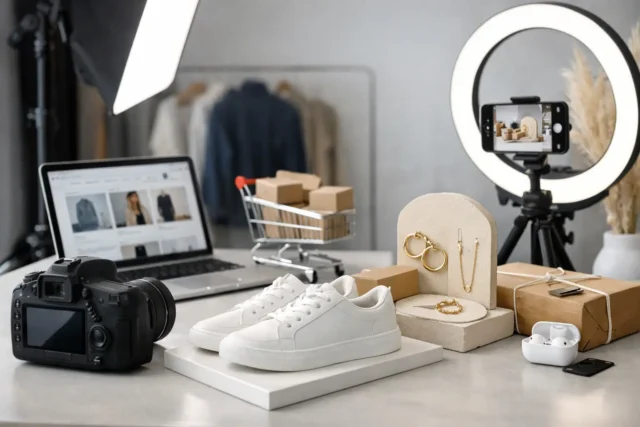
A plain packshot on white still has its place, but it is no longer enough to carry an online product page on its own. The most useful e-commerce photography trends UK brands are following now are not about novelty for its own sake. They are about selling more clearly, reducing returns, building trust faster and producing assets that work across marketplaces, paid social, brand sites and retail partners.
For brands, agencies and production teams, that changes the brief. Photography is no longer a one-format deliverable. It is a production system. The strongest shoots now need to cover clean cut-outs, campaign-ready lifestyle frames, short-form motion, detail crops and platform-specific variants in one go. If the studio, crew and workflow cannot support that, costs climb and consistency drops.
E-commerce photography trends UK teams are acting on
The biggest shift is not visual style alone. It is operational. Brands want more output from every shoot day, and they want it without compromising quality. That means planning imagery around commercial use rather than treating e-commerce as a stripped-back version of a campaign shoot.
Below are the trends shaping that approach in the UK market.
1. Hybrid shoots are replacing single-purpose sessions
A dedicated packshot day and a separate content day used to be common. Now, many brands want both from the same booking. They need website imagery, paid social assets, marketplace-compliant product shots and a handful of short motion clips, all created under one lighting plan and one production schedule.
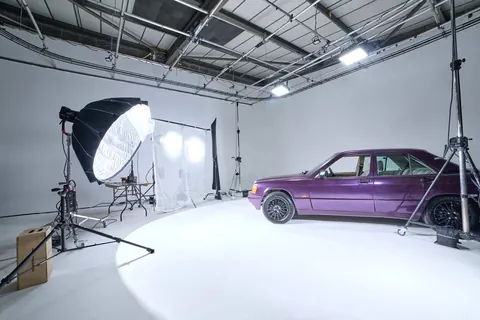
That sounds efficient, and it can be, but only if the space is built for it. Hybrid shoots break down quickly in cramped studios with poor access, limited rigging options or not enough room to stage multiple sets. If a team is constantly resetting because the room only suits one format at a time, the savings disappear.
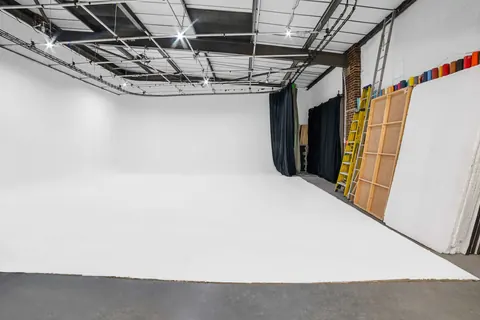
The practical answer is a studio that can hold a clean e-commerce setup alongside a lifestyle corner or larger branded set. For agencies handling multiple SKUs or seasonal launches, that flexibility is now a commercial advantage, not a nice extra.
2. Detail-led imagery is becoming a conversion tool
Customers are more cautious online, especially when price points rise. They want to inspect stitching, texture, finish, closures, labels and materials before they commit. That is pushing brands towards sharper, more deliberate detail photography rather than relying on generic close-ups captured at the end of a shoot.
In fashion, beauty, homeware and premium consumer goods, detail shots do a lot of heavy lifting. They answer quality questions before a customer asks them. They also support stronger zoom functions and more persuasive product page layouts.
The trade-off is time. Detail imagery needs controlled lighting, stable styling and enough working room for precise lens changes and product handling. Teams that treat these frames as an afterthought often end up with inconsistent results that weaken the overall product story.
3. Lifestyle imagery is getting more believable
The polished aspirational image still matters, but UK buyers are responding well to imagery that feels usable and grounded. That does not mean careless. It means less obviously staged environments, more natural interaction with the product and a better sense of scale, fit or everyday use.
For home, fashion and DTC brands in particular, the strongest lifestyle work now bridges realism and control. The image needs to feel lived in, but it still has to be commercially precise. Products must remain the focal point, colour must stay accurate and framing must leave room for cropping across channels.
This is where production decisions matter. A believable set often takes more control than a glossy one. Space for set build, rigging and art direction becomes critical when you want realism without visual clutter. A studio with proper access and enough footprint gives crews more room to shape environments that sell without looking forced.
More motion, but not at the expense of stills
One of the clearest e-commerce photography trends UK retailers are investing in is motion. Not full-scale brand film every time, but short, useful movement that helps products read better online. A rotating product, fabric in motion, a quick application demo or a model walking a garment can all improve confidence far more than another static angle.
That said, motion is not replacing stills. It is sitting alongside them. The mistake some brands make is assuming a few clips can cover what carefully planned photography used to do. In reality, the best-performing product pages use both. Stills give clarity, consistency and speed of scanning. Motion adds proof, scale and texture.
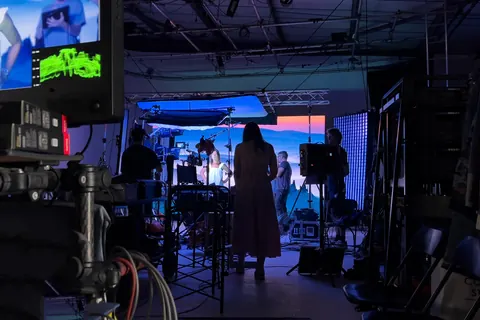
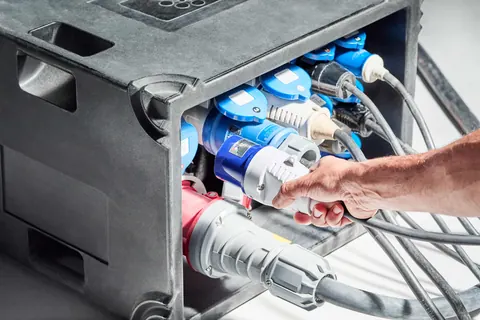
For production teams, this means planning lighting, camera positions and set layouts that can move between formats without a full rebuild. Studios with blackout capability, ceiling rigging and enough power and access to support both stills and video setups make that transition much more efficient.
4. Platform-specific shooting is now standard
Brands are no longer producing one hero image and hoping it works everywhere. The crop for a marketplace listing is not the crop for paid social. The image that performs on a product page may not work for a retailer’s banner slot or an email campaign.
As a result, more shoots are being planned around final use from the start. That means considering vertical framing, negative space for copy, alternate aspect ratios and regional marketplace requirements before the first light is placed.
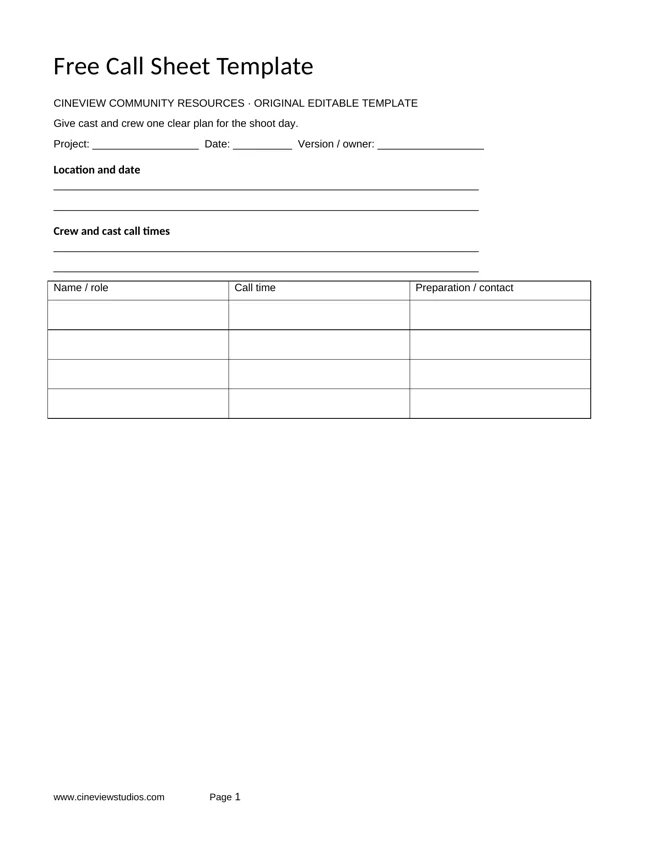
This sounds obvious, but it is often missed when productions are rushed. A good shoot plan now maps asset needs by channel, then builds an efficient capture order around them. That reduces re-shoots and gives creative teams material they can actually use, rather than a folder full of attractive but impractical frames.
5. True-to-product colour is under more scrutiny
Returns are expensive, and inaccurate colour is one of the easiest ways to create them. UK consumers expect product photography to be flattering, but they also expect it to be truthful. That is especially relevant for fashion, interiors, cosmetics and food, where small colour shifts can lead to complaints and lost trust.
This is pushing teams to tighten capture and grading workflows. Better colour management, more controlled lighting and closer alignment between photography, retouching and product teams are becoming standard. Heavy grading that changes the product itself is falling out of favour in e-commerce work.
There is a balance to strike. A product still needs to look premium. But premium and inaccurate are not the same thing. The most effective imagery now presents products at their best while staying close to what arrives in the box.
6. Scalable set design is replacing one-off styling
Brands with larger catalogues are under pressure to produce consistent content across multiple launches, seasons and channels. That is why modular set design is gaining ground. Instead of building a completely different environment for every SKU, teams are creating adaptable visual systems that can be refreshed without starting from scratch.
This could mean a repeatable tabletop environment for beauty, interchangeable background treatments for accessories or a flexible room set that can support several homeware stories in one booking. The gain is not only aesthetic consistency. It is production efficiency.
To do this properly, you need enough room to pre-rig, store props, move products in and out quickly and keep client review flowing without interrupting the set. That is where a functional studio earns its keep. If access is awkward or the space is too restricted, scalable design becomes harder than it should be.
The studio brief is changing with the trend
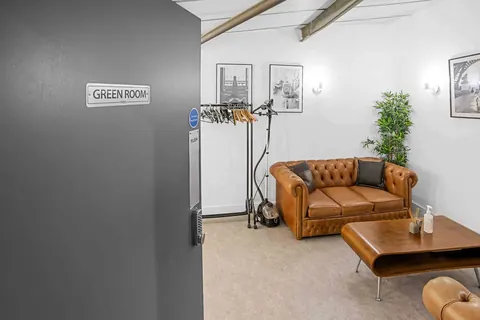
As these e-commerce photography trends UK brands are following become more production-heavy, the choice of studio has a direct effect on margin, speed and final asset quality. This is not just about a nice backdrop and a kettle in the corner. It is about whether the space can actually support the brief.
For e-commerce teams, the key questions are practical. Can you bring products in easily? Is there drive-in or ground-floor access for larger props, rails or set materials? Can lighting be rigged properly rather than improvised? Is there enough ceiling height to shape clean product light and still have room for overhead work? Can the team pre-light or pre-rig so the shoot day is spent capturing, not waiting?
These are the details that separate a low day rate from good value. A cheaper studio that slows the crew down, limits shot variety or forces overtime can cost more by the end of the job. A properly equipped space with strong access, in-house gear and room to scale often saves money where it counts – on time, labour and rework.
That is one reason more brands and agencies are moving towards production-friendly facilities rather than trying to squeeze commercial e-commerce briefs into undersized creative spaces. For teams shooting volume, variation and motion together, the operational difference is obvious.
Cineview Studios sits squarely in that shift, because the requirements are no longer theoretical. They are part of the day-to-day brief.
The direction of travel is clear. E-commerce photography is becoming more strategic, more channel-aware and more demanding from a production point of view. The brands doing it well are not chasing every visual fad. They are building shoots that work harder, deliver more usable assets and make the buying decision easier. If your setup supports that from the start, the imagery tends to perform better long before anyone talks about style.