


Film Studio Hire South London: What Matters
If you have ever lost an hour of shoot time because a van could not unload properly, the ceiling was too low for the lighting plan, or the studio’s kit list looked better on paper than on set, you already know what separates decent film studio hire South London from a space that actively helps production move. Price matters, but workflow matters more. The wrong studio costs you twice – once on the booking, then again in delays, compromises and crew frustration.
South London has become an increasingly practical choice for production teams that need more than four white walls and a kettle. For commercials, branded content, music videos, product campaigns and editorial shoots, the best spaces are not simply affordable alternatives to central London. They are often better operationally. More room, better access, fewer restrictions and a setup that reflects how crews actually work.
Why film studio hire in South London makes commercial sense
For many productions, geography is only part of the decision. What usually matters is whether the space supports the schedule. Film studio hire in South London often gives crews a stronger balance between cost and capability, particularly when a shoot needs build space, vehicle access, larger lighting setups or room for agency and client attendance.
That trade-off is worth paying attention to. A cheaper studio that lacks blackout control, proper loading access or enough power can quickly become expensive once you add workaround costs. Equally, a premium studio with a prestigious postcode is not much use if your art department cannot build efficiently or your crew spends the day working around spatial limitations.
This is where South London tends to perform well. Industrial-scale units, ground-floor access and production-led layouts are more common, which means fewer compromises once the call sheet becomes real.
What to check before booking film studio hire South London
The first question is not square footage. It is whether the studio fits the way your production needs to run.
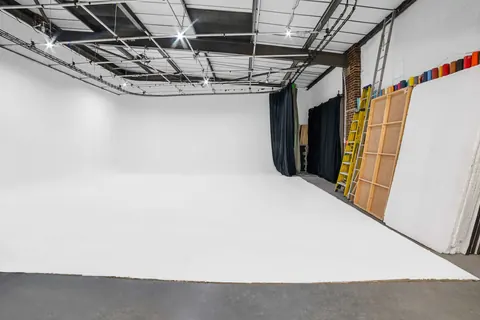
Ceiling height is usually one of the first indicators. If you are lighting people, sets or vehicles, low ceilings close down options quickly. A proper lighting grid and enough vertical clearance give your gaffer more control and keep the floor workable. That matters just as much on a modest branded content shoot as it does on a larger commercial.
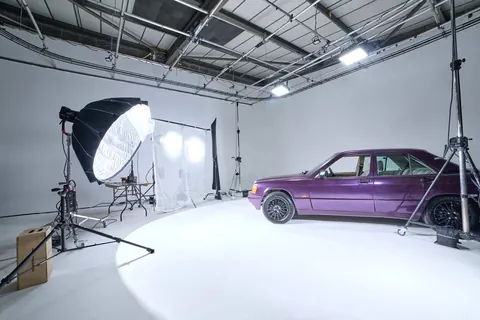
Access is next. Ground-floor entry, shutter access and drive-in capability can save serious time during load-in and load-out. If your production includes oversized props, set flats, product rigs or vehicles, poor access turns a simple studio day into a logistical problem. Many teams overlook this until the morning of the shoot, which is far too late.
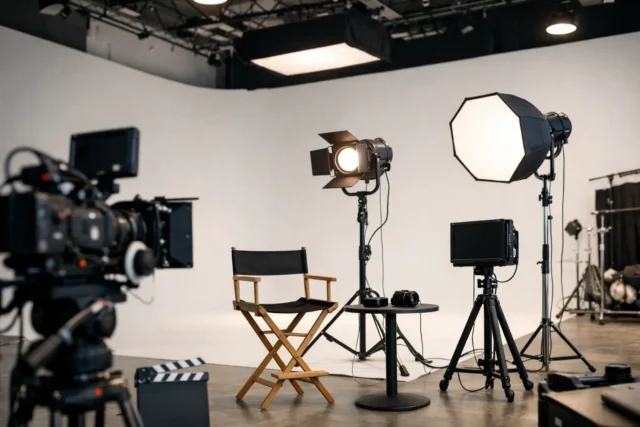
Then there is studio versatility. A strong studio should not force you into one style of production. Infinity cove studio, blackout capability, green screen studio and set-build suitability all widen your options. That flexibility is useful even if you think you only need one setup. Productions change. Clients ask for an extra scene, a different angle, a moving vehicle shot, a fully controlled blacked-out look. The more adaptable the space, the easier it is to respond without relocating.
Power, rigging and in-house kit also deserve scrutiny. Some studios advertise themselves as fully equipped when in reality the available kit is minimal or outdated. If the space includes reliable lighting and grip equipment, and if pre-lighting or pre-rigging support is available, you can strip out a lot of wasted setup time. That is not a luxury. It is a production advantage.
The features that genuinely improve shoot days
A studio should do more than contain the production. It should help it.
Free parking is a good example. It sounds mundane until you are booking for a crew, clients, runners, a camera van and talent arrivals. Parking costs add up quickly across a full-day or multi-day shoot, and awkward off-site parking creates friction all day long.
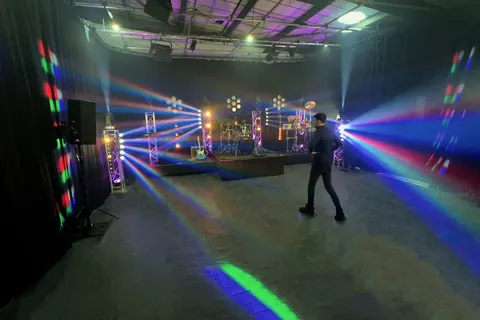
Twenty-four hour opening is another feature that becomes critical on the right project. Not every production needs overnight access, but when you do, you really do. Music videos, long set builds, pre-rigs, dawn call times and tight agency turnaround can all demand unusual hours. A studio that can support that without turning it into a negotiation gives producers much more control.
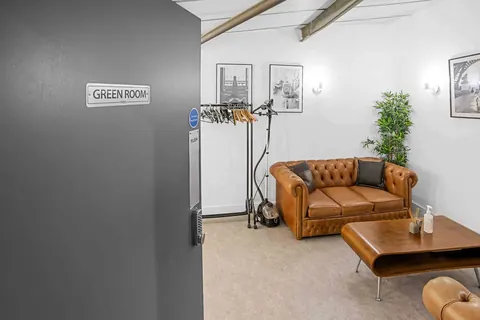
Client-ready space matters too. Commercial shoots are collaborative, and the environment needs to work for more than the camera department. If brand teams, agency creatives or stakeholders are attending, they need enough room to review, wait, work and stay out of the crew’s path. A cramped studio creates tension even before the first take.
Space versus specification
One mistake production teams make is treating size as the main sign of quality. Large floor area is useful, but only if the space is usable. A studio with awkward pillars, poor rigging points, limited blackout control or difficult loading can feel smaller than the square footage suggests.
Specification is what turns size into production value. High ceilings, clean power distribution, a proper grid, blackout control and practical access all have a direct effect on the work. If you are shooting e-commerce stills, perhaps you can compromise on one or two of those points. If you are shooting motion, managing multiple departments or building a set, those details become non-negotiable.
That is why comparison should always be based on the working reality of the shoot. Two studios may sit at a similar price point, but if one reduces setup time, supports heavier lighting plans and lets departments work properly, it will usually deliver a better end result at a lower overall production cost.
When an affordable studio is actually the smarter option
Affordable is often misunderstood in the London studio market. It does not mean basic. It means the pricing aligns with what the production receives.
The strongest value usually comes from studios built for practical use rather than postcode appeal. If the space includes serious infrastructure, useful in-house kit, proper access and enough flexibility to handle stills, motion and set builds, affordability becomes an operational benefit rather than a compromise.
For smaller brands, independent filmmakers and growing agencies, that can be the difference between settling for a stripped-back shoot and producing something with real production value. For experienced crews, it means budget can be directed where it counts – art direction, talent, camera, post or additional shooting time – rather than being swallowed by an underperforming space.
This is exactly why many teams now approach South London differently. They are not asking whether they can afford a proper studio. They are asking which studio will let them work properly without wasting budget.
Who benefits most from film studio hire South London
The short answer is almost any production that needs control, access and room to operate.
Commercial teams benefit because they often need a polished environment that works for clients and crew at the same time. Photographers and videographers benefit because lighting, rigging and flexibility affect both speed and output. Production companies benefit because practical loading, parking and reliable support reduce pressure on already stretched schedules.
There is also a strong case for brand teams and e-commerce operators. Not every project needs a huge crew or a complex set build, but even straightforward product and campaign shoots improve when the space is well equipped and easy to manage. Better access, better kit and fewer restrictions usually mean more content captured in the same booking window.
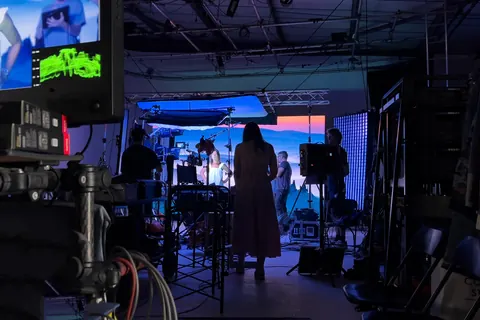
For more advanced productions, features such as drive-in access, virtual production studio capability and set-build suitability open up options that many smaller London studios simply cannot support. That scalability matters. It allows one space to serve a quick tabletop shoot one week and a much more ambitious build the next.
Choosing a studio that respects the schedule
The best studio hire decisions are rarely based on one headline feature. They come down to whether the whole setup is designed around production reality.
Can your crew load in fast? Can lighting be rigged efficiently? Can you black out the space fully? Is there enough room for clients without compromising the floor? Is the in-house kit useful enough to reduce external hire? Can the team pre-rig or pre-light if the schedule demands it? These are the questions that protect a shoot.
A production-friendly studio should feel like an asset from the first recce. It should answer problems before they appear, not create new ones once the crew arrives. That is why facilities such as Cineview Studios stand out to teams who know what a working day actually looks like. The appeal is not just the headline rate. It is the combination of space, access, equipment and flexibility that lets productions run cleanly.
If you are booking your next studio, think less about postcode and more about what the day needs to deliver. The right space does not just hold the shoot – it gives it a better chance of going exactly to plan.