
What Does Studio Hire Include?
If you have ever compared two studio quotes in London and wondered why one looks cheap until the extras start appearing, you are asking the right question. What does studio hire include is not a minor detail. It is often the difference between a smooth shoot day and a budget that starts leaking money from call time.
Studio hire can mean anything from four blank walls and a power socket to a fully production-ready space with lighting, grip, access support and client facilities built in. The problem is that many listings make the headline rate look attractive while leaving the practical essentials buried in the small print. For photographers, filmmakers, agencies and brand teams, that is where costs and delays creep in.
What does studio hire include in practice?
At the most basic level, studio hire includes access to the physical space for an agreed period. That usually means a shooting area, standard power, basic house rules and use of whatever fixed features are permanently part of the room. In a lower-spec studio, that may be almost all you are getting.
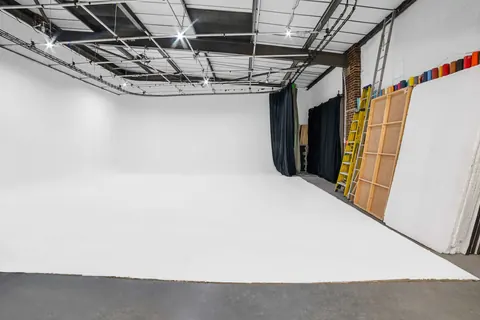
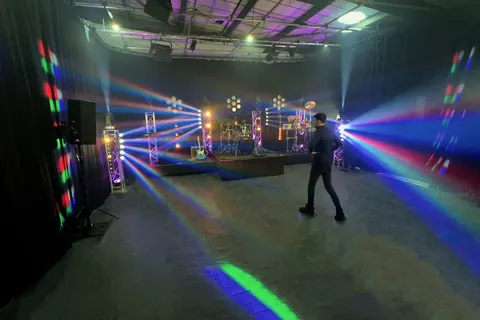
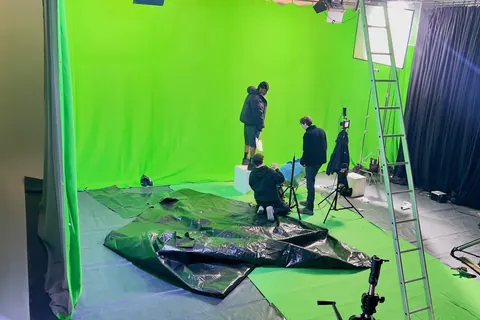
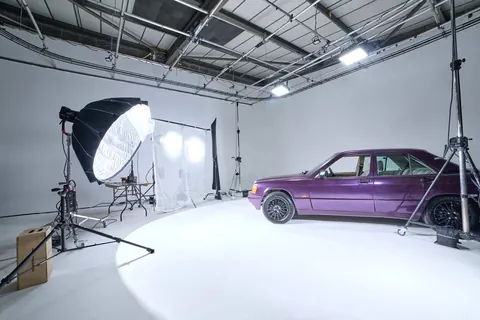
A more professional hire package usually goes much further. It can include lighting support infrastructure, grip options, changing areas, make-up space, production furniture, drive-in access, parking, blackout capability, internet access, crew facilities and on-site assistance. Some studios also include use of specialist features such as an infinity cove, green screen or pre-rigged lighting grid.
That is why the right question is not just what the day rate is. It is what the day rate actually covers, what gets charged separately and what will affect the pace of your shoot.
The space itself should do more than exist
A studio is not simply an empty shell. The dimensions, layout and usability of the space are part of what you are hiring, and they have a direct impact on what you can shoot.
Ceiling height matters more than many first-time hirers expect. If you are shooting fashion, movement, larger set pieces or commercial video, a low ceiling restricts camera angles, lighting positions and overall production value. A proper lighting grid also changes the workflow. It keeps the floor clearer, speeds up rigging and makes the space safer for crew and clients.
Floor area is only useful if the room works operationally. A large footprint with awkward pillars, poor access or limited rigging options can be less practical than a well-designed studio with better infrastructure. If your production involves vehicles, oversized props or scenery, ground-floor loading and shutter access are not bonuses. They are often essential.
Studios that support film and photography properly tend to offer specialist environments rather than one generic room. That could mean blackout capability for controlled lighting, a green screen setup for keying work, an infinity cove for clean product and fashion visuals, or enough depth to build sets without compromising shot options.
Equipment can change the real cost of hire
One of the biggest differences between studio listings is whether equipment is included, partially included or billed as an extra. This is where two similar day rates can produce very different final invoices.
In some cases, studio hire includes only the space and you bring or rent everything else. In others, there is an in-house inventory of lighting and grip available within the hire or at least at a more sensible rate than third-party rental. For many shoots, this has a serious effect on budget control.
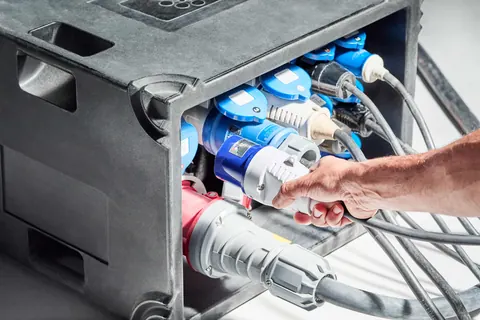
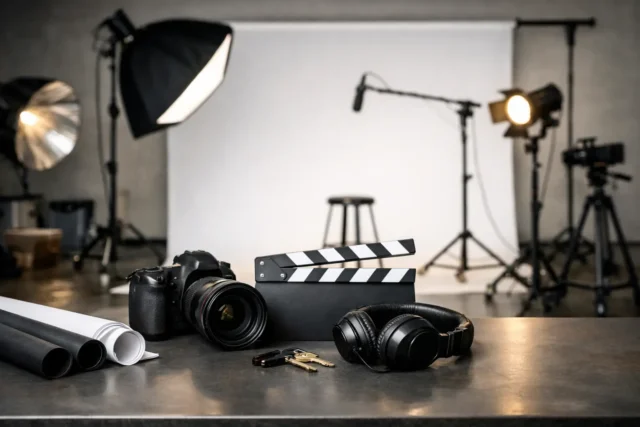
Lighting might include flash heads for photography, constant lights for video, modifiers, stands, flags, C-stands, sandbags and distribution. Grip could cover support gear, clamps, booms, apple boxes and other practical kit that crews need on set. Even if not every item is included as standard, a studio with a strong in-house equipment package saves time and reduces delivery coordination.
This is also where experience matters. A professional production space will not simply have kit on a shelf. It will stock the sort of equipment crews actually ask for and make it available in a way that supports realistic shoot schedules.
Access, loading and parking are part of the hire value
A studio may look perfect in photos and still be a headache on the day if access is poor. One flight of stairs, limited loading windows or no nearby parking can slow your crew down before the first frame is shot.
Good studio hire often includes practical access advantages that are easy to overlook at quoting stage. Ground-floor entry, shutter loading, drive-in capability and free on-site parking all remove friction from production. If you are moving lighting cases, set flats, styling rails, props or camera carts, those details matter as much as the cyc wall.
The same goes for opening hours. A space with restricted access can create overtime elsewhere in your production, especially if you need early starts, late finishes, pre-lighting or overnight set holds. A studio that operates 24/7 gives productions more control, particularly for commercial shoots with tight turnaround.
Crew and client facilities are not decorative extras
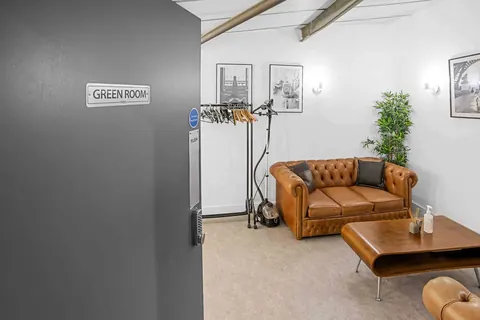
When people ask what does studio hire include, they often focus on the shooting area and forget the support spaces around it. But changing rooms, make-up stations, green rooms, client seating and clean toilets are not soft perks. They affect how professionally a shoot runs.
If talent has nowhere suitable to change, if HMU has no dedicated setup area or if the client team is balancing laptops on flight cases, the day becomes less efficient very quickly. For agency and brand work in particular, the studio has to function as a working environment, not just a technical shell.
A good hire setup usually includes the basics needed to keep the production moving comfortably – seating, tables, mirrors, steaming points, Wi-Fi, refreshments access and enough separation between crew zones and client areas. These details may not decide the creative, but they often decide whether the day feels organised or improvised.
Support before and during the shoot
The best studio hire includes more than keys to the building. Operational support can be one of the most valuable parts of the package, especially on larger or more technical productions.
Pre-lighting and pre-rigging support are a strong example. If a studio can help you get the space ready in advance, your shoot day starts with the setup already working for you instead of against you. That is particularly useful for video productions, agency jobs and any setup with a tighter client-facing schedule.
On-site assistance also matters when plans change, which they often do. A responsive studio team can help solve access issues, adapt layouts, point you to available kit or troubleshoot practical problems before they become delays. That support is difficult to price line by line, but it has real value when the clock is running.
What is usually not included
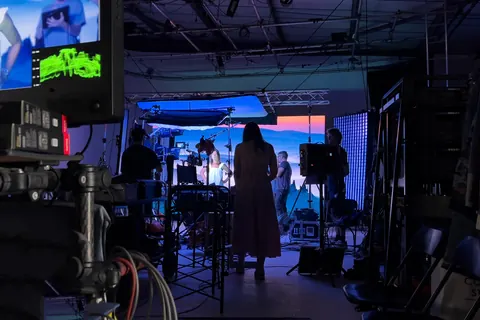
Even in a well-equipped studio, some items may still sit outside the standard hire fee. Catering, specialist crew, advanced virtual production workflows, bespoke set construction, dedicated technicians and certain premium equipment are commonly quoted separately.
Cleaning charges can also appear if a shoot is messy or involves paint, liquids, vehicle use, construction work or heavy set dressing. Overtime, weekend access and damage waivers may be handled separately too. None of this is unreasonable, but it should be clear before booking.
The issue is not that extras exist. The issue is whether they are transparent. A serious studio will explain what is standard, what is optional and what conditions trigger additional charges.
How to compare studio hire properly
If you are reviewing options, compare studios by total production value rather than day rate alone. A cheaper room with no parking, no grip, no loading support and limited hours can end up costing more once you add external rentals, crew time and logistical workarounds.
Ask practical questions. Does the quote include use of the infinity cove or green screen? Are house lights or grip part of the package? Is parking free? Can you pre-rig? Is there enough power for your setup? Can a vehicle get inside or directly to the loading point? Are there client-ready facilities on site?
A production-friendly studio should answer these clearly because those are the details that shape a real shoot day. This is one reason facilities such as Cineview Studios are built around function first – not just square footage, but the access, equipment and workflow support that make the space commercially useful.
The real answer depends on the studio
There is no single industry-wide definition of studio hire. Some spaces include very little beyond the room. Others include the infrastructure and support that crews actually need. That is why vague listings can be expensive in practice.
The right hire should give you more than a location. It should give you control over lighting, movement, loading, timing and on-set organisation. When a studio is genuinely designed for production, that shows up in every part of the booking – from how quickly you get in, to how much kit you do not need to outsource, to how confidently your day runs once the client arrives.
Before you book, read past the headline price and look at what the hire is really buying you. The more demanding the shoot, the more that answer matters.