Professional Studio Hire Review That Counts
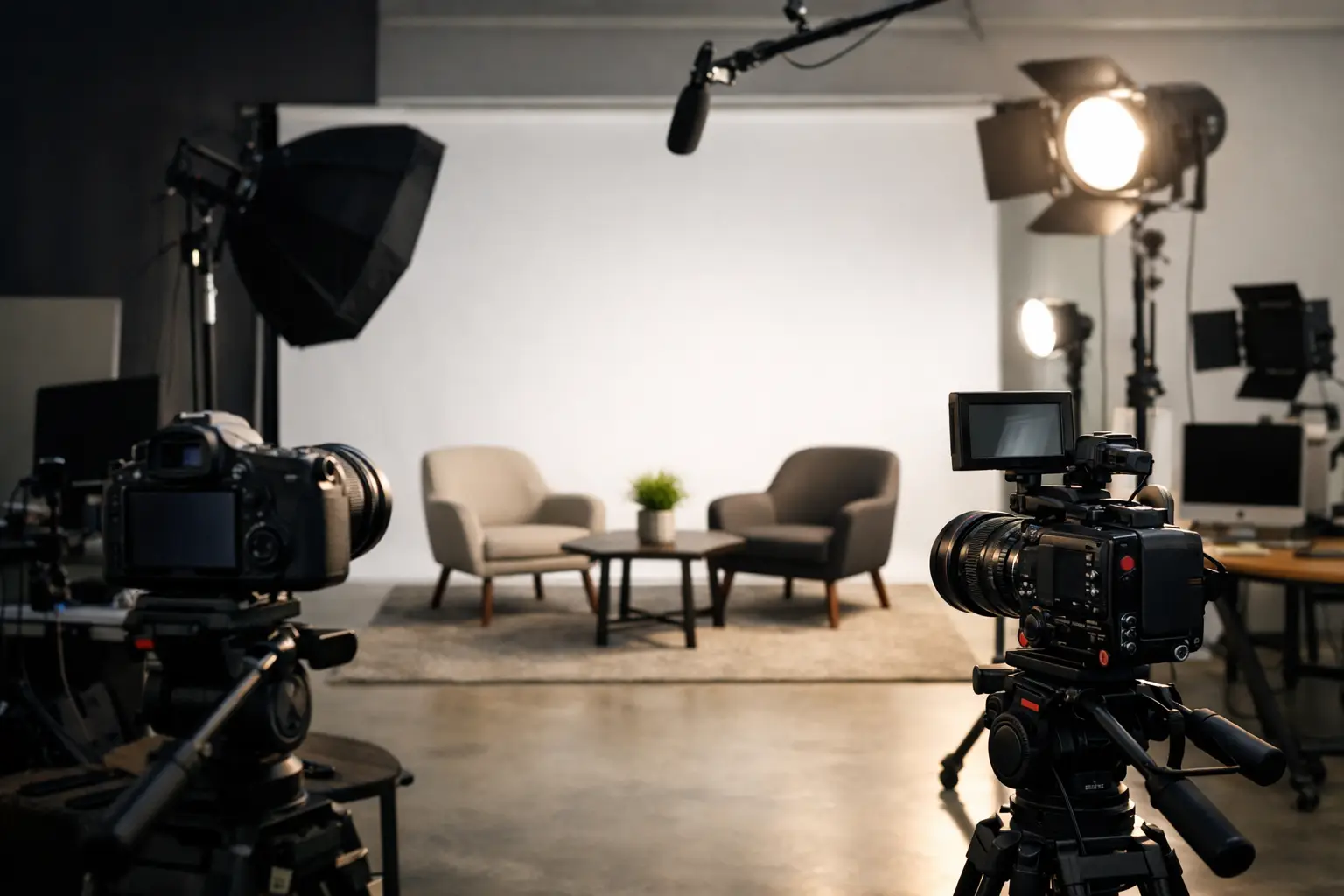
A professional studio hire review should not start with the day rate. It should start with the moment your crew arrives: can the vehicle get close to the set, can cases come straight through a shutter, and is there enough room to work without moving stands every five minutes? In London, a studio that looks good in photographs can quickly become expensive once restricted access, limited height and missing equipment begin slowing the day down.
For photographers, filmmakers, agencies and brand teams, the right hire is not simply a clean room with a white wall. It is a production environment that protects the schedule, gives the creative team control and prevents avoidable spend. This is what to assess before confirming a studio.
What a professional studio hire review should measure
The most useful way to review a studio is through operational value rather than headline price. A lower hire fee is only a saving if the space can support your brief without additional location vehicles, external equipment rentals, overtime or compromises to the shot.
Start with the type of production. A tabletop product shoot, a cast-led commercial, a music video and a virtual production job place very different demands on a space. The key question is whether the studio gives you room and infrastructure to execute the original plan, not a reduced version designed around the building’s limitations.
A good review considers five connected areas: usable floor space, height and rigging, access and loading, controlled shooting conditions, and the equipment and support available on site. If any one of these falls short, it can affect every department.
Space means working space, not just square footage
Listings often lead with floor area, but crews need to know how much of it remains once the cove, camera track, lighting stands, monitors, props, talent, client seating and catering are in place. A studio may technically accommodate a set build, yet leave no practical route for people or equipment around it.
Look at the dimensions in relation to your camera and lighting plan. Wider shots need distance from subject to lens. Larger modifiers need clearance. Motion-control work, vehicle shoots and multi-camera setups need additional room that cannot be improvised on the day. For e-commerce and portrait work, a more compact studio may be entirely appropriate. For a campaign shoot with a substantial crew, cramped conditions soon turn into lost time.
High ceilings matter for the same reason. They create separation between lights and subjects, make overhead rigging possible and give the team more control over spill, contrast and shadow. Low ceilings are manageable for certain shoots, but they restrict large soft sources and can force the lighting plan into a flatter, less flexible result.
Review the studio’s shooting conditions
A professional space should allow you to create, rather than merely accept, the conditions of the room. That normally means a properly maintained infinity cove, reliable blackout capability and enough power for the intended lighting package.
An infinity cove is not just a visual feature. Its scale, finish and condition affect how quickly the team can shoot clean backgrounds, full-length talent and product work. Ask whether it has recently been painted, whether coloured repainting is available, and whether there is enough depth to light it separately from the subject. A small cove can suit packshots; a larger cyc gives directors and photographers more options with movement, wider lenses and bigger sets.
Blackout deserves equal scrutiny. Daylight can be useful for editorial work, but it is a liability when continuity matters or when you are matching a precise lighting treatment across a long shoot. Check whether windows can be fully controlled and whether there are light leaks around doors, roof lights or access points. A blackout studio should let you work at any hour without the weather dictating the look.
Green screen and virtual production capabilities should also be assessed against the actual job. A green screen is valuable only if it is large enough for the talent, camera angle and lighting separation required. Virtual production needs suitable dimensions, technical planning and a studio team that understands the workflow. These are powerful facilities, but they are not interchangeable solutions for every brief.
Lighting, grip and pre-rigging affect the real budget
External kit hire can be necessary, particularly for specialist camera, motion or lighting requirements. But a studio with a serious in-house lighting and grip inventory can remove a substantial amount of transport, collection and return logistics from the production.
Ask for clarity on what is included, what is chargeable and whether equipment has been tested and maintained. Consider the practical items as well as the headline fixtures: stands, booms, flags, polyboards, sandbags, clamps, extension leads and rolling equipment can save a crew from a surprising number of interruptions.
A fixed lighting grid adds another advantage. It keeps the floor clearer, enables more repeatable setups and reduces the time spent building and moving stands. For multi-day shoots, pre-lighting and pre-rigging support can be more valuable than a marginally lower room rate elsewhere. Walking into a prepared studio at call time gives the crew a productive first hour instead of a logistical one.
Access is where London studio hires often fail
Loading is rarely glamorous, but it is one of the clearest indicators of whether a facility is designed for production. If your kit, set materials or props must be carried through narrow corridors, up stairs or across a shared reception, build that labour and time into the quote. It is not an incidental inconvenience.
Ground-floor drive-in access and a large shutter change the equation. They make it feasible to bring in larger flats, scenery, heavy flight cases and even vehicles where the brief requires them. They also make strike faster, which matters when a production is operating on a tight booking window.
Parking should be reviewed with the same level of care. London parking costs, unloading restrictions and the need for multiple vehicles can quickly erode an apparently competitive rate. Free on-site parking is a practical production benefit: fewer transfers, less risk to equipment and a simpler arrival for crew and clients.
There is a trade-off. A central studio may shorten travel for some attendees, while a better-equipped location slightly further out may save far more time in loading, parking and build. Compare the whole production day, not just the postcode.
Check whether the studio supports the people on set
The best facilities understand that a shoot is not only a camera department and a backdrop. Clients need somewhere to review work. Talent needs a comfortable changing area. Producers need a place to manage schedules, calls and approvals. Crews need practical break-out space and reliable amenities, especially on long days.
24/7 opening can be particularly useful for overnight builds, early call times, international schedules and productions that need to avoid peak travel. However, confirm how access works outside standard hours, who is available for support and what is expected at wrap. Flexibility is most valuable when it is backed by clear operational processes.
Service also matters when the plan changes. A first-time studio hirer may need straightforward advice on space, equipment and timing. An experienced production manager may need a responsive team that can coordinate a pre-light, accommodate a set build or resolve a last-minute requirement without creating unnecessary friction. Cineview Studios is built around this production-first approach: practical scale, technical readiness and support that helps crews keep moving.
Questions worth asking before you book
A viewing is the strongest way to test a studio, particularly for a shoot involving construction, vehicles, complex lighting or agency clients. Walk the load-in route. Stand at the furthest camera position. Look up at the ceiling. Check where video village, makeup, styling and catering will sit once the set is live.
Before signing off, confirm the exact access hours, overtime terms, power availability, included equipment, cove condition, blackout process, parking allocation and any restrictions on smoke, haze, paint, noise or set building. Ask who will be your point of contact on the day and whether a pre-light or technical recce can be arranged.
These questions are not excessive. They are the difference between a location that is merely available and one that is genuinely ready for a professional production.
The right studio should make the brief feel more achievable once you see it, not introduce a new list of workarounds. Choose the space that gives your crew the clearest route from load-in to final frame, and the production will have a better chance of delivering on time, on budget and at the level the work deserves.