Film Studio or On Location: Which Works Best?
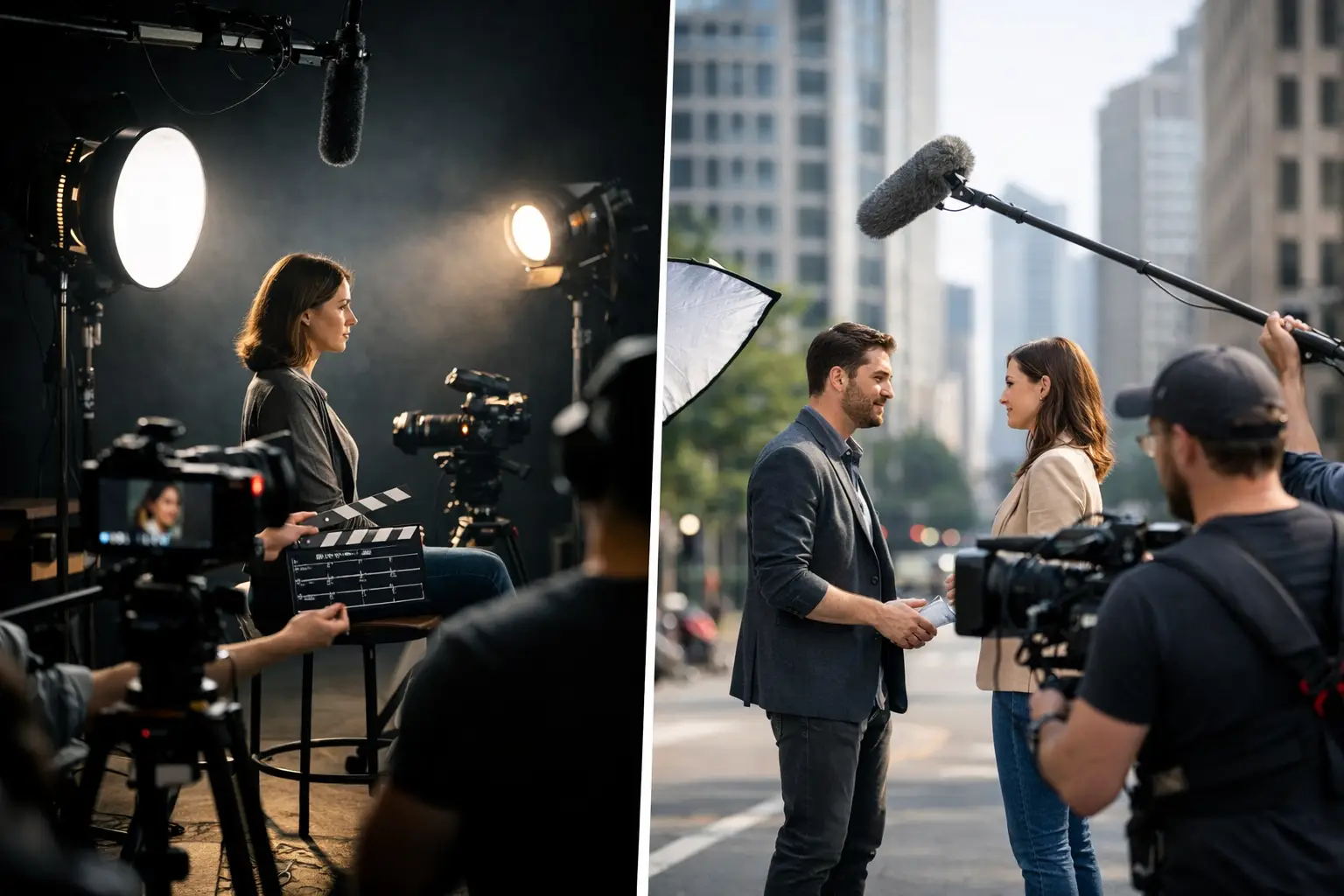
Table of Contents
ToggleA location can give a commercial instant character: a real kitchen, a recognisable street, a lived-in office or a view that cannot be recreated convincingly. But deciding between a film studio or on location should start with the production, not the mood board. The better choice is the one that protects the schedule, gives the crew workable conditions and puts the budget into what audiences will actually see.
For some shoots, location is essential. For many others, it introduces costs and compromises that only become clear once the unit arrives. A studio is not simply a blank room. When it has the right access, ceiling height, power, lighting infrastructure and build capability, it becomes a controlled production base that can be shaped around the brief.
Film Studio or On Location: Start With Control
The central difference is control. On a location shoot, your team works around somebody else’s building, opening hours, neighbours, available power, lift dimensions, loading restrictions and rules on what can be moved. A well-managed location can still work brilliantly, but every restriction has a knock-on effect on lighting, crew call times and what can be achieved in a day.
A purpose-built studio puts the production in charge. You can black out daylight, rig lighting from a grid, build the required set, run multiple takes without disturbing a household or business, and keep equipment safely in one place. This is particularly valuable for commercials, product films, branded content, music videos and editorial shoots where consistency matters across a long day or several shoot days.
That control also protects creative decisions. If the weather turns, a location exterior may need to be postponed, relit or rewritten. In a studio, the intended look can be maintained from first setup to final shot. For campaigns requiring multiple formats, cut-downs or stills alongside motion, that consistency makes post-production easier and reduces the risk of mismatched footage.
When a real location earns its place
Location is often the right call when the setting is part of the story. A heritage building, a specific retail space, a working factory, an authentic home or a recognisable London exterior may deliver texture that would be expensive to reproduce. Documentary work, observational content and scenes requiring genuine public context can benefit from the unpredictability of the real world.
It can also be more economical for a small, lightly equipped crew filming a short scene in a simple environment. If you need little lighting, have permission to work efficiently and can complete the work in a few hours, building a version of that setting in a studio may be unnecessary.
The key is to cost the full location requirement, not only the day rate. Include the location manager, permits, insurance, travel, parking, security, cleaning, overtime, power distribution, generators where needed, catering space and time lost to restricted access. A location that appears cheap on paper can quickly become the more expensive option.
What a Studio Changes on the Shoot Day
A studio does not remove every production challenge, but it removes many avoidable ones. The practical gains begin before the camera rolls. Ground-floor shutter access lets sets, cases, props and large equipment come straight into the space rather than through narrow corridors or undersized lifts. Drive-in access can save considerable time on vehicle shoots, sizeable set pieces and high-volume product work.
Ceiling height is equally important. Low ceilings limit where a gaffer can place fixtures and make it harder to create depth, shape light or keep stands out of frame. A lighting grid gives the crew usable overhead positions, keeps the floor clearer and allows pre-rigging before talent or clients arrive. That is not a luxury on a commercial schedule. It is time saved at the point where time costs most.
A blackout-capable space makes daylight predictable. You can shoot a morning scene late in the day, create a night look at noon or maintain the same exposure while weather changes outside. An infinity cove offers a clean, adaptable background for product, fashion, automotive and e-commerce content, while a green screen or virtual production setup gives production teams options that are difficult to achieve in a typical hired location.
At Cineview Studios, these features are designed to work together: high ceilings, professional lighting infrastructure, practical loading access, free parking and a space that can accommodate both straightforward setups and more ambitious builds. The point is not to force every project into a studio. It is to give teams a facility that removes the physical limitations common in London hire spaces.
Pre-lighting protects the schedule
Pre-lighting and pre-rigging are among the strongest arguments for a studio when production value matters. If a lighting plan can be installed and tested before the main shoot day, the crew starts with a working setup rather than a room full of flight cases.
That creates better conditions for everyone. Directors and photographers get more time to refine shots. Talent spends less time waiting. Agency and brand clients see progress earlier. The production manager has fewer pressure points if a setup runs long.
On location, pre-lighting is often limited by hire hours, access times or the need to leave the property as found. You may have a narrow window to load in, protect surfaces, move furniture and light the room before the first shot. Those constraints can be manageable, but they need a plan and a contingency budget.
The Budget Question Is Bigger Than Hire Cost
Comparing a studio day rate with a location day rate is rarely meaningful on its own. The useful comparison is total production cost per usable hour.
A studio can reduce transport time, equipment hire, weather cover, overtime risk and the need to bring in temporary facilities. In-house lighting and grip equipment can simplify the kit list. On-site parking removes a common London frustration, especially for crews travelling with cameras, lighting, props and production supplies. A 24/7 facility can also make an early call, overnight build or weekend shoot more realistic without paying for an extended location window.
Locations may have hidden operational costs that are easy to overlook during a recce. Will the mains supply support the lighting package? Is there a quiet room for sound? Where does wardrobe work? Is there space for hair and make-up, client viewing, catering and secure storage? Can a lorry unload without blocking the road? Does the property have enough room to reset between takes?
None of these questions rule out location. They simply establish whether the apparent saving survives contact with the shoot plan.
Choose Based on the Brief, Not Habit
A studio is usually the stronger choice when you need repeatable lighting, set construction, a controlled sound environment, high equipment volume, multiple setups or a reliable weather-proof schedule. It is especially effective for product launches, fashion, food, beauty, tabletop, interviews, social campaigns and commercial productions that need both moving image and stills.
Location is likely to lead when authenticity, architecture or a specific setting carries the creative idea. It may also suit a campaign that relies on natural light, public atmosphere or a small crew moving quickly between several places.
There is a third route worth considering: combine both. Film controlled interiors, product inserts, pack shots and backup scenes in the studio, then use location for the exterior moments that establish place. This approach can deliver the visual credibility of a real environment without making every shot dependent on it.
Before confirming either option, ask the production team what must be true for the shoot to succeed. If the answer includes reliable access, space to rig, room to build, controlled lighting, parking, equipment support and flexibility around the clock, a purpose-built studio will often give the better return. If the answer is a view, a building or a genuine environment that cannot be substituted, secure the location early and plan around its limits. The strongest shoots do not choose the most fashionable option – they choose the environment that lets the work happen properly.