



Modular Set Build for Faster, Smarter Shoots
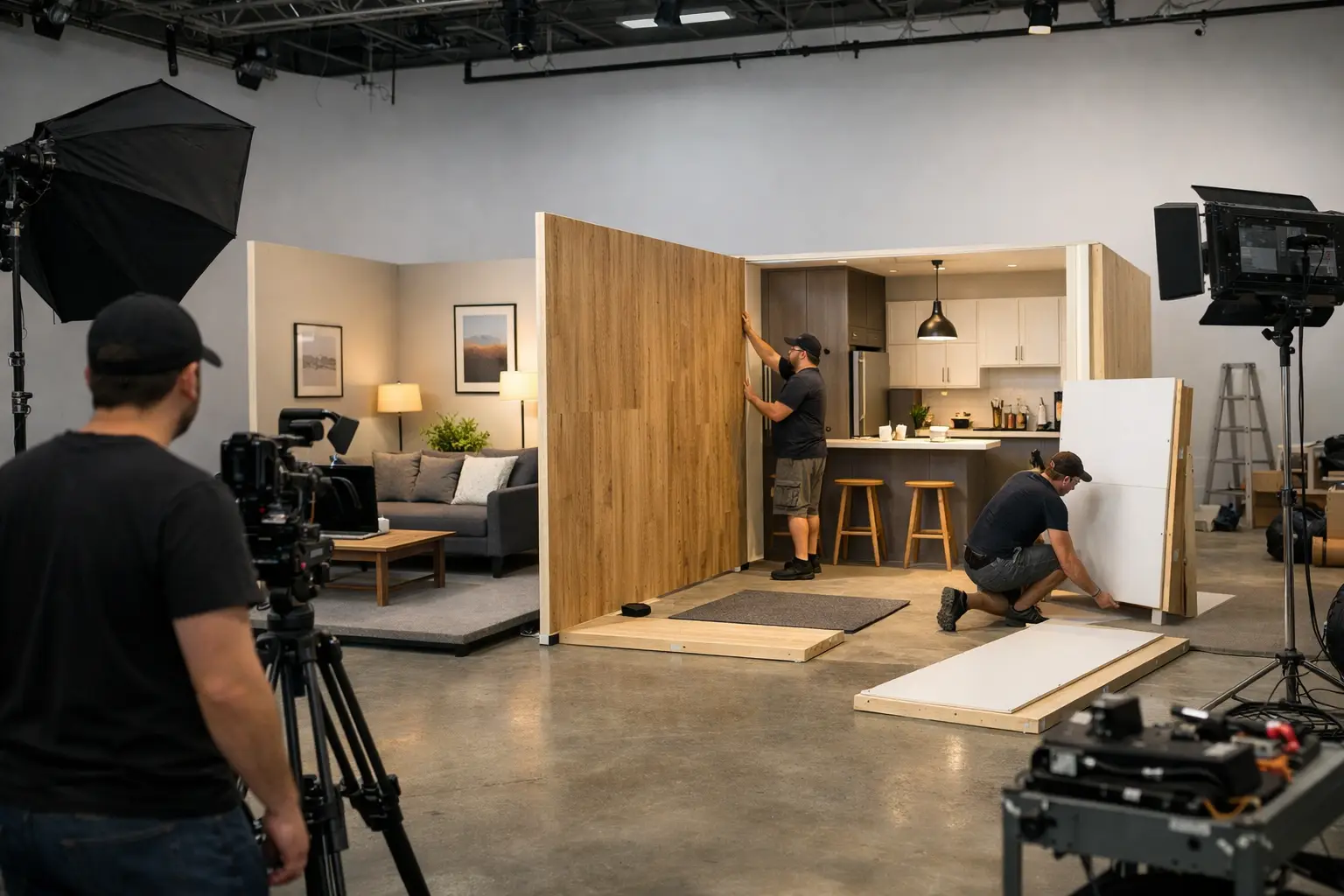
Table of Contents
ToggleA set that takes six hours to construct, blocks the lighting team and has to be dismantled before lunch is not a flexible creative asset. It is a costly bottleneck. A well-planned modular set build changes that equation, giving production teams a repeatable environment that can shift from one campaign look to another without starting from bare walls every time.
For commercial photography, branded content, e-commerce, music videos and social-first video, modular construction offers creative range without the cost and waste of a complete bespoke build for every scene. The catch is that modular does not mean improvised. It needs clear design decisions, proper materials, enough studio volume and a workflow that accounts for access, lighting and reset time.
What a modular set build is designed to do
A modular set is made from individual, reusable components that can be assembled in different configurations. Those components may include flats, movable walls, doorways, windows, plinths, shelving, floor sections, kitchen units, counters, practical lighting features and branded architectural details.
The aim is not to make every set look identical. The aim is to create a kit of parts that can produce multiple distinct looks while keeping labour, transport and material costs under control. A retail campaign might use the same wall system for a clean product launch, a domestic lifestyle scene and a bold colour-blocked social campaign. Change the paint, dressing, flooring, angles and lighting, and the audience sees a new world rather than the same set rearranged.
This is particularly useful when a client needs high content volume. One studio booking can support a bank of stills, short-form video, cut-downs and seasonal variations, provided the build has been designed for fast changes rather than one fixed hero shot.
Start with the shot list, not the floor plan
The strongest modular set build begins with the creative deliverables. Before deciding on wall heights or finishes, establish what the camera needs to see, how the subject will move and how many set changes are required across the day.
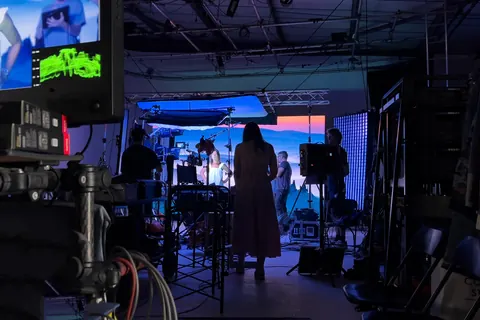
A beauty shoot may need tight, controlled backgrounds where joins will never appear in frame. A furniture campaign may need deep sightlines, working doorways and enough depth to place a camera well back from the action. A dialogue-led film scene needs space outside the frame for sound, lighting, crew movement and camera coverage. These are different production problems, even when the visual reference looks similar on a mood board.
Map the build against the shot list in practical terms. Identify which walls must be removable, which elevations need to work on camera, where windows or doors are required, and whether the set must be shootable from more than one direction. If a scene only works from a single angle, that can be entirely valid. It simply needs to be a deliberate cost-saving decision, not a limitation discovered once the director wants a reverse shot.
Build for changeovers that matter
Not every element needs to be modular. Structural or background pieces that remain constant can be fixed in place, while high-change elements should be designed to move quickly. This might mean freestanding flats, interchangeable wall skins, reversible panels, clip-on signage or furniture that can be redressed without disturbing the lighting setup.
The question is simple: will the time saved on this changeover justify the additional build cost? For a one-day shoot with a single scene, a fully modular system may be unnecessary. For a campaign producing ten content variations, it can protect hours of valuable studio time.
Choose a studio that supports the build, not just the camera
A set plan can look efficient on paper and still fail in a cramped studio. Low ceilings restrict wall heights and lighting angles. Narrow access turns every flat, floor section and prop into a handling problem. A lack of storage means unused pieces sit in the middle of the working floor, slowing every department down.
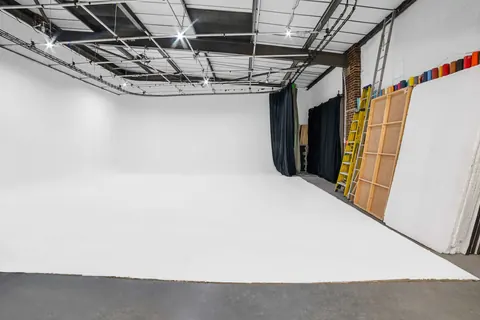
For a serious build, assess the production space as closely as the creative concept. High ceilings and a lighting grid give the gaffer options to light over walls, control spill and maintain a cleaner floor. Ground-floor shutter access matters when materials, scenic items and larger props need to come directly into the studio. Drive-in capability can be decisive for vehicle content or heavier installations that are unrealistic to hand-carry through a typical London building.
A studio also needs enough clear floor area around the set. Crew require room to rig, operate, dress and reset safely. Clients need a place to review work without standing in the shot. If every cable run crosses the only route to the exit, the studio is not functioning as a professional production environment.
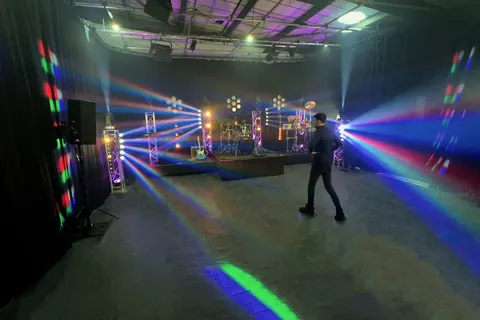
At Cineview Studios, the combination of large-scale floor space, high ceilings, shutter access, free parking and pre-rigging support gives production teams a more workable base for builds that would be difficult to manage in smaller London hire spaces.
Design the structure for camera and crew
Set construction is often judged by finish, but the unseen side of the build has an equal effect on shoot efficiency. Flats need stable bracing. Doors need enough clearance to open repeatedly without damaging adjacent surfaces. Removable sections must be safe to handle and easy to locate. If something is intended to move between shots, it should not require a carpenter, a ladder and a ten-minute discussion to do so.
Consider how the camera will work around the structure. Removable walls can create access for a dolly, allow a wider lens position or give the lighting team a route to shape a practical window effect. Ceiling sections can be omitted where overhead rigging is needed. A hero wall may need to be deeper or more solid than the rest of the set if it will carry shelving, artwork or a working fixture.
Materials should match the brief and the schedule. Timber flats and scenic paint offer flexibility for most commercial work. More durable finishes may be worthwhile for repeated use, especially if the set will support multiple shoot days. Real tile, stone and glass can deliver close-up authenticity, but they add weight, transport complexity and installation time. Often, the right solution is a convincing camera-facing finish supported by sound construction, rather than an expensive material choice the lens will not reward.
Plan lighting and power before the walls go up
A beautiful set becomes difficult very quickly if lighting was treated as an afterthought. Decide where the key sources will sit, whether practical lights are needed, where negative fill can be placed and how power will reach the set without creating visible or unsafe cable runs.
A blackout-capable studio gives greater control when consistency matters, particularly for video, product work and day-to-night scenes. Conversely, if the concept relies on daylight, plan for the direction and timing of natural light, then ensure the set can be shaped or blacked out if conditions change. Weather is not a production plan.
Use the lighting grid where possible to get fixtures off the floor and preserve shooting space. It also makes a modular build more effective because walls and furniture can move beneath a stable overhead lighting structure. Pre-lighting before talent or clients arrive is another practical advantage: problems are solved while the clock is less expensive.
Keep access, storage and resets in the schedule
Modular builds save time only when the full workflow is accounted for. That includes load-in, assembly, scenic finishing, rigging, shoot changes, strike and removal. Teams often underestimate the gap between a component being technically movable and it being movable without disrupting a live set.
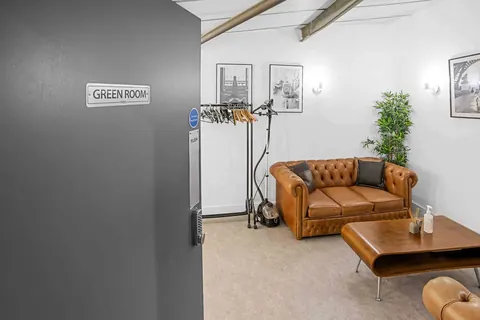
Create a clear backstage area for spare panels, props and tools. Label components, photograph successful configurations and keep a simple plan showing where each item belongs. This is not excessive administration. It is how a team avoids wasting twenty minutes searching for the one wall return needed for the next setup.
Before the shoot, confirm these operational essentials:
- the dimensions and weight of every large component;
- the delivery route, shutter access and unloading plan;
- the crew responsible for assembly, scenic work and resets;
- power requirements for practicals, tools and lighting;
- storage space for unused set elements and packaging;
- the strike deadline and waste-removal arrangement.
Free parking and direct access may sound secondary during creative development, but they have a direct effect on crew call times, delivery costs and how calmly a build day runs.
Get more value from the same set
The commercial strength of modular construction lies in planned reuse. A set should offer enough adaptable surfaces to earn its footprint across several outputs. Paint one side of a flat in a campaign colour and leave the reverse neutral. Use removable vinyl, picture rails, fabric treatments or interchangeable architectural details to change the character of a room without rebuilding it.
Think in layers. The base build establishes the geometry: walls, openings, floor levels and core fixtures. The scenic layer changes colour and texture. The dressing layer gives the set its story. The lighting layer determines mood and depth. When those layers are designed to change independently, a modest build can deliver a surprisingly broad range of visual assets.
There are limits. If each new scene requires a radically different scale, room layout or physical action, forcing one modular set to do everything may create compromises that show on camera. In that case, separate smaller builds, or a more focused hero set with clean studio setups alongside it, can be the smarter spend.
The best modular set build is not the one with the most moving parts. It is the one that gives the creative team genuine options while keeping the production crew fast, safe and in control. Build around the images you need, allow proper room to make them, and every reset becomes an opportunity to produce more from the same studio day.
2 thoughts on “Modular Set Build for Faster, Smarter Shoots”