



CINEVIEW JOURNAL
What Is Hard Lighting, and How Do You Control Sharp Shadows in a Studio?
17/11/2026
Hard lighting produces shadows with a clear, sharp edge. It is useful for graphic portraits, defined product shapes and dramatic scenes. The common problem is not simply that the light is too bright: an unwanted nose shadow, a distracting double shadow or a small movement can change the picture.
When arranging photo studio hire or film studio hire, describe the shadow you want as well as the subject. A reference image and a simple lighting test are more useful than asking for “a powerful light”.
What makes light hard rather than soft?
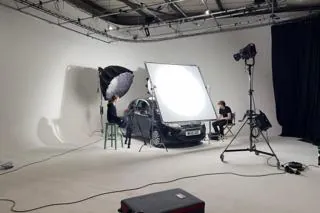
The apparent size of the light source from the subject’s position matters. A relatively small source produces a sharper shadow edge; a broad source produces a softer transition. ARRI’s Lighting Handbook distinguishes light quality from intensity. Turning a lamp down changes brightness, not its physical size, so dimming alone does not turn hard light into soft light.
Hard light and high contrast are not interchangeable. You can keep a crisp shadow edge while adding controlled fill to make the dark side less dark. Conversely, a soft source can still produce a strong bright-to-dark difference when there is little fill.
Try a one-light shadow test before adding more lamps
- Place the actual subject or product in the intended position. Choose your camera angle and framing.
- Start with one suitable light and make a reference frame. Look at the shape and position of the shadow, not only the overall exposure.
- Change the light’s direction in small steps. For a portrait, check the eyes, nose shadow and chin. For a product, check whether the shadow hides a label or important feature.
- Test the planned movement. Have the person turn their head or rotate the product as it will appear in the final shot.
- Only then add fill or another light if the image needs it. Compare each change with the reference.
These are creative test steps, not instructions for a particular fixture. Use suitable supports and a competent lighting technician; follow equipment clearance requirements and keep stands and cables out of working routes. Do not improvise overhead mounting.
How do you fix a shadow that falls in the wrong place?
First change the relationship between the light, subject and camera. A small change of position can solve the composition without changing the whole lighting style. Check the full frame after every adjustment, especially hands, jewellery and the background.
If two distinct shadows appear, switch the lights on one at a time to identify what each contributes. Decide whether both are intentional. If the brief actually calls for gentler shadow edges, choose a larger effective source rather than trying to solve everything with a dimmer. See our bounce lighting guide for a different approach.
Does the studio background change the result?
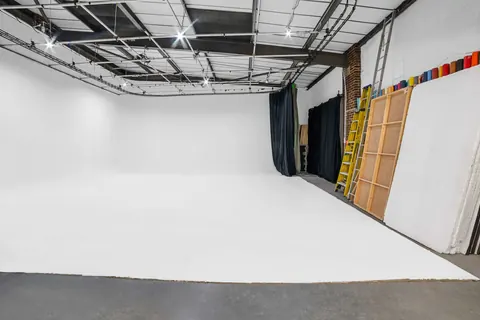
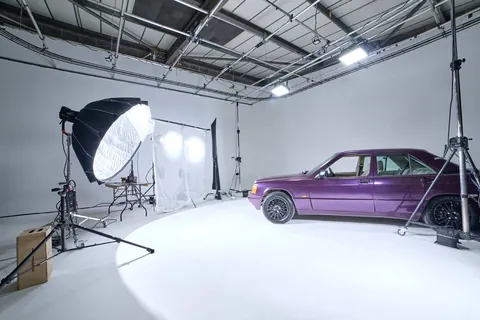
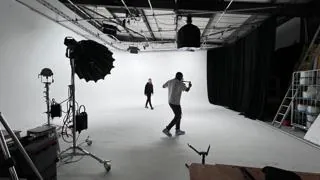
Yes. Light returning from bright surroundings can affect the shadow side. An infinity cove studio provides a seamless white setting, but an infinity cove is not automatically a high-contrast lighting setup.
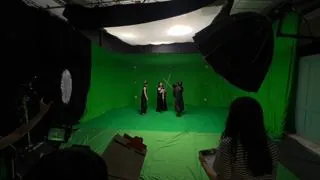
A blackout studio offers a different starting point for controlling unwanted light. For blackout studio hire, send your intended framing and movement so the setup can be discussed in advance. Neither room choice replaces a test.
What should you confirm before booking?
- Lighting and control: identify fixtures, modifiers, flags, supports and any crew assistance on the equipment shortlist. Confirm compatibility, quantities, availability and charges.
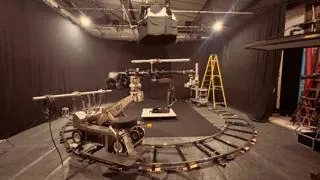
- Working space: allow for the full light path and camera movement, not only the subject’s footprint.
- Time: include lighting tests, adjustments and pack-down in the agreed booking.
Is a photo studio near me enough?
“Photo studio near me” and “photography studio near me” help you find a convenient location. Before you hire photo studio space, also check that your lighting plan fits.
How should I compare cheap studio hire?
Compare complete photography studio hire quotes rather than headline rates. Cheap studio hire may not include your chosen equipment or the preparation time you need.
Where can I compare studio hire London options?
Use Cineview’s photography studio hire London overview for stills, or the film studio hire London overview for motion work. Mention both deliverables if you need stills and video.
The solution: agree the shadow, then book the setup
Decide whether you want a crisp or soft edge, test the real subject and check movement before committing to the final lighting arrangement. Send Cineview your reference image and shoot brief to confirm space, equipment and booked hours.