
CINEVIEW JOURNAL
How Do You Light a Studio Shot That Looks Through an Open Doorway?
22/11/2026

A shot through an open studio doorway can look right outside and too dark inside. Set the exposure for the interior instead, and the doorway may turn into a bright white rectangle. Before adding lights, decide what the viewer needs to see on either side of the threshold.
For film studio hire or photo studio hire, tell the venue that the open shutter is part of the shot, not just the route for loading. Agree where the camera, lights and people can work while keeping the access route clear.
Decide whether the exterior needs detail
Pick one of two aims. If the shot needs the viewer to read a sign, see the equipment being carried or recognise a person outside, protect the essential exterior detail. If the doorway only needs to suggest a bright day, it can sit brighter, provided that flare does not wash out the action indoors.
Take an ambient-only test from the final camera position with the studio lights or flash off. Judge the recorded image, not just how bright the doorway looks to your eye. Use the histogram or your usual exposure tools to check the parts of the view where you need detail. This gives you a reference before you light the interior.
Test a person in three positions
Rehearse with a stand-in outside, at the threshold and at the indoor finish mark. Keep the camera exposure consistent for the test. If the person looks right only at one mark, find out where the light changes rather than choosing the best-looking single frame.
Review the actual movement as well as the three positions. A reflective case can catch the bright doorway and flare halfway through the move. A dark jacket may lose the detail you wanted as it enters the room. Decide which changes look natural and which need attention. If you will cut between angles, test each one before committing to the lighting.
Add interior light without flattening the doorway
Once the exterior looks right, add enough light inside to reveal the faces or equipment you want to see. Try a controlled source from the side or bounce onto a suitable neutral surface if that gives the spread you want. A high or grey ceiling may return less light than expected; a closer neutral bounce surface can give you more control. Compare one test with the fill off and another with it on.
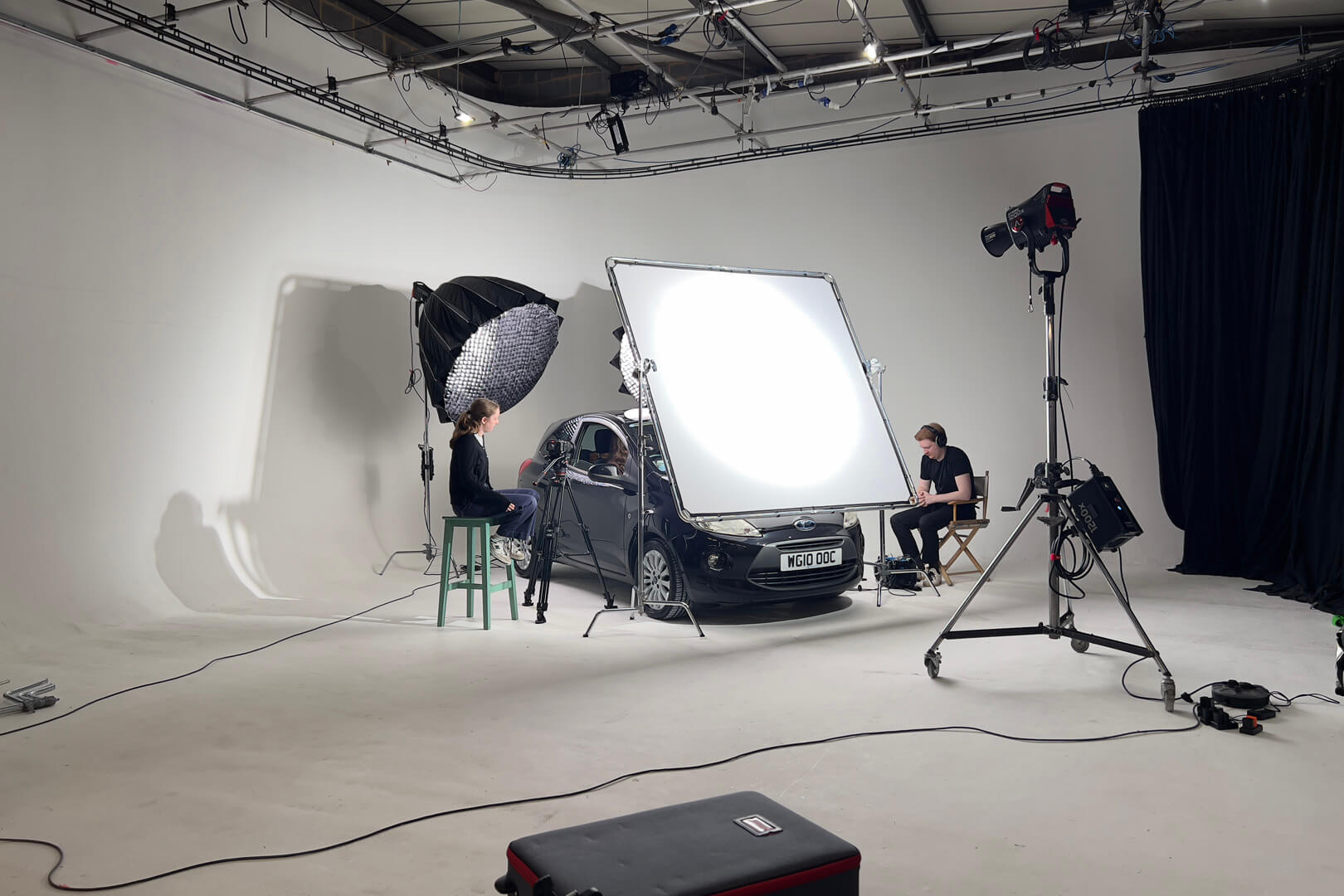
For flash photography, set a workable ambient exposure first, then adjust the flash contribution. Use a shutter speed your camera and flash can sync at, and test the combination instead of assuming a setting works on every camera. Profoto’s guide to mixing ambient light and flash illustrates why it helps to establish the background exposure before adding flash. For video, use suitable continuous lighting and review a moving test clip.
Plan for the light to change
Cloud cover can change between takes even if your indoor lights stay put. Save a reference frame for the look you have approved and compare it when you go back to the doorway. If daylight changes, agree whether to wait, rebalance the indoor light or complete the matching angles together. Keep daylight-dependent shots close in the schedule where practical.
Do not assume that outside equipment positioning is included simply because a studio has a shutter. Keep indoor-rated fixtures in dry indoor positions, away from rain, spray or condensation. Talk to the venue about weather, wind, safe working positions and who controls access. Keep stands, cables and crew clear of the working shutter and vehicle route. If the exterior position is not workable, test an indoor lighting position or choose an angle that uses less of the outside.
Ask for the doorway setup when you compare hire
For film studio hire London, send a reference frame and the movement route. For photography studio hire, say whether you need flash, continuous light or just the daylight effect. Send the same plan for each photography studio hire London enquiry. Cineview’s drive-in studio page sets out the access options; discuss any filming or lighting around the shutter for your specific booking.
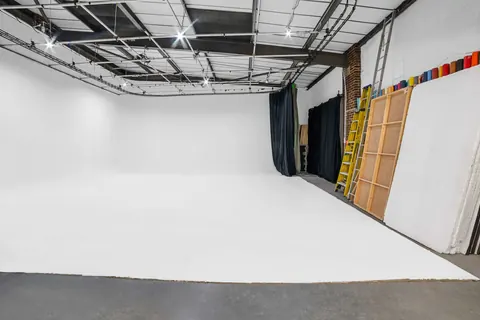
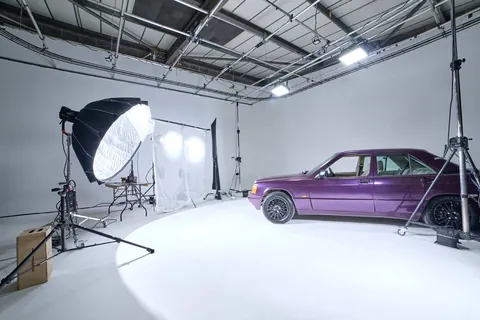
An infinity cove studio can give you a clean indoor background in a separate shot. White surfaces on an infinity cove also return light, so check whether that helps or reduces the contrast. A blackout studio is designed for light control; an open shutter changes that. If you also need blackout studio hire, ask how much time the changeover needs.
Searches for “photo studio near me” or “photography studio near me” are a starting point. Before you hire photo studio space, ask about the view from your intended camera position. Compare a cheap studio hire quote only after allowing for the setup and test time in your studio hire London budget.
The solution: expose for the outside, light for the inside, test the crossing
Decide what detail should survive in the exterior, then balance the interior around it. Rehearse the entire crossing and check it again whenever daylight changes. Send Cineview a reference and your planned camera and movement positions before booking.