
CINEVIEW JOURNAL
Will Your Product Layout Fit in a True Overhead Shot?
24/11/2026
For a true overhead shot, the camera points straight down. The question is whether it can get far enough from the products to see the whole layout, with room left for the lights and camera support. Before you book, test the widest arrangement with the camera, lens and crop you plan to use. Measure from the surface to the lens, not from the floor to the ceiling.
Mark the shot that needs the most room
Tape the finished arrangement on a table or the floor at full size. For example, a 120 × 80 cm layout might need more width if hands enter from both sides or the finished film needs space for a line of text. Use the tallest product in the test: a box lid sits closer to the lens than the tabletop and can fill more of the image than its footprint suggests.
If you need both a wide still and vertical video, turn on the actual framing guides or record a short test in each mode. Some video modes crop the camera’s view. Check every outside edge with the hands in position, before assuming that both versions can use the same setup.
Check room for the camera and lights
Use the test to record three things: the layout width and depth, the surface height, and the distance from the surface to the lens. A floor setup gives the camera more working distance at the same height, but can make resets harder on a long shoot. A wider lens can fit more in, but test how tall objects and edge details look before committing.
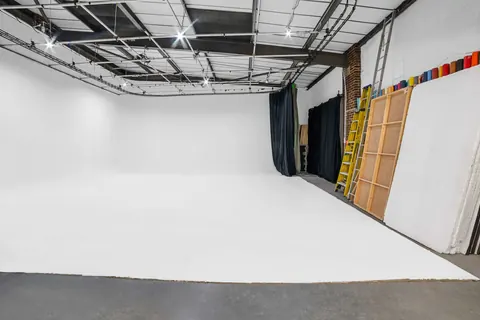
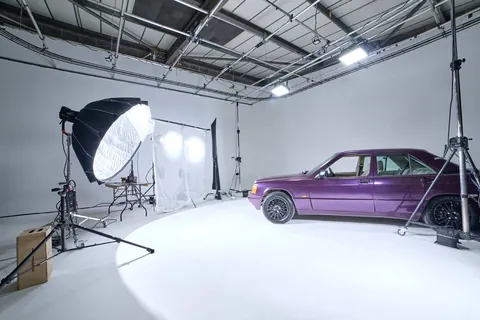
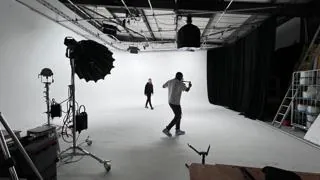
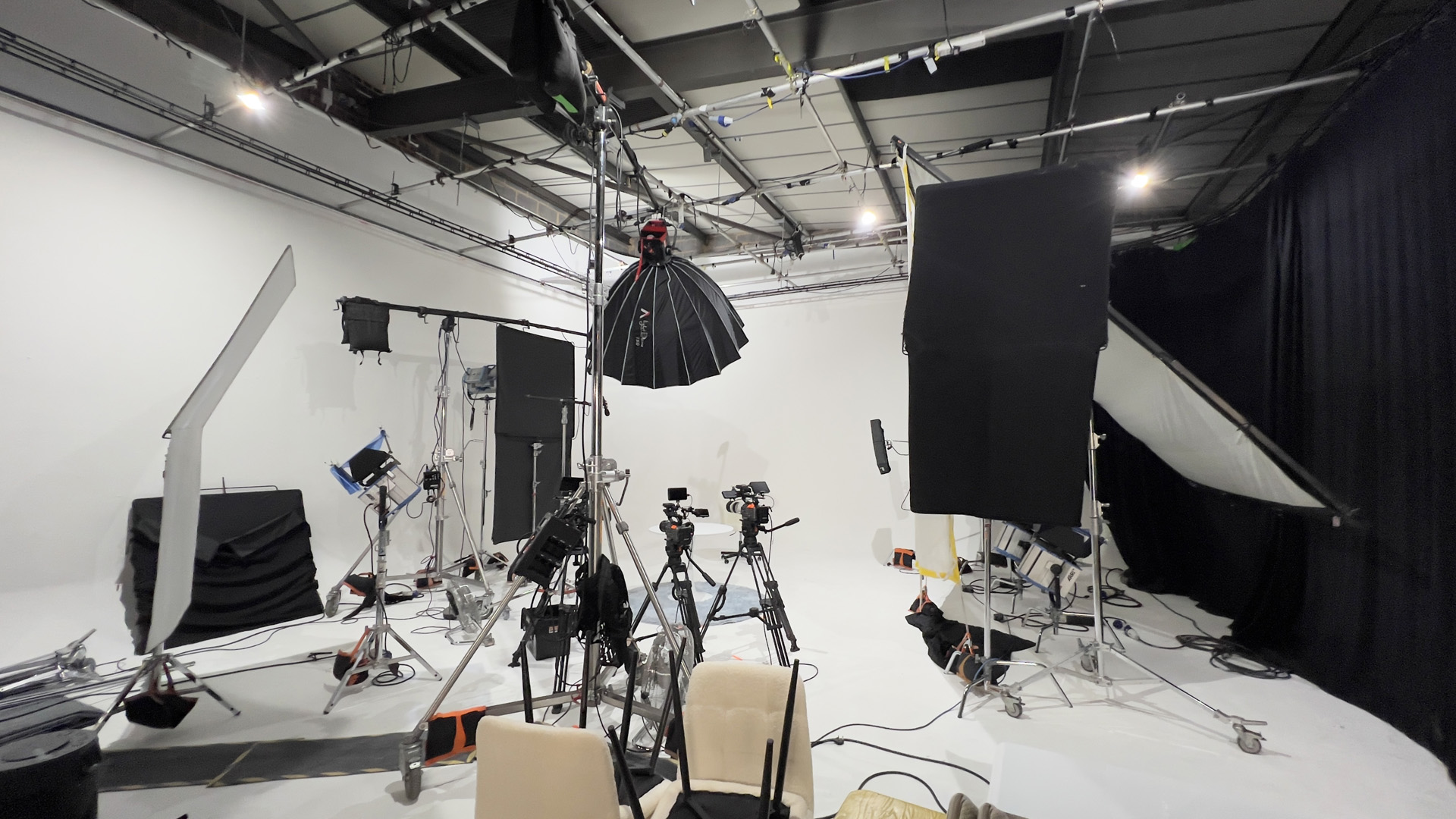
Ask the studio to check the actual clear height over that spot and leave room for the camera body, support, cables and lights. Cineview’s infinity cove studio lists a 5.8 m ceiling; that figure is not a guarantee of usable camera height. Share the camera and lens weight, where you want the lights, and how you will see and control the shot. Have the studio team confirm a suitable setup and what is included in the quote. Don’t assume a lighting grid can hold your camera or that rigging is included. Check the lighting and grip list before deciding what to bring.
Which setup should you ask for?
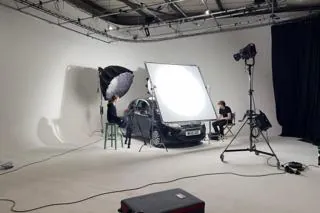
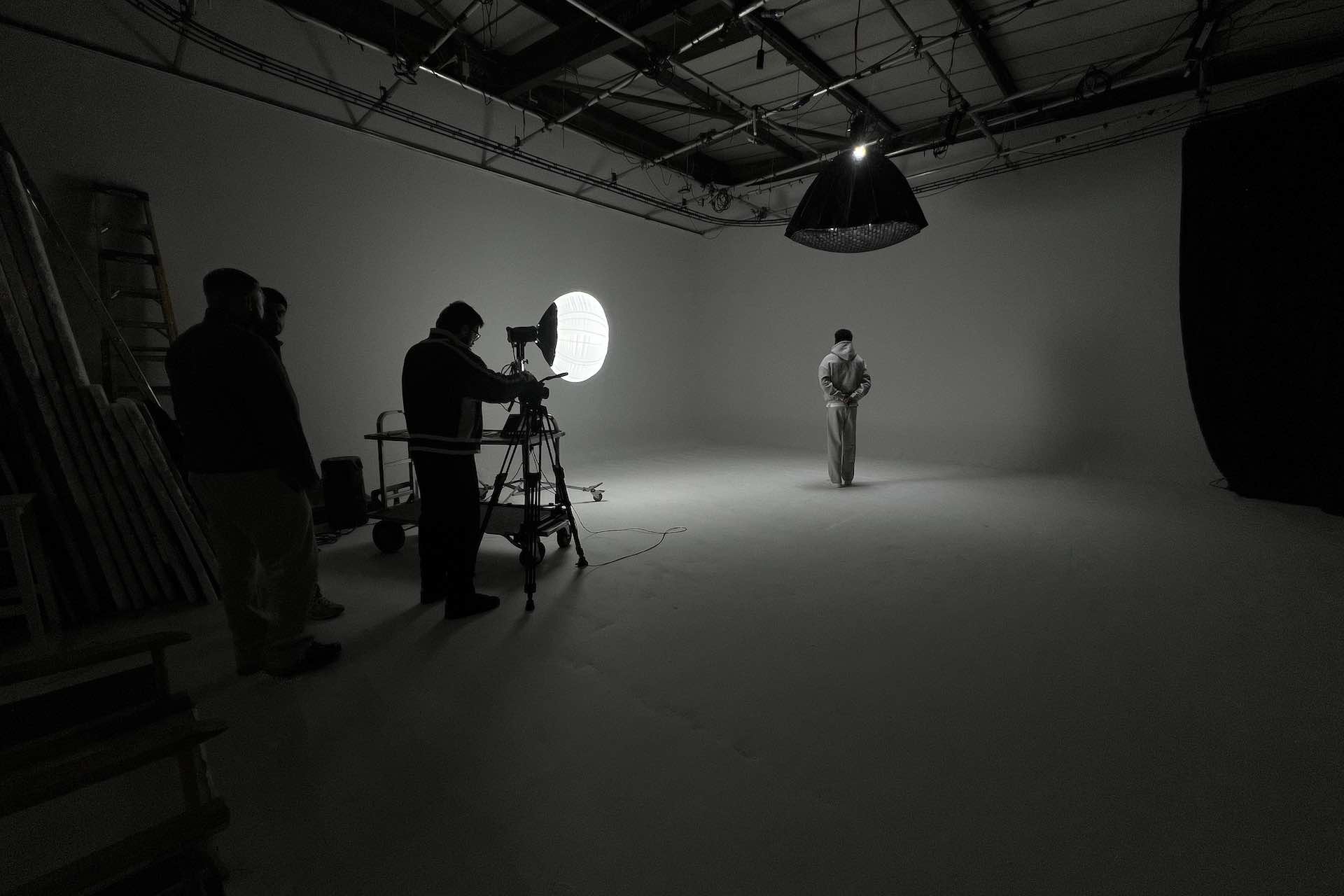
For photo studio hire, the infinity cove can be useful if you also need wide, clean side views; an overhead shot may still need its own surface. If you need to control reflections on gloss packaging and keep stray light out, ask about blackout studio hire and check what surfaces and modifiers you can use in the blackout studio. The choice depends on the rest of the shot list, not just the overhead frame.
Can photography and video share one booking?
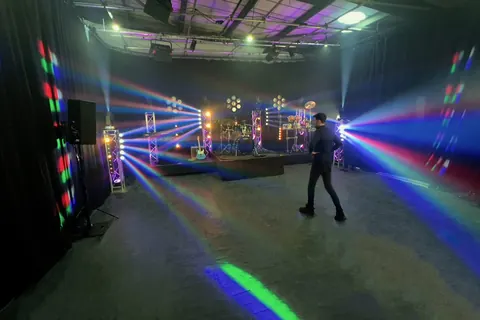
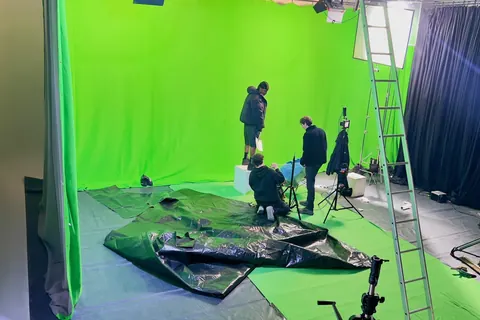
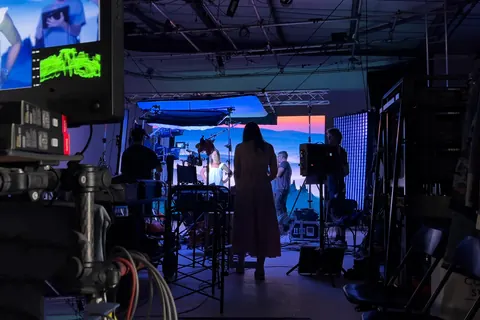
Yes, if the framing, lighting and time allow. If you search “photo studio near me” or “photography studio near me”, ask if you can hire photo studio space for both the stills and the motion test. When comparing “studio hire London”, “photography studio hire London” or “film studio hire London” quotes, send each venue the same measurements. A cheap studio hire quote may leave out the setup time or support you need. Ask what your photography studio hire and film studio hire quote includes.
Send the studio one marked-up frame
Send a picture of the taped layout with its dimensions, surface height, camera and lens, and the final crops marked. Ask Cineview to confirm the clear working space, who will approve the setup and how much time to allow. If the shot is tight, book a short test or split the wide and vertical versions before shoot day.