Studio Hire With Lighting Grid That Works Harder
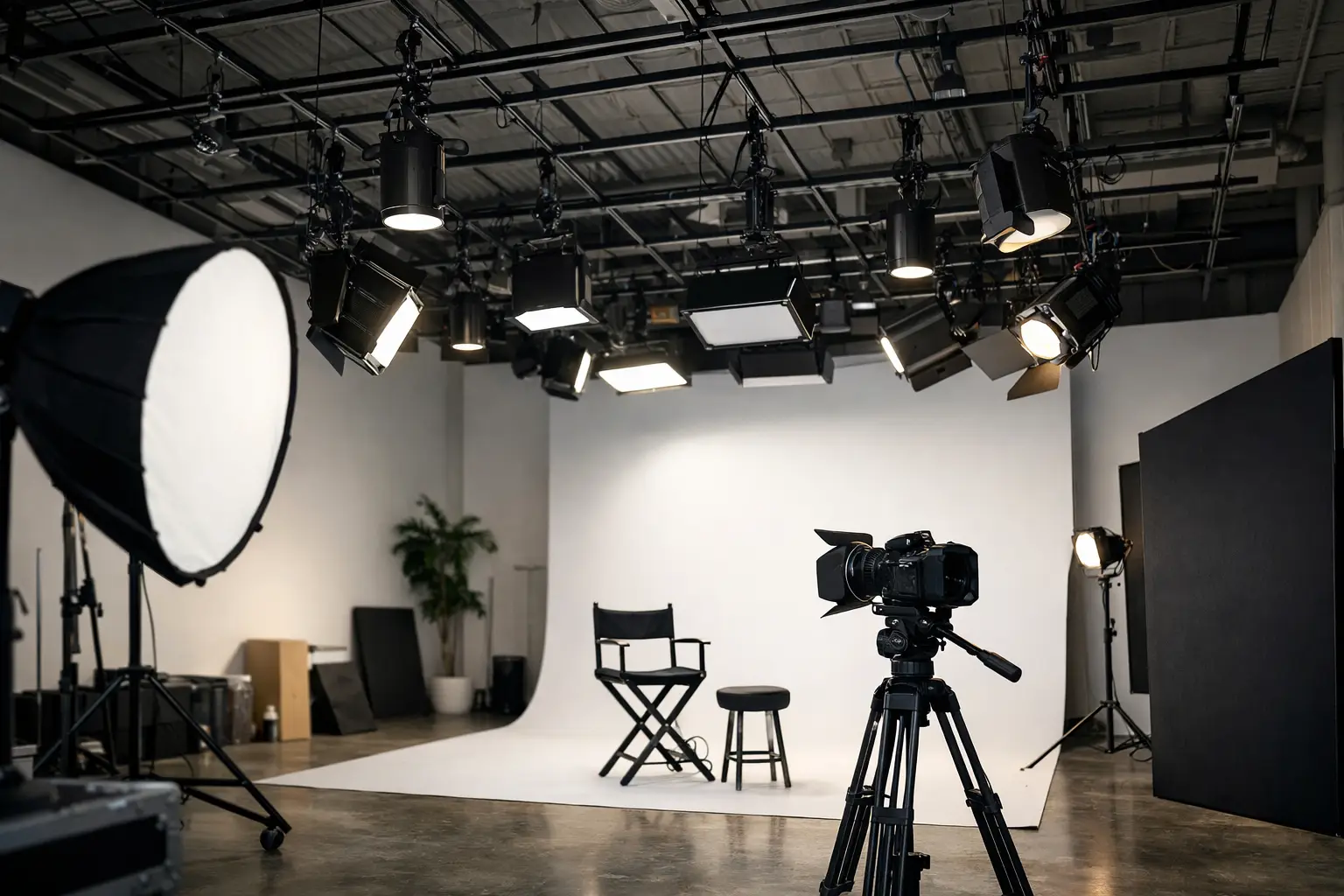
Table of Contents
ToggleA lighting grid is not a decorative technical extra. It changes what a studio can handle, how quickly a crew can work and how much of the floor remains available for the shot. When you need studio hire with lighting grid, you are paying for a more controlled production environment – one that makes commercial shoots, music videos, product campaigns and virtual production work easier to plan and deliver.
For London crews, the difference is often felt before the camera rolls. In a low-ceilinged space without overhead rigging, every lighting decision competes with talent movement, set dressing, camera positions and safety. A properly specified grid moves that equipment above the action, where it belongs.
Why studio hire with lighting grid changes the workflow
Lighting stands are useful, but they are not always the right answer. A large soft source on stands can consume a surprising amount of floor space. Add flags, negative fill, diffusion frames, practicals, monitors and a working camera track, and a modest studio quickly becomes restrictive.
A lighting grid gives the gaffer and lighting team an overhead structure for suspending fixtures, modifiers and rigging where appropriate. This creates cleaner sightlines, keeps walkways open and allows the lighting design to support the set rather than dictate its footprint. For a fashion shoot, that may mean a full-length background remains clear. For a car shoot, it can mean reflections are shaped from above without crowding the vehicle. For a talking-head production, it keeps the key, backlight and ambience consistent while allowing the director and client to move freely.
It also supports a more professional pace. Fixtures can be positioned accurately, cable runs can be better managed, and the team has fewer stands to move when a camera angle changes. That does not remove the need for a competent crew, a safe rigging plan and proper load management. It does, however, give experienced technicians a far more capable starting point.
More space for the work that clients actually see
The practical value of a grid is floor space. Clients rarely book a studio because they want to admire the ceiling structure. They book it because they need room for the production: a polished set, a larger cast, a camera move, a vehicle, a product lineup or an agency viewing area that does not interfere with the crew.
In a studio with high ceilings and overhead lighting positions, the floor can work harder. A photographer has more freedom to shoot wide without stands entering the frame. A director of photography can place a top light without compromising a doorway or corridor. Set builders can construct foreground and background elements while retaining access around the build. This matters when the schedule is tight and every reset has a cost.
It is especially valuable for productions combining several functions in one day. A campaign might require product stills in the morning, social-first video in the afternoon and a client-approved hero setup held in place until the final shot. Overhead rigging makes it more realistic to protect a lighting setup while the ground crew changes props, wardrobe and camera positions beneath it.
Better options for large and soft sources
Many modern commercial looks rely on broad, controlled soft light. Large diffusion, overhead textiles and carefully placed top sources can create the clean wrap needed for beauty, food, automotive, fashion and premium product work. These setups are difficult to achieve well if every component must be supported from the floor.
A grid lets the team build light into the volume of the studio. It can support a soft, even base across an infinity cove, create controlled pools of light on a blackout set, or help produce the overhead reflections needed for glossy products. The exact approach depends on the fixture, rigging points, permissible loads and the gaffer’s plan, but the creative advantage is clear: lighting is no longer limited to where a stand can safely sit.
Pre-rigging saves time when the schedule is real
The strongest case for a lighting grid is often made in the schedule, not the moodboard. If the crew arrives early to assemble a complex lighting package, every minute spent moving ladders, stands and cable is a minute taken from rehearsals, styling, camera tests or filming.
Pre-rigging allows approved fixtures and support equipment to be placed ahead of the shoot, so the crew can arrive to a more prepared stage. On a multi-day production, pre-lighting can protect continuity and reduce the pressure of the first call. For agencies and brand teams, that can mean less waiting while technical decisions are resolved in front of stakeholders.
There is a commercial benefit too. A capable studio may cost more than a bare room on paper, but the hire rate is only one part of the budget. Consider the additional crew hours, hired stands, lost shooting time and compromises caused by an unsuitable space. A grid can reduce friction across the day, which is often where production overspend begins.
That said, pre-rigging is not automatically necessary. A simple packshot session with a small team may be perfectly efficient using floor-based lighting. The value rises with the scale of the setup, the need to keep the floor clear, the number of lighting changes and the consequences of delay.
What to check before booking a lighting-grid studio
Not every overhead structure offers the same capability. Before committing, production should establish what the grid can safely support and what assistance is available. A quick technical conversation before the recce avoids assumptions that become expensive on shoot day.
Ask about ceiling height, grid height, point loading, approved rigging methods and whether the venue has an in-house technician or requires a named rigger. Confirm which fixtures, clamps, safety bonds, chains, truss and lifting equipment are available. It is also sensible to discuss power distribution, cable management, blackout control and access equipment, particularly where the lighting plan includes multiple large units or overhead diffusion.
Access is part of the same decision. A lighting grid is more useful when equipment can get into the studio quickly. Ground-floor shutter access removes a major bottleneck for larger lighting packages, set materials and heavy cases. Free parking helps crews avoid the repeated loading problems that are common in central London spaces. If the production involves a drive-in set, vehicle, sizeable build or lorry delivery, access should be assessed as carefully as the grid itself.
Finally, consider the wider studio specification. A grid is most valuable in a space with enough height, usable dimensions and suitable shooting surfaces to take advantage of it. An infinity cove, blackout capability, green screen options and room for client holding can turn a technically good stage into a genuinely flexible production base.
A better fit for shoots that need control
At Cineview Studios, the combination of high ceilings, a lighting grid, in-house lighting and grip, ground-floor access and flexible operating hours is designed around the way productions actually run. It gives crews the option to build upward, keep the stage clearer and make better use of the available space without paying for a London location that looks impressive but slows the work down.
For productions with straightforward needs, that may simply mean a cleaner, more comfortable set. For a commercial, music video or detailed product campaign, it can be the difference between adapting the creative to fit the room and choosing a room that supports the creative. Book the space that gives your crew room to light properly, move confidently and keep the day focused on the shot.
4 thoughts on “Studio Hire With Lighting Grid That Works Harder”