
CINEVIEW JOURNAL
How Can a Test Key Help You Compare Green Screen Studio Quotes?
18/11/2026

A higher hire price does not tell you whether a green screen setup will work for your film. Before paying for a premium option, agree what the extra cost provides and how your team will check the result. A short test key can turn a vague promise of quality into a useful production decision.
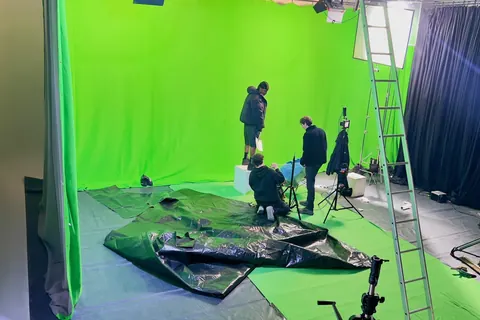
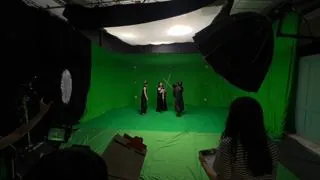
A test key means recording a sample clip, removing its green background in editing software and checking the subject over a replacement background. It is a rehearsal for the finished image, not a guarantee that every later shot will work. Arrange any visit, test session or prelight with the studio first, including its cost.
Start with the shot that could cause the most trouble
Give the studio and editor the same brief. Include the widest framing, the subject’s movement, the intended background and the delivery format. A seated presenter test cannot answer every question about a full-body dance performance.
Choose a short action from the real production rather than a person standing perfectly still. Bring the planned costume or a representative product if a test has been agreed. Ask the editor what they need to judge the footage before deciding which camera and recording settings to use.
For a wider introduction to the booking requirements, see our green screen studio hire guide. This checklist focuses on the evidence you need when comparing quotes.
Agree a small review checklist before recording
Adobe’s keying guidance recommends an evenly lit screen and checking intricate details such as hair or transparent objects. It also explains that a temporary background helps reveal transparency. Use those principles to make a practical test:
- Does important hair or costume detail remain visible?
- Do solid parts of the subject become transparent?
- Is green colour still visible along the subject’s edges?
- Does the result remain acceptable throughout the movement, rather than in one selected frame?
Ask the editor to review the actual recorded file, not just a photograph of a monitor. Note the file name, camera settings, lighting arrangement and any changes made. Keep the test short enough that there is time to discuss what it shows.
Separate the studio problem from the production problem
A disappointing result is a reason to investigate, not automatically reject the room. Ask the camera, lighting and post-production team to identify what needs changing. The answer might affect the screen arrangement, costume, recording workflow or planned shot.
Write each issue as a decision with an owner. For example: “Editor to review the moving sleeve before the lighting setup is approved.” Avoid leaving a general note that says “fix in post”. Ask what the fix involves and whether it changes the agreed post-production scope.
If a second test is needed, change one agreed factor and label the new clip clearly. Keep the original so the team can compare results. Do not treat a quick successful test as approval for an entirely different lighting state or camera move.
Ask what the premium quote adds
Compare the same deliverable and booking hours. For each quote, confirm:
- The screen area and arrangement required for your framing.
- Setup, testing, filming and pack-down time.
- Specified lights, modifiers and grip, including quantities and charges.
- Any technician or operator, their role and booked hours.
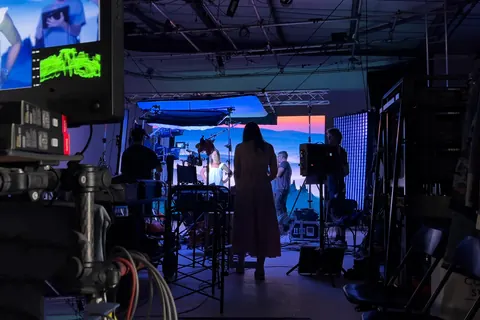
- Whether live compositing or a post-production review is included or separately arranged.
- Any agreed changes needed after the test.
Use Cineview’s equipment list as a starting point for a discussion, not proof that an item is reserved or included. A premium quote earns its place when its named benefits matter to your shot. Cheap studio hire can still be suitable when it covers the same needs. Neither label replaces a written scope.
What if the booking also includes stills or another background?
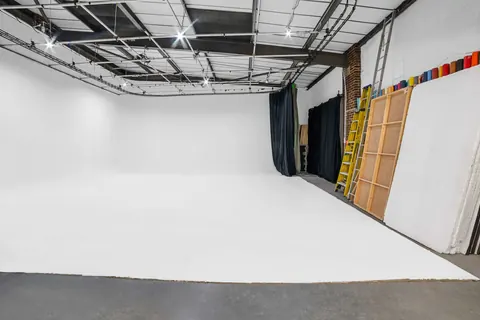
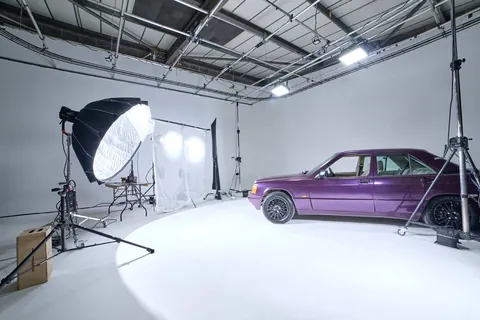
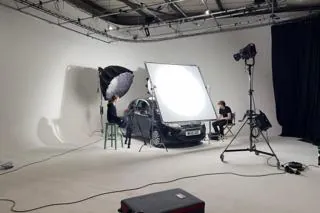
For combined film studio hire and photo studio hire, list the separate setups. An infinity cove can provide a seamless white background; an infinity cove studio booking does not by itself mean a green screen will be installed. A blackout studio gives you a different starting environment, but blackout studio hire does not automatically include a chroma backdrop or its lighting.
When comparing photography studio hire alongside filming, allow time to change and check each setup. Tell the team which images need replacement backgrounds and which should be finished in camera.
Searches such as “film studio hire London”, “photography studio hire London” and “studio hire London” can help you find options. Searches for “photo studio near me” or “photography studio near me” may shorten the journey, but they cannot establish whether your test will work. Before you hire photo studio space, send the actual shot requirements rather than relying on the listing category.
The solution: choose an agreed result, not a premium label
Make the decision with three things in front of you: the representative test clip, the editor’s review and the itemised quote. Resolve important issues, name who will check the first production take, and leave time for that check before the main shoot begins.
Contact Cineview Studios with your framing, movement, screen requirements and proposed dates. Ask which test arrangements and equipment can be quoted for your production. That gives the studio a specific problem to solve and your team a clearer basis for booking.