
Do Photo Studios Include Lighting? What Hire Covers
A studio can look fully equipped on a hire listing and still leave you arranging the lights, stands, modifiers and technician separately. So, do photo studios include lighting? Sometimes, but never assume that a clear white space, ceiling grid or impressive shoot images mean a complete lighting package is included in the base rate. The difference matters when you are working to a call sheet, client budget and a narrow production window.
For a straightforward portrait session, hiring a couple of heads and softboxes may be all you need. For a commercial campaign, e-commerce day, music video or vehicle shoot, lighting becomes a major part of the production plan. Knowing exactly what is supplied before you book protects both your budget and the quality of the final work.
Do photo studios include lighting as standard?
There is no universal answer. Some smaller studios include a basic starter kit, often one or two continuous lights or flash heads with simple modifiers. Others hire an empty studio and charge separately for every piece of equipment. Higher-spec production studios may provide an extensive in-house lighting and grip inventory, but the kit still needs to be selected, quoted and prepared for your particular shoot.
The key distinction is between lighting being available and lighting being included. A studio may own a broad range of equipment but make it available as an add-on. This is normal, particularly where productions have very different needs. A fashion photographer may require powerful flash heads, large octabanks and flags; a film crew may need daylight-balanced LED fixtures, diffusion frames, C-stands, blackouts and a dimming plan. Including every item in every room rate would make simple hires unnecessarily expensive.
When comparing studio quotes, ask for the base hire, the included equipment list and the separate cost of any additional lighting or grip. That gives you a like-for-like figure rather than a low headline rate followed by a growing equipment bill.
What lighting might be included in studio hire?
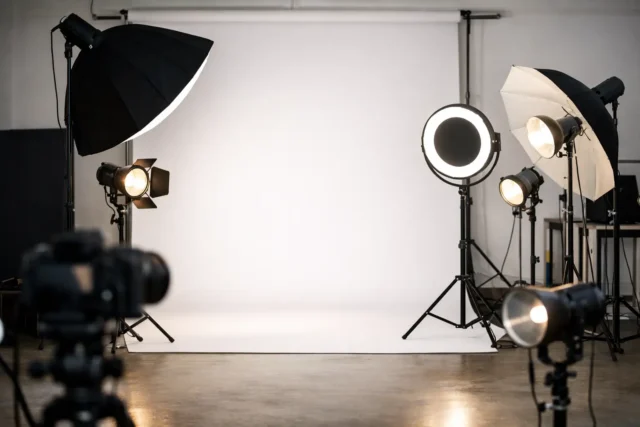
An included package is usually designed to get a modest production moving, not to replace a full lighting department. It may contain a pair of flash heads, a basic continuous-light setup, standard light stands and one or two modifiers. In some cases, paper backdrops or a small number of stands are also included, although these are not lighting and should be quoted separately where relevant.
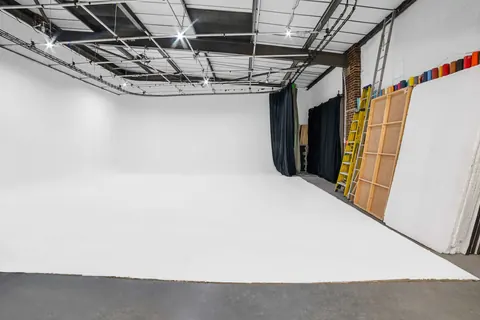
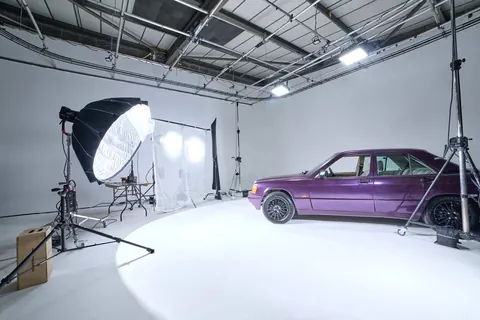
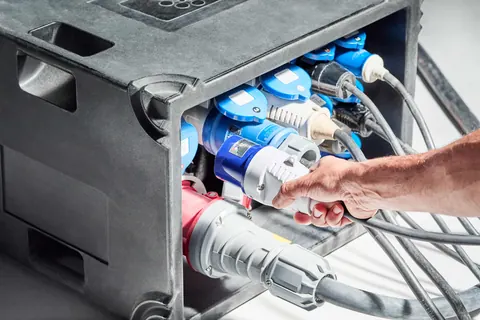
A professional facility is more likely to offer practical infrastructure as part of the space: high ceilings, a fixed lighting grid, blackout capability, plentiful power, loading access and room to position lights safely. These features are as valuable as the fixtures themselves. A powerful lamp is of limited use if the ceiling is too low for a top light, the studio cannot be blacked out, or there is no safe route to bring cases in from the van.
Lighting equipment is not the same as lighting support
A hire may include the physical kit but not a gaffer, lighting technician or studio assistant. If your crew needs help rigging fixtures, managing power, building a lighting plan or operating specialist equipment, establish who is responsible before the shoot day.
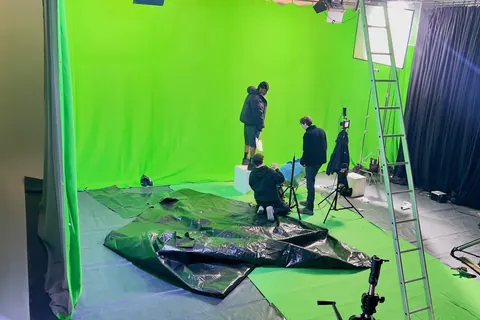
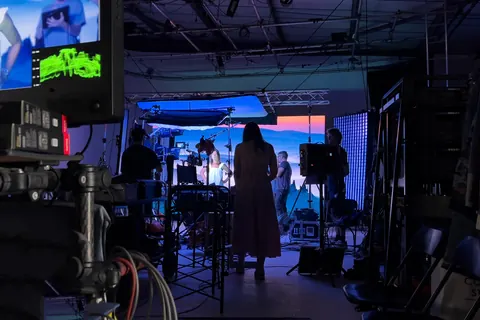
This is especially relevant for larger sets, green screen work, virtual production and motion shoots. Pre-rigging may need to happen before talent, clients and camera crew arrive. A studio that supports pre-lighting and pre-rigging can save substantial time, but it should be planned in advance and reflected in the booking.
Flash and continuous lighting serve different jobs
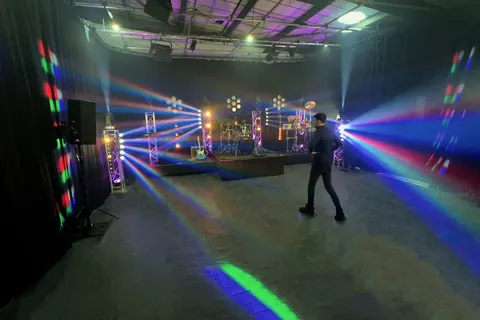
Flash is often the efficient choice for stills, particularly fashion, beauty, portraiture and product photography where you want clean output and control over motion. Continuous LED or HMI-style fixtures are generally better suited to video, allowing the camera team to see the result in real time. Many hybrid shoots need both.
Do not simply ask whether the studio has lights. Ask what type, how many units are available, their output, colour quality, mounting options and whether the appropriate modifiers are in stock. A video light without softening, shaping or support equipment may not give you the look your treatment promises.
The questions to ask before booking a lit studio
A capable studio will answer practical questions clearly rather than relying on vague phrases such as fully equipped. Start by asking what is included in the hire fee and request the actual item list. Check the make and model of fixtures if output, colour rendering or compatibility matters to your production.
Then establish whether stands, booms, sandbags, clamps, extension leads, flags, cutters, diffusion and grip are included or charged separately. These supporting items are often where an apparently complete kit falls short. They also have a direct impact on safety and speed on set.
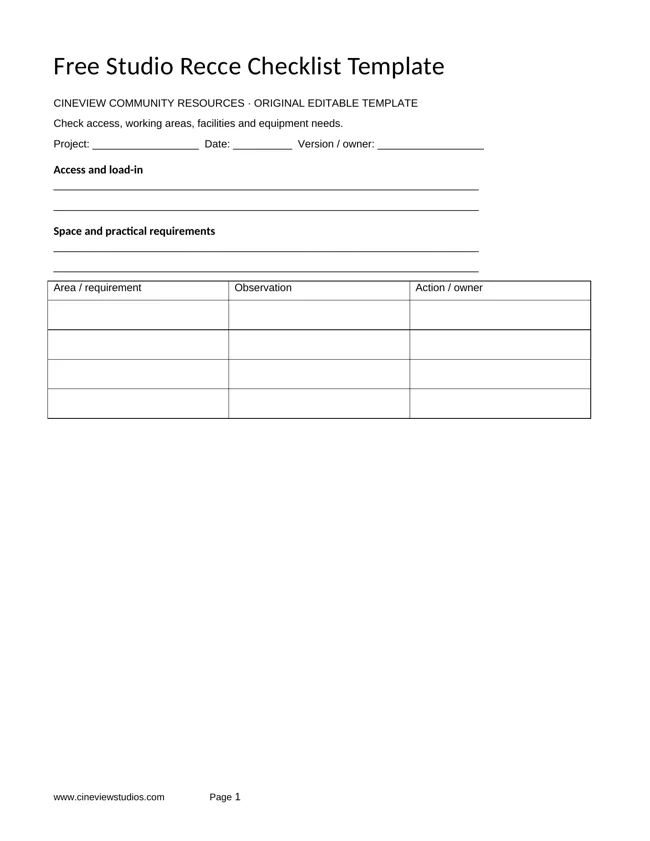
Ask whether the lighting can be prepped before your booked hours begin, whether you can visit for a recce, and whether there is a technician available if something fails or your brief changes. For productions bringing their own kit, confirm the electrical supply, load-in route, parking arrangements and any restrictions on rigging from the ceiling.
It is also sensible to clarify consumables. Coloured gels, diffusion, tape, bulbs, batteries and backdrop rolls can all be chargeable. None of these costs is unreasonable, but surprises are. A detailed equipment quote makes it easier for a producer to control spend and for the crew to arrive properly prepared.
Why the studio setup affects your lighting budget
The best-value studio is not always the one with the cheapest day rate. A cramped room can create a slow, expensive shoot if you cannot get lights far enough from the subject, place a large modifier, separate the background or work around a client area. Likewise, poor access can turn a ten-minute load-in into an hour of carrying equipment through corridors and up stairs.
A larger ground-floor space with shutter access, free parking and a proper lighting grid changes the economics. Crew can unload efficiently, rigs can be built safely and equipment can stay in place between setups. High ceilings give photographers and cinematographers room for overhead lighting, negative fill and wide shots without fighting the architecture.
At Cineview Studios, the combination of a large production floor, high ceilings, lighting grid, blackout control and extensive in-house lighting and grip equipment is designed for that practical reality. It suits a quick content day, but it also gives agencies and production teams the headroom to build sets, light an infinity cove or bring in larger-scale equipment without paying for a compromised London space.
When bringing your own lights makes more sense
There are good reasons to supply your own equipment. You may already own a preferred flash system, have a gaffer with a known package, need specialist fixtures unavailable locally, or be matching lighting from a previous shoot. For a campaign with a precise visual language, familiar equipment can make the process faster and more consistent.
However, bringing everything is not automatically cheaper. Consider transport, crew time, insurance, loading, battery charging, cable management and the cost of hiring missing grip at the last minute. A sensible approach is often a hybrid one: bring the core fixtures your team knows, then hire additional stands, modifiers, blackout materials and grip from the studio.
That approach works particularly well when the schedule changes. If a client requests another setup, a different background or a stronger daylight effect, access to on-site equipment can prevent a costly courier run or a lost half-day.
Plan the light around the production, not the room rate
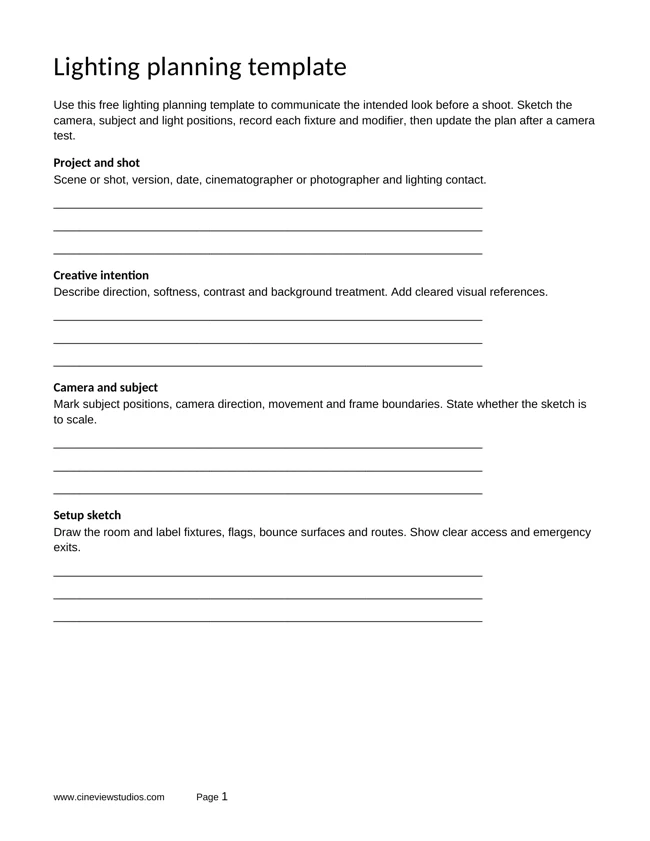
Before signing off a studio, build a simple lighting plan from the actual deliverables. How many looks are required? Are you shooting stills, motion or both? Do you need full blackout? Will products be reflective? Does the set need an overhead rig, a large soft source or green screen illumination? These answers determine whether a basic included kit is genuinely enough.
A studio that states its equipment, access and technical support clearly lets you make that decision early. Book the space that gives your crew enough room to work, enough infrastructure to rig safely and enough equipment flexibility to solve problems without stopping the shoot. That is where lighting provision becomes more than a line on a quote: it becomes a smoother production day.