Production Studio Cost Guide for London Shoots
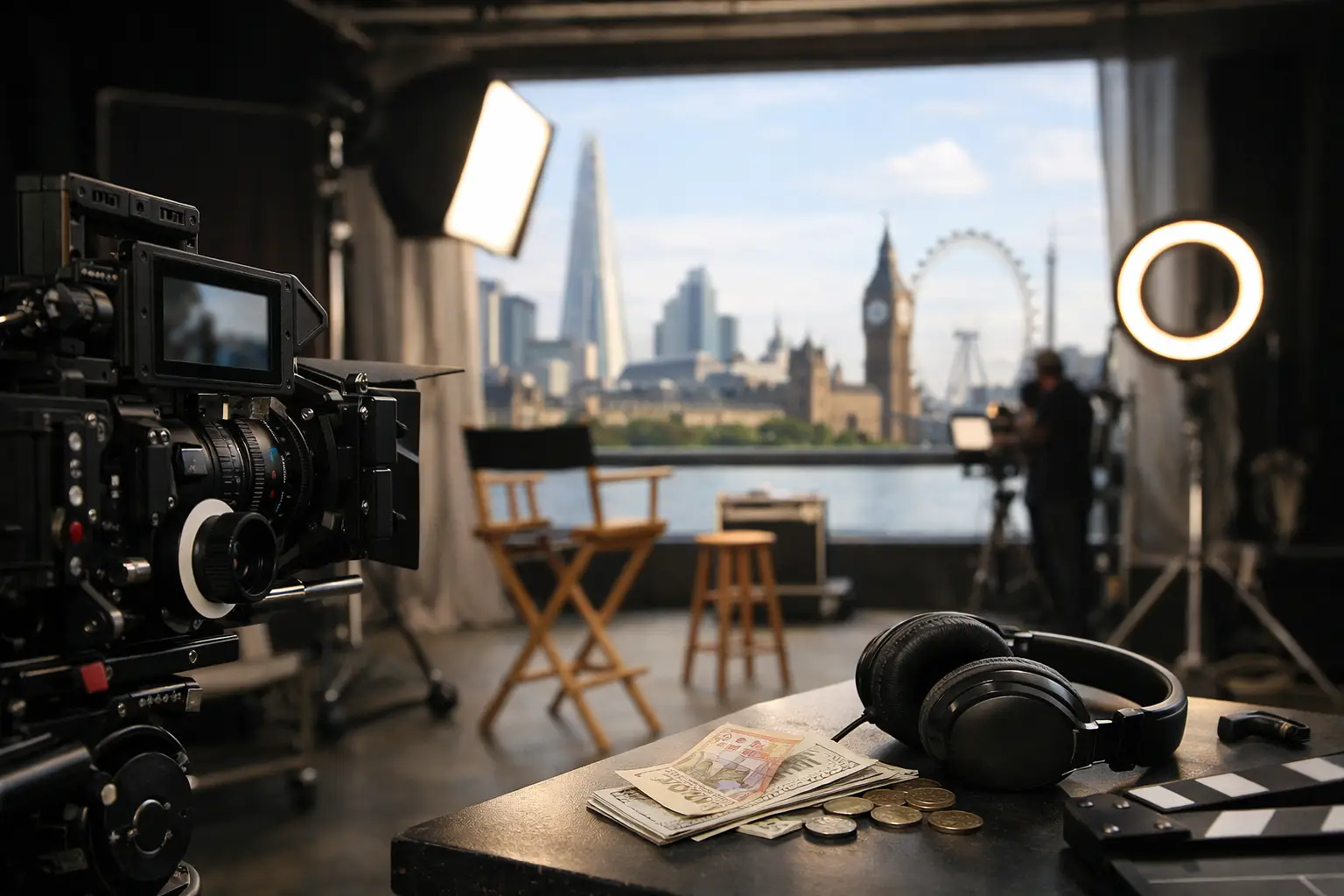
A studio that appears cheaper on the booking page can become the most expensive line in a production budget by wrap. If the crew cannot get a van through the door, the lighting package is incomplete, parking is charged by the hour or a set build has nowhere to happen, the difference comes out in overtime, extra hire and lost shooting time. This production studio cost guide is designed to help London production teams assess the full cost of a space before the call sheet is locked.
Start with the hire period, not just the day rate
The advertised studio rate is only useful when you know what it covers. A half-day, full-day, evening and 24-hour booking can all be priced differently, while access times may not match the time you actually need on set. For a straightforward packshot session, a shorter booking can make sense. For a commercial, music video or multi-look fashion shoot, booking enough time to load in, pre-light, shoot, reset and load out is usually better value than trying to compress the day.
Ask whether the quoted period includes production access before the shoot and strike time afterwards. A crew arriving at 08:00 does not mean filming begins at 08:00. Cameras, lighting, art department, styling, hair and make-up, client arrivals and safety checks all need space in the schedule. If a studio bills extra for early access or a late finish, those charges should be in the working budget from the start.
There is also a practical trade-off between hourly flexibility and a full-day hire. Hourly bookings suit small, tightly controlled shoots with minimal kit. Once multiple departments, talent or a significant lighting setup are involved, a day rate often protects the schedule and reduces pressure on the crew.
The production studio cost guide: what a quote should include
A useful quote separates the space from the operational costs needed to make that space work. If a price looks unusually low, check what has been excluded rather than assuming it represents a like-for-like saving.
The main areas to confirm are:
- Studio hire duration, including load-in, load-out, pre-light and any set-build days
- Lighting, grip, stands, modifiers, power distribution and consumables
- Parking, vehicle access, lift or ground-floor access, and crew loading arrangements
- Technical support, studio assistants, cleaning, security and out-of-hours cover
- Specialist surfaces or facilities, such as an infinity cove, blackout capability, green screen or virtual production
Not every shoot needs every item. A solo photographer with a compact kit may need little beyond a clean, well-lit room. A brand campaign with motion, stills and a client village needs a considerably more capable facility. The right question is not, “What is the cheapest studio?” It is, “What will this studio allow us to achieve without adding friction to the shoot?”
Equipment can be a saving or an avoidable duplicate cost
Equipment is one of the biggest variables in a production studio budget. Hiring lights and grip separately gives specialist crews precise control over the package, but it can add transport, delivery windows, collection deadlines and prep time. A studio with a substantial in-house inventory may reduce those costs while making last-minute adjustments easier.
Request an equipment list before confirming the booking. Check quantities and condition, not just broad labels such as “lighting included”. A functional package should be clear about fixtures, stands, flags, sandbags, modifiers, extension leads and any chargeable additions. If you are bringing your own kit, establish whether there is enough power, safe cable routing and appropriate rigging provision for the plan.
For larger productions, the lighting grid matters as much as the kit list. A high ceiling with suitable overhead rigging can free up floor space, speed up resets and create cleaner frames. That is an operational advantage, not a decorative feature.
Access costs more than most budgets allow for
London logistics are rarely simple. A studio on an upper floor, down a narrow corridor or behind restrictive loading rules can add hours to a day before the first frame is shot. If a set, vehicle, large prop, heavy flightcases or sizeable camera package is involved, access must be assessed as seriously as the shooting area.
Ground-floor shutter access and drive-in capability can materially change the budget. They reduce handling, remove the need for repeated lifts and allow art department, prop teams and technical suppliers to work with fewer compromises. Free on-site parking also has a direct value when crew vehicles, vans and client arrivals would otherwise incur London charges throughout the day.
Before booking, confirm vehicle dimensions, loading hours, parking allocation and whether a lorry or long-wheelbase van can access the site. Ask where waste, packaging and empty cases can be stored. These details sound minor until they force a crew to clear the set every time a delivery arrives.
Space affects crew time and creative options
Square footage alone is a poor measure of value. A wide studio with low ceilings may suit tabletop work but limit lighting positions. A large room with no blackout control can become difficult for motion work. A compact studio may look economical until there is no room for styling, client monitoring, video village or a turnaround area for talent.
Assess the space against the actual production plan. A white infinity cove supports clean product, fashion and automotive-style visuals, but confirm its dimensions, condition and any repainting fees. A blackout studio gives control for film lighting and projection, but only if light spill is properly managed. Green screen should be evenly lit, large enough for the required action and accessible for crew to work around it.
Set builds deserve their own conversation. If you need to construct walls, dress a room or create a practical environment, check ceiling height, fixing policies, floor protection, build access and reinstatement requirements. A studio that supports a build can save the production from hiring a separate workshop or compromising the design to fit a restrictive room.
Budget for support when it prevents downtime
There is a tendency to treat studio support as an optional extra. That can be sensible on a simple shoot with an experienced, self-contained crew. It is less sensible when the schedule is tight, the setup is technical or the team is working in an unfamiliar space.
A good studio team can help with pre-rigging, pre-lighting, access planning and practical problem-solving before they become expensive delays. The value is not simply having someone present. It is having people who understand how a shoot moves, where gear needs to go and what can disrupt a setup.
For productions involving virtual production, motion control, extensive rigging or complex power requirements, technical support should be agreed early. These are not areas where a vague assumption on the booking form is enough. Establish responsibilities, permitted equipment, insurance requirements and the escalation route if something changes on the day.
Watch for the costs hidden outside the studio quote
A studio booking sits inside a wider production budget. The space may be competitively priced but still require expensive transport, external equipment, overnight security, cleaning or additional crew. Equally, a studio with a higher headline rate may include enough practical support to lower the total cost.
Build a simple comparison using the same shoot assumptions for every venue: identical crew size, hire hours, kit, parking, access needs, setup time and specialist requirements. Then add contingency. A modest contingency is particularly sensible where weather affects arrivals, client approvals may extend the day or a set build depends on external deliveries.
Do not overlook damage deposits, cove repainting, rubbish removal, power usage, overtime rules and cancellation terms. None of these are necessarily unreasonable. Problems arise when they are discovered after a creative decision has already committed the production to a particular space.
Choose a studio that protects the schedule
The most cost-effective studio is not necessarily the one with the lowest published rate. It is the one that lets your team get in quickly, build confidently, light properly, work comfortably and leave without a punitive overrun. For commercial work, that reliability protects both margin and reputation.
Cineview Studios is built around that production reality: large-scale space, practical access, in-house equipment and facilities that support everything from controlled product work to major set builds. When comparing options, give equal weight to the room, the workflow around it and the hours it can save your crew. A clear budget is useful, but a studio that keeps the shoot moving is what makes that budget hold.