
Choosing a Photo Studio for Fashion Shoots
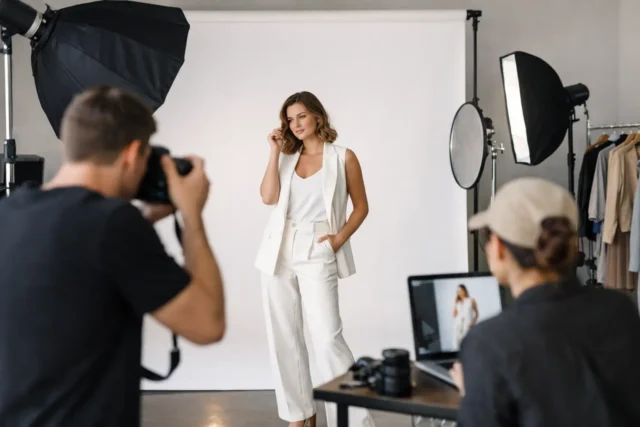
A fashion brief can look straightforward on a moodboard, then become demanding the moment rails, talent, a glam team, client monitors, large modifiers and a full lighting package arrive. The right photo studio for fashion shoots gives the crew room to create, adjust and keep moving. The wrong one turns every outfit change and lighting reset into a compromise.
For editorial, campaign, lookbook and e-commerce productions, the venue is part of the production plan. It affects the scale of the image, the pace of the day, the comfort of the team and, ultimately, how much of the budget reaches the screen or page.
What a fashion shoot needs from the studio
Fashion photography is rarely static. A lighting setup that works for a clean full-length look may need to become a hard-shadow beauty portrait, a group composition or a moving shot within the same call. That demands usable floor space, ceiling height and enough distance to place lights properly rather than forcing every modifier close to the subject.
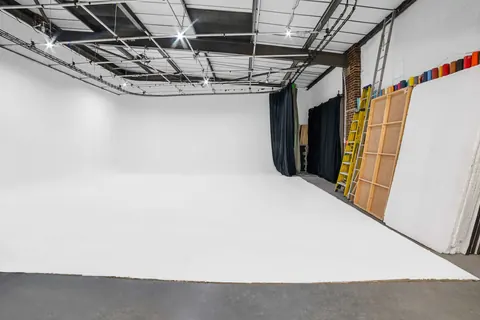
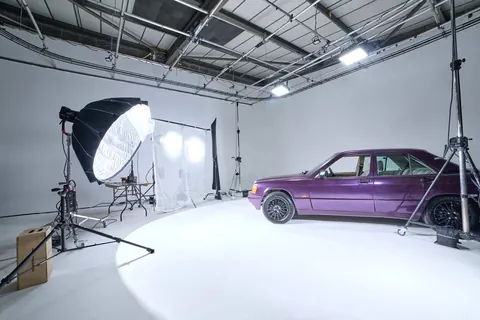
A large infinity cove is particularly valuable where the creative calls for a clean, premium background. It creates a continuous sweep with no visible corner line, allowing the photographer to shoot full length, wider framing and lower angles without the limitations of a paper roll or a shallow wall. It also gives art direction room to breathe, whether the look is minimal and graphic or built around styling, props and movement.
Scale matters, but so does control. Blackout capability lets the team shape light consistently throughout the day, regardless of changing conditions outside. This is essential for a campaign that needs repeatable lighting across multiple looks, as well as for fashion film, where daylight spill can quickly undermine continuity.
Ceiling height changes what is possible
Low ceilings are one of the most common restrictions in smaller London studios. They limit the angle of key lights, make overhead diffusion difficult and leave little clearance for boom arms, flags or taller set pieces. In fashion, where a long silhouette, oversized garment or dynamic pose may need a wider frame, that limitation shows up in the final image.
High ceilings and a proper lighting grid allow fixtures to be rigged safely above the set, freeing the floor for talent, wardrobe and camera movement. They also make it practical to light a larger area evenly – useful for multiple models, flowing fabrics, seated compositions and video capture alongside stills. A studio with rigging support can reduce the time spent rebuilding positions between setups, especially on a tightly scheduled agency or brand production.
Access is a production issue, not a convenience
Fashion shoots bring more equipment and people than many first-time hirers expect. Garment rails, steaming equipment, mirrors, styling cases, props, set flats, lighting, grip, camera cases and catering all need to enter the building quickly and safely.
A ground-floor studio with shutter or drive-in access removes a major friction point. Instead of carrying heavy cases through narrow corridors, queuing for a lift or working around residential neighbours, crews can unload directly into the production space. This matters even more when a set build, large scenic element or vehicle is part of the concept.
Free on-site parking also has a direct budget benefit. London parking charges, loading restrictions and multiple courier runs add up fast. A practical facility makes it easier for the photographer, production manager, assistants and suppliers to arrive prepared, rather than spend the first hour solving access problems.
Choose the background around the brief
There is no single best studio background for every fashion job. The strongest choice depends on the campaign, delivery formats and how much creative change is expected during the day.
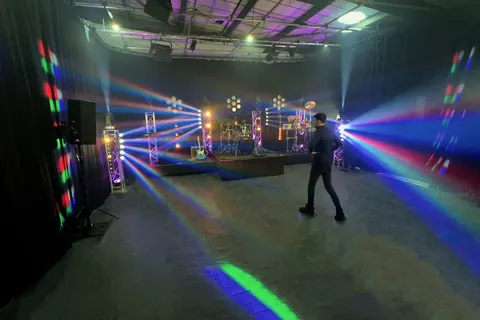
An infinity cove suits polished catalogue work, beauty-led editorials, social assets and clean campaign imagery. It provides a controlled base that can move from bright and high-key to dramatic and directional with a change in lighting. A blackout area is better when the intended look depends on precise contrast, projection, coloured lighting or a cinematic fashion-film treatment.
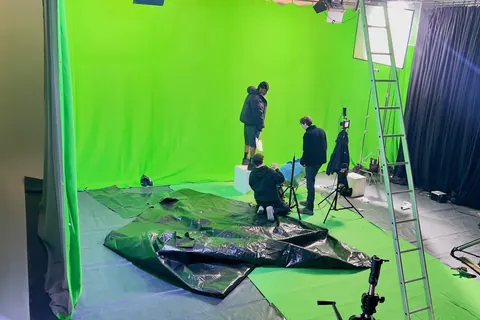
Green screen can be the right choice for projects requiring a digital environment, multiple market versions or motion content that will be finished in post-production. It is not automatically the cheaper route: keying requires careful lighting, clean separation around hair and fabric, and post-production time. If the creative outcome can be achieved physically with a built set, that may deliver a more immediate and tactile result.
For brands that need distinctive campaign worlds, a studio that permits set builds is often more useful than a visually busy location. You control every surface, colour and sightline. You also avoid the uncertainty of location restrictions, weather, noise and limited shooting hours.
Build the hire around the full working day
The studio fee is only one line in the budget. A lower day rate can become poor value if the team has to hire lighting elsewhere, pay for separate parking, work around a short booking window or lose shooting time due to difficult access.
When comparing a photo studio for fashion shoots, ask what is genuinely included and what requires additional coordination. An extensive in-house lighting and grip inventory can reduce transport costs and make last-minute creative adjustments far easier. The ability to pre-light or pre-rig before the main call time is equally valuable on a production involving multiple looks, several deliverables or client approvals on set.
Twenty-four-hour access can also be a commercial advantage rather than a luxury. It gives productions more options for early load-ins, overnight builds, late pack-downs and schedules that avoid peak travel times. It depends on the scale of the shoot, of course. A lean e-commerce session may simply need a clean cove, reliable power and a well-organised workstation. A national campaign, however, benefits from every minute saved before the first model steps on set.
Do not overlook the crew and client experience
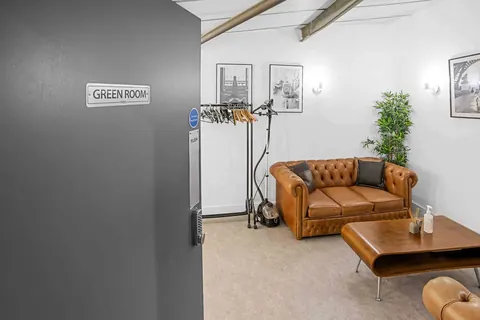
A studio should work as a production environment, not just a backdrop. Fashion teams need sensible areas for styling, hair and make-up, changing, steaming garments, reviewing images and keeping cases out of shot. Without that separation, the shooting floor becomes congested and the day slows down.
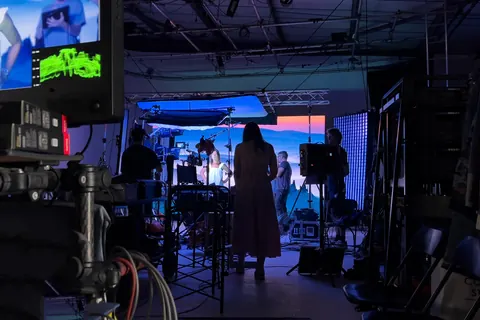
Client-ready facilities matter too. When brand stakeholders, agency creatives and talent are present, they need a comfortable place to monitor work without standing in the path of the crew. A clear division between shooting, client viewing and preparation supports faster feedback and a calmer set.
This is not about adding unnecessary luxury. It is about protecting the working conditions that help a team make better decisions. A model has space to change. A stylist can prepare the next look. The photographer can maintain the set. The client can approve frames without interrupting the flow.
Plan the technical questions before booking
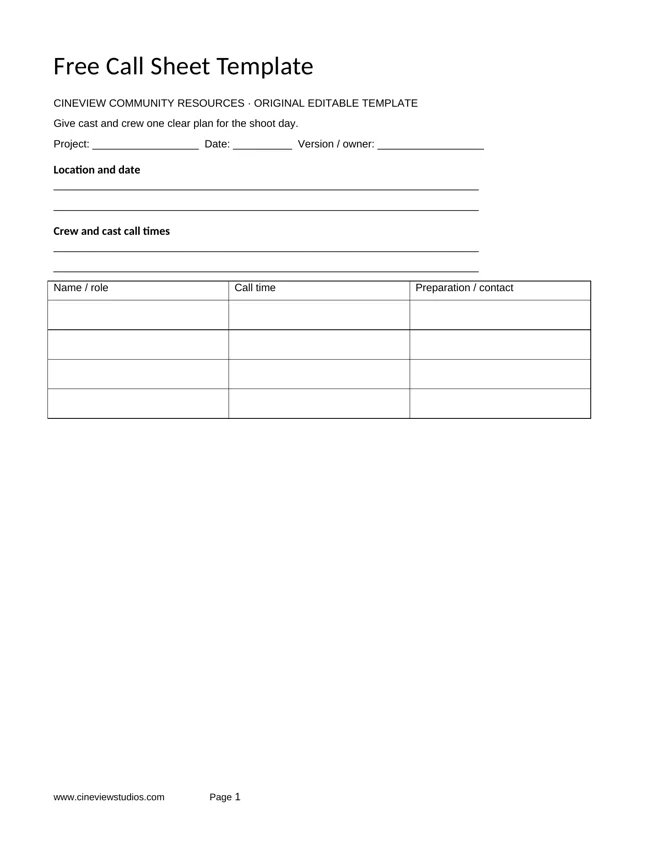
A site visit is useful when the campaign has complex lighting, large props, a build or a combined stills-and-motion schedule. Bring the rough floor plan, key references and equipment list. Check not only whether the space looks right, but whether it supports the way your crew will use it.
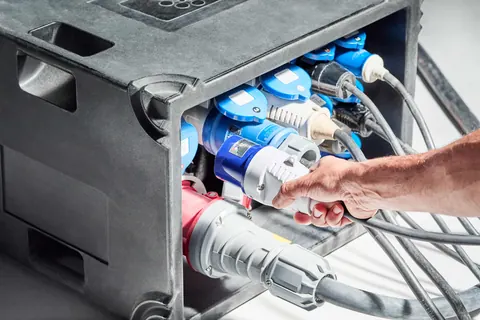
Confirm the cove dimensions and condition, blackout options, available power, ceiling and rigging points, load-in route, parking arrangements and the equipment held on site. If you are filming, ask about sound considerations, cooling requirements for lights and whether the studio can accommodate your camera movement, track or virtual production needs.
It is also worth discussing the schedule honestly. A studio team that understands production can advise when pre-rigging, an additional access hour or a different layout will prevent a costly bottleneck later. That practical conversation is often more valuable than a venue that only offers a bare room and a key.
A London studio should remove constraints
London has no shortage of studio listings, but many are designed around a limited footprint: stairs, restricted loading, low ceilings, limited equipment or a booking model that leaves crews paying separately for the basics. For fashion productions, those constraints are not minor details. They affect creative ambition and cost control at the same time.
Cineview Studios is built for the requirements that make commercial fashion work run properly: large-scale floor space, high ceilings, a lighting grid, infinity cove, blackout and green-screen capability, ground-floor access and in-house kit. It offers a professional production base without treating practical essentials as premium extras.
The best booking decision is the one that gives your crew enough room to deliver the brief with confidence. Start with the image you need, then choose a studio that supports the lighting, access, pace and people required to make it happen.