Broadcast Interview Setup That Looks the Part
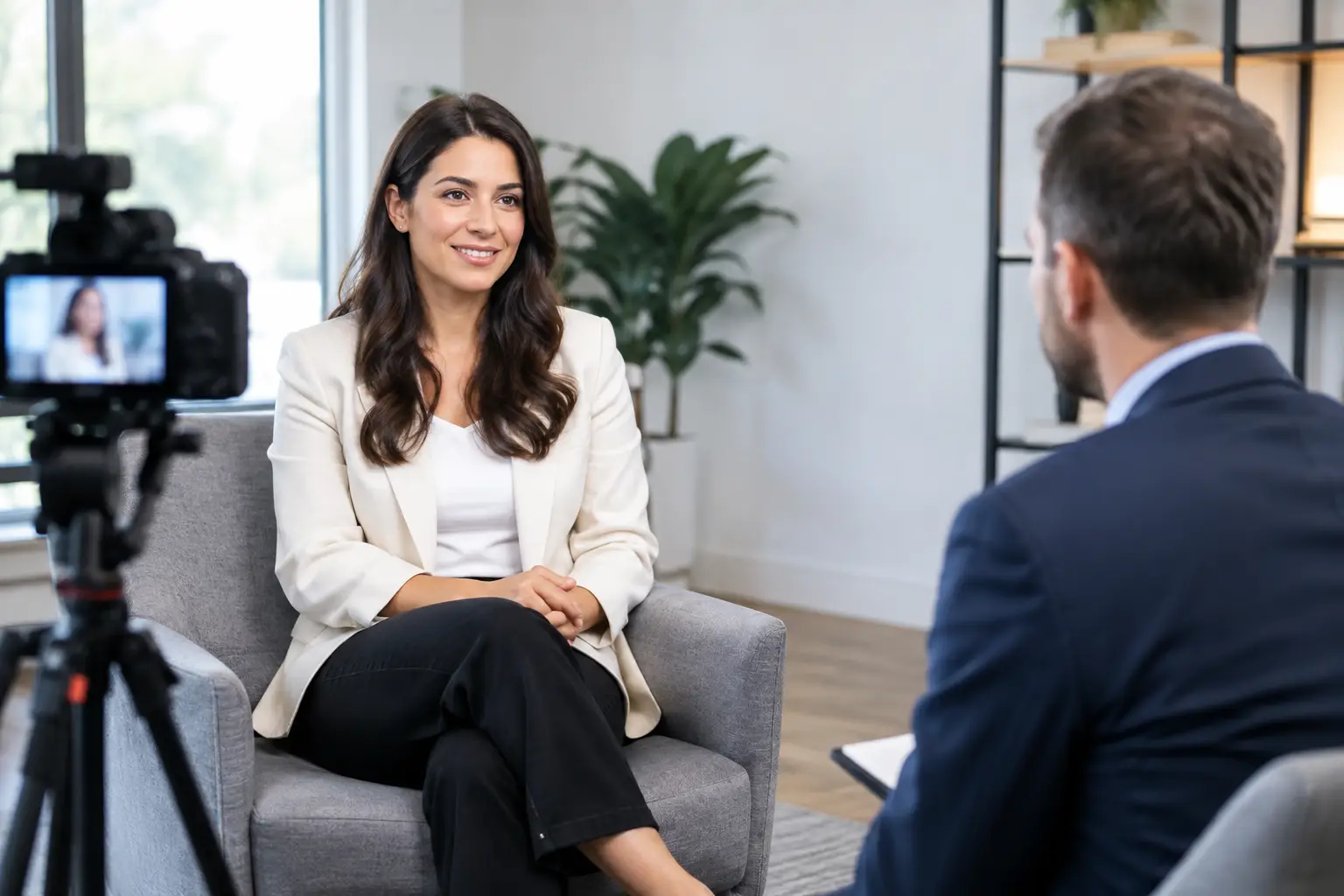
A broadcast interview setup can look deceptively simple: one contributor, one interviewer and a carefully composed frame. In practice, it is one of the fastest ways to expose weak production planning. Poor sound, a cramped camera position, a distracting background or nowhere to place a key light will make an otherwise credible interview feel low-value.
For branded content, editorial, corporate communications and broadcast productions, the objective is not merely to record a conversation. It is to create a controlled environment where contributors feel comfortable, the crew can work efficiently and the footage has enough production value to sit confidently alongside the rest of the campaign.
Start with the interview’s intended use
Before choosing lenses or building a set, establish where the interview will appear. A short social cutdown, a documentary sequence, a CEO announcement and a multi-camera panel all demand different levels of control.
A single contributor piece may only require one primary camera and a discreet second angle for cutaways. A broadcast package may need matching eyelines, room for a sound recordist, multiple cameras, a producer position and a lighting design that holds up through a full day of filming. If the final edit needs landscape, portrait and square deliverables, plan for the wider composition from the outset rather than trying to crop a tight frame later.
This decision affects the studio choice. A location that is suitable for a quick one-camera interview can become restrictive when the client asks for a second background, a standing piece to camera or a same-day panel discussion.
Choose a studio with working room, not just a nice wall
The most common compromise in an interview shoot is treating floor area as an afterthought. The background may look right on a recce, but the practical setup needs depth behind the contributor, distance between subject and camera, clearance for lights and a route for crew to move without crossing frame.
Depth is particularly valuable. Pulling the subject away from the background helps create separation and allows a longer focal length without flattening the whole image against the wall. It also gives the gaffer room to light the background independently, whether that means creating a soft fall-off, introducing practicals or using colour to support the brand.
Ceiling height matters just as much. High ceilings and an overhead lighting grid make it easier to place a soft key at the correct angle without crowding the contributor with stands. This is cleaner, safer and quicker to adjust when a director decides the frame needs a little more shape.
A proper production studio should also accommodate the less visible parts of the day: client viewing, hair and make-up, kit cases, catering and a quiet holding area for guests. If every spare square metre becomes storage, the set will feel pressured and the schedule will follow.
Build the frame before lighting it
Interview backgrounds should communicate something, but they should not compete with the contributor. A plain black or white backdrop can work well when the brand requires a clean, flexible look. An infinity cove gives an especially polished result for presenter-led pieces, product-adjacent interviews and campaigns that need room for motion graphics in post-production.
For a more editorial result, consider a controlled set build, textured flats, furniture, practical lamps or a branded environment. The key is deliberate depth. Place foreground or background elements only where they support the composition and retain enough negative space for graphics, subtitles or a logo lock-up.
Eyeline should be agreed before the camera team settles into position. An interviewee looking just off lens usually feels natural for a documentary or editorial piece. Direct-to-camera delivery is stronger for a message from a founder or spokesperson. Both are valid, but switching between them without purpose can make an edit feel disjointed.
Where possible, record a clean plate of the background before the contributor sits down. It gives post-production options for masking, screen replacement and tidying minor continuity issues.
Light for consistency, not just the first shot
The classic interview approach remains effective because it is controllable: a flattering soft key, a restrained fill, a little separation from the background and, where needed, a dedicated background light. The exact ratio depends on the brief. A charity campaign may call for softness and openness; a documentary about a difficult subject may benefit from more shadow and contrast.
The mistake is relying on a setup that only works from one position at one moment in the day. Window light can be attractive, but it changes. Mixed colour temperatures from practicals, overhead fittings and daylight can become a grading problem, particularly on longer filming days.
A blackout-capable studio gives the crew the option to remove that uncertainty. Controlled conditions are not about making every interview look dramatic. They are about ensuring the look approved by the director at 9am still works when the final contributor arrives at 5pm.
Use lighting that suits the scale of the set. Large soft sources create a natural wrap, but they need enough room to sit at a useful distance and angle. In-house lighting and grip can also reduce the cost and delay of bringing every stand, flag and modifier across London, provided the equipment list is confirmed during pre-production.
Treat sound as part of the picture
Viewers will accept a modest image before they accept muffled dialogue, traffic noise or a room full of reflections. A professional broadcast interview setup needs a sound plan from the first recce, not a radio mic clipped on as the cameras roll.
Start with the room. Hard walls, concrete floors and large empty spaces can sound lively. Rugs, acoustic treatment, soft furnishings and carefully positioned sound blankets can help, but the best approach depends on the studio and the shot. Do not fill the set with treatment that compromises the visual brief if a better microphone position or quieter room will solve the real problem.
For most seated interviews, a concealed lavalier is practical and gives the contributor freedom to move naturally. A boom microphone positioned just out of frame often delivers a fuller, more natural sound and is worth considering when wardrobe allows. Many crews record both, giving the edit a useful fallback.
Plan for interruptions too. Shutter doors, air conditioning, lifts and neighbouring activity can all appear on a recording. A studio with controlled, production-led operations and responsive on-site support makes it easier to hold a quiet take when it matters.
Plan camera coverage around the edit
A single-camera interview can be highly effective, but it places more pressure on the performance and limits the editor’s options. A second camera provides cutaways for pauses, stumbles and structural edits. The two frames should be clearly different: for example, a medium close-up as the master and a tighter angle from the opposite side of the eyeline.
Avoid placing both cameras at nearly the same focal length and height. It produces coverage that is technically different but editorially unhelpful. Similarly, be careful with crossing the eyeline. If cameras are placed carelessly, a contributor can appear to switch direction between cuts.
If the project includes a host and guest, leave enough space for a two-shot even if it is not the hero frame. The editorial team may need it to establish the relationship or cover a transition. For remote contributors feeding into a live or recorded programme, establish their screen position, return audio and delay tolerance before the shoot day rather than improvising around a laptop.
Design the day around access and changeovers
A polished interview set is of little value if the crew loses two hours carrying equipment through narrow corridors or waiting for a loading slot. Ground-floor access, wide shutter entry and free parking are practical advantages that directly protect the schedule, especially for productions carrying camera packages, furniture, set materials and multiple lighting cases.
This is where a flexible production space earns its keep. At Cineview Studios, drive-in access, high ceilings, blackout capability and pre-rigging support allow a straightforward interview setup to scale into a multi-contributor shoot without forcing the crew to work around the building.
If several interviews are scheduled, build in a realistic reset window. The contributor change may take five minutes; adjusting the chair, checking wardrobe, refreshing make-up, changing framing and retuning sound can take longer. Pre-lighting the set and marking key positions keeps the look consistent while protecting time for the conversations themselves.
Give contributors a set they can perform in
Technical precision should make the subject feel less, not more, intimidated. Keep the camera area calm, minimise unnecessary crew chatter and give the contributor a clear explanation of where to look, how long they will be speaking and what happens if they need to restart an answer.
A comfortable chair at the right height prevents fidgeting and poor posture. Water within reach is a small but useful detail. For high-profile guests, client-facing facilities and a clean holding space also matter. They signal that the production is organised before a single question has been asked.
The strongest interview footage rarely comes from the most elaborate set. It comes from a space that gives the crew room to control the technical details, leaving the contributor free to say something worth hearing.