
Studio Hire vs Location Shoot: Which Works?

Table of Contents
ToggleA beautiful location can win a pitch. It can also lose a shooting day to traffic restrictions, a narrow staircase, poor power access or a landlord who will not allow the rig your director of photography needs. The studio hire vs location shoot decision is not simply about the look on camera. It is about control, time, access and whether the production can deliver its creative ambition without spending the day solving avoidable problems.
For some jobs, a real location is non-negotiable. For many commercial, editorial and branded productions, however, a properly equipped studio gives the crew more usable time, more reliable results and a clearer budget from the outset.
Studio hire vs location shoot: the practical difference
A location shoot uses an existing environment – a home, office, retail unit, warehouse, street or venue – as the backdrop. Its immediate advantage is authenticity. Real architecture, lived-in texture and a recognisable setting can add production value that would take time and budget to recreate.
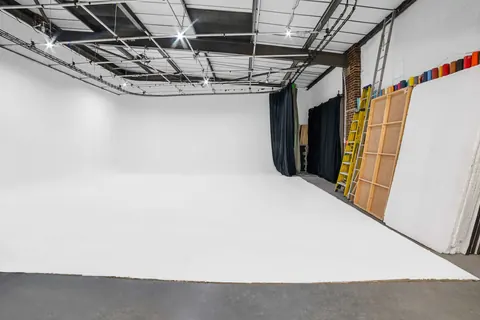
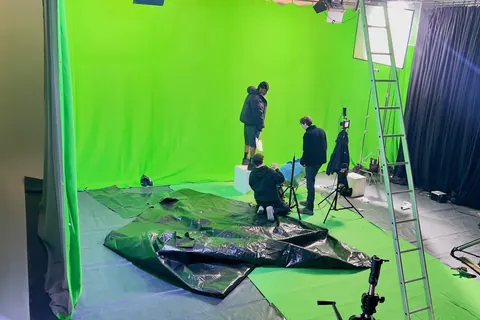
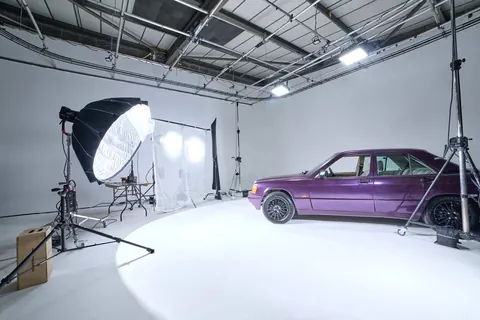
Studio hire starts with a controlled blank canvas. You can shoot against an infinity cove, black out the space, create a green-screen environment, build a set or bring in vehicles and large props where access permits. Rather than adapting your schedule and lighting plan around a building, the building is set up to support the shoot.
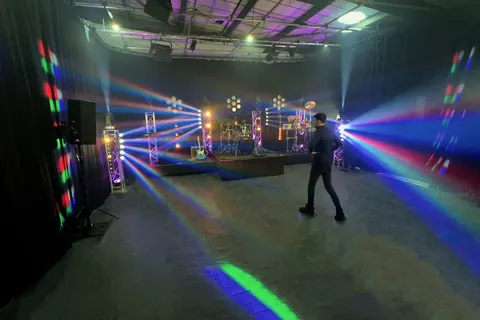
Neither option is automatically better. A fashion story set in a period townhouse needs the character of the townhouse. A product campaign, e-commerce shoot, music video, talking-head series or vehicle content project will often benefit more from the certainty and flexibility of a purpose-built studio.
Creative control is where studios pull ahead
On location, the existing light may be exactly why the space was selected. It may also be the reason every setup takes longer than expected. Windows create shifting daylight, practical lights may flicker on camera, low ceilings restrict modifier placement, and room layouts can leave nowhere for camera, sound, video village and clients to work comfortably.
A studio gives the production team command of those variables. Blackout capability means daylight is not dictating exposure or continuity. A lighting grid and generous ceiling height allow fixtures to be placed where the shot needs them, rather than where the room happens to allow them. An infinity cove creates clean, repeatable backgrounds for stills, packshots and motion work without fighting corners, skirting boards or awkward joins.
That control matters most when a campaign requires several deliverables. If the same day needs portraiture, product cut-downs, social content and video assets in different formats, a configurable studio can support multiple looks without moving the entire unit between locations.
When a location is creatively worth the trade-off
There are occasions when control should take second place. A genuine restaurant kitchen, an active factory floor or a distinctive London exterior brings credibility that a constructed set may not match. Location work can also be the faster route when the story depends on a specific building or the action has to happen in a real working environment.
The key question is whether the location contributes something essential to the final image. If it is simply providing a neutral wall, a domestic-looking corner or a broad industrial backdrop, building or styling that look in a studio may be cheaper and considerably easier to manage.
The real cost is not always the hire fee
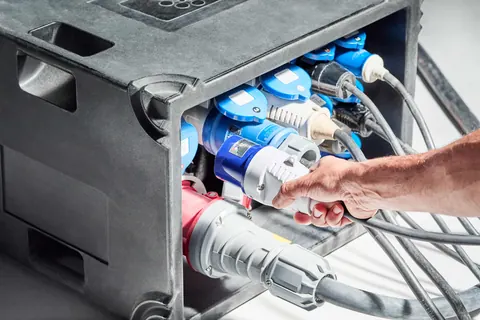
Comparing day rates alone can be misleading. A location that appears affordable can quickly become expensive once the practical requirements are added: a location manager, parking suspensions, unit base, security, insurance conditions, cleaning, overtime, additional power, temporary blackout and equipment brought in because the venue has none.
Studios usually make these costs more visible earlier. A production-ready facility with in-house lighting and grip, parking, usable client areas and technical support reduces the number of separate suppliers required. This is particularly useful for lean crews and agencies working to a fixed estimate, where an unplanned half-day can erase the apparent saving on a cheaper space.
Time is a cost too. On location, crew may spend the first hours carrying cases up stairs, protecting floors, moving furniture and finding ways to route cable safely. At wrap, everything has to be returned exactly as found. A ground-floor studio with shutter access changes the equation. Equipment, set materials and props can move in efficiently, and the crew can begin building the shot rather than wrestling the venue.
For larger productions, drive-in access can remove another common constraint. Vehicle shoots, sizeable scenic pieces and heavy kit are far more achievable when they can enter the space directly instead of being unloaded at the kerb and manoeuvred through a building.
Access and workflow decide whether the day runs well
The strongest productions protect their shooting time. That means assessing the route from vehicle to set, the space around the set and what happens when the client, agency, talent and crew all arrive at once.
London locations can be difficult on all three counts. Restricted loading, resident parking zones, lift limitations and shared entrances are manageable when planned properly, but they place pressure on the schedule. They can become critical when a large lighting package, wardrobe rail, props department or set-build team is involved.
A professional studio is designed around production flow. High ceilings and a clear floor area give departments room to work. Free parking removes a daily source of friction. Twenty-four-hour access is valuable for pre-lighting, overnight builds and shoots that need to work around talent availability. It also gives the crew a realistic recovery option when a previous setup overruns.
At Cineview Studios, that operational thinking extends to pre-rigging and pre-lighting support, helping productions arrive to a space that is already moving towards camera-ready. For a commercial crew, that can mean the difference between using the first call as a build day and getting the first shot in before breakfast.
Reliability matters more on client-facing productions
Location shoots carry variables that are not always visible at the recce. Nearby construction can begin without warning. Traffic noise may ruin dialogue takes. A café or office can be busier than anticipated, while a residential location can impose strict limits on noise, crew numbers or working hours.
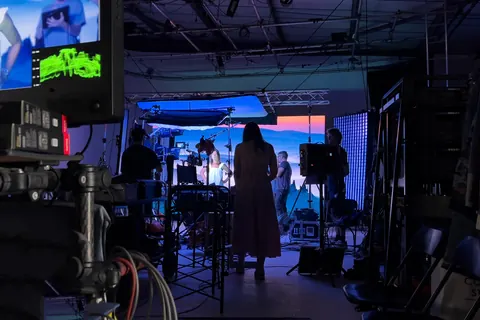
Studios are not free from planning requirements, but they remove many of these unknowns. A controlled internal environment supports consistent sound conditions, repeatable lighting and clearer access arrangements. This is particularly valuable for interviews, tabletop work, livestreams, virtual production and any shoot where continuity is central to the brief.
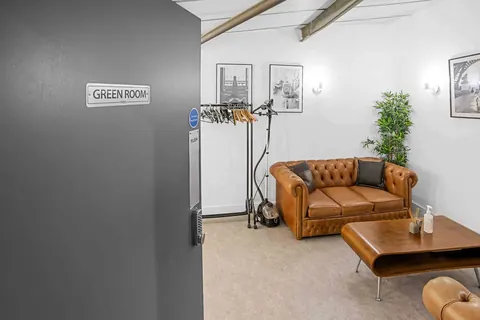
It also makes the experience better for clients. Rather than watching a crew squeeze around domestic furniture or wait for daylight to cooperate, stakeholders can review work in a professional setting with space to collaborate. That reassurance has commercial value when a campaign has multiple approvers and little tolerance for reshoots.
Choose the setting based on the job, not the moodboard
A location shoot is the right call when the environment is part of the story, the restrictions are understood, and the unit can work within them without compromising the schedule. Put the intended location through a proper technical recce before committing: check power, ceiling height, ambient sound, loading, parking, permissions, toilet provision and the available working hours.
Studio hire is the stronger choice when the brief needs repeatability, complex lighting, multiple setups, set construction, product precision or a weather-proof plan. It is also the more practical option when access is tight, the crew is carrying substantial kit or the production needs to control costs across a full day.
For hybrid concepts, use both strategically. Capture the establishing scenes and recognisable exterior on location, then move controlled close-ups, product work, interviews and high-volume content into the studio. The audience sees a coherent campaign; the production gets a more efficient and dependable workflow.
Before choosing, ask a simple production question: what could stop us getting the shots? If the answer is weather, daylight, access, sound, power, lack of space or an inflexible venue, a studio is likely to protect the schedule. If the answer is that the story only works in one real place, invest in the location planning needed to make that place work hard for the camera.