




Day Rate Versus Hourly Studio Hire: Which Pays?

Table of Contents
ToggleA two-hour booking can look like the cheaper option until the crew are waiting for a delivery, the lighting needs refining, and the client asks for one more setup. The decision between day rate versus hourly studio hire is not simply about the figure on the quote. It is about how much time your production genuinely needs to load in, build, shoot, reset and leave the space without sacrificing the work.
For straightforward content, hourly hire can be disciplined and cost-effective. For commercial productions, multi-look campaigns and shoots involving a full crew, a day rate often gives better value because it removes the pressure points that create overruns. The right choice depends on the scale of the job, the complexity of the setup and the cost of every person standing by.
When hourly studio hire makes commercial sense
Hourly hire is useful when the production has a tightly defined brief and very little technical uncertainty. A product photographer capturing a small range on a pre-agreed background, a presenter filming a short talking-head piece, or a creator making social content with a compact kit can often work efficiently within a short slot.
The key is that the shoot must be genuinely self-contained. Your shot list should be final, talent should be confirmed, wardrobe should be ready and equipment requirements should be known before arrival. If the studio layout is simple and the team can load in quickly, an hourly booking can prevent you paying for unused time.
This model is also practical for test shoots, castings, quick interviews and pick-up shots. A one-hour or half-day requirement does not need to become a full-day expense simply because that is how another studio structures its pricing.
However, hourly hire only works when the booked time reflects the entire production window, not just the time the camera is rolling. If your booking runs from 10.00 to 14.00, that period usually needs to accommodate access, unloading, studio preparation, lighting, talent turnaround, shooting, packing down and departure. Treating setup and pack-down as free time is how a four-hour booking becomes an expensive extension.
Why day rate versus hourly studio hire changes on bigger shoots
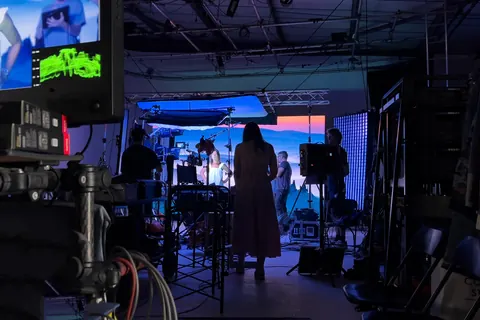
As soon as a shoot includes multiple departments, the calculation changes. The apparent saving of hourly hire can disappear quickly when a photographer, director, DOP, producer, assistants, hair and make-up artist, stylist, talent and client are all working to the same deadline.
A day rate gives the crew room to work properly. That does not mean working slowly. It means allowing enough time to pre-light, test camera positions, make considered adjustments and respond when the brief evolves. These are normal parts of professional production, particularly when delivering assets for a campaign rather than a single social post.
Consider a brand shoot with six products, three talent looks and both stills and video deliverables. Even if each setup takes only 30 minutes to photograph, transitions are rarely instant. Props move, styling changes, talent needs touch-ups, batteries are replaced and the client reviews the monitor. A studio day rate provides a realistic production envelope rather than forcing every department to race the clock.
There is also a straightforward crew-cost argument. Saving a modest amount on studio hire is not a saving if it causes an overtime payment, reduces the number of deliverable shots or requires a second booking. The more people on set, the more valuable protected studio time becomes.
The hidden costs that should influence your choice
The studio price is only one line in the budget. Access and functionality determine whether the booked hours are productive. A cheaper room on an upper floor with restricted loading can cost more in labour and lost time than a properly equipped ground-floor studio with shutter access and parking.
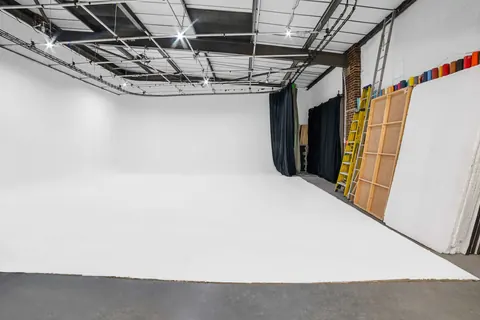
Look closely at what is included. If you need to hire lighting, stands, modifiers, grip, blackout materials or a green screen studio separately, compare the complete production cost rather than the headline hire fee. Similarly, ask whether there is sufficient ceiling height, an installed lighting grid, reliable blackout and enough floor space to separate shooting, client viewing, styling and storage.
For vehicle shoots, large set pieces or bulky product deliveries, drive-in access can be decisive. For motion work, a studio that supports blacked-out shooting, green screen studio or virtual production studio may avoid the need to compromise the creative treatment. These practical advantages matter because they reduce reset time and give the crew more control.
A day rate is often stronger value when the studio allows pre-rigging or pre-lighting. Arriving to a prepared space means the paid shoot day is focused on execution, not building the conditions required to begin. If a location is open 24/7, an evening prep or early call can also protect the main crew call time.
Match the rate to the shoot, not the wishful schedule
The most reliable way to choose a booking model is to build a realistic schedule before requesting the studio. Start with the creative output, then work backwards through each practical stage. Do not ask only, “How long will we shoot?” Ask how long it takes to make the shoot possible.
For an hourly booking, allow time for arrival and unloading, equipment setup, lighting tests, a contingency window, pack-down and vehicle collection. A short production with no client attendance may need little contingency. A client-led campaign with live feedback needs more. The point is not to overbook by default, but to avoid budgeting on the best-case scenario.
For a day rate, establish how you will use the extra capacity. It might support a pre-light, a second unit, multiple formats, alternative crops, behind-the-scenes content or a more ambitious set build. A full day should create a more efficient production, not simply encourage unnecessary complexity.
A useful rule is this: choose hourly hire when the setup is repeatable and the risk of delay is low. Choose a day rate when the setup is bespoke, there are multiple deliverables, or the cost of an overrun outweighs the additional studio fee.
Questions to ask before booking a London studio
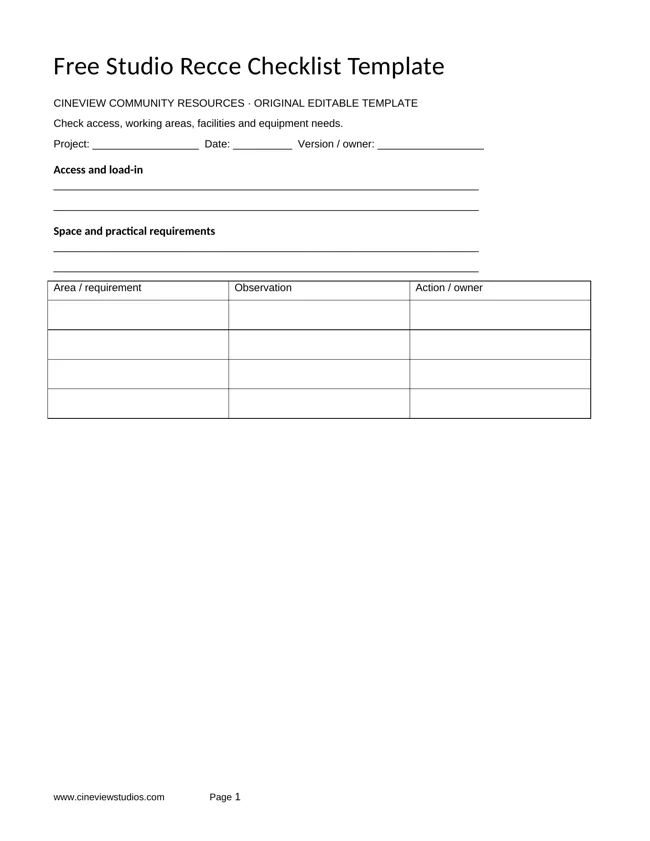
Before confirming any rate, establish whether the quoted time includes access for loading and packing down, and what happens if the session overruns. Check the size of the shooting area, the ceiling height, available power, blackout capability and whether the studio can accommodate your required set, talent and client team comfortably.
It is equally sensible to ask about parking, goods access and in-house equipment. London productions can lose valuable time moving cases through narrow corridors, finding a loading bay or sourcing a last-minute stand. A studio designed around production workflow reduces those risks.
If you are shooting stills and motion together, confirm that the space can support both without forcing constant rebuilds. If you require a cove, green screen studio, vehicle access or a constructed set, make that clear at the enquiry stage. The right facility may make a day rate compelling even where the hourly figure initially appears lower.
Cineview Studios is built for the types of shoots where access, floor space, high ceilings, grip and lighting readiness affect both the creative result and the final budget. For smaller work, the same operational advantages can make an hourly session more productive rather than more elaborate.
Build time into the brief, not just the booking
The best rate is the one that lets your team finish the agreed job well, without paying for avoidable downtime or cutting corners at the end of the day. An hourly studio booking rewards a concise, prepared production. A day rate protects bigger crews and more demanding shot lists from the false economy of an unrealistic schedule.
Book the time your production needs to breathe. When loading is easy, the studio is technically ready and the schedule reflects real on-set work, the rate structure becomes a commercial decision rather than a gamble against the clock.