







Infinity Cove studio vs Backdrop: Which Suits Your Shoot?
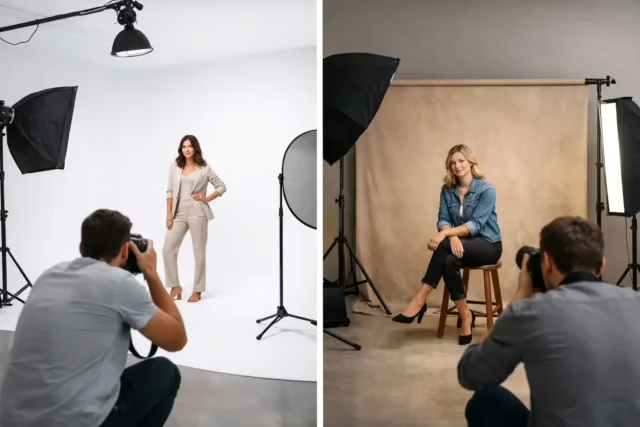
Table of Contents
ToggleThe infinity cove studio vs backdrop decision is rarely just about appearance. It affects how quickly your crew can light the set, how freely talent and products can move, whether the camera can find clean angles, and how much time disappears into resets. For a simple portrait or small product job, a backdrop may be all you need. For a commercial production that needs scale, movement and a polished finish in camera, an infinity cove studio is often the more capable choice.
Infinity Cove studio vs Backdrop: The Practical Difference
A backdrop is a defined surface placed behind the subject. It may be colourama paper, fabric, vinyl, a printed graphic, a painted flat or a purpose-built scenic panel. It gives you control over colour, texture and branding without committing the whole studio to one look. Backdrops are fast to swap and can be a smart, cost-conscious option when the frame stays tight.
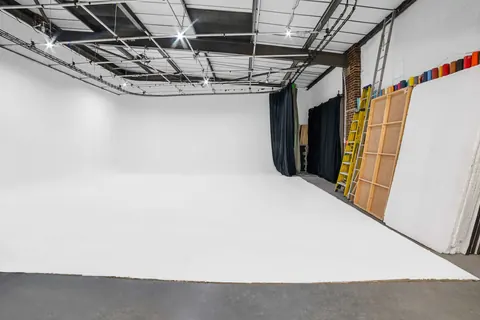
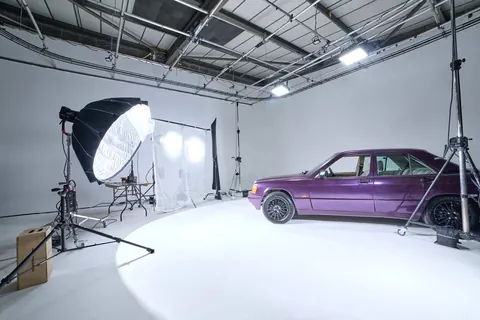
An infinity cove studio, also called a cyclorama or cyc, is a curved transition between wall and floor. With no visible corner or horizon line, it creates a continuous field behind and beneath the subject. Light it evenly and the result can look open, minimal and high-end. Light it more selectively and the same cove can deliver contrast, shadow and depth.
The distinction matters because a backdrop works within the frame, while a cove becomes the environment around it. That makes a cove particularly useful for full-length fashion, vehicles, large props, moving talent, tabletop content with wider angles and product films where the floor needs to look as considered as the background.
What the Camera Sees
A backdrop gives you a controlled frame
A backdrop is excellent when the camera position is predictable. Headshots, e-commerce stills, social content, interviews and close product photography can all benefit from its simplicity. You can bring the background close to the subject, use less studio depth and create a specific visual identity without building a full set.
It also gives you deliberate texture. Seamless paper has a clean editorial quality, fabric can soften light, and painted or printed surfaces can introduce a brand colour or campaign concept. If the intended image needs a visible edge, a hard horizon or a contained graphic composition, the absence of a cove is not a disadvantage.
The limitation appears when you go wider. The floor edge may enter shot, the support system can become difficult to hide, and a subject stepping forward can quickly expose the boundary between foreground and background. You can solve some of this with camera angle, lighting and post-production, but each solution adds time or restricts the shot.
An infinity cove studio removes visual boundaries
A well-maintained cove gives the lens room to breathe. It is the stronger option when you need full-body framing, low camera angles, lateral movement or a sequence of shots that all need a consistent clean background. It helps products sit naturally in the frame rather than appearing placed in front of a roll of paper.
That continuity is valuable for advertising. A presenter can walk into shot, a model can turn through a fashion sequence, or a product can be captured from multiple angles without redesigning the background for every setup. For motion work, that reduction in visual clutter can make the edit feel more expensive before any grading begins.
A cove is not automatically flat white on camera. Its result depends on lighting distance, fixture choice, flags, exposure and the separation between subject and background. A white cyc can read white, grey or near-black. That flexibility is one reason commercial crews use coves so often, but it also means the lighting plan needs to be intentional.
Access, Space and Crew Workflow
The best choice often becomes obvious before the first light is switched on. Ask what needs to enter the studio, how many people need to work comfortably, and whether the setup will change during the day.
A compact backdrop setup can be efficient in a smaller room with a lean crew. It needs relatively little floor space and is easier to keep contained. This is useful for quick catalogue shoots, creator content and straightforward interviews where the production footprint is modest.
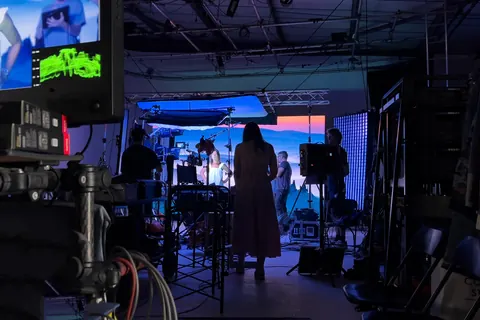
An infinity cove studio earns its keep when the shoot has physical demands. Larger lighting units need distance to spread evenly. A camera team may need room to track, a stylist needs space around talent, and a client team needs to review without standing in the lighting path. If you are shooting furniture, oversized products, multiple talent or anything arriving on pallets, ground-floor access and generous clearance become as important as the background itself.
At Cineview Studios, a high-ceilinged cove, lighting grid, drive-in-friendly shutter access and pre-rigging support can reduce the friction that normally comes with larger London productions. The point is not to hire more space for its own sake. It is to avoid paying for lost hours caused by cramped loading, limited rigging positions or a set that cannot accommodate the planned camera movement.
When a Backdrop Is the Better Commercial Decision
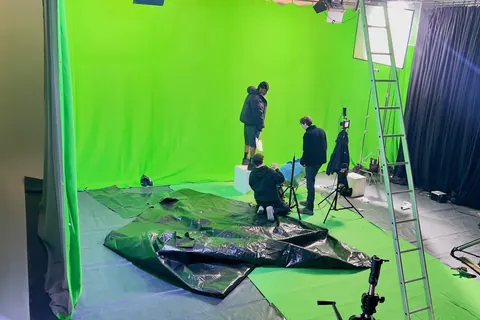
A cove is not the default answer for every brief. A backdrop is usually the better route when colour or texture is central to the creative, the shot is tightly framed, or you need several different looks in one day. Swapping paper rolls or scenic flats is often quicker than repainting or relighting a cyc between campaign variations.
It can also be more economical for a short shoot with a small product range. If the product never needs to show its base, and the camera will not move beyond a controlled medium shot, paying for a large cove may not add meaningful value. Spend the budget instead on stronger styling, a more considered lighting package or a retoucher who understands the brand finish.
Backdrops are also useful where intentional imperfection suits the work. Visible paper sweep, folds in fabric, a textured wall or a constructed set can bring character that a pure white cove is designed to remove. Beauty, editorial and fashion campaigns regularly benefit from that sense of materiality.
When an Infinity Cove studio Is Worth It
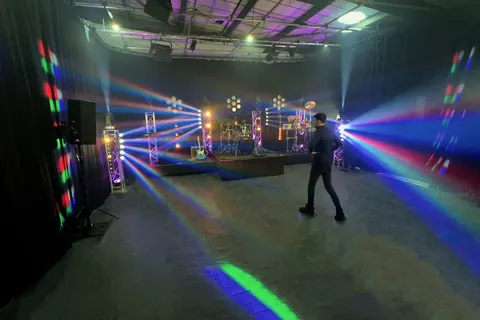
Choose a cove when consistency and shooting freedom matter more than changing background treatments. It is especially well suited to car content, fashion lookbooks, commercial product films, fitness campaigns, large-scale e-commerce, music performance and branded content with active movement.
The value increases across a full shoot day. A crew can move from wide to close coverage without rebuilding the background, shoot front, side and detail angles with the same visual world, and keep the floor clean within the frame. For agency and brand teams, that means more usable variations from the same setup.
There are practical responsibilities. White coves mark easily, particularly with shoes, tyres, stands and heavy props. Confirm the studio’s rules on painting, cleaning and repair charges before booking. Build a floor-protection plan into the call sheet if the production involves vehicles, mud, liquids or paint. A cove remains a professional surface, not an indestructible blank canvas.
Sound is another consideration for film crews. Hard, curved surfaces can be reflective, so a dialogue-heavy shoot may need sound blankets, baffles, careful microphone placement or a separate treated area. The visual benefit is substantial, but it should not override the audio requirements of the job.
Plan the Setup Before You Book
The fastest way to make the right choice is to review the shot list rather than choosing by reference images alone. Consider the widest required frame, the tallest prop or talent position, the intended camera moves and whether the floor is visible. Then account for lighting distance, crew numbers, client attendance, loading requirements and turnaround between looks.
For a backdrop, check the usable width and height, whether the stand or rail can be kept out of shot, and how much sweep you need on the floor. For a cove, confirm the dimensions of the usable shooting area, ceiling height, lighting-grid positions, power availability, blackout control and access route. If you need to bring in a vehicle or a substantial set build, confirm weights, shutter dimensions and studio procedures early.
Pre-lighting is often the difference between a calm commercial day and a rushed one. A lighting test lets you see how white the cove will read at the chosen exposure, whether spill is wrapping around the subject, and how much separation you can maintain. With a backdrop, it lets you check colour accuracy and reveal any unwanted sheen or creasing before talent arrives.
The right setup is the one that gives your crew enough room to deliver the planned work without compromises becoming visible on camera. Use a backdrop when the brief benefits from speed, variety and a contained frame. Use an infinity cove studio when the production needs a clean world with the space to move inside it.