
Best Studios for Car Commercials in London
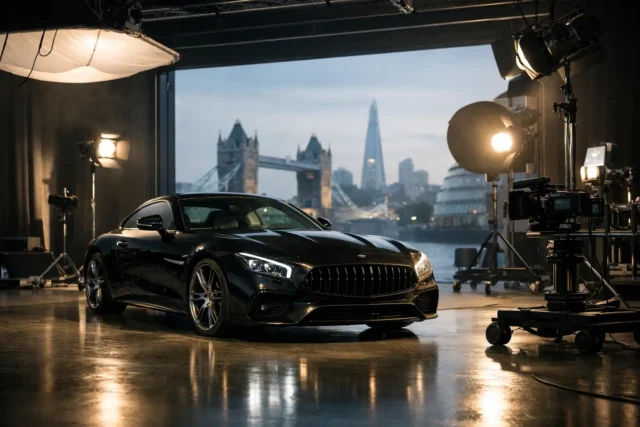
A car commercial can lose half a day before the first frame is lit. A tight loading route, an undersized cove, no place to pre-rig, or a venue that treats vehicle access as an exception rather than a standard process all add cost quickly. The best studios for car commercials are built around the real workflow of automotive production: getting the vehicle in safely, giving the crew room to shape reflections, and keeping the shoot moving when agency clients, talent, technicians and kit arrive.
For London productions, the right choice is rarely the most fashionable address or the cheapest day rate on paper. It is the facility that removes friction from a technically demanding job.
What car commercial shoots need from a studio
Cars are among the least forgiving subjects in commercial production. Their bodywork reflects every lamp, stand, cable, ceiling feature and person near the set. A studio needs enough clear space to position large diffusion frames, flags and lighting at distance, while preserving clean sightlines around the vehicle.
Ceiling height matters for the same reason. A high roof with a proper lighting grid lets the team suspend large soft sources and overhead diffusion rather than filling the floor with stands. That gives the director of photography more control over long, continuous reflections across a bonnet, windscreen or side panel. It also makes the set safer and easier to work around.
The studio must accommodate the practical side of the job too. Vehicle content often requires camera cars, tracking rigs, mirrors, rollers, fog or haze, specialist lighting, set dress and a significant amount of grip. A space that looks generous in still photographs can feel very different once a full commercial crew and equipment package are in the room.
Drive-in access is not a minor detail
The most useful studios for automotive work provide direct, ground-floor vehicle access through a wide shutter or loading entrance. This should allow a car to enter without complicated ramps, narrow turns or the need to dismantle part of the set. It sounds basic, but it is one of the clearest differences between a photo studio that can occasionally host a car and a production facility designed to handle one.
Direct access protects both schedule and vehicle. Premium, prototype or freshly detailed cars should not be manoeuvred through restrictive corridors or crowded shared buildings. Ground-floor drive-in access also helps when a production needs to move the car between a white cove, a blacked-out set and an exterior loading area during the same hire.
Ask whether the route has been used for similar vehicles, what the doorway dimensions are, and whether there are limits on vehicle weight, fuel level or engine operation. Some facilities require engines to be switched off inside, which is sensible, but that needs to be planned for if the creative calls for wheel movement, exhaust atmosphere or a running-engine sequence.
Choose the right backdrop for the treatment
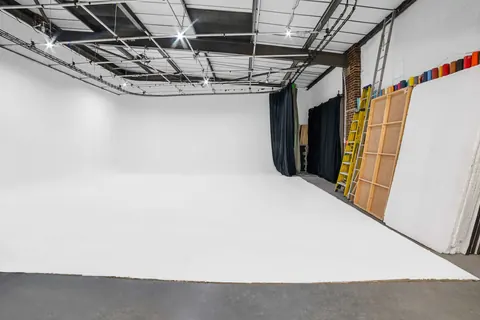
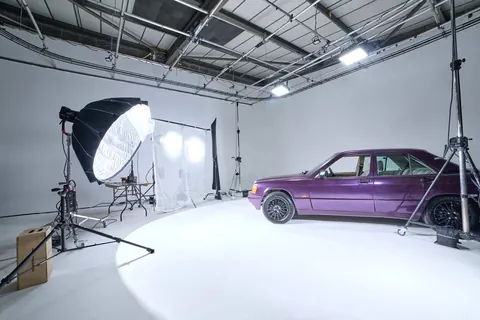
A large infinity cove remains the workhorse for clean automotive stills, packshot films and polished motion content. It gives post-production a controlled background and lets the team create a high-end look through lighting rather than expensive location builds. For a vehicle, however, the cove needs to be wide and deep enough for the camera angle, the lighting setup and safe clearance around the car.
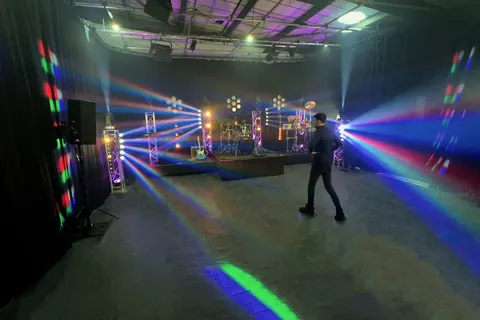
A white cove is not automatically the right answer. White surfaces can create unwanted lift and reflections on gloss paint, dark glass and chrome. A studio that can be blacked out gives greater control for moodier campaigns, night-driving simulations and dramatic reflection work. Blackout capability is particularly valuable when shooting over a long day, as daylight changes should not dictate exposure or continuity.
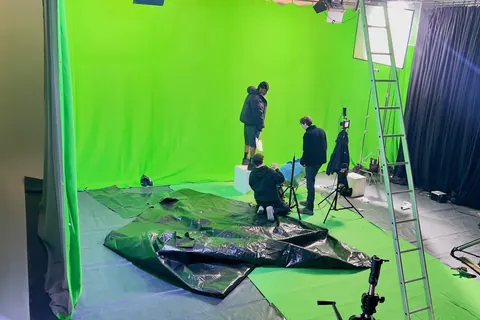
Green screen may suit a campaign that needs extensive environmental replacement, virtual driving plates or stylised digital worlds. Yet it comes with trade-offs. Green spill can contaminate reflective bodywork, windows and metallic trim, increasing the work required in grading and compositing. It can be the efficient choice for a well-planned VFX job, but it is not a shortcut for every car spot.
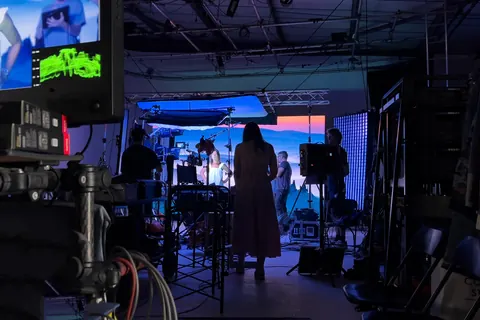
Virtual production can offer a more convincing environment through LED backgrounds, interactive light and in-camera imagery. It is most effective when the production has allowed enough preparation time for content, tracking, colour management and precise vehicle placement. For simple beauty shots, a well-lit cove or controlled black set may still be faster and more cost-effective.
Lighting infrastructure determines creative control
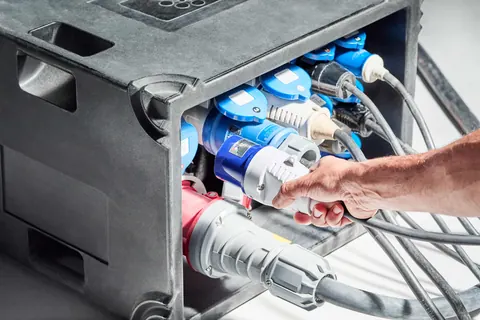
The studio hire should be assessed as an operating system, not an empty room. A lighting grid, accessible power, suitable distribution and a serious in-house lighting and grip inventory can reduce delivery costs, shorten setup and give the crew more options when the creative evolves.
For automotive work, common requirements include large soft lights, overhead fixtures, diffusion, polyboards, flags, frames, haze equipment and reliable stands. Hiring these separately is possible, but it creates more suppliers, more transport and more points of failure. In-house equipment is especially useful for test setups, last-minute additions and smaller cutdown shoots where a full external package is difficult to justify.
Pre-lighting and pre-rigging support are equally valuable. Commercial days are expensive because they involve more than the technical crew. If the lighting plan can be prepared before the agency, client and talent arrive, the production starts with decisions being made at the monitor rather than while the crew is still building the room.
Space around the car protects the schedule
A commercial studio should have room for the crew to work without constantly relocating equipment. The vehicle may occupy only a small percentage of the floor, but the shot does not. The camera needs distance for lenses and movement; lighting needs depth; art department needs a clean working area; and clients need somewhere to observe without standing in the shooting lane.
Look beyond the advertised square footage. Ask about usable clear floor area, ceiling height, obstructions, columns and whether there is a separate client or production area. A high ceiling and open floor plan are often more valuable than an awkwardly shaped space with a larger nominal footprint.
Set-build suitability also changes what is possible. Automotive campaigns frequently need a partial garage, showroom, charging point, abstract architectural environment or modular scenic elements. A studio that permits builds, supports heavy-duty working and gives the art department enough access can save the cost and compromise of hiring a separate warehouse.
Parking, loading and crew facilities are production features
A central London studio can look excellent in a location scout but become expensive if every vehicle, van and lorry requires off-site parking or repeated loading runs. Free on-site parking and straightforward loading reduce callsheets, waiting time and courier costs. They also make it easier to keep a backup vehicle, catering, wardrobe and spare kit close to the stage.
Long automotive days benefit from a facility that is available 24/7 or can accommodate early call times and late wraps. This flexibility is useful for shoots that need to build overnight, work around client availability or create a night-time look without rushing the setup.
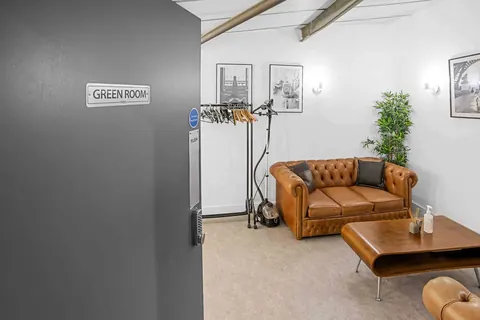
Do not overlook the less glamorous details: clean toilets, a practical make-up area, reliable heating, a place to eat, secure storage and a presentable environment for clients. These are not luxury extras. They keep the working day orderly and help a production maintain confidence when the pressure rises.
How to compare studios for car commercials
When shortlisting, start with the treatment rather than a generic venue checklist. A minimal studio beauty film, a VFX-heavy launch campaign and a practical set build all need different things. Then test each potential studio against the same operational questions.
Can the specific vehicle enter and turn safely? Is there enough clear height and floor depth for the planned lighting? Can the space be fully controlled from daylight? What lighting and grip are available on site? Is there time and support to pre-light? Where will the crew, client team and vehicles park? Finally, confirm the costs that can distort an apparently low hire rate: overtime, equipment, cleaning, cove repainting, security, power and access outside standard hours.
Cineview Studios is designed around these practical requirements, combining drive-in access, a large infinity cove, blackout and green-screen capability, high ceilings with a lighting grid, parking and an extensive in-house equipment offering. That combination gives automotive teams room to choose the right approach rather than forcing the creative around the limitations of the building.
The strongest car commercial work comes from control: control of reflections, light, access, time and the environment around the vehicle. Book the studio that gives your crew that control before the wheels cross the shutter line.