
Green Screen studio Versus LED Wall: Which Fits?
A location-heavy commercial can look expensive long before the first frame is shot. The real question is whether that spend belongs in post-production, on set, or in the background itself. In the green screen versus LED wall decision, neither format is automatically the premium choice. The right one is the system that protects your schedule, suits the shot list and gives the director, talent and client the confidence to make decisions on the day.
Green screen remains a highly capable, cost-effective tool for controlled shoots. LED walls bring real-time environments, interactive light and immediate playback to the stage. They also bring a different level of technical planning, specialist crew and budget. Treat the choice as a production decision rather than a technology trend.
Green screen versus LED wall: the practical difference
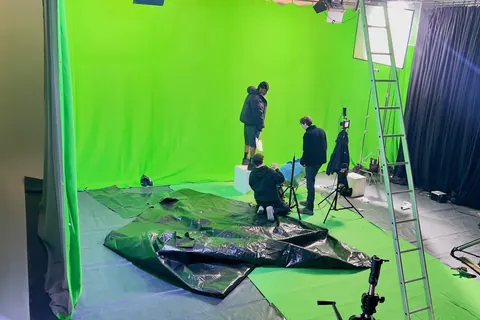
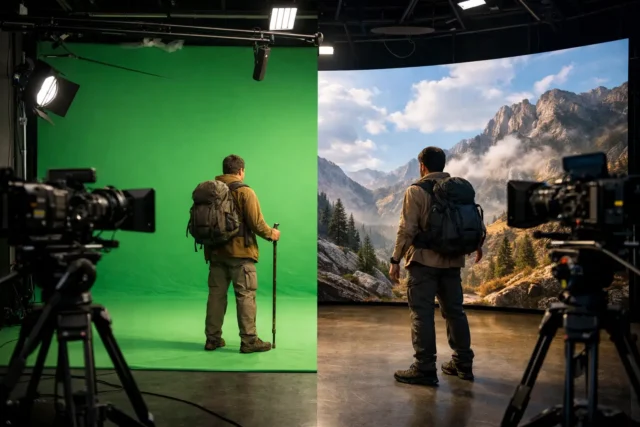
A green screen is a physical chroma background, usually cloth, paint or a purpose-built cyc, that is replaced in post-production. The camera records the foreground action against a consistent green surface, then compositors isolate that colour and insert the desired plate, 3D environment, graphic or video asset.
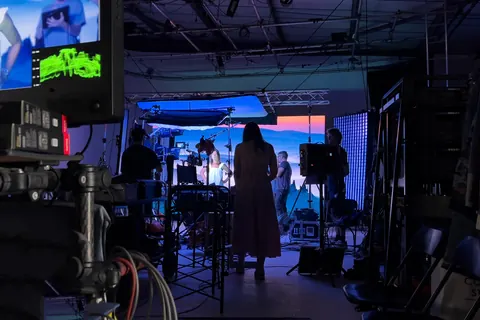
An LED wall displays the background in camera. It may show a filmed plate, a designed motion background or a real-time 3D world driven by a media server and, for virtual production, linked to camera tracking. The talent sees the environment, the camera sees it too, and much of the final image can be captured on the shoot day.
That distinction changes the workflow. Green screen puts more creative flexibility into post. LED puts more visual decision-making, asset preparation and technical coordination into pre-production and the studio day.
When green screen is the stronger commercial choice
Green screen is often the better option when a campaign needs numerous background versions, late-stage market adaptations or substantial retouching. A product film that needs ten regional cityscapes, for example, does not require ten physical or virtual locations. Shoot the product cleanly and build the variations in post.
It is also the sensible route for shots where the background is deliberately secondary. Talking-head content, social cut-downs, explainers, packshots and many e-commerce videos can benefit from a clean keying workflow without carrying the cost of an LED volume. A well-lit green screen, sufficient subject separation and disciplined camera settings deliver an excellent starting point.
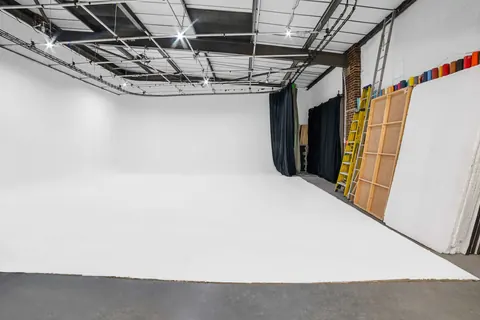
Space requirements matter too. Green screen gives the crew freedom to move lights and position talent away from the backing. That separation is crucial: it limits green spill, creates believable depth and makes hair, translucent materials and reflective edges easier to manage. A large studio with ceiling height, a lighting grid and blackout control makes this considerably more straightforward than trying to key a subject in a cramped room.
The trade-off is that nobody can see the finished world in camera. Talent may be acting to marks, reference images or a rough monitor composite. Clients need to understand that the sky, landscape, office view or graphic setting will be resolved later. If approvals are vague on the day, post-production can become the place where unresolved creative debates reappear.
Green screen demands a proper post budget
The common mistake is to call green screen cheap because the background itself is inexpensive. The studio day may cost less, but high-quality keying, roto work, tracking, colour matching, clean-up and compositing still take time. Fine hair, glass, smoke, fast movement, shiny products and transparent fabrics increase that time quickly.
Green also reflects onto skin, wardrobe and glossy surfaces. This is controllable, not mysterious, but it requires distance from the screen, precise lighting and an experienced crew. If the shoot needs an exact final result straight from camera with very little finishing time, green screen may be false economy.
Where an LED wall earns its budget
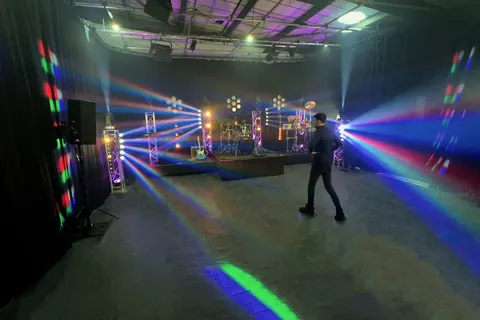
An LED wall is at its best when the environment needs to affect the foreground. A sunset should cast warm, low-angle light across a car. A neon street should reflect in a visor. A moving landscape should play naturally through the windows behind talent. These are situations where the wall does more than provide a background – it becomes an interactive lighting source and a practical reference for performance.
For car work, music videos, beauty films, branded content and cinematic interviews, this can be a serious advantage. The director and client can judge composition, colour, reflections and background movement live rather than imagining a composite. Playback is more meaningful, and creative decisions can be made before the crew wraps.
LED can also reduce post-production pressure when the background is substantially final in camera. There may still be clean-up, colour work, screen replacement or extensions, but the production is not relying on a full chroma-key composite for every shot. That can be valuable when a fast turnaround is genuinely non-negotiable.
Virtual production takes this further. With camera tracking, the displayed 3D environment shifts in perspective as the camera moves, creating parallax that makes the scene feel spatial rather than flat. This is powerful for carefully planned cinematic work, but it is not a shortcut for every job. It depends on suitable assets, accurate tracking, calibrated screens, a capable technical team and a shot design built around the volume.
LED walls have limits that affect the shot list
LED walls are not a universal replacement for green screen. Resolution, pixel pitch and camera distance matter. Shoot too close, use the wrong lens or create certain focus conditions, and the panel structure can become visible. Moiré, refresh artefacts and colour reproduction must be tested with the chosen camera system.
The wall also has a physical size. Wide shots, high angles and ambitious camera moves can expose its edges, ceiling or floor unless the set is designed to hide them. A convincing virtual world may need physical foreground elements, practical props and carefully controlled lighting around the volume. The most successful LED shoots are designed as integrated sets, not treated as a large television placed behind an actor.
There is also a practical issue with bright daylight scenes. LED output can be effective for many scenarios, particularly dusk, night, interiors and stylised environments, but it has limits against powerful key lighting. If the brief calls for hard, sun-drenched daylight at scale, the lighting plan needs to be realistic about what the wall can contribute.
Compare the full cost, not the headline hire rate
A green screen setup generally needs studio space, backing, lighting, camera crew and a post-production team. An LED setup adds display panels, processing, playback or real-time rendering systems, technical operators, content preparation and often camera tracking. The LED day rate is therefore usually higher before the camera rolls.
But a lower stage cost is not automatically a lower production cost. Ask where the complexity sits. If a green screen shoot creates weeks of high-end compositing and multiple approval rounds, an LED wall may be commercially justified. If the same asset must be reframed, repurposed and localised across dozens of deliverables, green screen may offer more useful flexibility.
The most reliable budgets are built from the actual deliverables: final shot count, number of environments, camera movement, turnaround, revision allowance and post finish. Avoid choosing a format simply because it looks impressive in a treatment.
Plan the studio around the workflow
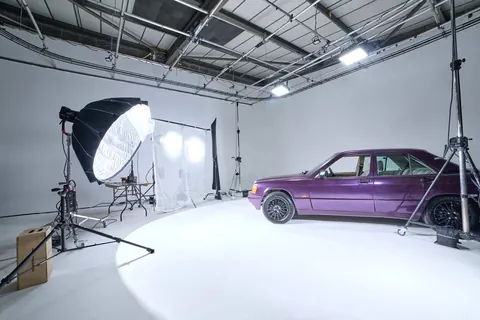
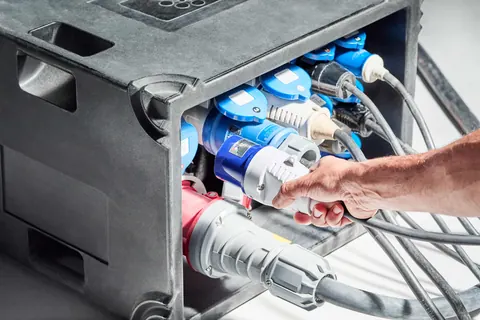
Both options benefit from a production-friendly stage. Green screen needs enough depth for subject separation, enough width for the framing and room for flags, negative fill and lighting positions. An LED wall needs clear drive-in or load-in access for panels and technical kit, a stable power plan, blackout capability, adequate ceiling clearance and space for the control position, camera tracking and crew movement.
Access and timing are not minor details. Overnight pre-rigging, pre-lighting and a ground-floor load-in can protect valuable shooting hours, especially when agencies, clients and multiple departments are on set. At Cineview Studios, the combination of a large blackout-capable space, green screen facilities, virtual production capability, lighting grid and practical access supports both routes without forcing a production into a compromised room.
Before confirming either approach, test the difficult element. For green screen, that may be a reflective product or flowing hair. For LED, it may be a wide lens, a fast camera move or a bright wardrobe pattern. A short technical test costs less than rebuilding a solution under pressure on the shoot day.
Choose for the image you need to deliver
Choose green screen when flexibility, multiple versions and complex background changes outweigh the need to see a finished setting on set. Choose an LED wall when interactive light, reflections, performance reference and confident in-camera decisions materially improve the film. Hybrid shoots can be equally effective: use LED for the key reflective or performance shots, then use green screen for extensions, alternate worlds or deliverables that need room to change.
The strongest choice is rarely the newest one. It is the format that gives your crew enough space to work, your client clear visibility of the result and your budget a realistic route from call time to final delivery.