

Green Screen studio vs Virtual Production studio: Which Fits?
A director wants a car driving through a rain-soaked Tokyo street at sunset. A brand team needs a product film with a Mediterranean villa behind the talent. Both briefs may lead to the same question: green screen vs virtual production – which route will give the production the best result without putting pressure on the schedule or budget?
The answer is not that LED virtual production has replaced chroma key. It has not. Green screen remains a highly effective, flexible and cost-conscious tool for many shoots. Virtual production solves different problems, particularly where in-camera realism, interactive lighting and instant creative decisions matter. The right choice depends on what must be captured on the day, what can be finished in post, and how much control the production needs over the environment.
Green Screen vs Virtual Production: The Core Difference
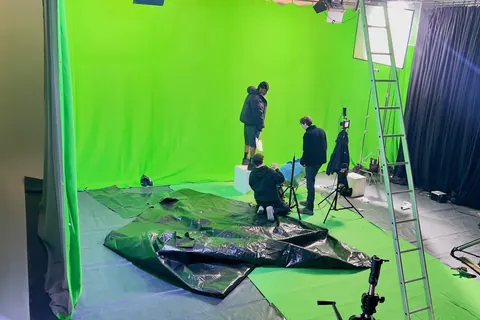
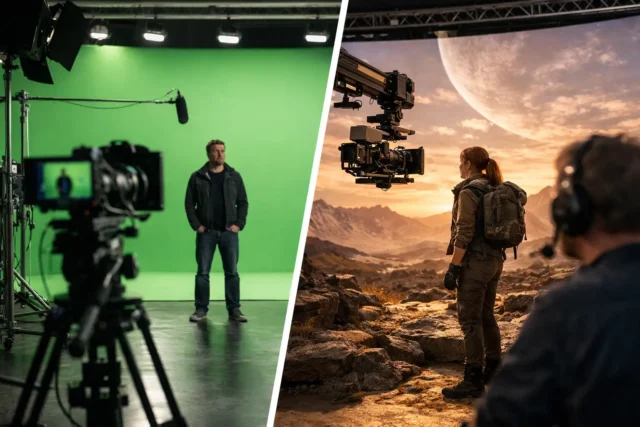
Green screen is a post-production workflow. Talent, vehicles or products are filmed against a consistently lit green background, then the green is removed in post and replaced with a digital environment, still image, motion graphic or filmed plate. The final world is created after the shoot, which gives the production significant freedom to change the background later.
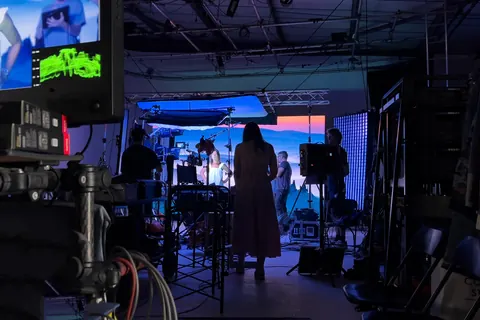
Virtual production brings much of that environment onto the stage. An LED volume displays a real-time digital background, usually created in a game engine, while camera tracking adjusts the perspective of that background as the camera moves. Instead of asking the crew to imagine the setting, the setting is visible through the lens. Reflections, coloured light and horizon lines can all be captured in camera.
That distinction changes the workflow. Green screen shifts more creative and technical responsibility into post-production. Virtual production moves more preparation and decision-making to pre-production and the shoot day.
When Green Screen Is the Smarter Choice
Green screen is often the practical choice when the background does not need to influence the foreground. A presenter delivering a message to camera, an e-commerce campaign requiring clean cut-outs, or social content with graphic treatments rarely needs an LED world behind the subject. A well-lit green screen and a disciplined post workflow will produce a strong result at a more accessible production cost.
It is also useful where the final environment is still being developed. If an agency has not signed off the location, artwork or campaign world, shooting green gives the team room to refine the creative after the talent has wrapped. That can be particularly valuable for fast-moving branded content, where approvals arrive late and campaign assets change during the edit.
Green screen works well for complex composites too. Creatures, fantasy environments, extreme weather and impossible camera moves may demand extensive visual effects regardless of the shooting method. In those cases, paying for a large LED setup can add cost without removing enough of the post workload to justify it.
The trade-off is that green screen requires precision. Green spill on skin, hair, glass, chrome and reflective clothing can make keying more difficult. The subject needs enough separation from the backdrop, and lighting must be planned to protect the edge detail. A quick green setup in a cramped room may look economical at first, but it can create hours of avoidable roto, clean-up and colour work later.
Where Virtual Production Earns Its Cost
Virtual production is at its strongest when the background needs to behave like a real location. Think automotive work, music videos, interviews framed against a changing landscape, premium commercials or scenes involving reflective surfaces. An LED wall can put the colour and movement of the environment onto the car body, glossy product packaging or talent’s face at the moment of capture.
That is not just an aesthetic benefit. It gives directors, clients and agencies something real to assess on set. The sky can be adjusted, the cityscape repositioned or the time of day altered while the crew is still in the studio. Decisions happen with the actual lens, lighting and performance in front of everyone, rather than being left to a later review of rough composites.
For talent, the improvement can be substantial. Looking at an environment rather than a blank green field can produce more natural eyelines and a more convincing performance. It is particularly useful when a performer needs to react to a horizon, passing scenery, changing light or visual event.
Virtual production also makes sense where travelling to a location would create disproportionate cost or risk. A controlled studio environment avoids weather delays, location restrictions, overnight unit moves and the uncertainty of shooting around the public. It can make a global-looking campaign achievable without taking a full crew overseas.
However, virtual production is not a plug-and-play backdrop. It requires an appropriate LED volume, correctly configured camera tracking, prepared content, an experienced operator and time for calibration. A weak digital environment, a poorly matched foreground set or an unrealistic lighting plan will still look artificial. The technology raises the ceiling, but it does not remove the need for strong art direction and technical preparation.
Cost Is About the Whole Workflow, Not the Studio Day
Comparing the hire cost of a green screen stage with an LED volume tells only part of the story. Green screen can cost less on the day while creating a larger post-production bill. Virtual production generally requires greater upfront investment in the stage, content preparation and specialist crew, but may reduce compositing, location and retouching requirements.
The financial question is therefore more specific: where does the complexity sit, and when does the team need certainty? If the final visual treatment is simple and the background can be added efficiently, green screen is likely to be the better value. If the client needs to see final-quality worlds during the shoot, or reflections and interactive light are central to the creative, virtual production can protect both the schedule and the finish.
There is also a hidden cost in indecision. Green screen permits late changes, but every late change has a post-production implication. Virtual production demands earlier sign-off, yet it can reduce rounds of subjective feedback because more of the final image is agreed in camera. Neither model is automatically cheaper. The best option is the one that puts spend where it has the greatest effect on the final frame.
Studio Requirements That Affect Both Approaches
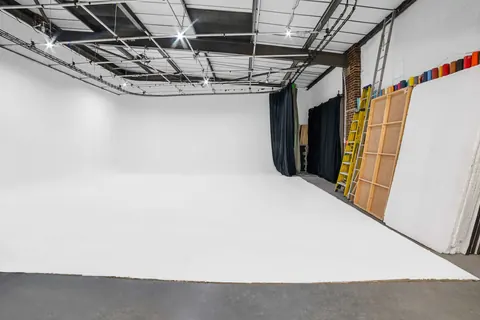
The screen is only one part of the production environment. Whether using green screen or virtual production, the studio needs enough space to keep talent, camera and lighting at workable distances. A larger stage makes it easier to avoid shadows on green, build practical foreground elements and accommodate tracking moves without compromising the shot.
Ceiling height and a proper lighting grid matter as much as floor area. Green screen requires controlled, even illumination across the backing while retaining shape on the subject. Virtual production requires careful foreground lighting that complements the LED source rather than fighting it. Pre-rigging overhead saves valuable shooting time, especially on commercials with multiple lighting states.
Blackout capability is equally important. Ambient daylight can contaminate a green screen and reduce the contrast needed for a clean key. For LED work, uncontrolled light can affect screen brightness and perceived contrast. A stage that can be fully controlled gives the cinematographer a consistent starting point.
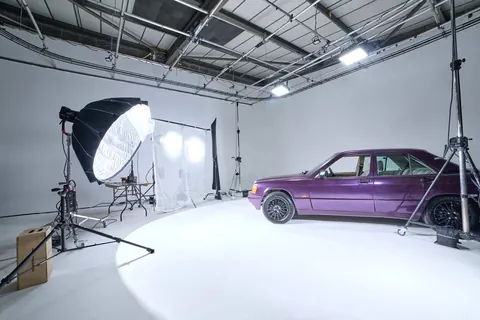
Practical access is not glamorous, but it is often the difference between a smooth call sheet and a delayed one. Ground-floor shutter access helps when bringing in flats, props, vehicles or large lighting packages. Free parking and room for crew vehicles reduce friction on a busy London shoot. At Cineview Studios, the combination of a large blackout-capable space, high lighting grid, drive-in access and flexible set-build capability supports both straightforward chroma work and more involved virtual production setups.
How to Choose Before You Book
Start with the required final image, not the technology. Ask whether the environment must be visible and believable to the performer, whether it needs to cast light or appear in reflections, and whether the client needs to approve it in camera. If the answer is yes to several of those questions, virtual production deserves serious consideration.
Next, assess the post pipeline honestly. Do you have a confirmed VFX team, an agreed delivery schedule and approved environment assets? Green screen is only economical when the post process is properly budgeted and managed. It is not a shortcut for solving an unresolved creative brief.
Then consider scale. For a single clean talking-head setup, an LED volume can be unnecessary. For a campaign requiring several international environments in one day, it may be more efficient than location moves or building multiple physical sets. The camera language matters too: a locked-off shot is easier to composite than a moving shot with difficult reflections and parallax.
Finally, plan the stage around the workflow. Allow time for screen lighting tests, keying checks and monitor review on a green screen shoot. For virtual production, schedule technical rehearsals, content checks and tracking calibration before talent is on the floor. Saving an hour in pre-production often costs far more once crew, cast and clients are waiting.
The strongest productions do not choose green screen or virtual production because one feels newer than the other. They choose the method that gives the creative team control over the elements audiences will actually notice: believable light, convincing performance, confident camera work and a final image that holds up beyond the first viewing.