


How to Plan a Studio Shoot Without Losing Time

A studio shoot can look straightforward on a call sheet and still lose hours before the first proper take. The usual causes are not creative: a set that will not fit the booked space, a delivery stuck outside, a lighting plan that cannot be rigged safely, or a client arriving before the room is ready. Knowing how to plan a studio shoot means treating the studio as a working production environment, not simply a blank backdrop.
The strongest shoots are planned around workflow. That includes how people, kit, props, vehicles and information move through the day. Get those decisions right before booking, and your crew can spend their time making the work rather than solving avoidable problems on set.
Start with the brief, then test it against the space
Before looking at studio availability, define what must be achieved on camera. Is the shoot product-led, a campaign stills day, branded content, a music video, a vehicle shoot or a multi-set commercial? The answer determines more than the backdrop. It affects floor area, ceiling height, power requirements, sound control, build time, crew size and access.
Turn the creative brief into a practical production specification. Confirm the framing and movement required, the largest piece of scenery or product, the number of talent, the expected camera package and whether lighting needs to be hung from a grid. If you are shooting a wide hero frame, ask whether the studio has sufficient depth behind camera as well as width in front of it. A room can appear large in photographs yet feel restrictive once a dolly track, video village, lighting stands and client seating are in place.
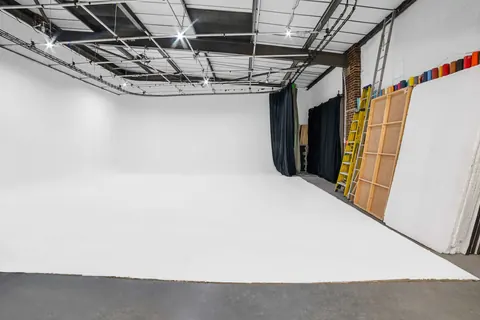
This is where a purpose-built studio earns its keep. High ceilings provide useful clearance for large modifiers and overhead rigging. A proper infinity cove gives cleaner wide shots and removes the time spent disguising awkward joins. Full blackout capability matters when you need repeatable lighting conditions during a long summer day, while a green screen or virtual production setup can prevent costly location moves or post-production compromises.
Build the day around access and turnaround
Access is one of the most underestimated parts of planning a studio shoot. A great-looking space becomes expensive if a crew has to carry cases, flats and furniture through tight corridors or up several flights of stairs. Ask exactly where vehicles can unload, whether the entrance is ground level, how wide and high the shutters are, and whether vehicles can enter the studio.
For larger productions, drive-in access can change the schedule completely. It makes vehicle work, scenic builds and heavy equipment deliveries far more manageable, and it gives the art department a realistic route for bringing in large set pieces. Ground-floor loading also reduces manual handling risks and lets departments work in parallel rather than queueing for access.
Plan the load-in in order, not just by arrival time. The set build, lighting and camera teams may need different areas clear at different moments. Give each department a delivery window and nominate one person to manage the loading bay. If equipment is arriving by courier or lorry, share a named contact, the access instructions and a mobile number in advance. These details are dull until a driver cannot find the entrance at 7am.
Allow for the reverse journey too. Wrap is often rushed, particularly when a studio booking ends at a fixed time. Build in enough time to strike lighting, clear rubbish, remove set materials and load vehicles safely. A 24/7 facility can offer useful flexibility, but it should support a disciplined schedule, not encourage a vague one.
Create a technical plan before the crew call
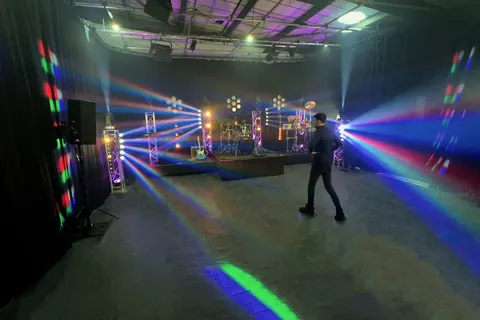
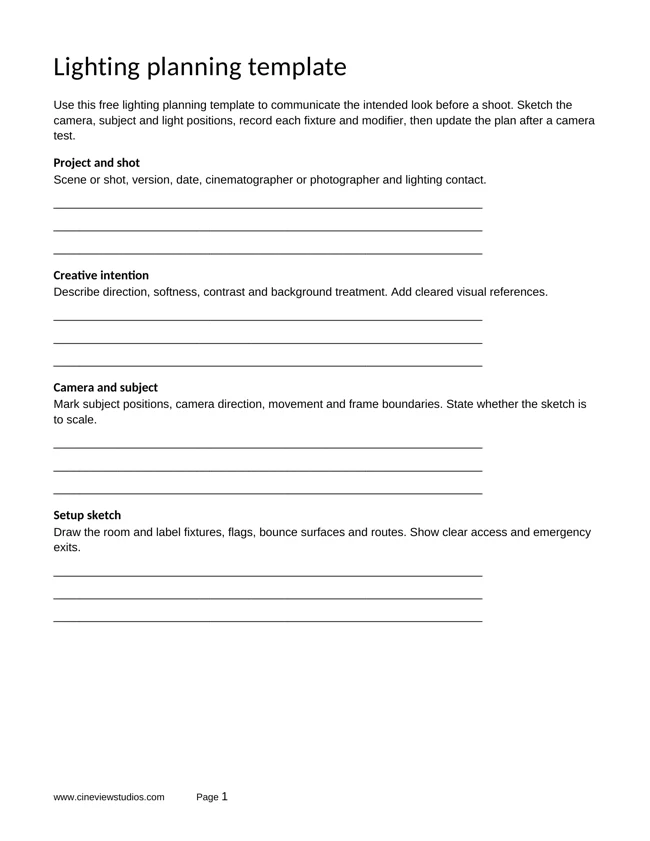
A lighting plan should be more specific than “bring enough lamps”. Mark the key, fill, background and practical-light positions on a floor plan, then check how they will be supported. Floor stands are flexible, but they consume space and can create trip hazards. A lighting grid can keep the floor clearer and make pre-rigging more efficient, especially for interviews, e-commerce work and repeated setups.
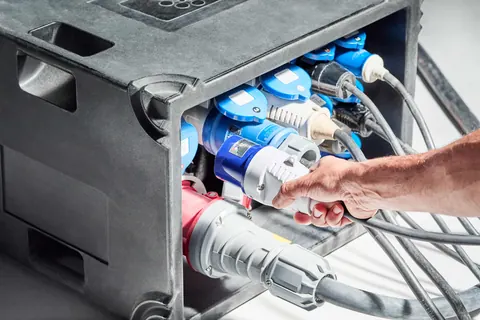
Confirm the available power, distribution requirements and cable runs with your gaffer. If the production needs high-output fixtures, cooking equipment, motion-control gear or several simultaneous departments, do not assume ordinary sockets will cover it. The same applies to blackout: check whether there are light leaks, skylights or doors that will be opened throughout the day.
Use the studio’s in-house lighting and grip inventory where it makes commercial sense. Hiring equipment on site can reduce transport, loading time and the number of suppliers to coordinate. It is not always the right choice – a specialist camera or a particular lighting package may still need to come from your preferred rental house – but standard kit is often easier to manage when it is already tested for the space.
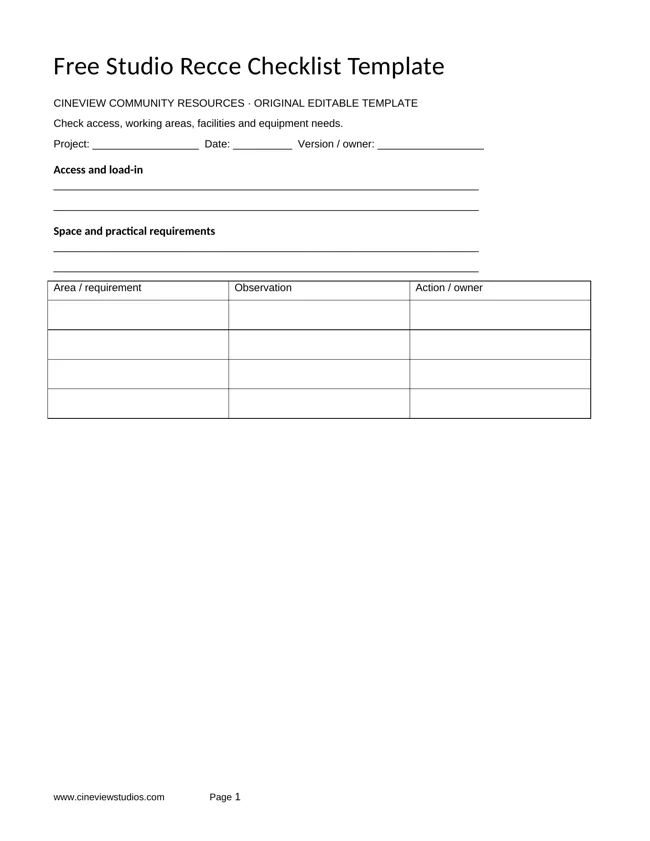
For complex work, arrange a technical recce with the key decision-makers. Bring the director, photographer, producer, gaffer, production designer and, where relevant, the virtual production or green-screen lead. A short recce can reveal whether a planned camera move is achievable, whether the cove needs repainting, and how much build or pre-light time the concept genuinely requires.
Plan the people areas as carefully as the set
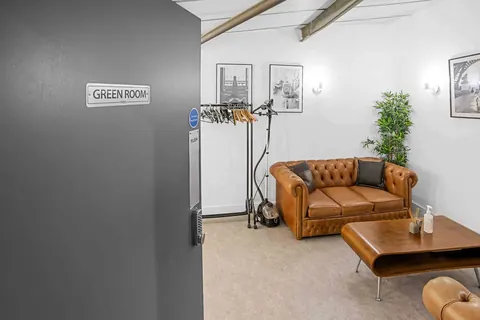
A studio is also a workplace for crew, talent and clients. If people are cold, crowded, hungry or unable to find a quiet place to change, the pressure quickly reaches the set. Confirm the available make-up, wardrobe, holding, production-office and client areas before finalising the crew list.
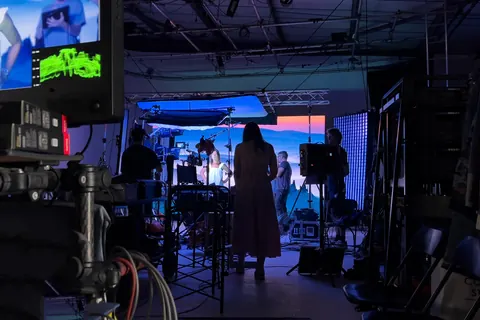
Think through sightlines and noise. Video village should give the director and client a useful view without becoming a bottleneck behind camera. Talent should be able to move from holding to set without walking through the frame or crossing an active lighting area. If the shoot includes children, animals, food preparation or confidential product, the separation between departments needs even more care.
Parking deserves an early decision, particularly in London. Free on-site parking can materially reduce unit costs and late arrivals, but spaces still need to be allocated. Reserve bays for essential production vehicles, accessibility needs and priority client transport. Everyone else should receive clear public transport and overflow parking guidance on the call sheet.
How to plan a studio shoot with a workable schedule
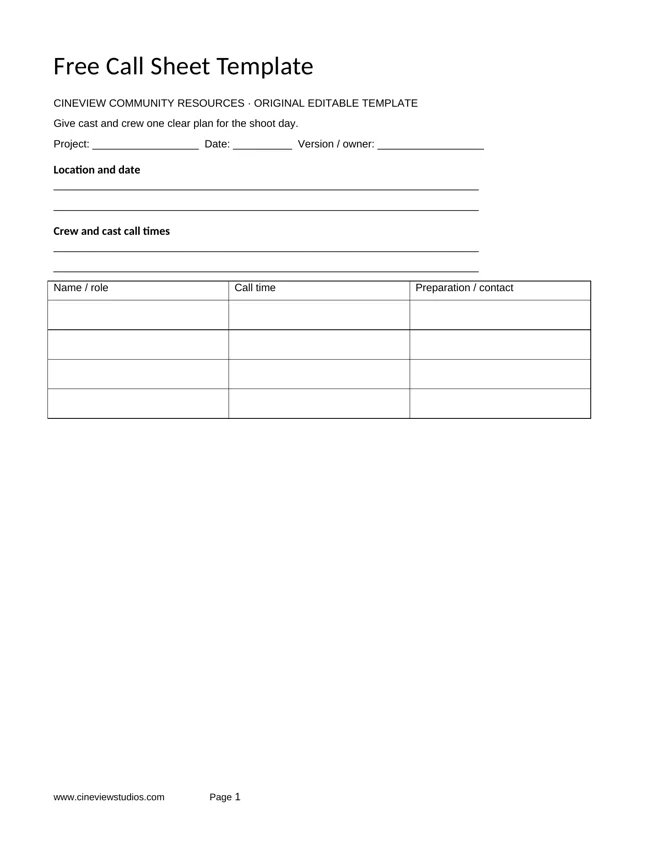
A call sheet records times. A workable schedule explains what must be ready at each time. Start with the first shot, then work backwards through pre-light, set dressing, camera build, talent preparation, crew call and load-in. Be realistic about which tasks can happen at the same time and which depend on another department finishing first.
For example, the art department may dress a set while lighting pre-rigs elsewhere, but final lighting often cannot be completed until the key scenic elements are in place. Likewise, a client review may take ten minutes or forty. Allow contingency around approval-heavy moments, major lighting changes, costume changes and any shot involving movement, water, vehicles or complex products.
A useful production schedule should include:
- access and load-in windows for each department;
- build, pre-rig and pre-light periods;
- shot blocks with setup and changeover allowances;
- meal breaks that protect the critical path;
- a clear strike and final handover time.
Do not fill every minute simply because the studio is booked for the day. A tightly packed plan can look efficient while actually making the crew slower. The better approach is to identify the shots that carry the campaign, give them enough time, and decide in advance which lower-priority shots can move if the day slips.
Protect the production with clear responsibilities
The final stage is making sure everyone receives the same version of the plan. Send the confirmed floor plan, schedule, access details, equipment list, health and safety information and client expectations before the shoot. The producer should know who can approve creative changes, who can sign off additional costs and who has authority to pause work if something is unsafe.
Check insurance, risk assessments and any special requirements for haze, water, animals, vehicles, elevated work or structural builds. If you are building scenery, confirm what can be fixed to the studio and what must be freestanding. If you are using the cove, agree responsibility for marks, damage and repainting before the crew arrives.
At Cineview Studios, the practical advantages are designed around this reality: generous production space, high ceilings, ground-floor shutter access, parking, blackout capability and equipment support all remove friction from the day. The point is not to add features to a specification. It is to give the production more control over time, cost and creative execution.
The best studio plan leaves room for the work to improve once the crew is in the room. Give your team the space, access and technical preparation to do their jobs properly, then keep enough contingency for the unexpected idea that makes the shoot worth remembering.
One thought on “How to Plan a Studio Shoot Without Losing Time”